VS

Honda CR-V vs Nissan X-Trail comparison

Compare performance (184 HP vs 213 HP), boot space and price (42,800 £ vs 34,200 £ ) at a glance. Find out which car is the better choice for you – Honda CR-V or Nissan X-Trail?

Honda CR-V vs Nissan X-Trail: Key differences

Honda CR-V

4.8 (2 Reviews)
rate
  • substantially more efficient
  • only slightly more trunk space

Nissan X-Trail

4.6 (5 Reviews)
rate
  • clearly cheaper
  • a bit more power
  • noticeably quicker 0–100 km/h
  • marginally lighter

All details on performance, efficiency, range and trunk space can be found in the technical comparison below – including user reviews for both models.

CR-V

Honda CR-V vs. Nissan X-Trail: A Comprehensive Comparison

The compact SUV segment continues to be a fierce battleground, and two competitors that have consistently made their mark are the Honda CR-V and the Nissan X-Trail. Both models come equipped with robust features, cutting-edge technology, and reliable performance. This article dives into the technical specifications and innovative features of these two SUVs to help you make an informed choice.
X-Trail

Performance and Powertrain

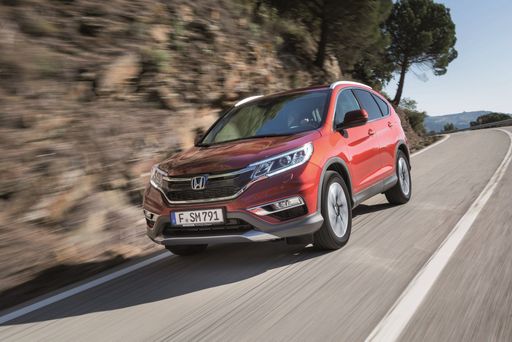
The Honda CR-V offers a range of engine options, including Full Hybrid and Plug-in Hybrid variants, delivering impressive performance figures. With a power output of up to 184 HP from its 2.0L engine, the CR-V stands out with a torque rating reaching 335 Nm. The SUV features a CVT automatic transmission, providing seamless acceleration, achieving 0-100 km/h in just 9.4 seconds. The CR-V's All-Wheel Drive and Front-Wheel Drive options ensure versatility on various terrains, while its fuel consumption ranges from 6.0 to 6.7 L/100km, making it an economical choice.

In contrast, the Nissan X-Trail presents a slightly different approach to performance. Available with petrol MHEV and Full Hybrid engines, this SUV can harness up to 213 HP with a torque output of 525 Nm. The X-Trail's acceleration can be as swift as 7 seconds for the more powerful variants, showcasing its dynamic capabilities. It too uses an automatic transmission, but with the added option of a reduction gearbox, enhancing off-road handling. The fuel consumption figures range from 5.7 to 6.9 L/100km, depending on the engine variant selected.

CR-V

Dimensions and Interior Space

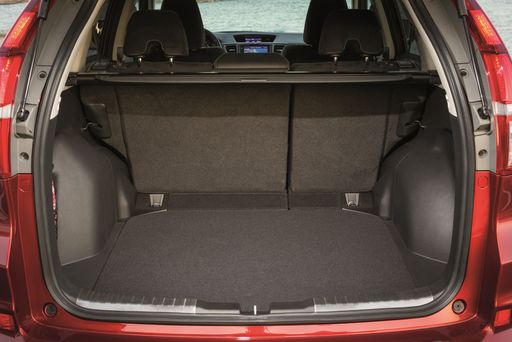
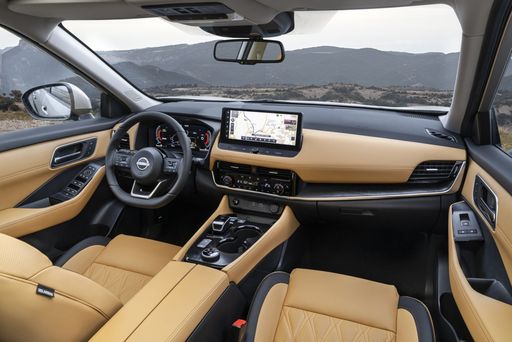
When looking at the dimensions, the Honda CR-V measures 4706 mm in length, 1866 mm in width, and stands at 1684 mm tall. It offers a spacious cabin that comfortably seats five, with a trunk capacity ranging from 579 to 617 liters, accommodating your gear with ease.

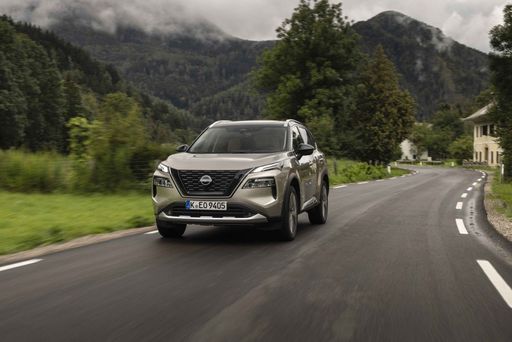
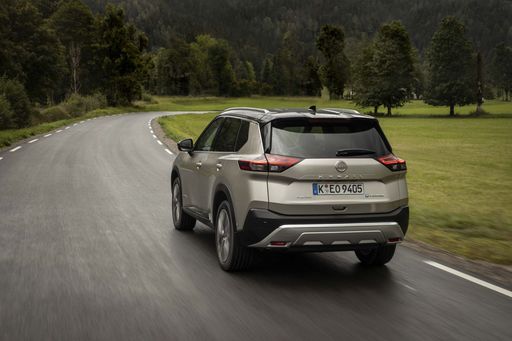
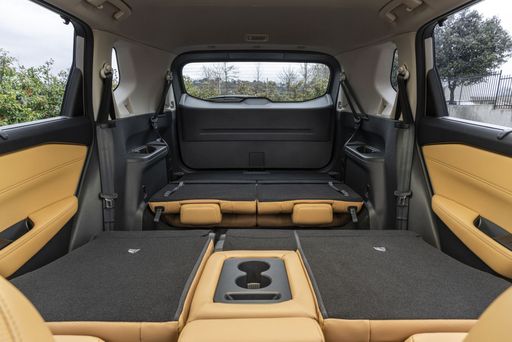
The Nissan X-Trail, while slightly shorter at 4680 mm in length and narrower at 1840 mm in width, compensates with a taller height of 1720 mm. It provides versatile seating arrangements, accommodating up to seven occupants in some variants. Its trunk space is also generous, with capacities reaching up to 585 liters, ensuring ample storage for family adventures.

X-Trail

Innovative Features and Technology

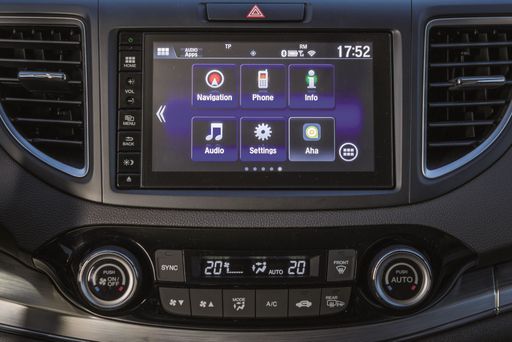
Both SUVs are well-equipped with modern technology aimed at enhancing the driving experience. The Honda CR-V boasts features such as advanced driver-assistance systems, including Honda Sensing, which incorporates adaptive cruise control, lane-keeping assist, and collision mitigation braking. The infotainment system includes a user-friendly touchscreen interface and smartphone integration via Android Auto and Apple CarPlay.

The Nissan X-Trail, on the other hand, is equipped with its own suite of technological innovations. The ProPILOT Assist feature offers semi-autonomous driving capabilities, enhancing safety and convenience during commutes. The infotainment system is equally impressive, providing connectivity options and an intuitive interface that keeps drivers informed and entertained.

CR-V

Sustainability and Environmental Impact

With growing concerns over environmental sustainability, both manufacturers have made strides in this area. The Honda CR-V's hybrid options produce CO2 emissions as low as 135 g/km, showcasing impressive eco-friendliness. Its Plug-in Hybrid variant even offers an electric range of up to 79 km, appealing to drivers looking for greener alternatives.

The Nissan X-Trail also emphasizes sustainability with its efficient hybrid systems, achieving CO2 emissions starting from 131 g/km. It represents a robust option for eco-conscious buyers without sacrificing performance and utility.

X-Trail

Conclusion: Which SUV Reigns Supreme?

Choosing between the Honda CR-V and the Nissan X-Trail ultimately depends on individual priorities. The CR-V excels in spaciousness and hybrid technology, making it well-suited for families and eco-conscious drivers. Conversely, the X-Trail's powerful engine options and advanced driving features cater to those seeking performance and versatility.

Regardless of your choice, both SUVs offer an impressive blend of safety, comfort, and efficiency that will serve their owners well for years to come.

Here’s where it gets real: The technical differences in detail

CR-V

Costs and Efficiency:

When it comes to price and running costs, the biggest differences usually appear. This is often where you see which car fits your budget better in the long run.

Nissan X-Trail is clearly cheaper – starting at 34,200 £ , while the Honda CR-V costs 42,800 £ . That’s a price difference of around 8,614 £.

Fuel consumption also shows a difference: the Honda CR-V uses 2.6 L/100km and is substantially more efficient than the Nissan X-Trail with 5.7 L/100km. The difference is about 3.1 L/100km.

X-Trail

Engine and Performance:

Power, torque and acceleration are the classic benchmarks for car enthusiasts – and here, some clear differences start to show.

When it comes to engine power, the Nissan X-Trail offers a bit more power – delivering 213 HP compared to 184 HP. That’s roughly 29 HP more horsepower.

When accelerating from 0 to 100 km/h, the Nissan X-Trail is noticeably quicker – completing the sprint in 7 s, while the Honda CR-V takes 9 s. That’s about 2 s quicker.

There’s also a difference in torque: the Nissan X-Trail delivers noticeably more torque with 525 Nm compared to 335 Nm. That’s about 190 Nm more.

CR-V

Space and Everyday Use:

Whether family car or daily driver – which one offers more room, flexibility and comfort?

Seats: Nissan X-Trail offers more seats – 7 vs 5.

In terms of curb weight, Nissan X-Trail is marginally lighter – 1,668 kg compared to 1,821 kg. The difference is around 153 kg.

Looking at boot space, the Honda CR-V offers only slightly more boot space – 617 L compared to 585 L. That’s a difference of about 32 L.

When it comes to payload, the Nissan X-Trail carries a bit more – 574 kg compared to 475 kg. That’s a difference of about 99 kg.

Who wins the race in the data check?

The Honda CR-V is decisively ahead in the objective data comparison.
This result only shows which model scores more points on paper – not which of the two cars feels right for you.

from £42,800
CR-V

Honda CR-V

  • Engine Type : Full Hybrid, Plugin Hybrid
  • Transmission : Automatic
  • Drive Type : Front-Wheel Drive, All-Wheel Drive
  • Power HP : 184 HP
  • Consumption L/100km : 2.6 - 6.7 L/100km
  • Electric Range : 78 km
Honda CR-V
Nissan X-Trail

Costs and Consumption

View detailed analysis

Engine and Performance

View detailed analysis

Dimensions and Body

View detailed analysis

Honda CR-V

The Honda CR-V blends sensible practicality with a polished feel, offering roomy interiors and a confident ride that keeps commutes and weekend escapes equally comfortable. Its unshowy styling and reliable reputation make it a smart, low‑drama choice for buyers who want versatility without fuss — the kind of car that quietly makes everyday life a little easier.

details

Nissan X-Trail

The Nissan X-Trail is a roomy, no-nonsense family SUV that mixes sensible practicality with a quietly modern look, making it an easy choice for busy lives and weekend escapes. It drives with calm confidence, delivers a comfortable ride and sensible tech, and won’t demand drama while doing the everyday heavy lifting.

details
Honda CR-V
Nissan X-Trail

Costs and Consumption

Price
42,800 - 52,100 £
Price
34,200 - 50,500 £
Consumption L/100km
2.6 - 6.7 L/100km
Consumption L/100km
5.7 - 6.9 L/100km
Consumption kWh/100km
-
Consumption kWh/100km
-
Electric Range
78 km
Electric Range
-
Battery Capacity
-
Battery Capacity
-
co2
59 - 152 g/km
co2
131 - 161 g/km
Fuel tank capacity
-
Fuel tank capacity
-

Dimensions and Body

Body Type
SUV
Body Type
SUV
Seats
5
Seats
5 - 7
Doors
-
Doors
-
Curb weight
1,821 - 1,988 kg
Curb weight
1,668 - 1,961 kg
Trunk capacity
579 - 617 L
Trunk capacity
177 - 585 L
Length
-
Length
-
Width
1,866 mm
Width
1,840 mm
Height
-
Height
-
Max trunk capacity
-
Max trunk capacity
-
Payload
439 - 475 kg
Payload
432 - 574 kg

Engine and Performance

Engine Type
Full Hybrid, Plugin Hybrid
Engine Type
Petrol MHEV, Full Hybrid
Transmission
Automatic
Transmission
Automatic
Transmission Detail
CVT
Transmission Detail
CVT, Reduction Gearbox
Drive Type
Front-Wheel Drive, All-Wheel Drive
Drive Type
Front-Wheel Drive, All-Wheel Drive
Power HP
184 HP
Power HP
163 - 213 HP
Acceleration 0-100km/h
9 - 9.5 s
Acceleration 0-100km/h
7 - 9.6 s
Max Speed
-
Max Speed
-
Torque
335 Nm
Torque
300 - 525 Nm
Number of Cylinders
4
Number of Cylinders
3
Power kW
135 kW
Power kW
120 - 157 kW
Engine capacity
1,993 cm3
Engine capacity
1,497 cm3

General

Model Year
2,025
Model Year
2,025
CO2 Efficiency Class
D, E, B
CO2 Efficiency Class
F, D, E
Brand
Honda
Brand
Nissan
DriveDuel uses data analysis and artificial intelligence to evaluate vehicle data and create content. Content is regularly reviewed and improved. The displayed prices are estimates based on German list prices, adjusted to the respective country’s VAT. Country-specific registration taxes are not included. This information is not legally binding.