@ Honda Motor Co., Ltd.
@ Toyota Motor Corporation
VS

Honda HR-V vs Toyota Corolla Touring Sports – Which one offers the better deal?

Everyday use, family trips or long-distance drives – here’s where the differences show.
Discover whether Honda HR-V or Toyota Corolla Touring Sports fits your lifestyle better.

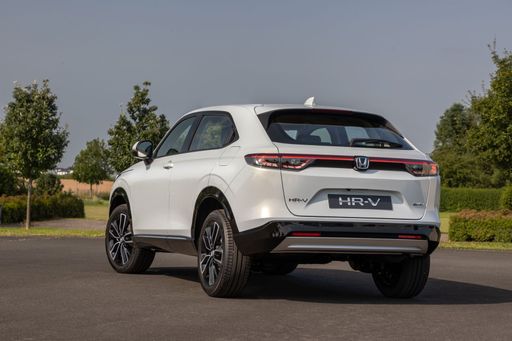
HR-V @ Honda Motor Co., Ltd.

The Great Showdown: Honda HR-V vs Toyota Corolla Touring Sports

In the fiercely competitive world of compact and crossover vehicles, the Honda HR-V and the Toyota Corolla Touring Sports stand out as two formidable contenders. Both marquis models share the same segment yet each car brings its own set of unique features, technical aspects, and innovations to the table. Let’s dive deep into what makes these vehicles tick and how they compare against each other.
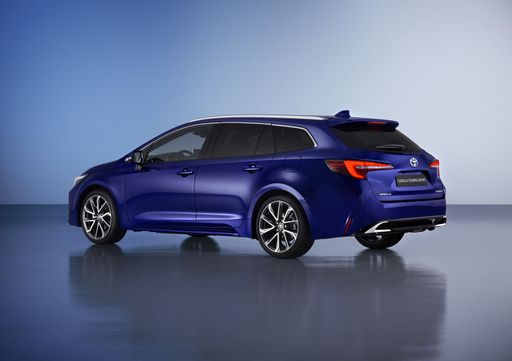
Corolla Touring Sports @ Toyota Motor Corporation

Design and Dimensions

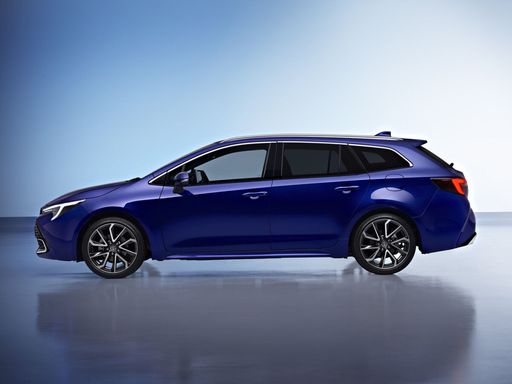
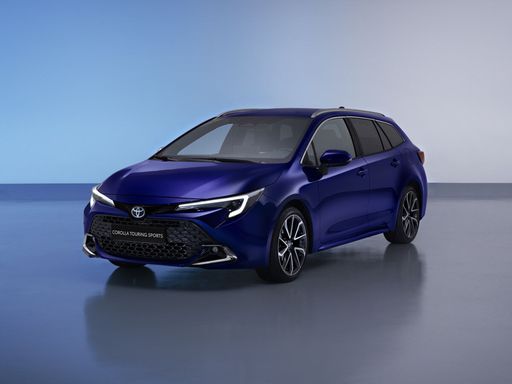
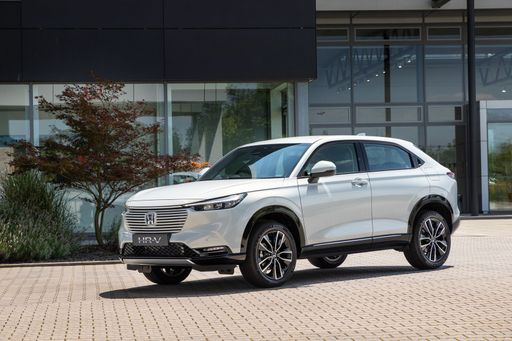
When it comes to aesthetics and design, the body type plays a crucial role in setting the tone. The Honda HR-V, labeled as an SUV, is consistently praised for its robust structure, boasting a length of 4340 mm and a height of 1582 mm. Meanwhile, the Toyota Corolla Touring Sports, classified as a wagon, offers a sleeker and more elongated profile with a length of 4650 mm and a width of 1790 mm, although it stands shorter in height at 1435 mm. These design choices reflect their usability; the HR-V leans into a higher driving position and ground clearance typical of SUVs, whereas the Corolla provides ample roominess in its extended hatchback form.

HR-V @ Honda Motor Co., Ltd.

Engine Performance and Efficiency

The heart of each vehicle is where performance truly comes to life. Both vehicles sport a full hybrid engine coupled with an automatic transmission using CVT technology, seamlessly blending power with efficiency. The Honda HR-V delivers a reliable 130 HP from its 1498 cm3 engine capacity. In contrast, the Corolla Touring Sports grants a choice between a more modest 140 HP engine and a robust 196 HP version, depending on the model year, with engine capacities ranging up to 1987 cm3.

Fuel efficiency is a decisive factor for many buyers, and here Corolla takes a slight edge. With a consumption rate as low as 4.4 L/100km compared to the HR-V's 5.4 L/100km, Corolla offers an eco-friendlier journey. Consequently, this translates to lower CO2 emissions at 100 g/km, rated more efficiently in class C, as opposed to the HR-V’s 122 g/km and class D.

Corolla Touring Sports @ Toyota Motor Corporation

Interior and Comfort

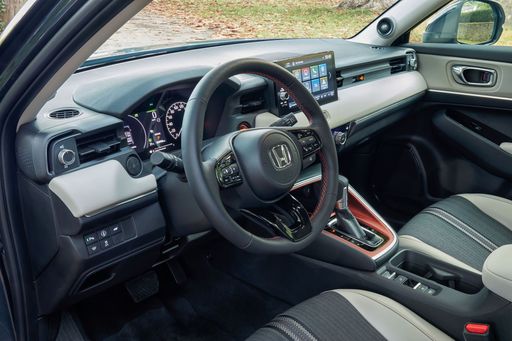
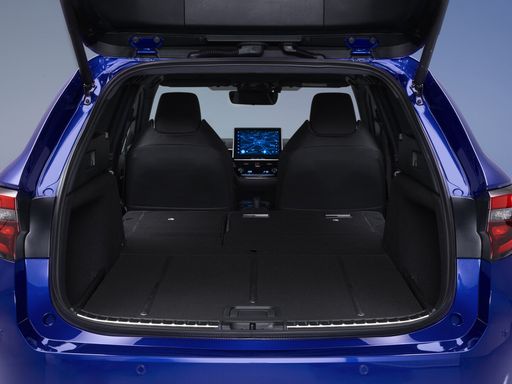
Stepping inside, both cars can comfortably seat five passengers. The smart design within maximizes passenger space and comfort, which is essential during long drives or heavy traffic. The Corolla Touring Sports excels in trunk capacity, offering a generous 596 liters, nearly doubling what the HR-V provides. This makes it an ideal choice for families or those requiring significant cargo space regularly.

HR-V @ Honda Motor Co., Ltd.

Acceleration and Handling

Performance enthusiasts will likely gravitate towards the Corolla Touring Sports due to its superior acceleration. The Toyota variant impresses with an acceleration time as brisk as 7.5 seconds for 0-100 km/h, compared to HR-V’s 10.6 seconds. While the Corolla easily hits a maximum speed of 180 km/h, the HR-V caps at a slightly lower 170 km/h. Both vehicles maintain solid handling with front-wheel drive configurations, though Corolla’s performance-tuned versions promise a more thrilling drive.

Corolla Touring Sports @ Toyota Motor Corporation

Innovations and Tech Offerings

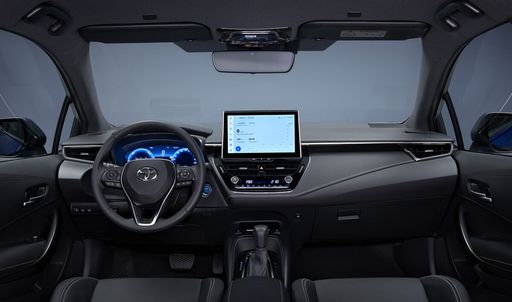
Innovation in hybrid technology is a cornerstone of both vehicles. The incorporation of CVT in both systems allows for smoother gear shifts and optimizes fuel efficiency without sacrificing engine performance. Additional tech offerings across both vehicles include advanced driver-assistance systems, connectivity features, and user-friendly infotainment systems, ensuring a modern and safe driving experience.

HR-V @ Honda Motor Co., Ltd.

Conclusion: Which One to Choose?

The decision between the Honda HR-V and the Toyota Corolla Touring Sports ultimately comes down to individual preferences and requirements. If you prioritize a taller ride height and SUV-like driving dynamics, the HR-V stands out as a strong choice. On the other hand, the Corolla Touring Sports wins over with superior cargo space, better acceleration, and slightly better fuel efficiency. Each vehicle exemplifies the strengths and values of its manufacturer, making either one a commendable option in the small crossover and wagon categories.

Here’s where it gets real: The technical differences in detail

Corolla Touring Sports @ Toyota Motor Corporation

Costs and Efficiency:

When it comes to price and running costs, the biggest differences usually appear. This is often where you see which car fits your budget better in the long run.

Toyota Corolla Touring Sports has a slight advantage in terms of price – it starts at 29600 £, while the Honda HR-V costs 29700 £. That’s a price difference of around 137 £.

Fuel consumption also shows a difference: Toyota Corolla Touring Sports manages with 4.40 L and is therefore distinct more efficient than the Honda HR-V with 5.40 L. The difference is about 1 L per 100 km.

Engine and Performance:

Power, torque and acceleration say a lot about how a car feels on the road. This is where you see which model delivers more driving dynamics.

When it comes to engine power, the Toyota Corolla Touring Sports has a clearly perceptible edge – offering 178 HP compared to 131 HP. That’s roughly 47 HP more horsepower.

In acceleration from 0 to 100 km/h, the Toyota Corolla Touring Sports is significantly quicker – completing the sprint in 7.50 s, while the Honda HR-V takes 10.60 s. That’s about 3.10 s faster.

In terms of top speed, the Toyota Corolla Touring Sports performs slight better – reaching 180 km/h, while the Honda HR-V tops out at 170 km/h. The difference is around 10 km/h.

Space and Everyday Use:

Cabin size, boot volume and payload all play a role in everyday practicality. Here, comfort and flexibility make the difference.

Both vehicles offer seating for 5 people.

In curb weight, Honda HR-V is minimal lighter – 1452 kg compared to 1485 kg. The difference is around 33 kg.

In terms of boot space, the Toyota Corolla Touring Sports offers clearly more room – 596 L compared to 319 L. That’s a difference of about 277 L.

In maximum load capacity, the Toyota Corolla Touring Sports performs to a small extent better – up to 1606 L, which is about 317 L more than the Honda HR-V.

When it comes to payload, Toyota Corolla Touring Sports hardly perceptible takes the win – 440 kg compared to 418 kg. That’s a difference of about 22 kg.

Who wins the race?

The Toyota Corolla Touring Sports proves to be leaves the rival little chance and therefore becomes our DriveDuel Champion!
Toyota Corolla Touring Sports is the better all-rounder in this comparison.

from about £29,600
Corolla Touring Sports @ Toyota Motor Corporation

Toyota Corolla Touring Sports

  • Engine Type : Full Hybrid
  • Transmission : Automatic
  • Drive Type : Front-Wheel Drive
  • Power HP : 140 - 178 HP
  • Consumption L/100km : 4.40 L

Honda HR-V

5 (2)
rate

The Honda HR-V is the sensible compact crossover that blends roomy practicality with a composed, friendly drive, making it an easy pick for buyers who want everyday usability without fuss. It won’t thrill hardcore enthusiasts, but its clever packaging, comfortable cabin and low-key styling make life simpler — and that’s exactly the point.

details

Toyota Corolla Touring Sports

The Toyota Corolla Touring Sports is a sensible yet stylish estate that blends everyday practicality with Toyota's trademark reliability, making it the kind of car that quietly gets on with family life without drama. Inside it's cleverly packaged for luggage and kids' gear and feels calm and comfortable on the road — sensible rather than flashy, but with enough character to make daily drives more enjoyable.

details
Honda HR-V
Toyota Corolla Touring Sports
HR-V @ Honda Motor Co., Ltd.
Corolla Touring Sports @ Toyota Motor Corporation

Costs and Consumption

Price
29700 - 35400 £
Price
29600 - 36400 £
Consumption L/100km
5.40 L
Consumption L/100km
4.40 L
Consumption kWh/100km
-
Consumption kWh/100km
-
Electric Range
-
Electric Range
-
Battery Capacity
-
Battery Capacity
-
co2
122 g/km
co2
100 g/km
Fuel tank capacity
40 L
Fuel tank capacity
43 L

Dimensions and Body

Body Type
SUV
Body Type
Estate
Seats
5
Seats
5
Doors
5
Doors
5
Curb weight
1452 kg
Curb weight
1485 - 1515 kg
Trunk capacity
319 L
Trunk capacity
581 - 596 L
Length
4355 mm
Length
4650 mm
Width
-
Width
1790 mm
Height
1582 mm
Height
1435 mm
Max trunk capacity
1289 L
Max trunk capacity
1591 - 1606 L
Payload
418 kg
Payload
400 - 440 kg

Engine and Performance

Engine Type
Full Hybrid
Engine Type
Full Hybrid
Transmission
Automatic
Transmission
Automatic
Transmission Detail
CVT
Transmission Detail
CVT
Drive Type
Front-Wheel Drive
Drive Type
Front-Wheel Drive
Power HP
131 HP
Power HP
140 - 178 HP
Acceleration 0-100km/h
10.6 - 10.8 s
Acceleration 0-100km/h
7.5 - 9.2 s
Max Speed
170 km/h
Max Speed
180 km/h
Torque
253 Nm
Torque
-
Number of Cylinders
4
Number of Cylinders
4
Power kW
96 kW
Power kW
103 - 131 kW
Engine capacity
1498 cm3
Engine capacity
1798 - 1987 cm3

General

Model Year
2025
Model Year
2025
CO2 Efficiency Class
D
CO2 Efficiency Class
C
Brand
Honda
Brand
Toyota
What drive types are available for the Honda HR-V?

The Honda HR-V is available as Front-Wheel Drive.

The prices and data displayed are estimates based on German list prices and may vary by country. This information is not legally binding.