
 Deutschland
 France
 Nederland
 Great Britain
 Sverige
 Norge
Norge Danmark
 Suomi
Suomi Italia
 Polska
 España
VS
Hyundai i10 vs Land Rover Range Rover Evoque – Which model is better for everyday use?
Compare performance, boot capacity, efficiency and price at a glance.
Find out which car is the better choice for you – Hyundai i10 or Land Rover Range Rover Evoque?
i10
@ Hyundai Motor Company
Costs and Efficiency:
When it comes to price and running costs, the biggest differences usually appear. This is often where you see which car fits your budget better in the long run.
Hyundai i10 has a significantly advantage in terms of price – it starts at 14600 £, while the Land Rover Range Rover Evoque costs 43300 £. That’s a price difference of around 28723 £.
Fuel consumption also shows a difference: Land Rover Range Rover Evoque manages with 3.70 L and is therefore noticeable more efficient than the Hyundai i10 with 4.90 L. The difference is about 1.20 L per 100 km.
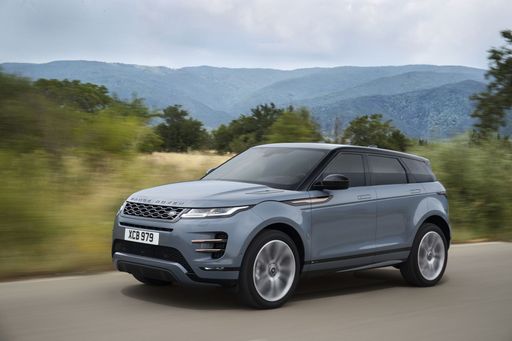
Range Rover Evoque
@ Jaguar Land Rover Media
Engine and Performance:
Power, torque and acceleration are the classic benchmarks for car enthusiasts – and here, some clear differences start to show.
When it comes to engine power, the Land Rover Range Rover Evoque has a decisively edge – offering 269 HP compared to 90 HP. That’s roughly 179 HP more horsepower.
In acceleration from 0 to 100 km/h, the Land Rover Range Rover Evoque is decisively quicker – completing the sprint in 7.20 s, while the Hyundai i10 takes 11.40 s. That’s about 4.20 s faster.
In terms of top speed, the Land Rover Range Rover Evoque performs somewhat better – reaching 213 km/h, while the Hyundai i10 tops out at 175 km/h. The difference is around 38 km/h.
There’s also a difference in torque: Land Rover Range Rover Evoque pulls decisively stronger with 540 Nm compared to 172 Nm. That’s about 368 Nm difference.
i10
@ Hyundai Motor Company
Space and Everyday Use:
Cabin size, boot volume and payload all play a role in everyday practicality. Here, comfort and flexibility make the difference.
Both vehicles offer seating for 5 people.
In curb weight, Hyundai i10 is significantly lighter – 996 kg compared to 1792 kg. The difference is around 796 kg.
In terms of boot space, the Land Rover Range Rover Evoque offers convincingly more room – 472 L compared to 252 L. That’s a difference of about 220 L.
In maximum load capacity, the Land Rover Range Rover Evoque performs minimal better – up to 1156 L, which is about 106 L more than the Hyundai i10.
When it comes to payload, Land Rover Range Rover Evoque noticeable takes the win – 600 kg compared to 423 kg. That’s a difference of about 177 kg.
Who wins the race?
The Land Rover Range Rover Evoque proves to be leaves the rival little chance and therefore becomes our DriveDuel Champion!
Land Rover Range Rover Evoque is the better all-rounder in this comparison.
from about £43,300
 @ Jaguar Land Rover Media
Land Rover Range Rover Evoque
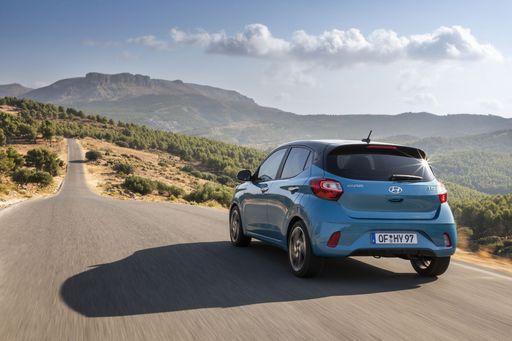
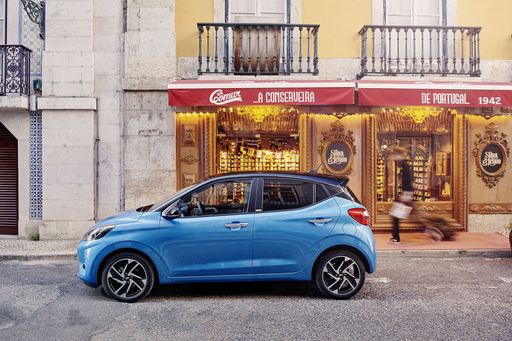
Hyundai i10
The Hyundai i10 is a cheeky city car that squeezes big-car confidence into a pocket-friendly package, carving through tight streets with surprising composure and sensible practicality. For buyers after low fuss, sensible equipment and wallet-friendly running costs, it's a smart, no-nonsense pick that makes sense whether you're a first-time driver or need a reliable second car.
details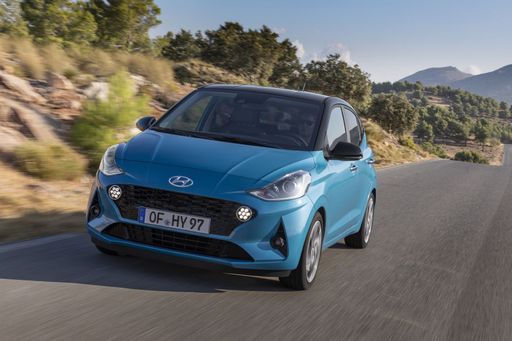 @ Hyundai Motor Company
 @ Hyundai Motor Company
 @ Hyundai Motor Company
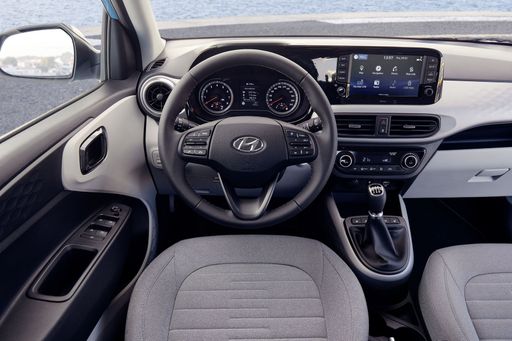 @ Hyundai Motor Company
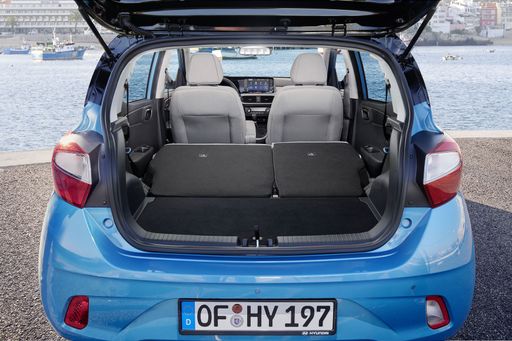 @ Hyundai Motor Company
Land Rover Range Rover Evoque
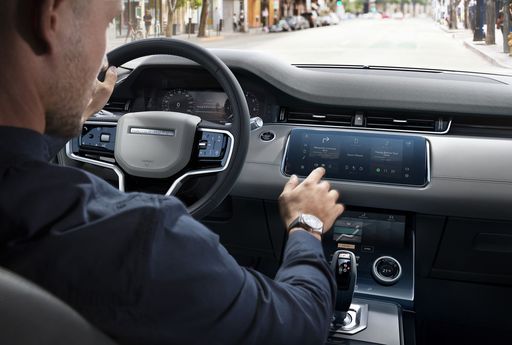
The Land Rover Range Rover Evoque combines refined luxury with robust off-road capabilities. Its sleek design and high-quality interior materials create an elegant yet comfortable driving experience. Advanced technology features and superior handling make it a versatile choice for both city and countryside adventures.
details
@ Jaguar Land Rover Media
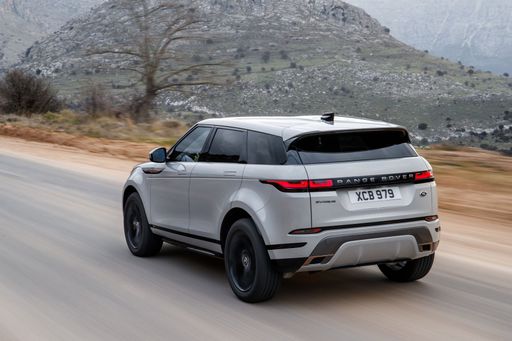 @ Jaguar Land Rover Media
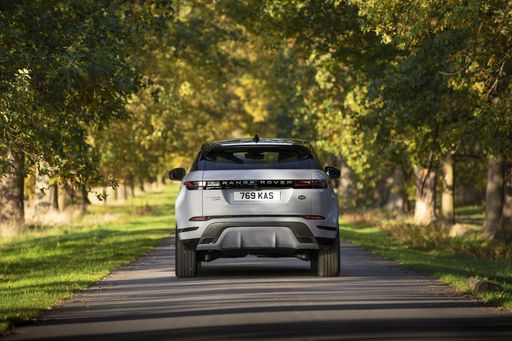 @ Jaguar Land Rover Media
 @ Jaguar Land Rover Media
Hyundai i10
Land Rover Range Rover Evoque
|
@ Hyundai Motor Company
|
@ Jaguar Land Rover Media
|
|
|
|
Costs and Consumption |
|
|---|---|
|
Price
14600 - 19000 £
|
Price
43300 - 64800 £
|
|
Consumption L/100km
4.9 - 5.5 L
|
Consumption L/100km
3.7 - 7.8 L
|
|
Consumption kWh/100km
-
|
Consumption kWh/100km
-
|
|
Electric Range
-
|
Electric Range
60 km
|
|
Battery Capacity
-
|
Battery Capacity
11.50 kWh
|
|
co2
110 - 124 g/km
|
co2
85 - 177 g/km
|
|
Fuel tank capacity
36 L
|
Fuel tank capacity
57 - 67 L
|
Dimensions and Body |
|
|---|---|
|
Body Type
Hatchback
|
Body Type
SUV
|
|
Seats
4 - 5
|
Seats
5
|
|
Doors
5
|
Doors
5
|
|
Curb weight
996 - 1099 kg
|
Curb weight
1792 - 2157 kg
|
|
Trunk capacity
252 L
|
Trunk capacity
472 L
|
|
Length
3670 - 3675 mm
|
Length
4371 mm
|
|
Width
1680 mm
|
Width
1900 mm
|
|
Height
1480 - 1483 mm
|
Height
1649 mm
|
|
Max trunk capacity
1050 L
|
Max trunk capacity
1156 L
|
|
Payload
344 - 423 kg
|
Payload
503 - 600 kg
|
Engine and Performance |
|
|---|---|
|
Engine Type
Petrol
|
Engine Type
Petrol MHEV, Diesel MHEV, Plugin Hybrid
|
|
Transmission
Manuel, Automatic
|
Transmission
Manuel, Automatic
|
|
Transmission Detail
Manual Gearbox, Automated Manual
|
Transmission Detail
Manual Gearbox, Automatic Gearbox
|
|
Drive Type
Front-Wheel Drive
|
Drive Type
Front-Wheel Drive, All-Wheel Drive
|
|
Power HP
63 - 90 HP
|
Power HP
160 - 269 HP
|
|
Acceleration 0-100km/h
11.4 - 18.4 s
|
Acceleration 0-100km/h
7.2 - 10.3 s
|
|
Max Speed
143 - 175 km/h
|
Max Speed
190 - 213 km/h
|
|
Torque
93 - 172 Nm
|
Torque
260 - 540 Nm
|
|
Number of Cylinders
3 - 4
|
Number of Cylinders
3 - 4
|
|
Power kW
46 - 66 kW
|
Power kW
118 - 198 kW
|
|
Engine capacity
998 - 1197 cm3
|
Engine capacity
1498 - 1998 cm3
|
General |
|
|---|---|
|
Model Year
2024
|
Model Year
2025
|
|
CO2 Efficiency Class
C, D
|
CO2 Efficiency Class
G, F, B
|
|
Brand
Hyundai
|
Brand
Land Rover
|
Is the Hyundai i10 offered with different drivetrains?
The Hyundai i10 is offered with Front-Wheel Drive.
The prices and data displayed are estimates based on German list prices and may vary by country. This information is not legally binding.