@ Hyundai Motor Company
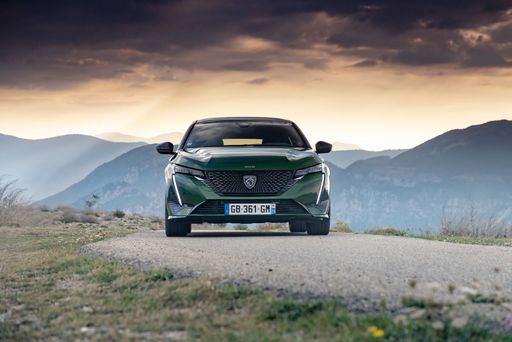
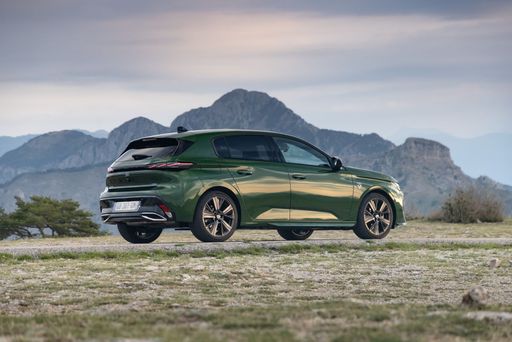
@ Peugeot / Stellantis Media
VS

Hyundai i30 Wagon vs Peugeot 308 – Which one offers the better deal?

Compare performance, boot capacity, efficiency and price at a glance.
Find out which car is the better choice for you – Hyundai i30 Wagon or Peugeot 308?

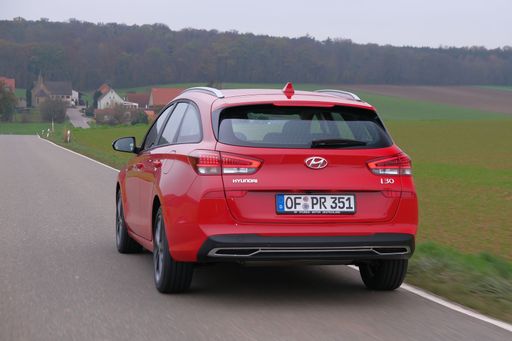
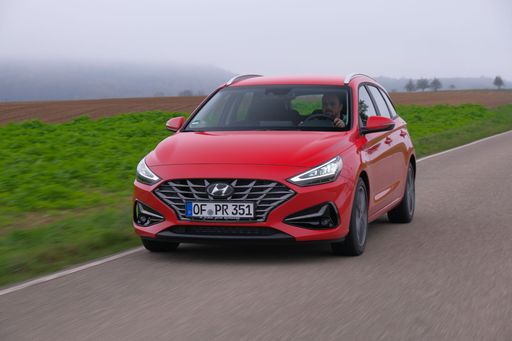
i30 Wagon @ Hyundai Motor Company

The Battle of the Estates: Hyundai i30 Kombi vs. Peugeot 308

In the competitive arena of compact estates, the Hyundai i30 Kombi and Peugeot 308 wage a battle for the hearts of car enthusiasts. Both cars represent the fusion of style, practicality, and innovative technology. Let’s delve into the technical aspects and innovations that define these two models.
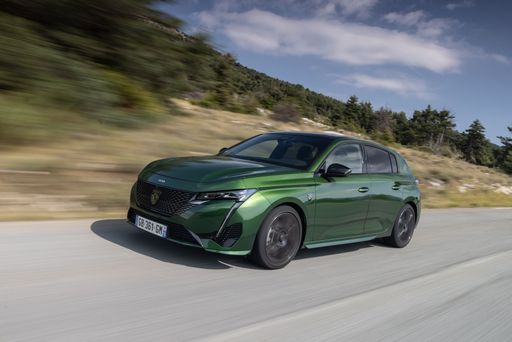
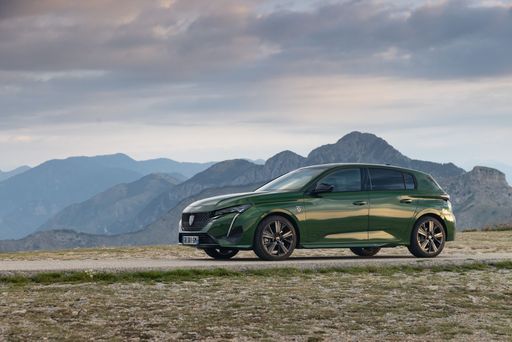
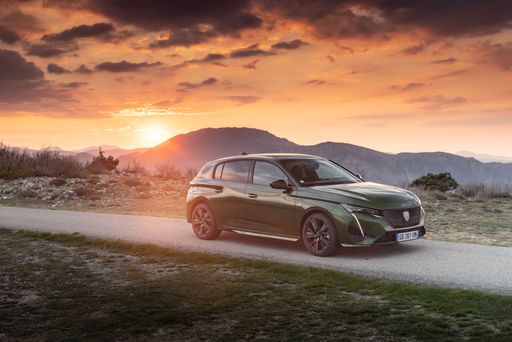
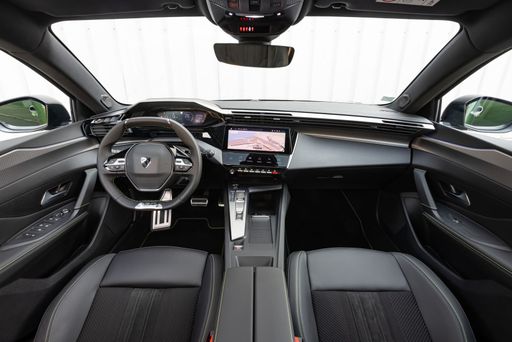
308 @ Peugeot / Stellantis Media

Design and Dimensions: Space and Style

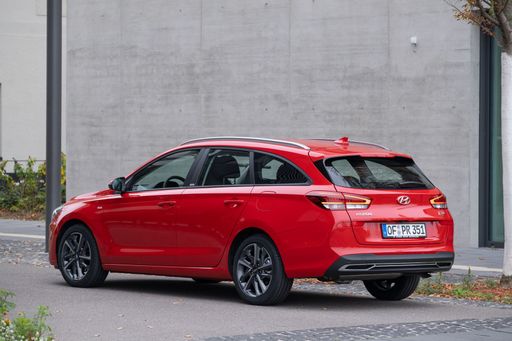
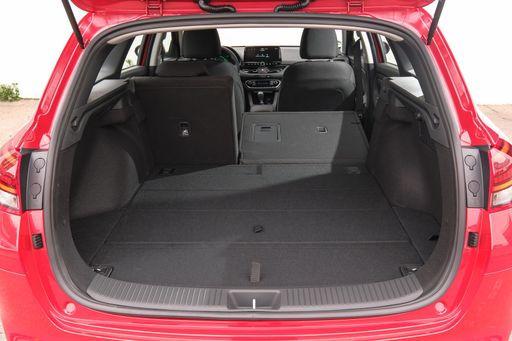
The Hyundai i30 Kombi is a true wagon, offering a generous length of 4585 mm, width of 1795 mm, and a height of 1475 mm. With a spacious trunk capacity of 602 liters, it pledges ample room for family adventures and road trips.

In contrast, the Peugeot 308 Hatchback flaunts a sportier silhouette with dimensions of 4367 mm in length, 1852 mm in width, and 1441 mm in height. Its trunk, however, offers a more modest 412 liters but compensates with an elegant design and urban maneuverability.

i30 Wagon @ Hyundai Motor Company

Engine Choices: Power Meets Efficiency

The i30 Kombi offers a choice between petrol and mild hybrid petrol engines, delivering power outputs ranging from 100 to 140 HP. Paired with a manual gearbox or a dual-clutch automatic transmission, the i30 spryly handles both city commutes and longer journeys. Notably, its dual-clutch automatic variants accelerate from 0-100 km/h in just 9.8 seconds.

The Peugeot 308 provides a vast engine lineup, embracing petrol, diesel, hybrid, and fully electric options. Offering power outputs from 130 to an exhilarating 225 HP in hybrid form, the 308 provides versatility unmatched by many. Notably, its electric version offers an impressive range of 419 km, catering to the environmentally conscious driver.

308 @ Peugeot / Stellantis Media

Fuel Economy and Emissions: A Sustainable Choice

The Hyundai i30 Kombi demonstrates efficiency with fuel consumption ranging from 5.6 to 5.9 L/100 km, and CO2 emissions between 126 to 133 g/km. It holds its ground steadily in the eco-friendly category.

Peugeot’s 308 shines with its comprehensive eco-options. Diesel variants offer around 5.9 L/100 km consumption, but it’s the plugin hybrid that boasts just 1.3 L/100 km, and the fully electric model that emits zero CO2, representing a leap towards sustainability.

i30 Wagon @ Hyundai Motor Company

Advanced Features: Technology-Driven Comfort

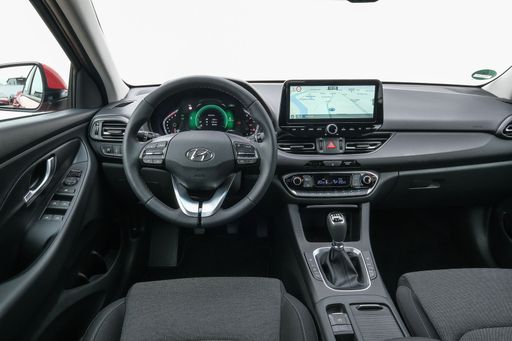
Both models are equipped with a suite of the latest technologies aimed at enhancing the driving experience. The Hyundai i30 Kombi comes with a comprehensive infotainment system and advanced safety features to ensure an enjoyable and secure ride.

In terms of innovation, the Peugeot 308 stands out with its i-Cockpit design, offering a driver-centric experience, and a range of connectivity features. With options including adaptive cruise control and active lane keeping assist, the 308 ensures a futuristic feel to each journey.

308 @ Peugeot / Stellantis Media

Conclusion: A Personal Preference

The decision between the Hyundai i30 Kombi and the Peugeot 308 hinges largely on individual needs and preferences. The i30 Kombi is perfect for those valuing space and classic estate styling, offering practicality married with efficiency. Meanwhile, the 308 appeals to those seeking a mix of cutting-edge technology and engine versatility, especially for urban settings and eco-conscious drivers.

In essence, both the Hyundai i30 Kombi and the Peugeot 308 showcase remarkable strides in automotive design and technology. Whichever you choose, both promise a thrilling and efficient driving experience for 2024 and beyond.

Here’s where it gets real: The technical differences in detail

i30 Wagon @ Hyundai Motor Company

Costs and Efficiency:

When it comes to price and running costs, the biggest differences usually appear. This is often where you see which car fits your budget better in the long run.

Hyundai i30 Wagon has a somewhat advantage in terms of price – it starts at 24800 £, while the Peugeot 308 costs 29200 £. That’s a price difference of around 4389 £.

Fuel consumption also shows a difference: Peugeot 308 manages with 2.30 L and is therefore significantly more efficient than the Hyundai i30 Wagon with 5.70 L. The difference is about 3.40 L per 100 km.

308 @ Peugeot / Stellantis Media

Engine and Performance:

Under the bonnet, it becomes clear which model is tuned for sportiness and which one takes the lead when you hit the accelerator.

When it comes to engine power, the Peugeot 308 has a evident edge – offering 195 HP compared to 140 HP. That’s roughly 55 HP more horsepower.

In acceleration from 0 to 100 km/h, the Peugeot 308 is distinct quicker – completing the sprint in 7.60 s, while the Hyundai i30 Wagon takes 9.80 s. That’s about 2.20 s faster.

In terms of top speed, the Peugeot 308 performs to a small extent better – reaching 225 km/h, while the Hyundai i30 Wagon tops out at 197 km/h. The difference is around 28 km/h.

There’s also a difference in torque: Peugeot 308 pulls to a small extent stronger with 300 Nm compared to 253 Nm. That’s about 47 Nm difference.

i30 Wagon @ Hyundai Motor Company

Space and Everyday Use:

Cabin size, boot volume and payload all play a role in everyday practicality. Here, comfort and flexibility make the difference.

Both vehicles offer seating for 5 people.

In curb weight, Hyundai i30 Wagon is to a small extent lighter – 1316 kg compared to 1453 kg. The difference is around 137 kg.

In terms of boot space, the Hyundai i30 Wagon offers distinct more room – 602 L compared to 412 L. That’s a difference of about 190 L.

In maximum load capacity, the Hyundai i30 Wagon performs a bit better – up to 1650 L, which is about 327 L more than the Peugeot 308.

When it comes to payload, Hyundai i30 Wagon barely noticeable takes the win – 524 kg compared to 503 kg. That’s a difference of about 21 kg.

Who wins the race?

The Peugeot 308 proves to be leaves the rival little chance and therefore becomes our DriveDuel Champion!
Peugeot 308 is the better all-rounder in this comparison.

from about £29,200
308 @ Peugeot / Stellantis Media

Peugeot 308

  • Engine Type : Petrol MHEV, Diesel, Plugin Hybrid, Electric
  • Transmission : Automatic
  • Drive Type : Front-Wheel Drive
  • Power HP : 131 - 195 HP
  • Consumption L/100km : 2.3 - 5 L
  • Consumption kWh/100km : 15.60 kWh
  • Electric Range : 78 - 450 km

Hyundai i30 Wagon

The Hyundai i30 Wagon offers a blend of practicality and style, making it a popular choice for families and those in need of extra space. Its sleek exterior and comfortable interior provide a pleasant driving experience, while advanced safety features ensure peace of mind on the road. The i30 Wagon stands out with its impressive fuel efficiency and reliability, catering to both urban and rural lifestyles.

details

Peugeot 308

5 (1)
rate

The Peugeot 308 brings a sleek, feline profile and an unexpectedly upscale cabin, with clever packaging and materials that feel a touch more premium than you might expect. It’s composed on the road, easy to live with for daily life, and a smart choice if you want a stylish hatch that still behaves when the road gets interesting.

details
Hyundai i30 Wagon
Peugeot 308
i30 Wagon @ Hyundai Motor Company
308 @ Peugeot / Stellantis Media

Costs and Consumption

Price
24800 - 30100 £
Price
29200 - 42600 £
Consumption L/100km
5.7 - 6 L
Consumption L/100km
2.3 - 5 L
Consumption kWh/100km
-
Consumption kWh/100km
15.60 kWh
Electric Range
-
Electric Range
78 - 450 km
Battery Capacity
-
Battery Capacity
0.40 kWh
co2
130 - 136 g/km
co2
0 - 129 g/km
Fuel tank capacity
50 L
Fuel tank capacity
42 - 52 L

Dimensions and Body

Body Type
Estate
Body Type
Hatchback
Seats
5
Seats
5
Doors
5
Doors
5
Curb weight
1316 - 1461 kg
Curb weight
1453 - 1749 kg
Trunk capacity
602 L
Trunk capacity
314 - 412 L
Length
4585 mm
Length
4367 mm
Width
1795 mm
Width
1852 mm
Height
1475 mm
Height
1438 mm
Max trunk capacity
1650 L
Max trunk capacity
1258 - 1323 L
Payload
439 - 524 kg
Payload
430 - 503 kg

Engine and Performance

Engine Type
Petrol, Petrol MHEV
Engine Type
Petrol MHEV, Diesel, Plugin Hybrid, Electric
Transmission
Manuel, Automatic
Transmission
Automatic
Transmission Detail
Manual Gearbox, Dual-Clutch Automatic
Transmission Detail
Dual-Clutch Automatic, Automatic Gearbox, Reduction Gearbox
Drive Type
Front-Wheel Drive
Drive Type
Front-Wheel Drive
Power HP
100 - 140 HP
Power HP
131 - 195 HP
Acceleration 0-100km/h
9.8 - 13.3 s
Acceleration 0-100km/h
7.6 - 10.6 s
Max Speed
178 - 197 km/h
Max Speed
170 - 225 km/h
Torque
172 - 253 Nm
Torque
230 - 300 Nm
Number of Cylinders
3 - 4
Number of Cylinders
3 - 4
Power kW
74 - 103 kW
Power kW
96 - 144 kW
Engine capacity
998 - 1482 cm3
Engine capacity
1199 - 1598 cm3

General

Model Year
2024
Model Year
2025
CO2 Efficiency Class
D, E
CO2 Efficiency Class
C, D, B, A
Brand
Hyundai
Brand
Peugeot
What drivetrain options does the Hyundai i30 Wagon have?

Available configurations include Front-Wheel Drive.

The prices and data displayed are estimates based on German list prices and may vary by country. This information is not legally binding.