VS

Hyundai i30 vs Ford Focus comparison

Compare performance (150 HP vs 280 HP), boot space and price (24,600 £ vs 27,500 £ ) at a glance. Find out which car is the better choice for you – Hyundai i30 or Ford Focus?

Hyundai i30 vs Ford Focus: Key differences

Hyundai i30

4.4 (1 Reviews)
rate
  • moderately cheaper
  • very slightly lighter
  • only slightly more trunk space

Ford Focus

4.6 (1 Reviews)
rate
  • significantly more power
  • markedly more efficient
  • significantly quicker 0–100 km/h

All details on performance, efficiency, range and trunk space can be found in the technical comparison below – including user reviews for both models.

i30

In the world of compact hatchbacks, the Ford Focus and the Hyundai i30 are two stalwart contenders that have carved a niche for themselves with a blend of performance, technology, and practicality. Both cars have undergone extensive updates in recent years, making this comparison not just a study of aesthetics, but also a deep dive into specifications, innovations, and overall driving experience.
Focus

Design and Dimensions

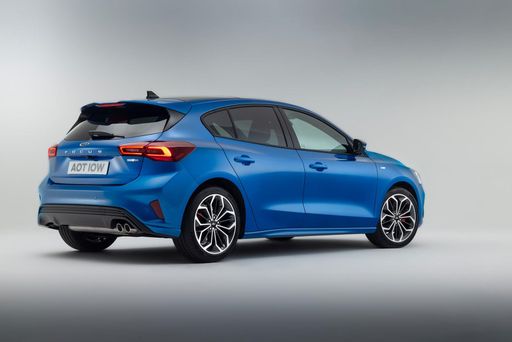
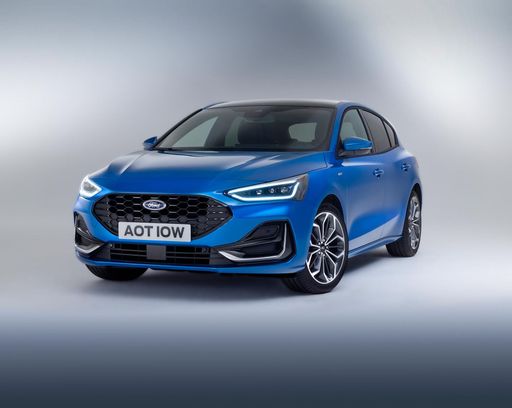
The Ford Focus presents a sporty demeanor with aggressive lines and a bold stance. Measuring approximately 4,392 mm in length, 1,825 mm in width, and standing 1,440 mm tall, the Focus utilizes its dimensions to provide a roomy interior and generous trunk space of 392 liters.

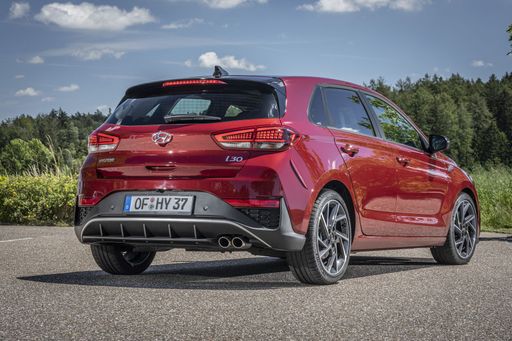
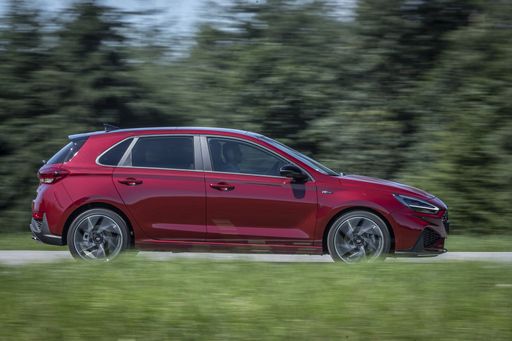
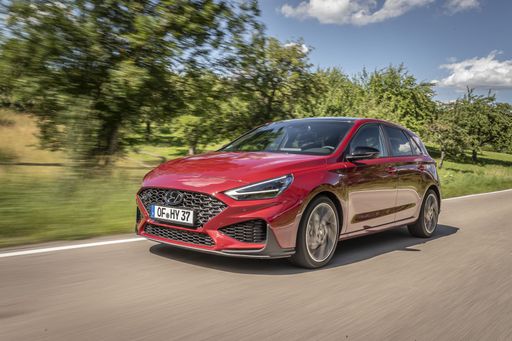
On the other hand, the Hyundai i30 boasts a more understated and sophisticated design. At 4,340 mm long, 1,795 mm wide and 1,455 mm tall, it remains compact and agile while still offering an impressive trunk capacity of 395 liters. This makes both cars practical for everyday use, with slight advantages in different areas.

i30

Engine Specifications and Performance

Under the hood, the Ford Focus offers multiple engine options, including petrol MHEV, diesel, and regular petrol engines, with power output ranging from 115 to a robust 280 hp. The diesel variant can achieve remarkable fuel consumption figures of around 4.9 L/100km, making it an excellent choice for those who prioritize efficiency.

In contrast, the Hyundai i30 has a more limited engine lineup, featuring both petrol and petrol MHEV engines with power outputs up to 140 hp. Its fuel consumption averages around 5.7 L/100km, modestly trailing behind the Focus in efficiency. However, the i30 does excel in predictably smooth acceleration with a time of 9.6 seconds from 0-100 km/h, demonstrating solid performance against the Focus variants, some of which reach the same mark in as little as 5.7 seconds.

Focus

Transmission and Driving Dynamics

Both the Focus and i30 offer a choice between manual and automatic transmissions. The Ford Focus has a diverse selection, including a dual-clutch automatic transmission and traditional manual gearbox options, delivering an engaging drive experience. Its front-wheel-drive layout ensures a spirited handling characteristic.

The Hyundai i30 also features manual and dual-clutch automatic options but doesn't vary as much in its transmission details. The driving dynamics of the i30 are commendable, providing a comfortable ride while retaining agility in urban environments.

i30

Technology and Innovations

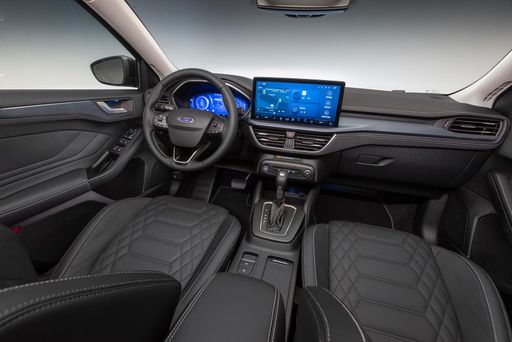
Ford has equipped the Focus with a host of technological innovations, including advanced driver assistance systems and an intuitive infotainment setup featuring the latest Ford SYNC technology, which offers seamless smartphone integration and built-in navigation. Its safety ratings are equally impressive, giving drivers peace of mind on the road.

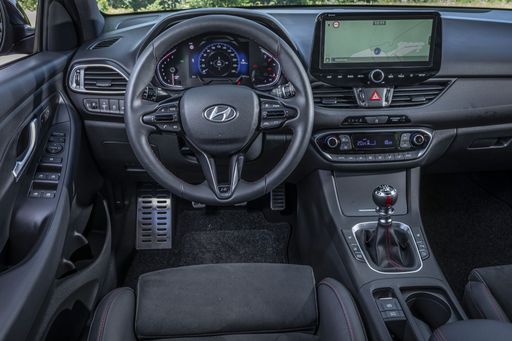
The Hyundai i30 matches Ford in technological readiness, boasting features like adaptive cruise control, lane-keeping assistance, and a modern infotainment system with connectivity options that cater to tech-savvy users. Its user-friendly interface often earns praise from critics and drivers alike.

Focus

Conclusion: Choosing Between Focus and i30

Ultimately, choosing between the Ford Focus and the Hyundai i30 boils down to personal preference and priorities. The Focus provides a thrilling driving experience with a range of powerful engines and innovative technology, making it an excellent choice for enthusiasts. Meanwhile, the i30 stands out with a balanced approach, delivering solid performance and everyday usability wrapped in a stylish package.

Both cars are outstanding representatives of their segments, ensuring that whether you gravitate towards Ford or Hyundai, you will be pleased with the offerings at hand. With the ongoing innovations in both models, the competition will only get fiercer, promising exciting advancements in future iterations.

Here’s where it gets real: The technical differences in detail

i30

Costs and Efficiency:

When it comes to price and running costs, the biggest differences usually appear. This is often where you see which car fits your budget better in the long run.

Hyundai i30 is moderately cheaper – starting at 24,600 £ , while the Ford Focus costs 27,500 £ . That’s a price difference of around 2,957 £.

Fuel consumption also shows a difference: the Ford Focus uses 4.9 L/100km and is markedly more efficient than the Hyundai i30 with 5.9 L/100km. The difference is about 1 L/100km.

Focus

Engine and Performance:

Under the bonnet, it becomes clear which model is tuned for sportiness and which one takes the lead when you hit the accelerator.

When it comes to engine power, the Ford Focus offers significantly more power – delivering 280 HP compared to 150 HP. That’s roughly 130 HP more horsepower.

When accelerating from 0 to 100 km/h, the Ford Focus is significantly quicker – completing the sprint in 5.7 s, while the Hyundai i30 takes 8.9 s. That’s about 3.2 s quicker.

There’s also a difference in torque: the Ford Focus delivers clearly more torque with 420 Nm compared to 250 Nm. That’s about 170 Nm more.

i30

Space and Everyday Use:

Cabin size, boot volume and payload all play a role in everyday practicality. Here, comfort and flexibility make the difference.

Both vehicles offer seating for 5 people.

In terms of curb weight, Hyundai i30 is very slightly lighter – 1,315 kg compared to 1,330 kg. The difference is around 15 kg.

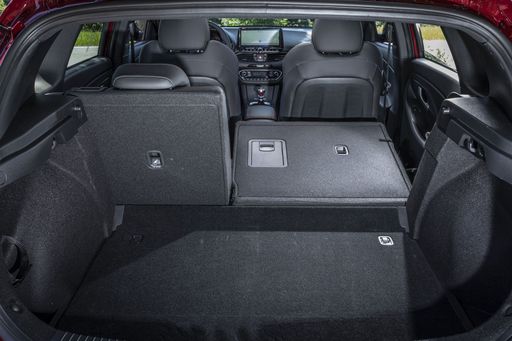
Looking at boot space, the Hyundai i30 offers only slightly more boot space – 395 L compared to 392 L. That’s a difference of about 3 L.

When it comes to payload, the Ford Focus carries moderately more – 560 kg compared to 485 kg. That’s a difference of about 75 kg.

Who wins the race in the data check?

The Ford Focus holds a decisive overall lead in the objective data comparison.
This result only shows which model scores more points on paper – not which of the two cars feels right for you.

from £27,500
Focus

Ford Focus

  • Engine Type : Petrol MHEV, Diesel, Petrol
  • Transmission : Manuel, Automatic
  • Drive Type : Front-Wheel Drive
  • Power HP : 115 - 280 HP
  • Consumption L/100km : 4.9 - 8 L/100km
Hyundai i30
Ford Focus

Costs and Consumption

View detailed analysis

Engine and Performance

View detailed analysis

Dimensions and Body

View detailed analysis

Hyundai i30

The Hyundai i30 proves that sensible can also be stylish, offering a confident driving character wrapped in neat, modern design. It serves up a roomy, well-equipped cabin and composed ride that make everyday motoring feel like a clever purchase rather than a compromise.

details

Ford Focus

The Ford Focus remains a clever all‑rounder that balances sharp handling with everyday comfort, making it a strong choice whether your commute is city streets or country lanes. Its practical cabin and sensible running costs mean you’ll spend more time enjoying the drive and less time worrying about ownership, with a playful streak underfoot that keeps things interesting.

details
Hyundai i30
Ford Focus

Costs and Consumption

Price
24,600 - 31,400 £
Price
27,500 - 42,700 £
Consumption L/100km
5.9 - 6.3 L/100km
Consumption L/100km
4.9 - 8 L/100km
Consumption kWh/100km
-
Consumption kWh/100km
-
Electric Range
-
Electric Range
-
Battery Capacity
-
Battery Capacity
-
co2
134 - 142 g/km
co2
117 - 183 g/km
Fuel tank capacity
-
Fuel tank capacity
52 L

Dimensions and Body

Body Type
Hatchback
Body Type
Hatchback
Seats
5
Seats
5
Doors
-
Doors
5
Curb weight
1,315 - 1,435 kg
Curb weight
1,330 - 1,529 kg
Trunk capacity
395 L
Trunk capacity
392 L
Length
-
Length
4,382 - 4,397 mm
Width
1,795 mm
Width
1,825 - 1,844 mm
Height
-
Height
1,438 - 1,482 mm
Max trunk capacity
-
Max trunk capacity
1,354 L
Payload
445 - 485 kg
Payload
495 - 560 kg

Engine and Performance

Engine Type
Petrol
Engine Type
Petrol MHEV, Diesel, Petrol
Transmission
Manuel, Automatic
Transmission
Manuel, Automatic
Transmission Detail
Manual Gearbox, Dual-Clutch Automatic
Transmission Detail
Manual Gearbox, Dual-Clutch Automatic, Automatic Gearbox
Drive Type
Front-Wheel Drive
Drive Type
Front-Wheel Drive
Power HP
115 - 150 HP
Power HP
115 - 280 HP
Acceleration 0-100km/h
8.9 - 11.7 s
Acceleration 0-100km/h
5.7 - 11.8 s
Max Speed
-
Max Speed
186 - 250 km/h
Torque
172 - 250 Nm
Torque
170 - 420 Nm
Number of Cylinders
3 - 4
Number of Cylinders
3 - 4
Power kW
85 - 110 kW
Power kW
85 - 206 kW
Engine capacity
998 - 1,598 cm3
Engine capacity
999 - 2,261 cm3

General

Model Year
2,026
Model Year
2,022 - 2,024
CO2 Efficiency Class
D, E
CO2 Efficiency Class
D, G
Brand
Hyundai
Brand
Ford
DriveDuel uses data analysis and artificial intelligence to evaluate vehicle data and create content. Content is regularly reviewed and improved. The displayed prices are estimates based on German list prices, adjusted to the respective country’s VAT. Country-specific registration taxes are not included. This information is not legally binding.