VS

Hyundai Inster vs Fiat 500 comparison

Compare performance (115 HP vs 118 HP), boot space and price (20,500 £ vs 17,100 £ ) at a glance. Find out which car is the better choice for you – Hyundai Inster or Fiat 500?

Hyundai Inster vs Fiat 500: Key differences

Hyundai Inster

5 (1 Reviews)
rate
  • a bit more electric range
  • noticeably more trunk space
details

Fiat 500

3.7 (1 Reviews)
rate
  • somewhat cheaper
  • barely more power
  • a bit more efficient
  • a bit quicker 0–100 km/h
  • clearly lighter
details

All details on performance, efficiency, range and trunk space can be found in the technical comparison below – including user reviews for both models.

By Achim Sedelmaier

Inster

Fiat 500 vs Hyundai Inster: A Comparative Analysis of Two Electric Vehicles

As the automotive market shifts increasingly towards electric vehicles, the competition among manufacturers is intensifying. Two notable contenders in the electric vehicle segment are the Fiat 500 and the Hyundai Inster. Both cars claim sustainability, innovation, and style; but which one excels in terms of performance and practicality? Dive into our detailed comparison below to find out.
500

Body Type and Dimensions

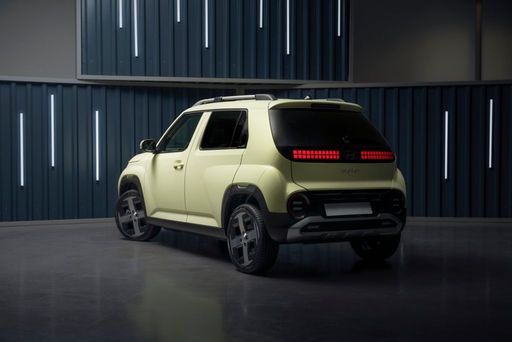
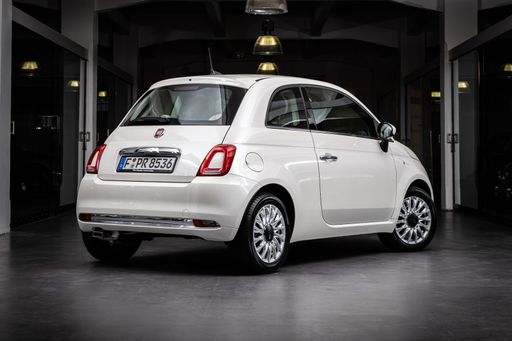
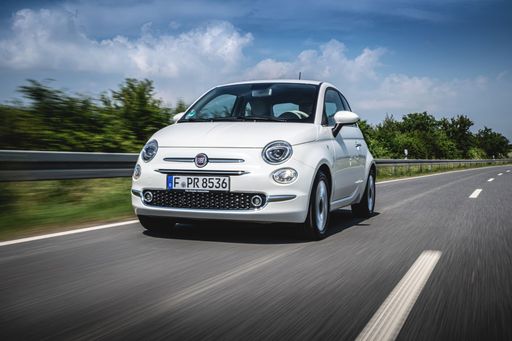
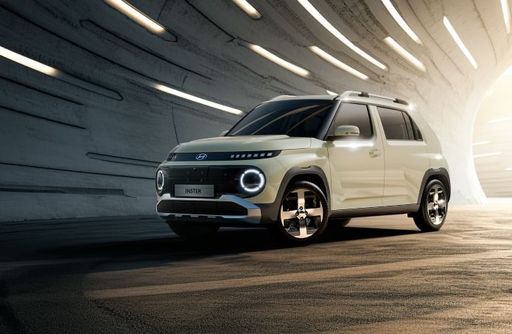
The Fiat 500 is a hatchback that encapsulates the essence of urban commuting with its compact size. Measuring 3632 mm in length, it is designed for city dwellers navigating tight spaces. The Hyundai Inster, on the other hand, boasts the robust stature of an SUV. Its length ranges from 3825 to 3845 mm, providing a larger footprint suitable for families and those needing more cargo space.

Inster

Powertrain Details

Both vehicles are powered by electric engines, but they differ in power output and efficiency. The Fiat 500 comes with two variants producing 95 to 118 HP, offering a torque of 220 Nm. In contrast, the Inster's power output varies between 97 to 115 HP, with a torque of 147 Nm. The acceleration from 0 to 100 km/h for the Fiat is exceptionally quick at 9 to 9.5 seconds, while the Inster takes between 10.6 to 11.7 seconds to reach the same speed, showcasing the Fiat's sporty edge.

500

Battery and Range Performance

Battery capacity plays a crucial role in determining the range of these electric vehicles. The Fiat 500 offers battery capacities of 21.3 to 37.3 kWh, translating to an electric range of 190 to 321 km, depending on the model. The Inster, with its larger battery sizes of 42 to 49 kWh, provides a more impressive range of 327 to 370 km. This substantial range advantage positions the Inster as a better choice for longer journeys.

Inster

Efficiency and Consumption

When it comes to energy consumption, both models exhibit impressive efficiencies. The Fiat 500 consumes between 13 to 14.7 kWh/100 km, while the Hyundai Inster ranges from 14.3 to 15.1 kWh/100 km. This indicates that both vehicles have similar energy requirements, but the Fiat 500 holds a slight edge in energy efficiency.

500

Interior and Cargo Space

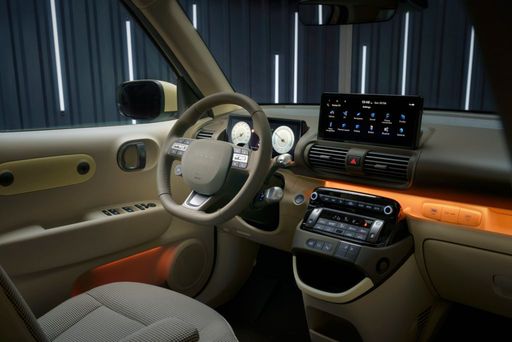
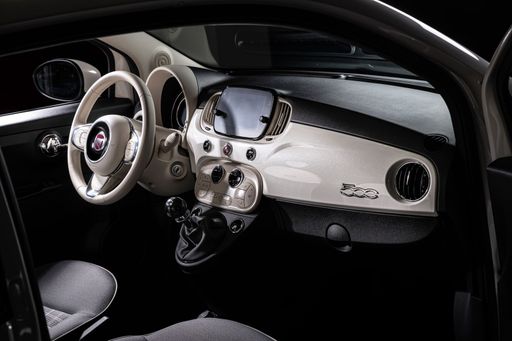
Interior comfort and cargo capacity are vital factors for potential buyers. The Fiat 500 is designed for 4 occupants and offers a trunk capacity of 185 liters. The Hyundai Inster, with its SUV classification, comfortably seats 4 and boasts a more spacious trunk capacity of 238 to 280 liters, making it better suited for families or those needing extra storage.

Design and Practicality

With its classic and stylish design, the Fiat 500 appeals to those seeking a trendy urban vehicle. In contrast, the Hyundai Inster takes a more rugged approach to design, reflecting its SUV functionality. The aesthetic choices may attract different demographics, with the Fiat appealing to style-conscious city drivers while the Inster caters to practicality-seeking families.

Environmental Impact and Efficiency Ratings

Both vehicles achieve an impressive CO2 efficiency class rating of "A," reflecting their zero-emission status. The Fiat 500 is highlighted by a curb weight of 1330 to 1440 kg, making it quite lightweight, which contributes to its nimbleness. The Inster’s curb weight ranges from 1380 to 1433 kg, offering a more substantial build synonymous with its SUV characteristics.

Conclusion: Choosing Your Ideal Electric Vehicle

In summary, both the Fiat 500 and Hyundai Inster offer compelling options in the electric vehicle market. The Fiat 500 shines with its sporty performance, urban-friendly dimensions, and energy efficiency, making it an excellent choice for city driving. Meanwhile, the Hyundai Inster presents itself as a versatile SUV with superior range and cargo space, catering to those who need practicality and comfort for family trips.

Your ultimate choice will depend on your specific needs—whether you prioritize style and agility with the Fiat 500 or practicality and range with the Hyundai Inster. Thankfully, either choice contributes positively to a sustainable future.

Here’s where it gets real: The technical differences in detail

Inster

Costs and Efficiency:

Price and efficiency are often the first things buyers look at. Here it becomes clear which model has the long-term edge – whether at the pump, the plug, or in purchase price.

Fiat 500 is somewhat cheaper – starting at 17,100 £ , while the Hyundai Inster costs 20,500 £ . That’s a price difference of around 3,351 £.

In terms of energy consumption, the Fiat 500 is a bit more efficient: consuming 13 kWh/100km compared to 14.3 kWh/100km for the Hyundai Inster. That’s a difference of about 1.3 kWh/100km.

As for electric range, the Hyundai Inster offers a bit more range – reaching up to 370 km, about 39 km more than the Fiat 500.

500

Engine and Performance:

Power, torque and acceleration are the classic benchmarks for car enthusiasts – and here, some clear differences start to show.

When it comes to engine power, the Fiat 500 offers barely more power – delivering 118 HP compared to 115 HP. That’s roughly 3 HP more horsepower.

When accelerating from 0 to 100 km/h, the Fiat 500 is a bit quicker – completing the sprint in 9 s, while the Hyundai Inster takes 10.6 s. That’s about 1.6 s quicker.

There’s also a difference in torque: the Fiat 500 delivers noticeably more torque with 220 Nm compared to 147 Nm. That’s about 73 Nm more.

Inster

Space and Everyday Use:

Beyond pure performance, interior space and usability matter most in daily life. This is where you see which car is more practical and versatile.

Both vehicles offer seating for 4 people.

In terms of curb weight, Fiat 500 is clearly lighter – 1,130 kg compared to 1,380 kg. The difference is around 250 kg.

Looking at boot space, the Hyundai Inster offers noticeably more boot space – 280 L compared to 185 L. That’s a difference of about 95 L.

When it comes to payload, the Hyundai Inster carries only slightly more – 357 kg compared to 325 kg. That’s a difference of about 32 kg.

Who wins the race in the data check?

The Fiat 500 leads convincingly in the objective data comparison.
This result only shows which model scores more points on paper – not which of the two cars feels right for you.

from £17,100
500

Fiat 500

  • Engine Type : Electric, Petrol MHEV
  • Transmission : Automatic, Manuel
  • Drive Type : Front-Wheel Drive
  • Power HP : 65 - 118 HP
  • Consumption L/100km : 5.2 - 5.3 L/100km
  • Consumption kWh/100km : 13 - 14.7 kWh/100km
  • Electric Range : 190 - 331 km
Hyundai Inster
Fiat 500

Costs and Consumption

View detailed analysis

Engine and Performance

View detailed analysis

Dimensions and Body

View detailed analysis

Hyundai Inster

The Inster has quickly captured the attention of automotive enthusiasts with its striking design and dynamic performance. This model seamlessly blends advanced technology with comfort, making it an ideal choice for both daily commutes and adventurous road trips. With its spacious interior and innovative features, the Inster promises an exhilarating driving experience that doesn’t compromise on practicality.

details

Fiat 500

The Fiat 500 is a cheeky, retro‑styled city car that turns heads with its iconic looks and playful personality. Perfect for weaving through tight streets and easing into tiny parking spots, it’s aimed at buyers who want style and character more than grand touring prowess.

details
Hyundai Inster
Fiat 500

Costs and Consumption

Price
20,500 - 25,800 £
Price
17,100 - 27,400 £
Consumption L/100km
-
Consumption L/100km
5.2 - 5.3 L/100km
Consumption kWh/100km
14.3 - 15.1 kWh/100km
Consumption kWh/100km
13 - 14.7 kWh/100km
Electric Range
327 - 370 km
Electric Range
190 - 331 km
Battery Capacity
-
Battery Capacity
-
co2
0 g/km
co2
0 - 121 g/km
Fuel tank capacity
-
Fuel tank capacity
-

Dimensions and Body

Body Type
SUV
Body Type
Hatchback
Seats
4
Seats
4
Doors
-
Doors
-
Curb weight
1,380 - 1,433 kg
Curb weight
1,130 - 1,475 kg
Trunk capacity
238 - 280 L
Trunk capacity
183 - 185 L
Length
-
Length
-
Width
1,610 mm
Width
1,683 - 1,684 mm
Height
-
Height
-
Max trunk capacity
-
Max trunk capacity
-
Payload
317 - 357 kg
Payload
250 - 325 kg

Engine and Performance

Engine Type
Electric
Engine Type
Electric, Petrol MHEV
Transmission
Automatic
Transmission
Automatic, Manuel
Transmission Detail
Reduction Gearbox
Transmission Detail
Reduction Gearbox, Manual Gearbox
Drive Type
Front-Wheel Drive
Drive Type
Front-Wheel Drive
Power HP
97 - 115 HP
Power HP
65 - 118 HP
Acceleration 0-100km/h
10.6 - 11.7 s
Acceleration 0-100km/h
9 - 16.2 s
Max Speed
-
Max Speed
-
Torque
147 Nm
Torque
92 - 220 Nm
Number of Cylinders
-
Number of Cylinders
3
Power kW
71 - 85 kW
Power kW
48 - 87 kW
Engine capacity
-
Engine capacity
999 cm3

General

Model Year
2025
Model Year
2025
CO2 Efficiency Class
A
CO2 Efficiency Class
A, D
Brand
Hyundai
Brand
Fiat
DriveDuel uses data analysis and artificial intelligence to evaluate vehicle data and create content. Content is regularly reviewed and improved. The displayed prices are estimates based on German list prices, adjusted to the respective country’s VAT. Country-specific registration taxes are not included. This information is not legally binding.