VS

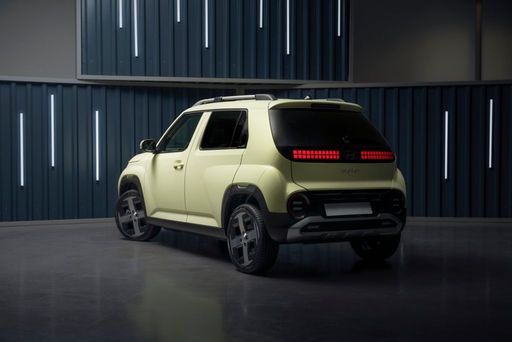
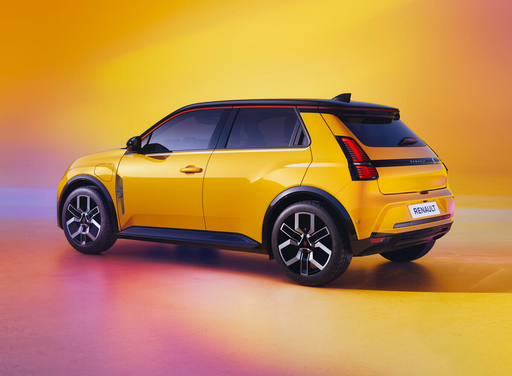
Hyundai Inster vs Renault R5 comparison

Compare performance (115 HP vs 540 HP), boot space and price (20,500 £ vs 23,900 £ ) at a glance. Find out which car is the better choice for you – Hyundai Inster or Renault R5?

Hyundai Inster vs Renault R5: Key differences

Hyundai Inster

5 (1 Reviews)
rate
  • moderately cheaper
  • only slightly more efficient
  • marginally lighter
details

Renault R5

5 (1 Reviews)
rate
  • substantially more power
  • marginally more electric range
  • substantially quicker 0–100 km/h
  • slightly more trunk space
details

All details on performance, efficiency, range and trunk space can be found in the technical comparison below – including user reviews for both models.

By Achim Sedelmaier

Inster

In today's automotive landscape, electric vehicles (EVs) are at the forefront of innovation, with numerous manufacturers vying for the attention of environmentally conscious consumers. Among the noteworthy entrants in this segment are the Renault R5 and the Hyundai Inster. This article delves into a comparative analysis of these two electric vehicles, focusing on their technical specifications, innovations, and overall performance in the rapidly evolving market.
R5

Design and Dimensions

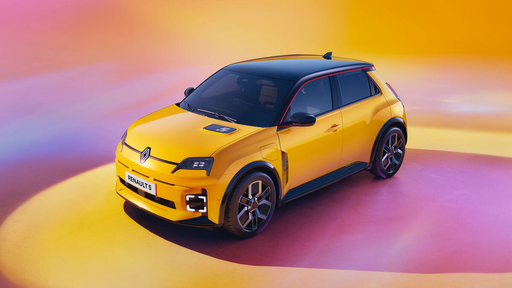
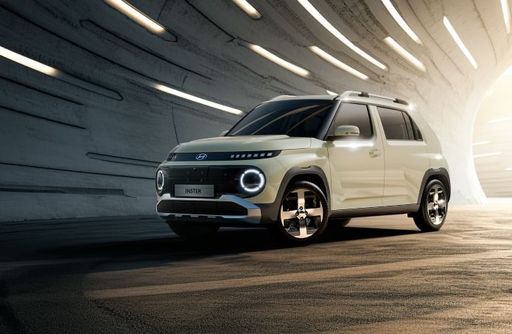
The Renault R5, a hatchback, boasts a compact design with a length of 3922 mm, width of 1744 mm, and height of 1498 mm. This makes it a suitable choice for urban environments, where maneuverability is key. In contrast, the Hyundai Inster takes on the SUV form factor, measuring between 3825 mm and 3845 mm in length, 1610 mm in width, and a height ranging from 1575 mm to 1610 mm. This gives the Inster a more commanding road presence and extra cabin height, beneficial for passenger comfort.

Inster

Engine and Performance

Both models are powered by electric motors, but their performance outputs differ. The Renault R5 offers a range of power options from 95 HP to 150 HP, with an impressive torque output of up to 245 Nm. The vehicle accelerates from 0-100 km/h in as little as 8 seconds, making it sprightly for city driving.

The Hyundai Inster, on the other hand, provides two power variants of 97 HP and 115 HP, with a torque of 147 Nm. Its acceleration is slower compared to the R5, taking up to 11.7 seconds to reach the same speed. While the Inster's performance may not match the R5, its top speed can reach 150 km/h, similar to the R5, demonstrating that both cars are capable of highway speeds.

R5

Battery and Range

Range anxiety is a common concern among EV owners, and here the Renault R5 shines. It offers an electric range between 300 km and 405 km, depending on configuration. This is facilitated by a battery capacity of 40 kWh, allowing for efficient energy consumption of 14.8 kWh/100 km.

The Hyundai Inster presents a competitive offering with its electric range spanning from 327 km to 370 km, supported by a larger battery capacity that goes up to 49 kWh. However, its energy consumption is slightly higher, with estimates ranging from 14.3 kWh to 15.1 kWh/100 km, potentially affecting long-distance journeys.

Inster

Interior and Capacity

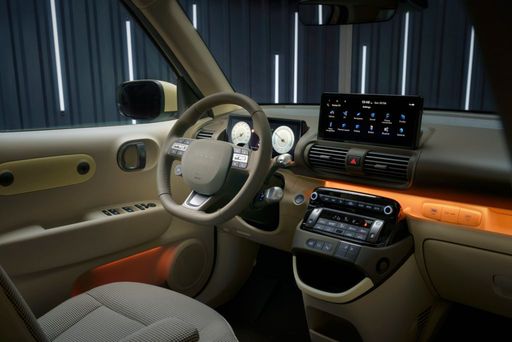
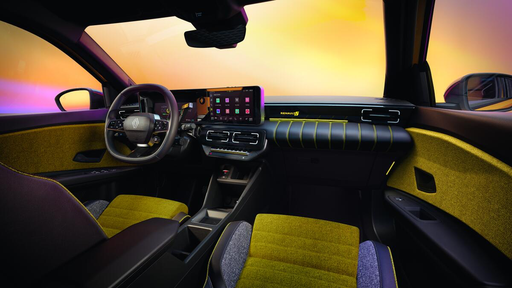
When it comes to seating, the Renault R5 accommodates five passengers comfortably. Its interior focuses on utility with a trunk capacity of 326 liters. The Hyundai Inster seats four, and the trunk capacity varies between 238 liters and 280 liters, suitable for short trips and daily commuting but may limit cargo space for longer adventures.

R5

Innovation and Technology

Each model incorporates modern technological features aimed at enhancing the driving experience. The Renault R5 emphasizes a user-friendly interface that integrates smart connectivity options, while the Hyundai Inster focuses on a fusion of safety technology and driver assist features, ensuring a secure and enjoyable ride.

Conclusion

In conclusion, the Renault R5 and Hyundai Inster each present compelling cases for those interested in electric mobility. The R5 stands out with its impressive range, power options, and spirited performance, while the Inster appeals to those looking for the SUV experience, combining practicality with advanced technology. Ultimately, the choice between these models will depend on personal preferences regarding space, performance, and intended use.

Here’s where it gets real: The technical differences in detail

Inster

Costs and Efficiency:

Price and efficiency are key factors when choosing a car – and this is often where the real differences emerge.

Hyundai Inster is moderately cheaper – starting at 20,500 £ , while the Renault R5 costs 23,900 £ . That’s a price difference of around 3,429 £.

In terms of energy consumption, the Hyundai Inster is only slightly more efficient: consuming 14.3 kWh/100km compared to 14.8 kWh/100km for the Renault R5. That’s a difference of about 0.5 kWh/100km.

As for electric range, the Renault R5 offers marginally more range – reaching up to 405 km, about 35 km more than the Hyundai Inster.

R5

Engine and Performance:

Power, torque and acceleration say a lot about how a car feels on the road. This is where you see which model delivers more driving dynamics.

When it comes to engine power, the Renault R5 offers substantially more power – delivering 540 HP compared to 115 HP. That’s roughly 425 HP more horsepower.

When accelerating from 0 to 100 km/h, the Renault R5 is substantially quicker – completing the sprint in 3.5 s, while the Hyundai Inster takes 10.6 s. That’s about 7.1 s quicker.

There’s also a difference in torque: the Renault R5 delivers considerably more torque with 4,800 Nm compared to 147 Nm. That’s about 4,653 Nm more.

Inster

Space and Everyday Use:

Whether family car or daily driver – which one offers more room, flexibility and comfort?

Seats: Renault R5 offers more seats – 5 vs 4.

In terms of curb weight, Hyundai Inster is marginally lighter – 1,380 kg compared to 1,447 kg. The difference is around 67 kg.

Looking at boot space, the Renault R5 offers slightly more boot space – 326 L compared to 280 L. That’s a difference of about 46 L.

When it comes to payload, the Renault R5 carries moderately more – 418 kg compared to 357 kg. That’s a difference of about 61 kg.

Who wins the race in the data check?

The Renault R5 holds a decisive overall lead in the objective data comparison.
This result only shows which model scores more points on paper – not which of the two cars feels right for you.

from £23,900
R5

Renault R5

  • Engine Type : Electric
  • Transmission : Automatic
  • Drive Type : Front-Wheel Drive, Rear-Wheel Drive
  • Power HP : 122 - 540 HP
  • Consumption kWh/100km : 14.8 - 15.2 kWh/100km
  • Electric Range : 307 - 405 km
Hyundai Inster
Renault R5

Costs and Consumption

View detailed analysis

Engine and Performance

View detailed analysis

Dimensions and Body

View detailed analysis

Hyundai Inster

The Inster has quickly captured the attention of automotive enthusiasts with its striking design and dynamic performance. This model seamlessly blends advanced technology with comfort, making it an ideal choice for both daily commutes and adventurous road trips. With its spacious interior and innovative features, the Inster promises an exhilarating driving experience that doesn’t compromise on practicality.

details

Renault R5

The Renault 5 is a cheeky city car that marries retro charm with modern flair, its playful looks promising smiles before you even start the engine. Practical enough for daily life yet lively enough to make short trips feel like mini adventures, it’s an irresistible choice for buyers who prefer personality to bland practicality.

details
Hyundai Inster
Renault R5

Costs and Consumption

Price
20,500 - 25,800 £
Price
23,900 - 137,100 £
Consumption L/100km
-
Consumption L/100km
-
Consumption kWh/100km
14.3 - 15.1 kWh/100km
Consumption kWh/100km
14.8 - 15.2 kWh/100km
Electric Range
327 - 370 km
Electric Range
307 - 405 km
Battery Capacity
-
Battery Capacity
40 - 52 kWh
co2
0 g/km
co2
0 g/km
Fuel tank capacity
-
Fuel tank capacity
-

Dimensions and Body

Body Type
SUV
Body Type
Hatchback
Seats
4
Seats
2 - 5
Doors
-
Doors
3 - 5
Curb weight
1,380 - 1,433 kg
Curb weight
1,447 - 1,524 kg
Trunk capacity
238 - 280 L
Trunk capacity
326 L
Length
-
Length
3,922 - 4,080 mm
Width
1,610 mm
Width
1,744 - 2,030 mm
Height
-
Height
1,380 - 1,498 mm
Max trunk capacity
-
Max trunk capacity
1,106 L
Payload
317 - 357 kg
Payload
396 - 418 kg

Engine and Performance

Engine Type
Electric
Engine Type
Electric
Transmission
Automatic
Transmission
Automatic
Transmission Detail
Reduction Gearbox
Transmission Detail
Reduction Gearbox
Drive Type
Front-Wheel Drive
Drive Type
Front-Wheel Drive, Rear-Wheel Drive
Power HP
97 - 115 HP
Power HP
122 - 540 HP
Acceleration 0-100km/h
10.6 - 11.7 s
Acceleration 0-100km/h
3.5 - 9 s
Max Speed
-
Max Speed
150 - 270 km/h
Torque
147 Nm
Torque
225 - 4,800 Nm
Number of Cylinders
-
Number of Cylinders
-
Power kW
71 - 85 kW
Power kW
90 - 397 kW
Engine capacity
-
Engine capacity
-

General

Model Year
2025
Model Year
2,025 - 2,027
CO2 Efficiency Class
A
CO2 Efficiency Class
A
Brand
Hyundai
Brand
Renault
DriveDuel uses data analysis and artificial intelligence to evaluate vehicle data and create content. Content is regularly reviewed and improved. The displayed prices are estimates based on German list prices, adjusted to the respective country’s VAT. Country-specific registration taxes are not included. This information is not legally binding.