VS

Hyundai IONIQ 6 vs BYD Seal comparison

Compare performance (650 HP vs 530 HP), boot space and price (39,000 £ vs 40,300 £ ) at a glance. Find out which car is the better choice for you – Hyundai IONIQ 6 or BYD Seal?

Hyundai IONIQ 6 vs BYD Seal: Key differences

Hyundai IONIQ 6

4.6 (1 Reviews)
rate
  • marginally cheaper
  • slightly more power
  • somewhat more efficient
  • slightly more electric range
  • somewhat quicker 0–100 km/h
  • only slightly lighter
  • very slightly more trunk space

BYD Seal

IONIQ 6

Electric Elegance: BYD Seal vs Hyundai IONIQ 6

As the electric vehicle market continues to surge forward, two models standing out in the crowd are the BYD Seal and the Hyundai IONIQ 6. Each brings its blend of technology, design, and performance to the forefront, offering consumers a tough choice between two distinguished worlds of electric prowess. Let's dive into a detailed comparison of these two innovative vehicles.

Seal

Power and Performance

The BYD Seal offers impressive performance capabilities with its dual motor variants. The all-wheel-drive top model delivers a roaring 530 HP, enabling an exhilarating acceleration from 0-100 km/h in just 3.8 seconds. Meanwhile, a slightly toned-down rear-wheel-drive option delivers 313 HP. The Seal promises a responsive driving experience with a maximum torque of up to 670 Nm, allowing for dynamic maneuvers and smooth cruising.

Conversely, the Hyundai IONIQ 6 offers a range of power options, with the top all-wheel-drive variant generating 325 HP and accelerating from 0-100 km/h in 5.1 seconds. While slightly less powerful than the Seal, the IONIQ 6 offers a versatile drive with torque maxing out at 605 Nm. It is built for efficiency with a focus on delivering a smooth, comfortable ride.

IONIQ 6

Efficiency and Range

In terms of efficiency, the IONIQ 6 sets a standard of its own with an impressive consumption as low as 13.9 kWh/100 km and can travel up to 614 km on a single charge in its optimal configuration. This makes it one of the most efficient options for long-distance electric travel.

The BYD Seal, on the other hand, offers a slightly higher consumption ranging from 16.6 to 18.2 kWh/100 km but compensates with a substantial range of up to 570 km, ensuring it rivals competitors in long-haul capabilities. This makes it a suitable choice for those prioritizing powerful performance alongside significant range.

Seal

Design and Comfort

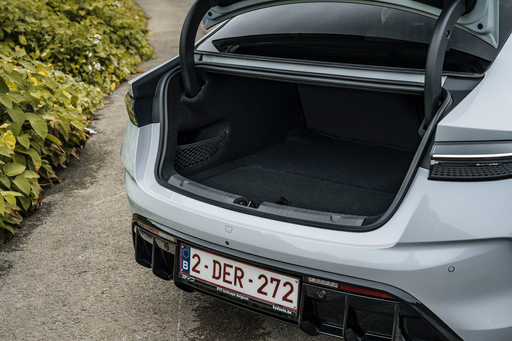
Both vehicles provide a comfortable and stylish environment within a practical package. The BYD Seal, with dimensions of 4800 mm in length, 1875 mm in width, and 1460 mm in height, presents a sleek sedan silhouette. Its trunk capacity stands at a practical 400 liters, sufficient to accommodate day-to-day needs.

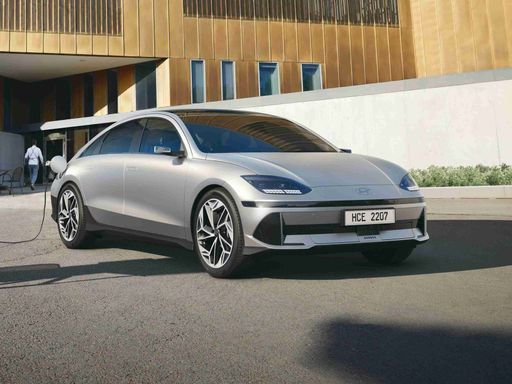
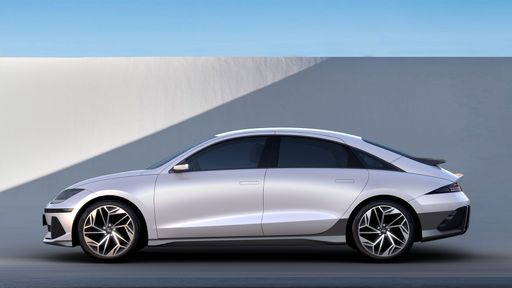
The Hyundai IONIQ 6, characterized as a hatchback, is slightly longer at 4855 mm with a width of 1880 mm and a height of 1495 mm. Its almost identical trunk capacity of 401 liters aligns it closely with the Seal in terms of utility. Both cars offer a seating capacity of five, ensuring plenty of space and comfort for passengers.

IONIQ 6

Sustainability and Conclusion

Both models rank high in sustainability with a CO2 efficiency classification of 'A', operating purely on electric power without any emissions, thereby contributing positively to a greener future.

Ultimately, the choice between the BYD Seal and Hyundai IONIQ 6 hinges on personal preferences. The Seal offers extraordinary power and striking performance, while the IONIQ 6 shines with its remarkable efficiency and slightly better range. Both vehicles, however, are outstanding choices in the world of electric driving, pushing boundaries and setting new standards in the automotive industry.

So, whether speed and power or efficiency and range are at the top of your list, both the BYD Seal and Hyundai IONIQ 6 deliver, offering a glimpse into the flexible and innovative future of automotive travel.

Here’s where it gets real: The technical differences in detail

IONIQ 6

Costs and Efficiency:

When it comes to price and running costs, the biggest differences usually appear. This is often where you see which car fits your budget better in the long run.

Hyundai IONIQ 6 is marginally cheaper – starting at 39,000 £ , while the BYD Seal costs 40,300 £ . That’s a price difference of around 1,235 £.

In terms of energy consumption, the Hyundai IONIQ 6 is somewhat more efficient: consuming 13.4 kWh/100km compared to 15.4 kWh/100km for the BYD Seal. That’s a difference of about 2 kWh/100km.

As for electric range, the Hyundai IONIQ 6 offers slightly more range – reaching up to 680 km, about 110 km more than the BYD Seal.

Seal

Engine and Performance:

Under the bonnet, it becomes clear which model is tuned for sportiness and which one takes the lead when you hit the accelerator.

When it comes to engine power, the Hyundai IONIQ 6 offers slightly more power – delivering 650 HP compared to 530 HP. That’s roughly 120 HP more horsepower.

When accelerating from 0 to 100 km/h, the Hyundai IONIQ 6 is somewhat quicker – completing the sprint in 3.2 s, while the BYD Seal takes 3.8 s. That’s about 0.6 s quicker.

There’s also a difference in torque: the Hyundai IONIQ 6 delivers slightly more torque with 770 Nm compared to 670 Nm. That’s about 100 Nm more.

IONIQ 6

Space and Everyday Use:

Cabin size, boot volume and payload all play a role in everyday practicality. Here, comfort and flexibility make the difference.

Both vehicles offer seating for 5 people.

In terms of curb weight, Hyundai IONIQ 6 is only slightly lighter – 1,892 kg compared to 1,907 kg. The difference is around 15 kg.

Looking at boot space, the Hyundai IONIQ 6 offers very slightly more boot space – 401 L compared to 400 L. That’s a difference of about 1 L.

When it comes to payload, the BYD Seal carries only slightly more – 473 kg compared to 438 kg. That’s a difference of about 35 kg.

Who wins the race in the data check?

The Hyundai IONIQ 6 is decisively ahead in the objective data comparison.
This result only shows which model scores more points on paper – not which of the two cars feels right for you.

from £39,000
IONIQ 6

Hyundai IONIQ 6

  • Engine Type : Electric
  • Transmission : Automatic
  • Drive Type : All-Wheel Drive, Rear-Wheel Drive
  • Power HP : 170 - 650 HP
  • Consumption kWh/100km : 13.4 - 15.9 kWh/100km
  • Electric Range : 469 - 680 km
Hyundai IONIQ 6
BYD Seal

Costs and Consumption

View detailed analysis

Engine and Performance

View detailed analysis

Dimensions and Body

View detailed analysis

Hyundai IONIQ 6

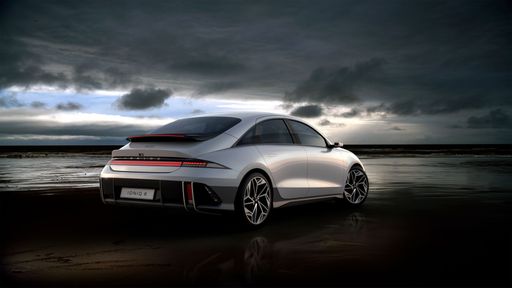
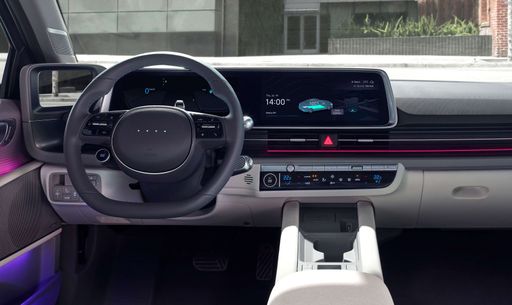
The Hyundai IONIQ 6 glides down the road with a poise that feels more runway model than commuter car, its sleek silhouette promising efficiency without trying too hard. Inside, a calm, minimalist cabin packed with clever, usable tech makes it a compelling choice for buyers who want electric motoring that's smart, stylish and quietly practical.

details

BYD Seal

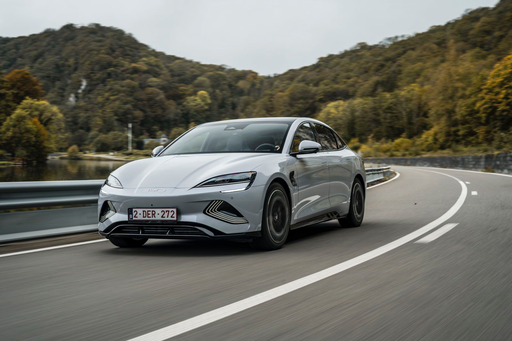
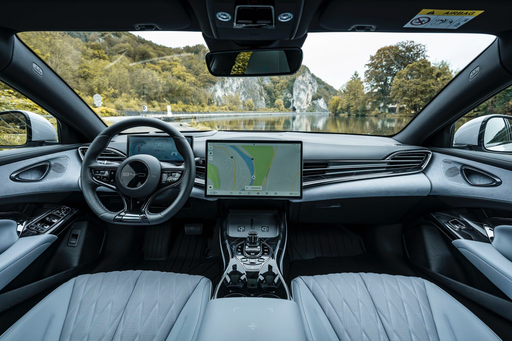
The BYD Seal is a sleek electric fastback that punches above its class with sporty looks and a surprisingly premium cabin, offering a very modern alternative for buyers who want style and substance without the badge snobbery. On the road it feels composed and eager, packed with tech and everyday practicality—ideal for shoppers after eco-friendly performance with a cheeky wink.

details
Hyundai IONIQ 6
BYD Seal

Costs and Consumption

Price
39,000 - 64,300 £
Price
40,300 - 45,400 £
Consumption L/100km
-
Consumption L/100km
-
Consumption kWh/100km
13.4 - 15.9 kWh/100km
Consumption kWh/100km
15.4 - 18.2 kWh/100km
Electric Range
469 - 680 km
Electric Range
460 - 570 km
Battery Capacity
-
Battery Capacity
-
co2
0 g/km
co2
0 g/km
Fuel tank capacity
-
Fuel tank capacity
-

Dimensions and Body

Body Type
Hatchback
Body Type
Sedan
Seats
5
Seats
5
Doors
-
Doors
4
Curb weight
1,892 - 2,134 kg
Curb weight
1,907 - 2,185 kg
Trunk capacity
401 L
Trunk capacity
400 L
Length
-
Length
4,800 mm
Width
1,880 - 1,940 mm
Width
1,875 mm
Height
-
Height
1,460 mm
Max trunk capacity
-
Max trunk capacity
-
Payload
386 - 438 kg
Payload
446 - 473 kg

Engine and Performance

Engine Type
Electric
Engine Type
Electric
Transmission
Automatic
Transmission
Automatic
Transmission Detail
Reduction Gearbox
Transmission Detail
Reduction Gearbox
Drive Type
All-Wheel Drive, Rear-Wheel Drive
Drive Type
Rear-Wheel Drive, All-Wheel Drive
Power HP
170 - 650 HP
Power HP
231 - 530 HP
Acceleration 0-100km/h
3.2 - 8.3 s
Acceleration 0-100km/h
3.8 - 7.5 s
Max Speed
-
Max Speed
180 km/h
Torque
350 - 770 Nm
Torque
360 - 670 Nm
Number of Cylinders
-
Number of Cylinders
-
Power kW
125 - 478 kW
Power kW
170 - 390 kW
Engine capacity
-
Engine capacity
-

General

Model Year
2,026
Model Year
2,023 - 2,025
CO2 Efficiency Class
A
CO2 Efficiency Class
A
Brand
Hyundai
Brand
BYD
DriveDuel uses data analysis and artificial intelligence to evaluate vehicle data and create content. Content is regularly reviewed and improved. The displayed prices are estimates based on German list prices, adjusted to the respective country’s VAT. Country-specific registration taxes are not included. This information is not legally binding.