
 Deutschland
 France
 Nederland
 Great Britain
 Sverige
 Norge
Norge Danmark
 Suomi
Suomi Italia
 Polska
 España
VS
Hyundai IONIQ 6 vs MG MG4 - Differences and prices compared
Compare performance (650 HP vs 204 HP), boot space and price (37600 £ vs 30500 £) at a glance. Find out which car is the better choice for you – Hyundai IONIQ 6 or MG MG4?
IONIQ 6
Costs and Efficiency:
When it comes to price and running costs, the biggest differences usually appear. This is often where you see which car fits your budget better in the long run.
MG MG4 has a evident advantage in terms of price – it starts at 30500 £, while the Hyundai IONIQ 6 costs 37600 £. That’s a price difference of around 7080 £.
In terms of energy consumption, the advantage goes to the Hyundai IONIQ 6: with 13.90 kWh per 100 km, it’s somewhat more efficient than the MG MG4 with 16.40 kWh. That’s a difference of about 2.50 kWh.
As for range, the Hyundai IONIQ 6 performs noticeable better – achieving up to 614 km, about 164 km more than the MG MG4.
MG4
Engine and Performance:
Under the bonnet, it becomes clear which model is tuned for sportiness and which one takes the lead when you hit the accelerator.
When it comes to engine power, the Hyundai IONIQ 6 has a significantly edge – offering 650 HP compared to 204 HP. That’s roughly 446 HP more horsepower.
In acceleration from 0 to 100 km/h, the Hyundai IONIQ 6 is decisively quicker – completing the sprint in 3.20 s, while the MG MG4 takes 7.10 s. That’s about 3.90 s faster.
In terms of top speed, the Hyundai IONIQ 6 performs clearly perceptible better – reaching 257 km/h, while the MG MG4 tops out at 160 km/h. The difference is around 97 km/h.
There’s also a difference in torque: Hyundai IONIQ 6 pulls significantly stronger with 770 Nm compared to 250 Nm. That’s about 520 Nm difference.
Ad · Affiliate
As an Amazon Associate, we earn from qualifying purchases.
IONIQ 6
Space and Everyday Use:
Whether family car or daily driver – which one offers more room, flexibility and comfort?
Both vehicles offer seating for 5 people.
In curb weight, MG MG4 is somewhat lighter – 1635 kg compared to 1850 kg. The difference is around 215 kg.
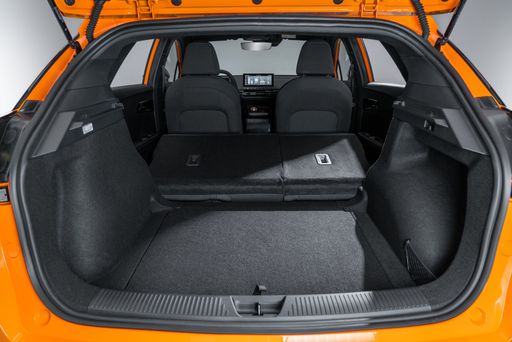
In terms of boot space, the Hyundai IONIQ 6 offers minimal more room – 401 L compared to 363 L. That’s a difference of about 38 L.
When it comes to payload, MG MG4 minimal takes the win – 449 kg compared to 430 kg. That’s a difference of about 19 kg.
Who comes out on top?
Overall, the Hyundai IONIQ 6 shows itself to be leaves the rival little chance and secures the title of DriveDuel Champion.
It convinces with the more balanced overall package and proves to be the more versatile choice for everyday use.
from about £37,600
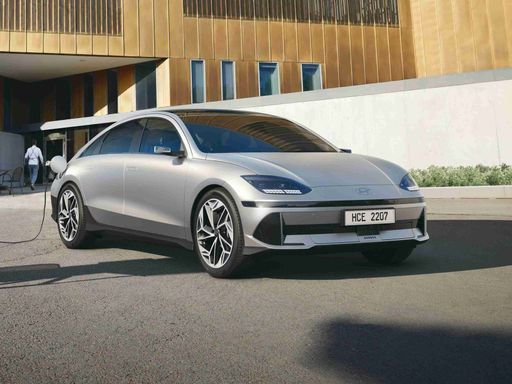
Hyundai IONIQ 6
Hyundai IONIQ 6
MG MG4
Costs and Consumption
View detailed analysis
View detailed analysis
Engine and Performance
View detailed analysis
View detailed analysis
Dimensions and Body
View detailed analysis
View detailed analysis
Hyundai IONIQ 6
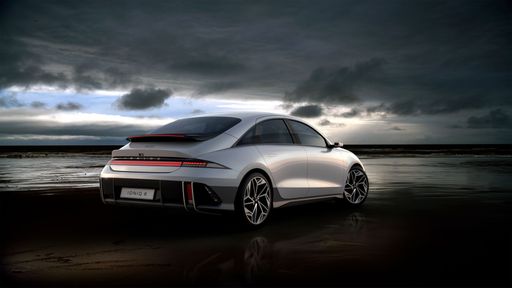
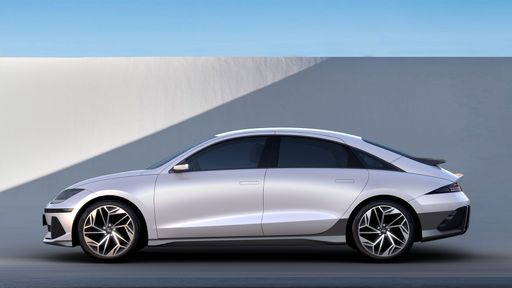
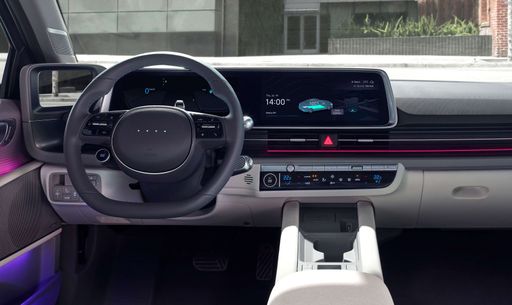
The Hyundai IONIQ 6 glides down the road with a poise that feels more runway model than commuter car, its sleek silhouette promising efficiency without trying too hard. Inside, a calm, minimalist cabin packed with clever, usable tech makes it a compelling choice for buyers who want electric motoring that's smart, stylish and quietly practical.
details
MG MG4
5 (1 Reviews)
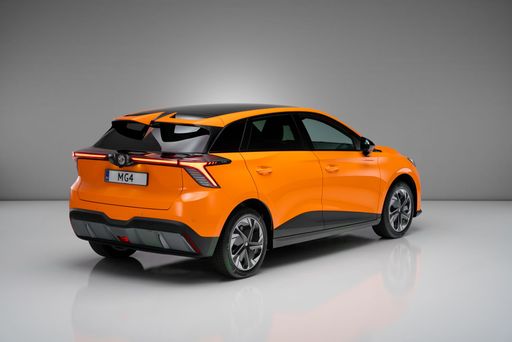
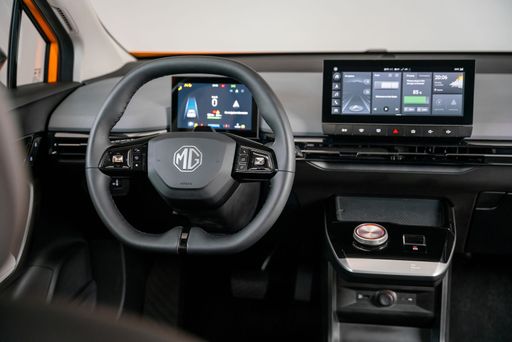
The MG4 is a sprightly electric hatch that marries bold, modern looks with genuinely useful practicality, making it a great everyday companion for city and weekend life alike. Inside it surprises with a smart, user-friendly cabin and an engaging drive that delivers more personality than you might expect for the price.
details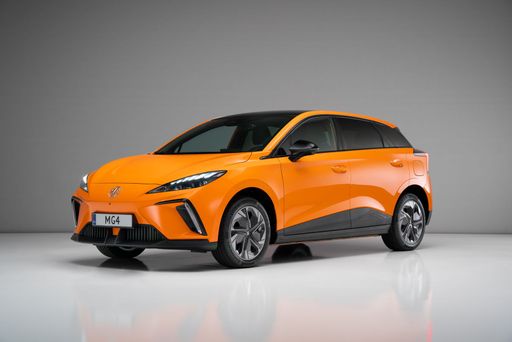
Hyundai IONIQ 6
MG MG4
Costs and Consumption |
|
|---|---|
|
Price
37600 - 64300 £
|
Price
30500 - 36500 £
|
|
Consumption L/100km
-
|
Consumption L/100km
-
|
|
Consumption kWh/100km
13.9 - 15.1 kWh
|
Consumption kWh/100km
16.4 - 17 kWh
|
|
Electric Range
429 - 614 km
|
Electric Range
330 - 450 km
|
|
Battery Capacity
53 - 84 kWh
|
Battery Capacity
49 - 61.7 kWh
|
|
co2
0 g/km
|
co2
0 g/km
|
|
Fuel tank capacity
-
|
Fuel tank capacity
-
|
Dimensions and Body |
|
|---|---|
|
Body Type
Hatchback
|
Body Type
Hatchback
|
|
Seats
5
|
Seats
5
|
|
Doors
4
|
Doors
5
|
|
Curb weight
1850 - 2095 kg
|
Curb weight
1635 - 1695 kg
|
|
Trunk capacity
401 L
|
Trunk capacity
350 - 363 L
|
|
Length
4855 - 4935 mm
|
Length
4287 mm
|
|
Width
1880 - 1940 mm
|
Width
1836 mm
|
|
Height
1495 mm
|
Height
1504 - 1516 mm
|
|
Max trunk capacity
-
|
Max trunk capacity
1165 - 1765 L
|
|
Payload
425 - 430 kg
|
Payload
389 - 449 kg
|
Engine and Performance |
|
|---|---|
|
Engine Type
Electric
|
Engine Type
Electric
|
|
Transmission
Automatic
|
Transmission
Automatic
|
|
Transmission Detail
Reduction Gearbox
|
Transmission Detail
Reduction Gearbox
|
|
Drive Type
Rear-Wheel Drive, All-Wheel Drive
|
Drive Type
Rear-Wheel Drive
|
|
Power HP
151 - 650 HP
|
Power HP
170 - 204 HP
|
|
Acceleration 0-100km/h
3.2 - 8.8 s
|
Acceleration 0-100km/h
7.1 - 7.6 s
|
|
Max Speed
185 - 257 km/h
|
Max Speed
160 km/h
|
|
Torque
350 - 770 Nm
|
Torque
250 Nm
|
|
Number of Cylinders
-
|
Number of Cylinders
-
|
|
Power kW
111 - 478 kW
|
Power kW
125 - 150 kW
|
|
Engine capacity
-
|
Engine capacity
-
|
General |
|
|---|---|
|
Model Year
2022 - 2025
|
Model Year
2025
|
|
CO2 Efficiency Class
A
|
CO2 Efficiency Class
A
|
|
Brand
Hyundai
|
Brand
MG
|
What drive types are available for the Hyundai IONIQ 6?
Available configurations include Rear-Wheel Drive or All-Wheel Drive.
The prices and data displayed are estimates based on German list prices and may vary by country. This information is not legally binding.