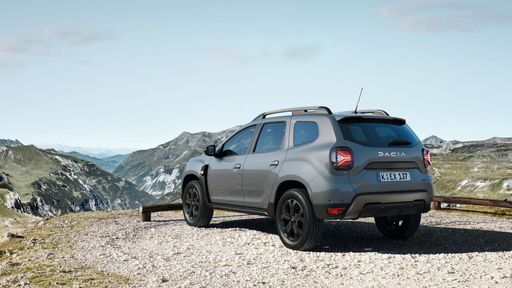
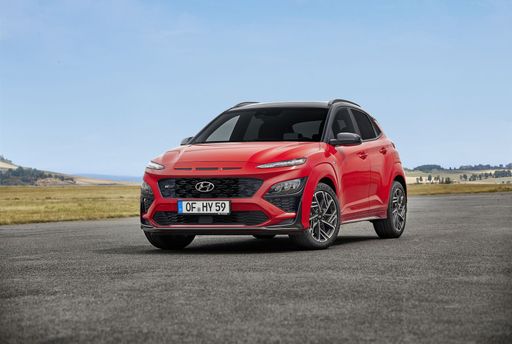
VS

Hyundai Kona vs Dacia Duster comparison

Compare performance (204 HP vs 158 HP), boot space and price (23,600 £ vs 16,300 £ ) at a glance. Find out which car is the better choice for you – Hyundai Kona or Dacia Duster?

Hyundai Kona vs Dacia Duster: Key differences

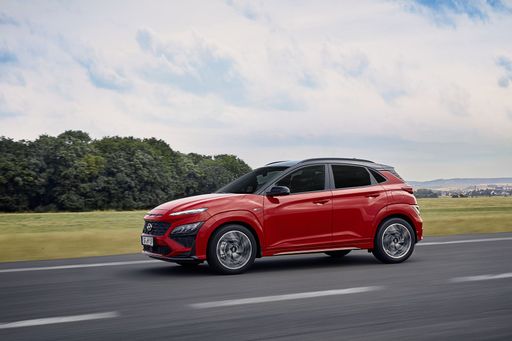
Hyundai Kona

4.6 (10 Reviews)
rate
  • markedly more power
  • barely more efficient
  • moderately quicker 0–100 km/h
  • marginally lighter
details

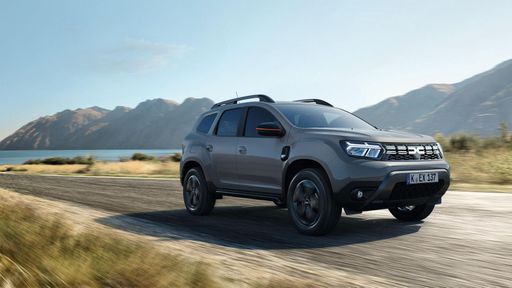
Dacia Duster

4.6 (5 Reviews)
rate
  • substantially cheaper
  • only slightly more trunk space
details

All details on performance, efficiency, range and trunk space can be found in the technical comparison below – including user reviews for both models.

By Achim Sedelmaier

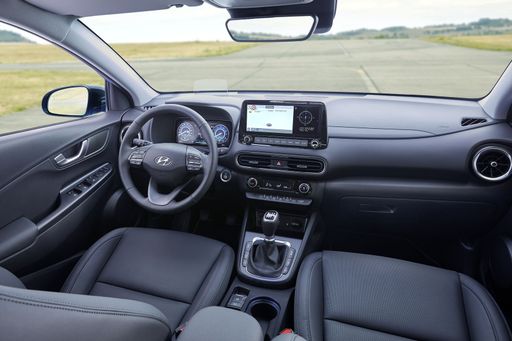
Kona

Exploring Compact SUV Excellence: Dacia Duster vs. Hyundai Kona

In the bustling compact SUV segment, the Dacia Duster and Hyundai Kona continue to capture the attention of enthusiasts and practical drivers alike. Both of these 2024 models offer a blend of innovation, efficiency, and style, making them compelling choices for anyone considering a vehicle in this category. Let’s delve into the specifics to see how they stack up against each other.
Duster

Engine Variants and Performance

The Dacia Duster offers a variety of engine options, including LPG, full hybrid, and petrol MHEV configurations. With a power output ranging from 91 to 140 HP, the Duster provides front-wheel and all-wheel drive capabilities, making it versatile for different driving needs. Its acceleration performance, from 0 to 100 km/h, varies between 9.9 to 14 seconds depending on the engine choice.

On the other hand, the Hyundai Kona presents a broader range of powertrains, including petrol, full hybrid, and electric options. Its power output spans from 100 to 218 HP, offering slightly more power at the top end. The Kona's electric variant boasts impressive ranges, reaching up to 514 km. Acceleration for the Kona is competitive, with the quickest model sprinting from 0 to 100 km/h in just 7.8 seconds.

Kona

Fuel Efficiency

Efficiency is crucial for modern SUVs, and both models excel here. The Dacia Duster's fuel consumption ranges from 5 to 8.1 L/100 km, with CO2 emissions between 114 and 147 g/km. These figures ensure cost-effective and eco-friendly drives, aligning with stricter global emissions standards.

The Hyundai Kona shows remarkable efficiency, especially with its hybrid model consuming just 4.5 L/100 km. The electric Kona is even more impressive with zero emissions and energy consumption from 14.6 to 16.8 kWh/100 km.

Duster

Interior Space and Comfort

Both SUVs accommodate up to five passengers, with thoughtful design enhancing comfort. The Dacia Duster offers a trunk capacity ranging from 430 to 517 liters, accommodating various storage needs without compromising passenger space. Its dimensions of 4343 mm in length, 1813 mm in width, and up to 1661 mm in height make it a spacious contender.

The Hyundai Kona, slightly larger, offers a trunk capacity of 466 liters. Measuring up to 4385 mm in length, 1825 mm in width, and 1585 mm in height, it provides adequate room for both passengers and cargo, making long journeys more comfortable.

Kona

Technology and Innovations

Technology is a notable strength for both models. The Duster incorporates an automated manual transmission, bringing a seamless driving experience while maintaining efficiency. Meanwhile, the Kona impresses with its dual-clutch automatic and reduction gearbox options, providing smooth and responsive gear shifts for an optimal driving experience.

The Kona’s electric variant also highlights Hyundai’s commitment to innovation, with comprehensive battery options of 48.4 and 65.4 kWh, supporting substantial driving ranges suitable for both urban and long-distance commutes.

Duster

Conclusion

Choosing between the Dacia Duster and Hyundai Kona largely depends on individual priorities, whether it’s the rugged versatility and new hybrid option of the Duster or the technology-forward and varied powertrain offerings of the Kona. Both models have adjusted brilliantly to the demands of the modern consumer, providing environmentally friendly, cost-efficient solutions without sacrificing comfort or performance.

Here’s where it gets real: The technical differences in detail

Kona

Costs and Efficiency:

Price and efficiency are often the first things buyers look at. Here it becomes clear which model has the long-term edge – whether at the pump, the plug, or in purchase price.

Dacia Duster is substantially cheaper – starting at 16,300 £ , while the Hyundai Kona costs 23,600 £ . That’s a price difference of around 7,294 £.

Fuel consumption also shows a difference: the Hyundai Kona uses 4.6 L/100km and is barely more efficient than the Dacia Duster with 4.7 L/100km. The difference is about 0.1 L/100km.

Duster

Engine and Performance:

Power, torque and acceleration say a lot about how a car feels on the road. This is where you see which model delivers more driving dynamics.

When it comes to engine power, the Hyundai Kona offers markedly more power – delivering 204 HP compared to 158 HP. That’s roughly 46 HP more horsepower.

When accelerating from 0 to 100 km/h, the Hyundai Kona is moderately quicker – completing the sprint in 8.1 s, while the Dacia Duster takes 9.4 s. That’s about 1.3 s quicker.

There’s also a difference in torque: the Hyundai Kona delivers a bit more torque with 265 Nm compared to 230 Nm. That’s about 35 Nm more.

Kona

Space and Everyday Use:

Beyond pure performance, interior space and usability matter most in daily life. This is where you see which car is more practical and versatile.

Both vehicles offer seating for 5 people.

In terms of curb weight, Hyundai Kona is marginally lighter – 1,370 kg compared to 1,377 kg. The difference is around 7 kg.

Looking at boot space, the Dacia Duster offers only slightly more boot space – 517 L compared to 466 L. That’s a difference of about 51 L.

When it comes to payload, the Hyundai Kona carries marginally more – 490 kg compared to 453 kg. That’s a difference of about 37 kg.

Who wins the race in the data check?

The Hyundai Kona holds a decisive overall lead in the objective data comparison.
This result only shows which model scores more points on paper – not which of the two cars feels right for you.

from £23,600
Kona

Hyundai Kona

  • Engine Type Petrol, Full Hybrid, Electric
  • Transmission Manuel, Automatic
  • Drive Type Front-Wheel Drive, All-Wheel Drive
  • Power HP 115 - 204 HP
  • Consumption L/100km 4.6 - 7 L/100km
  • Consumption kWh/100km 14.6 - 16.1 kWh/100km
  • Electric Range 380 - 510 km
Hyundai Kona
Dacia Duster

Costs and Consumption

View detailed analysis

Engine and Performance

View detailed analysis

Dimensions and Body

View detailed analysis

Hyundai Kona

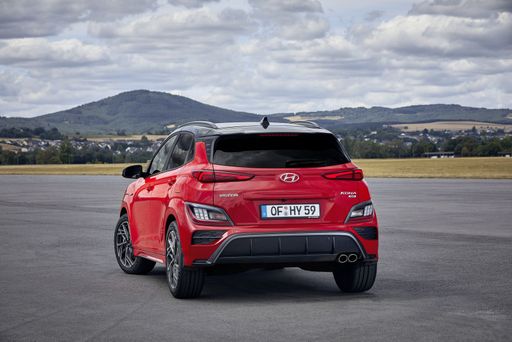
The Hyundai Kona is a compact crossover that pairs bold styling with practical everyday usability, offering a comfortable cabin and intuitive tech for modern drivers. Available in both conventional and electrified versions, Kona brings lively handling and strong value for buyers who want crossover versatility and standout character.

details

Dacia Duster

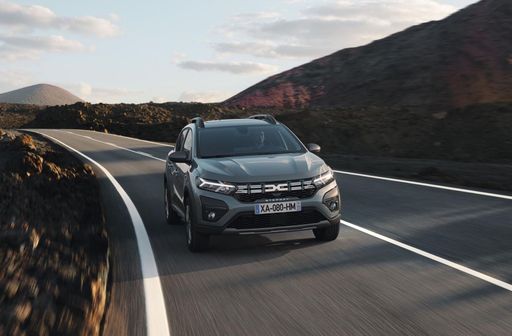
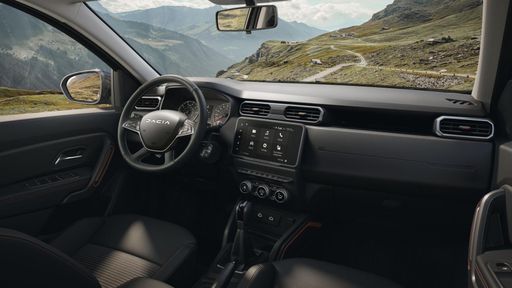
The Dacia Duster is a straightforward, budget-friendly SUV that prioritizes practicality and value over flashy features. Its rugged styling and simple, roomy interior make it a sensible choice for buyers who want capable everyday transport without paying for extras they won’t use.

details
Hyundai Kona
Dacia Duster

Costs and Consumption

Price
23,600 - 41,900 £
Price
16,300 - 24,900 £
Consumption L/100km
4.6 - 7 L/100km
Consumption L/100km
4.7 - 7.6 L/100km
Consumption kWh/100km
14.6 - 16.1 kWh/100km
Consumption kWh/100km
-
Electric Range
380 - 510 km
Electric Range
-
Battery Capacity
-
Battery Capacity
-
co2
0 - 163 g/km
co2
107 - 140 g/km
Fuel tank capacity
-
Fuel tank capacity
-

Dimensions and Body

Body Type
SUV
Body Type
SUV
Seats
5
Seats
5
Doors
-
Doors
-
Curb weight
1,370 - 1,773 kg
Curb weight
1,377 - 1,559 kg
Trunk capacity
466 L
Trunk capacity
348 - 517 L
Length
-
Length
-
Width
1,825 mm
Width
1,813 mm
Height
-
Height
-
Max trunk capacity
-
Max trunk capacity
-
Payload
420 - 490 kg
Payload
402 - 453 kg

Engine and Performance

Engine Type
Petrol, Full Hybrid, Electric
Engine Type
Petrol MHEV, Full Hybrid, LPG
Transmission
Manuel, Automatic
Transmission
Manuel, Automatic
Transmission Detail
Manual Gearbox, Dual-Clutch Automatic, Reduction Gearbox
Transmission Detail
Manual Gearbox, Automated Manual, Dual-Clutch Automatic
Drive Type
Front-Wheel Drive, All-Wheel Drive
Drive Type
Front-Wheel Drive, All-Wheel Drive
Power HP
115 - 204 HP
Power HP
115 - 158 HP
Acceleration 0-100km/h
8.1 - 11.9 s
Acceleration 0-100km/h
9.4 - 11.7 s
Max Speed
-
Max Speed
-
Torque
200 - 265 Nm
Torque
190 - 230 Nm
Number of Cylinders
3 - 4
Number of Cylinders
3 - 4
Power kW
85 - 150 kW
Power kW
84 - 116 kW
Engine capacity
998 - 1,598 cm3
Engine capacity
1,199 - 1,789 cm3

General

Model Year
2025
Model Year
2,025 - 2,026
CO2 Efficiency Class
D, C, E, F, A
CO2 Efficiency Class
D, C
Brand
Hyundai
Brand
Dacia
DriveDuel uses data analysis and artificial intelligence to evaluate vehicle data and create content. Content is regularly reviewed and improved. The displayed prices are estimates based on German list prices, adjusted to the respective country’s VAT. Country-specific registration taxes are not included. This information is not legally binding.