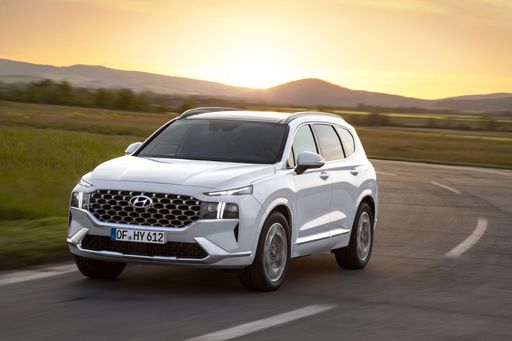
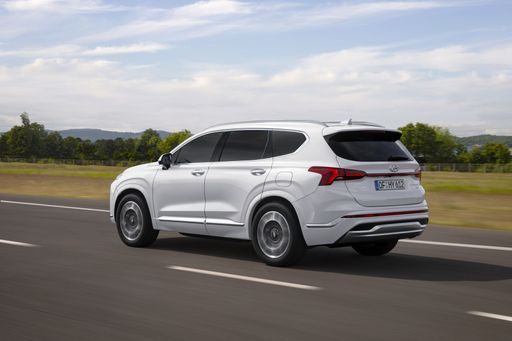
@ Hyundai Motor Company
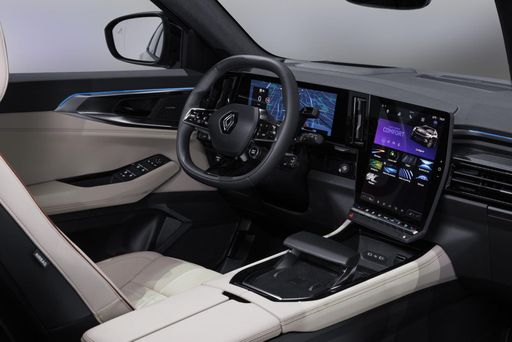
@ Renault Group Media
VS

Hyundai Santa Fe vs Renault Espace – Which car suits you better?

Everyday use, family trips or long-distance drives – here’s where the differences show.
Discover whether Hyundai Santa Fe or Renault Espace fits your lifestyle better.

Santa Fe @ Hyundai Motor Company

A Clash of Titans: Hyundai Santa Fe vs. Renault Espace

In today's automotive landscape, the SUV segment continues to grow, attracting consumers with its versatility, style, and performance. Two standout contenders in this category are the Hyundai Santa Fe and the Renault Espace. Both vehicles promise innovative features, robust performance, and a comfortable ride, making them prime choices for families and adventure seekers alike. Let's delve into a comparative analysis of these two SUVs across various technical aspects and innovations.
Espace @ Renault Group Media

Powertrain and Performance

The Hyundai Santa Fe shines with a choice of two hybrid types: a Full Hybrid and a Plugin Hybrid. With power outputs ranging from 215 HP to an impressive 253 HP, it boasts a torque rating of 367 Nm, ensuring a robust driving experience. The Santa Fe’s 0-100 km/h acceleration times range from 9.3 to 9.8 seconds, demonstrating solid performance for a family-centric SUV.

In comparison, the Renault Espace provides a more modest output of 200 HP with its Full Hybrid system and a unique 3-cylinder engine configuration that leads to enhanced efficiency. Its standout acceleration time of just 8.8 seconds showcases its sporty spirit despite its family-oriented design. Additionally, the Espace achieves commendable fuel consumption figures of merely 4.7 L/100 km, making it one of the more economical choices in its class.

Santa Fe @ Hyundai Motor Company

Dimensions and Cabin Space

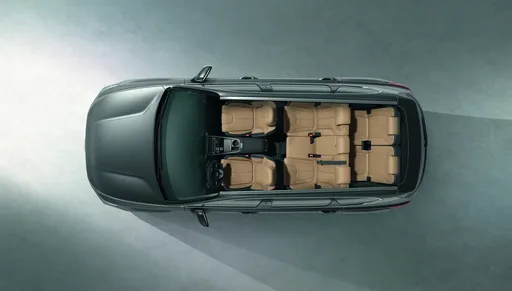
When it comes to size, the Hyundai Santa Fe is the larger of the two, measuring 4830 mm in length, 1900 mm in width, and 1720 mm in height. The additional space translates into a generous trunk capacity ranging from 621 to 711 liters, accommodating diverse luggage needs. With seating configurations for 5, 6, or 7 passengers, the Santa Fe is designed for flexibility.

The Renault Espace, while shorter at 4722 mm and slimmer at 1843 mm, still manages to cater to family needs with its seating capacity of 5 to 7. However, its trunk capacity is noticeably smaller, maxing out at 581 liters, which may require some compromises on long trips. The Espace’s height of 1645 mm gives it a sleek silhouette while still offering decent headroom for occupants.

Espace @ Renault Group Media

Driving Dynamics: Handling and Comfort

The driving experience of the Hyundai Santa Fe offers an engaging mix of front-wheel and all-wheel drive options, enhancing its performance on various terrains. The combination of its automatic transmission coupled with a curb weight that ranges from 1920 to 2165 kg instills confidence in on-road handling and stability. Its maximum speed of 180 km/h allows for spirited driving whether on highways or winding roads.

Conversely, the Renault Espace is limited to front-wheel drive but compensates for this with a lightweight build, ranging from 1659 to 1773 kg, which can enhance agility. With a top speed of 174 km/h, it still offers sufficient pace while maintaining smooth and composed road manners. The Espace’s suspension has been tuned for comfort, ensuring a plush ride even on rough surfaces.

Santa Fe @ Hyundai Motor Company

Innovation and Technology

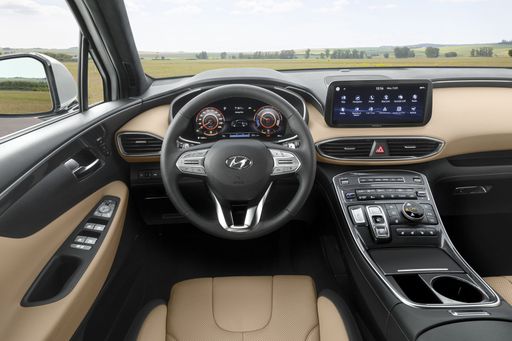
Both vehicles come equipped with a suite of modern tech features. The Hyundai Santa Fe includes advanced safety technologies like Blind-Spot Monitoring, Lane Keeping Assist, and a user-friendly infotainment system with a large touchscreen interface, delivering both connectivity and safety. The option for hybrid powertrains enhances its green credentials, catering to eco-conscious consumers.

The Renault Espace, on the other hand, features innovative driver assistance technologies designed to enhance safety and convenience. Its digital cockpit provides an ergonomic interface that integrates various functionalities, improving the overall driving experience. With such innovations, the Espace ensures that both drivers and passengers enjoy the latest in automotive technology.

Espace @ Renault Group Media

Which SUV Reigns Supreme?

Ultimately, the choice between the Hyundai Santa Fe and the Renault Espace boils down to individual preferences and requirements. The Santa Fe offers a larger size, more powerful engine options, and varied drivetrain configurations, making it suitable for those looking for versatility and performance. Conversely, the Renault Espace focuses on efficiency, comfort, and innovative features, appealing to families prioritizing practicality and tech-savviness.

Whichever SUV you choose, both the Hyundai Santa Fe and the Renault Espace exemplify the best that the mid-size SUV market has to offer, standing firm as formidable options in an ever-evolving automotive landscape.

Here’s where it gets real: The technical differences in detail

Santa Fe @ Hyundai Motor Company

Costs and Efficiency:

Price and efficiency are often the first things buyers look at. Here it becomes clear which model has the long-term edge – whether at the pump, the plug, or in purchase price.

Renault Espace has a distinct advantage in terms of price – it starts at 37500 £, while the Hyundai Santa Fe costs 51200 £. That’s a price difference of around 13672 £.

Fuel consumption also shows a difference: Hyundai Santa Fe manages with 1.70 L and is therefore convincingly more efficient than the Renault Espace with 4.90 L. The difference is about 3.20 L per 100 km.

Espace @ Renault Group Media

Engine and Performance:

Power, torque and acceleration are the classic benchmarks for car enthusiasts – and here, some clear differences start to show.

When it comes to engine power, the Hyundai Santa Fe has a noticeable edge – offering 253 HP compared to 200 HP. That’s roughly 53 HP more horsepower.

In acceleration from 0 to 100 km/h, the Renault Espace is hardly perceptible quicker – completing the sprint in 8.80 s, while the Hyundai Santa Fe takes 9 s. That’s about 0.20 s faster.

In terms of top speed, the Hyundai Santa Fe performs to a small extent better – reaching 196 km/h, while the Renault Espace tops out at 174 km/h. The difference is around 22 km/h.

Santa Fe @ Hyundai Motor Company

Space and Everyday Use:

Beyond pure performance, interior space and usability matter most in daily life. This is where you see which car is more practical and versatile.

Both vehicles offer seating for 7 people.

In curb weight, Renault Espace is somewhat lighter – 1673 kg compared to 1920 kg. The difference is around 247 kg.

In terms of boot space, the Hyundai Santa Fe offers hardly perceptible more room – 711 L compared to 692 L. That’s a difference of about 19 L.

In maximum load capacity, the Renault Espace performs barely noticeable better – up to 2224 L, which is about 192 L more than the Hyundai Santa Fe.

When it comes to payload, Hyundai Santa Fe to a small extent takes the win – 665 kg compared to 581 kg. That’s a difference of about 84 kg.

Who wins the race?

The Hyundai Santa Fe proves to be is largely superior and therefore becomes our DriveDuel Champion!
Hyundai Santa Fe is the better all-rounder in this comparison.

from about £51,200
Santa Fe @ Hyundai Motor Company

Hyundai Santa Fe

  • Engine Type : Plugin Hybrid, Full Hybrid
  • Transmission : Automatic
  • Drive Type : All-Wheel Drive, Front-Wheel Drive
  • Power HP : 239 - 253 HP
  • Consumption L/100km : 1.7 - 7.1 L
  • Electric Range : 54 km

Hyundai Santa Fe

The Hyundai Santa Fe offers a refined blend of style and functionality, making it a strong contender in the SUV market. Its modern interior, combined with advanced technology and comfort features, creates an inviting and practical driving environment. With its sleek design and robust performance, the Santa Fe is well-suited for both urban commutes and family adventures.

details

Renault Espace

4 (1)
rate

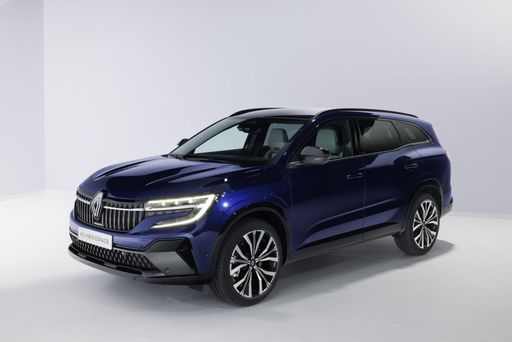
The Renault Espace is the sort of roomy, clever family cruiser that makes long journeys feel effortless, its interior prioritising comfort and practical thinking without drifting into blandness. It won't pretend to be a sports car, but its composed ride, smart packaging and a whisper of French flair make it a sensible and subtly stylish choice for buyers who value space and versatility.

details
Hyundai Santa Fe
Renault Espace
Santa Fe @ Hyundai Motor Company
Espace @ Renault Group Media

Costs and Consumption

Price
51200 - 58400 £
Price
37500 - 41400 £
Consumption L/100km
1.7 - 7.1 L
Consumption L/100km
4.90 L
Consumption kWh/100km
-
Consumption kWh/100km
-
Electric Range
54 km
Electric Range
-
Battery Capacity
-
Battery Capacity
-
co2
38 - 160 g/km
co2
110 g/km
Fuel tank capacity
47 - 67 L
Fuel tank capacity
55 L

Dimensions and Body

Body Type
SUV
Body Type
SUV
Seats
5 - 7
Seats
5 - 7
Doors
5
Doors
5
Curb weight
1920 - 2165 kg
Curb weight
1673 - 1783 kg
Trunk capacity
621 - 711 L
Trunk capacity
212 - 692 L
Length
4830 mm
Length
4746 mm
Width
1900 mm
Width
1830 mm
Height
1720 mm
Height
1645 mm
Max trunk capacity
1942 - 2032 L
Max trunk capacity
2054 - 2224 L
Payload
560 - 665 kg
Payload
404 - 581 kg

Engine and Performance

Engine Type
Plugin Hybrid, Full Hybrid
Engine Type
Full Hybrid
Transmission
Automatic
Transmission
Automatic
Transmission Detail
Automatic Gearbox
Transmission Detail
Automatic Gearbox
Drive Type
All-Wheel Drive, Front-Wheel Drive
Drive Type
Front-Wheel Drive
Power HP
239 - 253 HP
Power HP
200 HP
Acceleration 0-100km/h
9 - 9.3 s
Acceleration 0-100km/h
8.80 s
Max Speed
180 - 196 km/h
Max Speed
174 km/h
Torque
367 - 380 Nm
Torque
-
Number of Cylinders
4
Number of Cylinders
3
Power kW
176 - 186 kW
Power kW
147 kW
Engine capacity
1598 cm3
Engine capacity
1199 cm3

General

Model Year
2024 - 2025
Model Year
2025
CO2 Efficiency Class
B, E, F
CO2 Efficiency Class
C
Brand
Hyundai
Brand
Renault
What drivetrain options does the Hyundai Santa Fe have?

Available configurations include All-Wheel Drive or Front-Wheel Drive.

The prices and data displayed are estimates based on German list prices and may vary by country. This information is not legally binding.