@ Hyundai Motor Company
@ Volkswagen AG / VW Media
VS

Hyundai Staria vs VW Caddy – Differences & prices compared

Both models have their strengths – but which one suits you more?
Compare performance, efficiency, price and space directly: Hyundai Staria or VW Caddy?

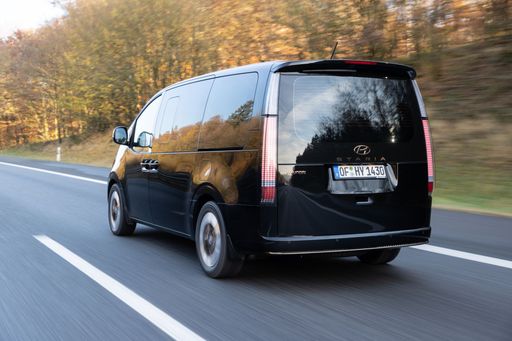
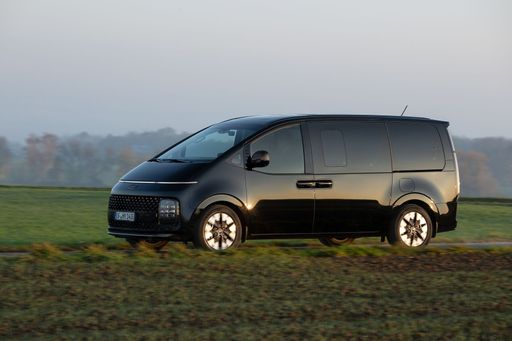
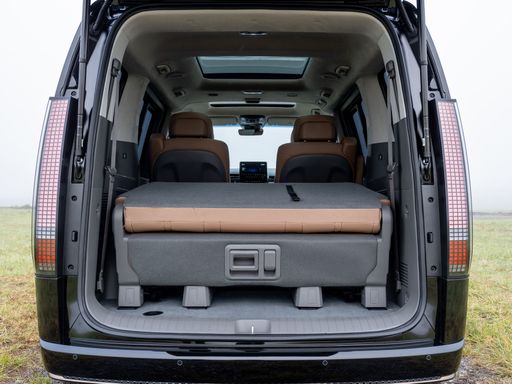
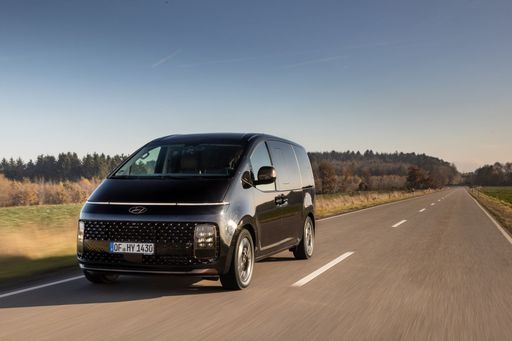
Staria @ Hyundai Motor Company

Hyundai Staria vs VW Caddy: The Battle of the Multi-Purpose Vehicles

In the world of multi-purpose vehicles (MPVs), two models have been gaining attention for their blend of practicality, innovation, and design: the Hyundai Staria and the VW Caddy. Both models cater to families, business needs, and adventure enthusiasts craving space and versatility. Let’s delve deeper into these automotive offerings to understand which vehicle might suit your needs best.
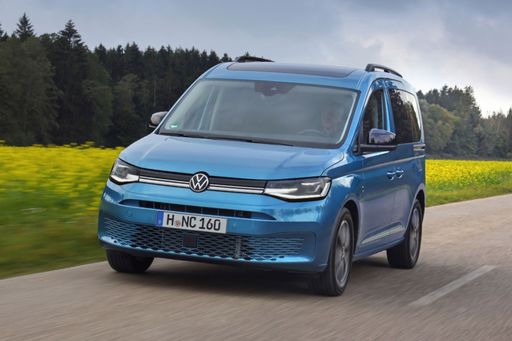
Caddy @ Volkswagen AG / VW Media

Design and Dimensions

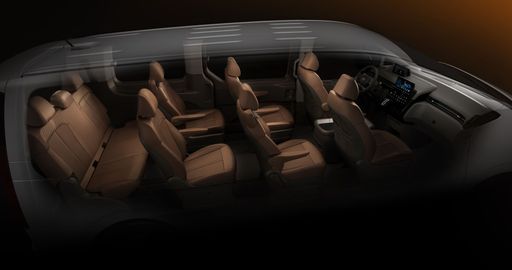
The Hyundai Staria, with its futuristic design and spacious dimensions, is a head-turner. Its length of 5253 mm combined with a width of 1997 mm and a height of 1990 mm makes it spacious enough to comfortably fit 7 to 9 passengers, depending on the configuration. The Staria exudes premium vibes with its streamlined silhouette and expansive windows, offering an airy feel inside the cabin.

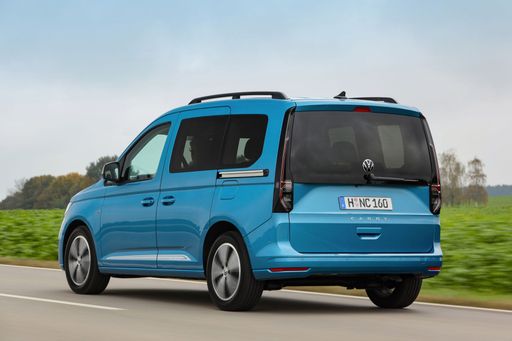
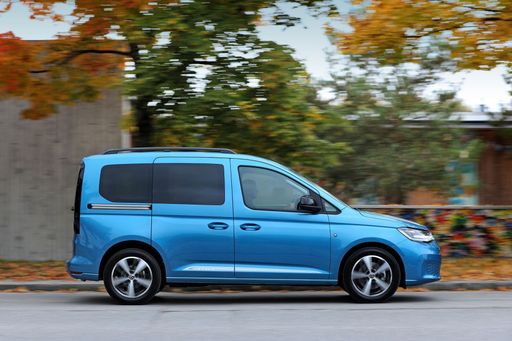
In contrast, the VW Caddy offers a more compact size with its two length options of 4500 mm and 4853 mm. Its width of 1855 mm and varying heights, with the maximum being 1860 mm, cater to those needing a smaller footprint without sacrificing utility. With seating for up to 7 passengers, the Caddy combines VW's timeless design ethos with a hint of modern practicality.

Staria @ Hyundai Motor Company

Engine Options and Performance

The Hyundai Staria's engine lineup includes both diesel and full hybrid options, offering power outputs ranging from 177 to 225 HP. Needless to say, the all-wheel and front-wheel drive configurations ensure it adapts well to various driving conditions. The acceleration from 0 to 100 km/h varies based on the model year and engine, clocking times like 10.2 to 13.5 seconds. The power delivery is complemented by a torque range of 367 to 430 Nm, which aids in smooth driving dynamics.

The VW Caddy, on the other hand, offers versatility with petrol, diesel, and plug-in hybrid engines, providing power outputs between 102 and 150 HP. Its emphasis on efficient driving is evident with consumption figures starting as low as 0.5 L/100 km in the plug-in hybrid variant, showcasing its commitment to eco-friendly technology. Acceleration times for the Caddy fall between 11.4 and 14 seconds, catering to those who prioritize efficiency over performance thrills.

Caddy @ Volkswagen AG / VW Media

Innovative Technologies and Features

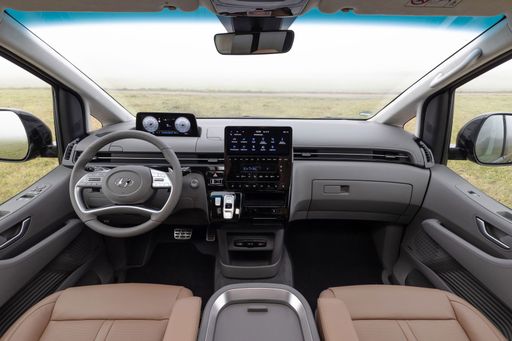
Tech enthusiasts will appreciate the innovation packed into the Hyundai Staria. Advanced driver-assistance systems are paired with infotainment technology, offering integrated connectivity and navigation solutions. The intelligent use of sustainable materials and hybrid technology also appeals to eco-conscious buyers.

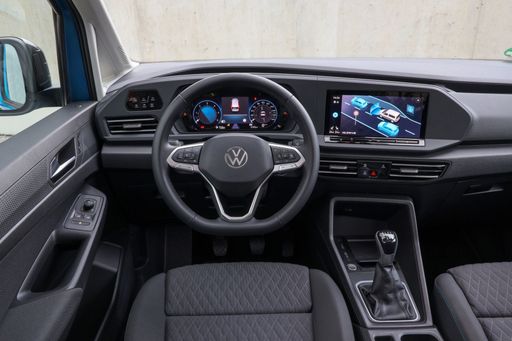
Similarly, the VW Caddy doesn’t skimp on technology either. With a dual-clutch automatic transmission available, the Caddy ensures seamless gear transitions. Its plug-in hybrid variant further enhances its appeal with an electric range of up to 121 km, making it a strong contender for urban commutes. Moreover, the Caddy's blend of practicality and smart tech solutions ensures passengers enjoy comfort and convenience on every journey.

Staria @ Hyundai Motor Company

Conclusion: Choosing Your Perfect Companion

When choosing between the Hyundai Staria and VW Caddy, it ultimately boils down to individual needs and preferences. The Staria is perfect for those seeking space, futuristic design, and robust performance, particularly for larger families or business applications. Meanwhile, the VW Caddy champions efficiency, offering a compact design with advanced hybrid technology, making it ideal for those budget and eco-conscious consumers.

In the ever-evolving landscape of MPVs, both models exhibit distinct fortes, offering something unique to their respective audiences. Whether prioritizing space or sustainability, either the Staria or Caddy promises a capable and comfortable motoring experience.

Here’s where it gets real: The technical differences in detail

Caddy @ Volkswagen AG / VW Media

Costs and Efficiency:

Price and efficiency are often the first things buyers look at. Here it becomes clear which model has the long-term edge – whether at the pump, the plug, or in purchase price.

VW Caddy has a clearly advantage in terms of price – it starts at 27800 £, while the Hyundai Staria costs 42400 £. That’s a price difference of around 14669 £.

Fuel consumption also shows a difference: VW Caddy manages with 0.50 L and is therefore decisively more efficient than the Hyundai Staria with 7.60 L. The difference is about 7.10 L per 100 km.

Staria @ Hyundai Motor Company

Engine and Performance:

Power, torque and acceleration say a lot about how a car feels on the road. This is where you see which model delivers more driving dynamics.

When it comes to engine power, the Hyundai Staria has a noticeable edge – offering 225 HP compared to 150 HP. That’s roughly 75 HP more horsepower.

In acceleration from 0 to 100 km/h, the Hyundai Staria is somewhat quicker – completing the sprint in 10.20 s, while the VW Caddy takes 11.40 s. That’s about 1.20 s faster.

In terms of top speed, the VW Caddy performs a bit better – reaching 186 km/h, while the Hyundai Staria tops out at 167 km/h. The difference is around 19 km/h.

There’s also a difference in torque: Hyundai Staria pulls slightly stronger with 367 Nm compared to 320 Nm. That’s about 47 Nm difference.

Caddy @ Volkswagen AG / VW Media

Space and Everyday Use:

Cabin size, boot volume and payload all play a role in everyday practicality. Here, comfort and flexibility make the difference.

Seats: Hyundai Staria offers evident more seating capacity – 9 vs 7.

In curb weight, VW Caddy is clearly lighter – 1575 kg compared to 2275 kg. The difference is around 700 kg.

In maximum load capacity, the VW Caddy performs significantly better – up to 3700 L, which is about 2397 L more than the Hyundai Staria.

When it comes to payload, Hyundai Staria hardly perceptible takes the win – 775 kg compared to 710 kg. That’s a difference of about 65 kg.

Who comes out on top?

Overall, the VW Caddy shows itself to be outperforms in nearly all aspects and secures the title of DriveDuel Champion.
It convinces with the more balanced overall package and proves to be the more versatile choice for everyday use.

from about £27,800
Caddy @ Volkswagen AG / VW Media

VW Caddy

  • Engine Type : Petrol, Diesel, Plugin Hybrid
  • Transmission : Manuel, Automatic
  • Drive Type : Front-Wheel Drive, All-Wheel Drive
  • Power HP : 102 - 150 HP
  • Consumption L/100km : 0.5 - 6.9 L
  • Electric Range : 116 - 121 km

Hyundai Staria

The Hyundai Staria stands out with its futuristic design, characterised by sleek lines and an expansive front grille that makes a bold statement on the road. Inside, it offers a spacious and versatile interior, providing a comfortable ride for both driver and passengers. This vehicle effortlessly combines practicality with a touch of luxury, appealing to families and professionals alike.

details

VW Caddy

The VW Caddy is the Swiss-army knife of compact vans — practical, surprisingly refined, and ready to swap a weekend adventure for a grocery run without breaking a sweat. It’s user-friendly, comfortable enough for daily driving, and sensible for buyers who want utility with a dash of style and no drama.

details
Hyundai Staria
VW Caddy
Staria @ Hyundai Motor Company
Caddy @ Volkswagen AG / VW Media

Costs and Consumption

Price
42400 - 50500 £
Price
27800 - 45900 £
Consumption L/100km
7.60 L
Consumption L/100km
0.5 - 6.9 L
Consumption kWh/100km
-
Consumption kWh/100km
-
Electric Range
-
Electric Range
116 - 121 km
Battery Capacity
-
Battery Capacity
19.70 kWh
co2
172 g/km
co2
10 - 165 g/km
Fuel tank capacity
65 L
Fuel tank capacity
50 L

Dimensions and Body

Body Type
Bus
Body Type
High Roof Estate
Seats
7 - 9
Seats
5 - 7
Doors
5
Doors
5
Curb weight
2275 - 2345 kg
Curb weight
1575 - 1998 kg
Trunk capacity
117 - 831 L
Trunk capacity
-
Length
5253 mm
Length
4500 - 4853 mm
Width
1997 mm
Width
1855 mm
Height
1990 mm
Height
1819 - 1860 mm
Max trunk capacity
431 - 1303 L
Max trunk capacity
2556 - 3700 L
Payload
605 - 775 kg
Payload
501 - 710 kg

Engine and Performance

Engine Type
Full Hybrid
Engine Type
Petrol, Diesel, Plugin Hybrid
Transmission
Automatic
Transmission
Manuel, Automatic
Transmission Detail
Automatic Gearbox
Transmission Detail
Manual Gearbox, Dual-Clutch Automatic
Drive Type
Front-Wheel Drive
Drive Type
Front-Wheel Drive, All-Wheel Drive
Power HP
225 HP
Power HP
102 - 150 HP
Acceleration 0-100km/h
10.20 s
Acceleration 0-100km/h
11.4 - 14 s
Max Speed
167 km/h
Max Speed
173 - 186 km/h
Torque
367 Nm
Torque
220 - 320 Nm
Number of Cylinders
4
Number of Cylinders
4
Power kW
165 kW
Power kW
75 - 110 kW
Engine capacity
1598 cm3
Engine capacity
1498 - 1968 cm3

General

Model Year
2024
Model Year
2024
CO2 Efficiency Class
F
CO2 Efficiency Class
E, F, B
Brand
Hyundai
Brand
VW
What drive types are available for the Hyundai Staria?

The Hyundai Staria is available as Front-Wheel Drive.

The prices and data displayed are estimates based on German list prices and may vary by country. This information is not legally binding.