VS

Hyundai Tucson vs BYD Seal U comparison

Compare performance (288 HP vs 324 HP), boot space and price (20,900 £ vs 34,300 £ ) at a glance. Find out which car is the better choice for you – Hyundai Tucson or BYD Seal U?

Hyundai Tucson vs BYD Seal U: Key differences

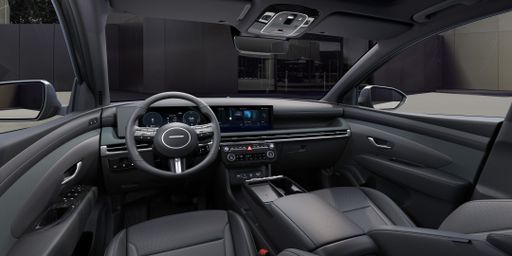
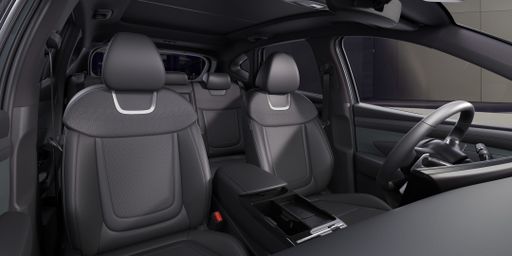
Hyundai Tucson

4.6 (4 Reviews)
rate
  • substantially cheaper
  • visibly lighter
  • slightly more trunk space

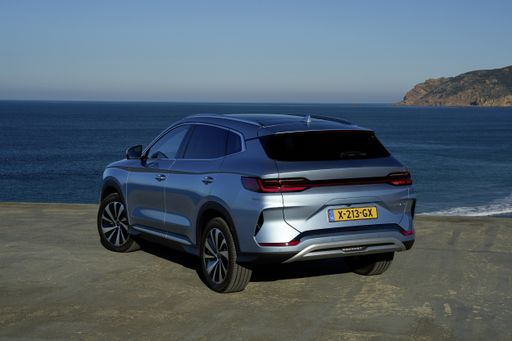
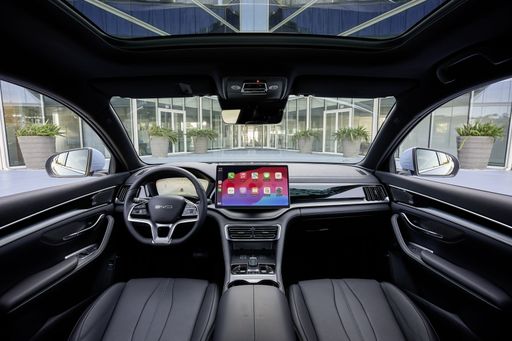
BYD Seal U

4.1 (7 Reviews)
rate
  • somewhat more power
  • significantly more electric range
  • noticeably quicker 0–100 km/h

All details on performance, efficiency, range and trunk space can be found in the technical comparison below – including user reviews for both models.

Tucson

BYD Seal U vs Hyundai Tucson: A Comprehensive Comparison

The automotive market is continuously evolving, with manufacturers delivering innovative solutions that cater to diverse preferences and environmental concerns. Among the latest entrants in the SUV arena are the BYD Seal U and the Hyundai Tucson. Both vehicles present exciting options in the growing segment of electrified and hybrid technology. This article examines the technical aspects and innovations of these two models, providing potential buyers with valuable insights.

Seal U

Design and Dimensions

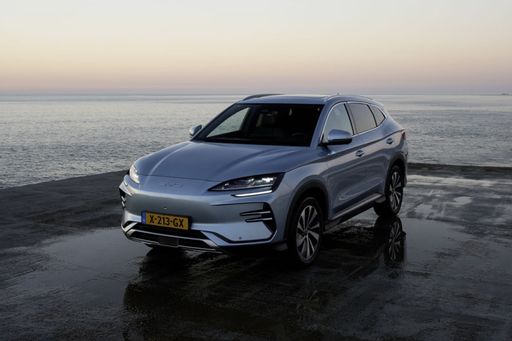
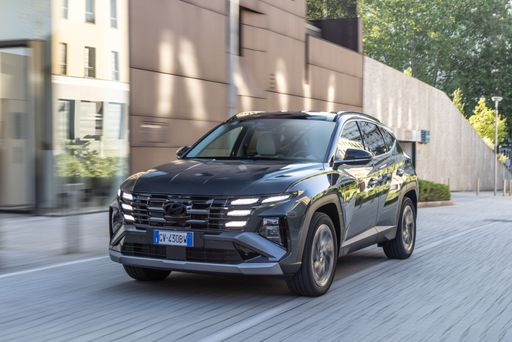
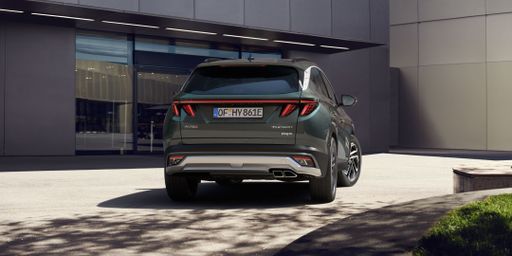
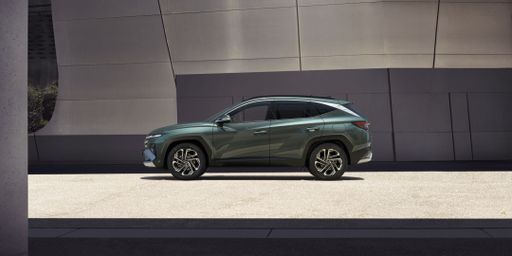
The BYD Seal U measures 4775 mm in length, 1890 mm wide, and stands at 1670 mm tall, offering a bold and modern appearance. Its five-door body type maximizes passenger and cargo space, featuring a trunk capacity that ranges from 425 to 552 liters, depending on the variant. In comparison, the Hyundai Tucson is slightly shorter, stretching between 4510 mm to 4520 mm in length, with a width of 1865 mm and a height of 1650 mm. Its trunk capacity also impresses, providing up to 620 liters of storage space, making it a practical choice for families and adventurers alike.

Tucson

Powertrain and Performance

Under the hood, the BYD Seal U is equipped with either a plugin hybrid or a fully electric powertrain, delivering an output that ranges from 218 to 324 HP. The electric variant boasts a remarkable acceleration from 0 to 100 km/h in just 5.9 seconds, demonstrating its sporty edge. The Seal U offers impressive efficiency, with a consumption rate of only 0.9 L/100 km (in hybrid mode) and an electric range of up to 500 km.

On the flip side, the Hyundai Tucson provides multiple engine choices, including petrol, diesel, full hybrid, and plugin hybrid options, producing power between 136 HP to 252 HP. The Tucson's hybrid variants also feature competitive acceleration times, with the quickest reaching 100 km/h in just 7.9 seconds. Its fuel economy is commendable, with consumption figures tailored to the engine type, ranging up to 6.8 L/100 km in certain configurations.

Seal U

Driving Dynamics

Both vehicles feature advanced transmission systems designed for smooth driving experiences. The BYD Seal U employs a Continuously Variable Transmission (CVT) and a reduction gearbox for efficient power delivery, available in both Front-Wheel Drive (FWD) and All-Wheel Drive (AWD) configurations. The Tucson, on the other hand, offers a diverse lineup including automatic double-clutch transmissions and manual options, ensuring adaptability across different driving conditions.

Tucson

Safety and Technology Innovations

In terms of safety and technology, both the BYD Seal U and Hyundai Tucson feature a range of cutting-edge advancements. The Seal U showcases BYD's intelligent driving assistance systems, enhancing road safety and convenience. Similarly, the Tucson is equipped with Hyundai's SmartSense technology, which includes advanced driver-assistance systems that help mitigate accidents and enhance the driving experience.

Interior technology in both vehicles is competitive. The BYD Seal U features an intuitive infotainment system with high-resolution displays and connectivity options, ensuring drivers stay connected on the go. The Tucson equally impresses with its user-friendly interface, advanced navigation systems, and integrated smartphone connectivity, fostering an engaging driver experience.

Seal U

Environmental Responsibility

As eco-conscious choices become increasingly important to consumers, both models take environmental responsibility seriously. The BYD Seal U stands out with a CO2 emission rating of 0 g/km in its electric variant, promoting a sustainable way of driving. The Hyundai Tucson, while slightly higher with emissions ranging from 126 g/km to 153 g/km depending on the variant, still offers efficient hybrid options that align with greener initiatives.

Tucson

Conclusion

In this head-to-head comparison, both the BYD Seal U and Hyundai Tucson present compelling features that cater to today's diverse automotive landscape. The Seal U shines with its electric capabilities, quick acceleration, and exceptional range, while the Tucson offers versatility with multiple engine choices and practical storage solutions. Ultimately, the choice between these two SUVs may come down to specific needs, preferences, and the importance of electrification versus traditional engines in the modern driving experience.

Here’s where it gets real: The technical differences in detail

Tucson

Costs and Efficiency:

Price and efficiency are key factors when choosing a car – and this is often where the real differences emerge.

Hyundai Tucson is substantially cheaper – starting at 20,900 £ , while the BYD Seal U costs 34,300 £ . That’s a price difference of around 13,380 £.

As for electric range, the BYD Seal U offers significantly more range – reaching up to 500 km, about 430 km more than the Hyundai Tucson.

Seal U

Engine and Performance:

Power, torque and acceleration are the classic benchmarks for car enthusiasts – and here, some clear differences start to show.

When it comes to engine power, the BYD Seal U offers somewhat more power – delivering 324 HP compared to 288 HP. That’s roughly 36 HP more horsepower.

When accelerating from 0 to 100 km/h, the BYD Seal U is noticeably quicker – completing the sprint in 5.9 s, while the Hyundai Tucson takes 7.5 s. That’s about 1.6 s quicker.

Looking at top speed, the Hyundai Tucson is moderately faster – reaching 204 km/h, while the BYD Seal U tops out at 175 km/h. The difference is around 29 km/h.

There’s also a difference in torque: the BYD Seal U delivers clearly more torque with 550 Nm compared to 379 Nm. That’s about 171 Nm more.

Tucson

Space and Everyday Use:

Whether family car or daily driver – which one offers more room, flexibility and comfort?

Both vehicles offer seating for 5 people.

In terms of curb weight, Hyundai Tucson is visibly lighter – 1,542 kg compared to 1,940 kg. The difference is around 398 kg.

Looking at boot space, the Hyundai Tucson offers slightly more boot space – 620 L compared to 552 L. That’s a difference of about 68 L.

For maximum load capacity, the Hyundai Tucson offers slightly more capacity – up to 1,799 L, about 359 L more than the BYD Seal U.

When it comes to payload, the Hyundai Tucson carries clearly more – 545 kg compared to 410 kg. That’s a difference of about 135 kg.

Who wins the race in the data check?

The BYD Seal U is far ahead overall in the objective data comparison.
This result only shows which model scores more points on paper – not which of the two cars feels right for you.

from £34,300
Seal U

BYD Seal U

  • Engine Type : Electric, Plugin Hybrid
  • Transmission : Automatic
  • Drive Type : Front-Wheel Drive, All-Wheel Drive
  • Power HP : 218 - 324 HP
  • Consumption kWh/100km : 12.1 - 20.5 kWh/100km
  • Electric Range : 70 - 500 km
Hyundai Tucson
BYD Seal U

Costs and Consumption

View detailed analysis

Engine and Performance

View detailed analysis

Dimensions and Body

View detailed analysis

Hyundai Tucson

Hyundai Tucson marries bold, sculpted looks with a clever, roomy cabin that feels smarter than its price tag suggests. It's composed on the road, easy to live with day-to-day, and a sensible choice for buyers who want SUV style without the showroom theatrics.

details

BYD Seal U

The BYD Seal U pairs a sleek fastback silhouette with a surprisingly roomy, tech-rich cabin, giving electric chic without the showroom pretension. It's a smart pick for buyers after confident handling, sensible practicality and standout value — all wrapped up with a cheeky grin when you put your foot down.

details
Hyundai Tucson
BYD Seal U

Costs and Consumption

Price
20,900 - 47,900 £
Price
34,300 - 39,800 £
Consumption L/100km
2.7 - 7.6 L/100km
Consumption L/100km
-
Consumption kWh/100km
-
Consumption kWh/100km
12.1 - 20.5 kWh/100km
Electric Range
63 - 70 km
Electric Range
70 - 500 km
Battery Capacity
-
Battery Capacity
-
co2
62 - 172 g/km
co2
0 - 71 g/km
Fuel tank capacity
52 - 54 L
Fuel tank capacity
-

Dimensions and Body

Body Type
SUV
Body Type
SUV
Seats
5
Seats
5
Doors
5
Doors
5
Curb weight
1,542 - 1,893 kg
Curb weight
1,940 - 2,147 kg
Trunk capacity
546 - 620 L
Trunk capacity
425 - 552 L
Length
4,525 - 4,535 mm
Length
4,785 mm
Width
1,865 mm
Width
1,890 mm
Height
1,650 mm
Height
1,668 mm
Max trunk capacity
1,795 - 1,799 L
Max trunk capacity
1,440 L
Payload
518 - 545 kg
Payload
410 kg

Engine and Performance

Engine Type
Petrol, Full Hybrid, Plugin Hybrid, Diesel MHEV
Engine Type
Electric, Plugin Hybrid
Transmission
Manuel, Automatic
Transmission
Automatic
Transmission Detail
Manual Gearbox, Dual-Clutch Automatic, Automatic Gearbox
Transmission Detail
Reduction Gearbox, Automatic Gearbox
Drive Type
Front-Wheel Drive, All-Wheel Drive
Drive Type
Front-Wheel Drive, All-Wheel Drive
Power HP
136 - 288 HP
Power HP
218 - 324 HP
Acceleration 0-100km/h
7.5 - 11.6 s
Acceleration 0-100km/h
5.9 - 9.6 s
Max Speed
196 - 204 km/h
Max Speed
175 km/h
Torque
250 - 379 Nm
Torque
300 - 550 Nm
Number of Cylinders
4
Number of Cylinders
4
Power kW
100 - 212 kW
Power kW
160 - 238 kW
Engine capacity
1,598 cm3
Engine capacity
1,497 - 1,498 cm3

General

Model Year
2,025
Model Year
2,024 - 2,026
CO2 Efficiency Class
F, D, E, B
CO2 Efficiency Class
A, B
Brand
Hyundai
Brand
BYD
DriveDuel uses data analysis and artificial intelligence to evaluate vehicle data and create content. Content is regularly reviewed and improved. The displayed prices are estimates based on German list prices, adjusted to the respective country’s VAT. Country-specific registration taxes are not included. This information is not legally binding.