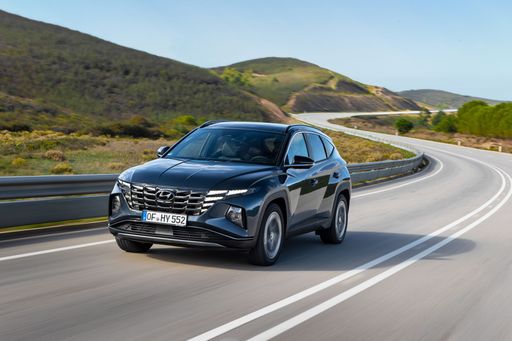
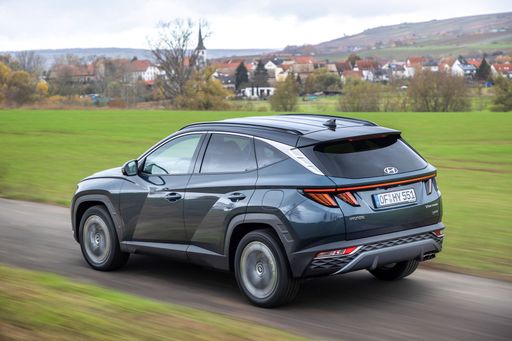
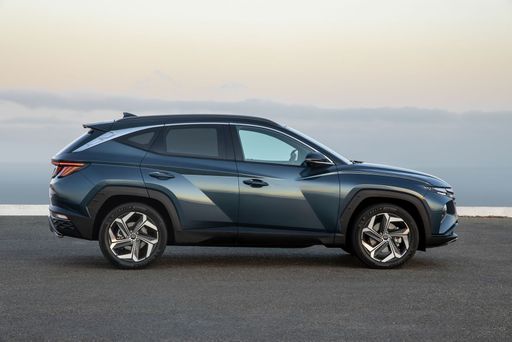
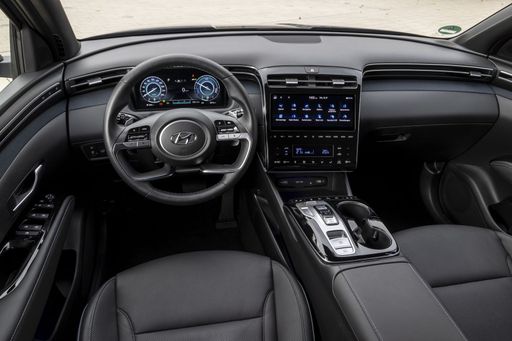
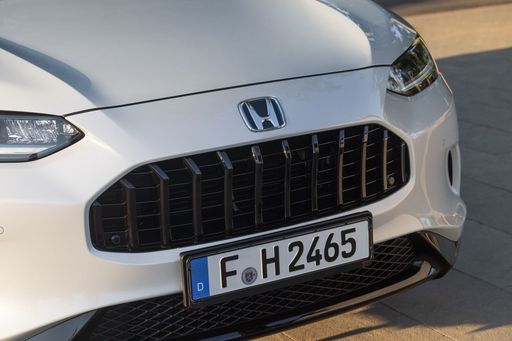
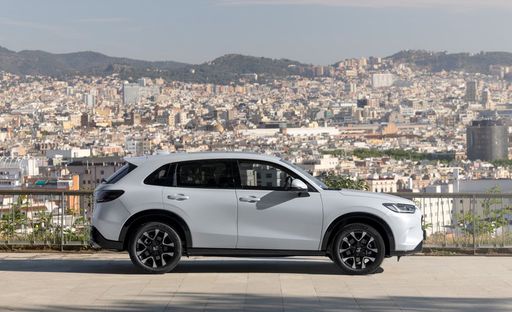
VS

Hyundai Tucson vs Honda ZR-V comparison

Compare performance (288 HP vs 184 HP), boot space and price (20,900 £ vs 35,100 £ ) at a glance. Find out which car is the better choice for you – Hyundai Tucson or Honda ZR-V?

Hyundai Tucson vs Honda ZR-V: Key differences

Hyundai Tucson

4.6 (4 Reviews)
rate
  • substantially cheaper
  • clearly more power
  • considerably more efficient
  • only slightly quicker 0–100 km/h
  • only slightly lighter

Honda ZR-V

5 (1 Reviews)
rate

All details on performance, efficiency, range and trunk space can be found in the technical comparison below – including user reviews for both models.

Tucson

Honda ZR-V vs. Hyundai Tucson: A Head-to-Head SUV Showdown

In the ever-evolving landscape of SUVs, two contenders stand out in the compact segment: the Honda ZR-V and the Hyundai Tucson. Both brands have been synonymous with reliability and innovation, continuously pushing the boundaries of what modern SUVs can offer. Let’s see how these two stack up against each other across various technical aspects and innovations.

ZR-V

Performance and Powertrain

The Honda ZR-V comes equipped with a full hybrid engine, offering a potent combination of power and fuel efficiency. With a power output of 184 HP (135 kW) and a maximum torque of 315 Nm, it impresses with an acceleration of 0-100 km/h in just 8 seconds. Achieving a top speed of 173 km/h, it presents itself as a capable SUV for both city and highway driving. Its fuel consumption rates between 5.7 and 5.8 L/100km make it a frugal choice for eco-conscious drivers.

Conversely, the Hyundai Tucson offers a broader range of engine types, including Diesel MHEV, Petrol MHEV, Full Hybrid, and Plugin Hybrid options, allowing buyers to tailor the powertrain according to their needs. The Tucson's power ranges up to 252 HP, with torque figures reaching 367 Nm, depending on the variant. It achieves 0-100 km/h acceleration as fast as 7.9 seconds in its quickest version, with top speeds up to 194 km/h. In terms of efficiency, it showcases competitive consumption figures as low as 1.2 L/100km for the plugin hybrid versions.


Tucson

Driving Dynamics and Transmission

The Honda ZR-V delivers power through a front-wheel-drive system, emphasizing a straightforward drive experience. The fixed hybrid configuration integrates seamlessly with the driving dynamics, providing smooth acceleration and confident handling.

Hyundai Tucson offers more in terms of flexibility with both front-wheel and all-wheel-drive options. The SUV also boasts an array of transmission choices, including manual and various automatic variants, catering to a wider audience and driving preference.

ZR-V

Interior Comfort and Cargo Space

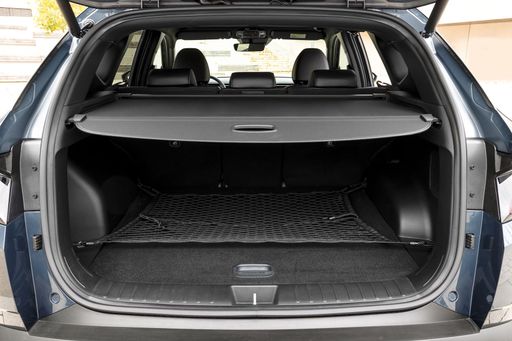
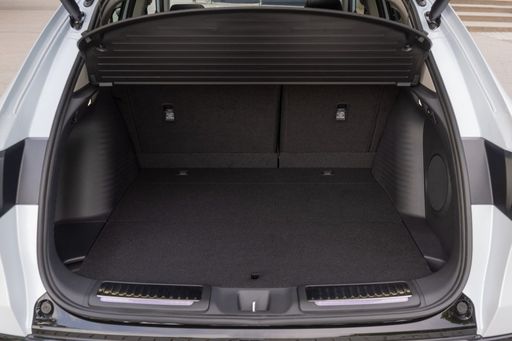
Both vehicles comfortably seat up to five passengers, but when it comes to cargo space, the Tucson takes the lead with its generous trunk capacity ranging from 558 to 620 liters. Conversely, the ZR-V offers a more compact storage capacity between 370 and 380 liters, suitable for daily errands and weekend getaways.

Tucson

Dimensions and Exterior

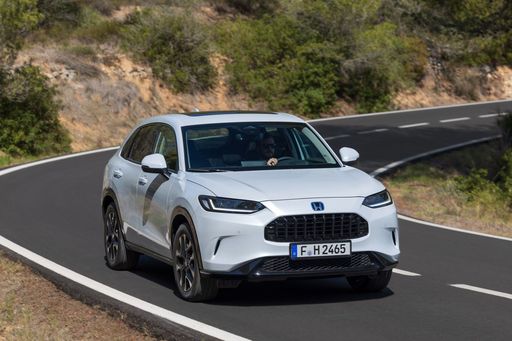
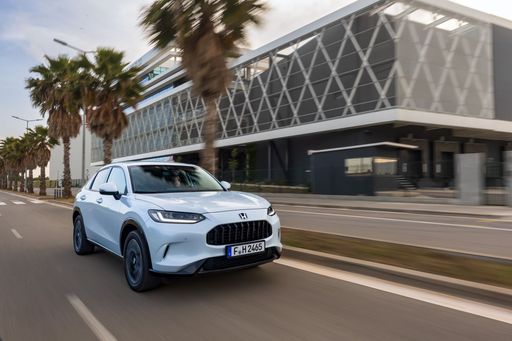
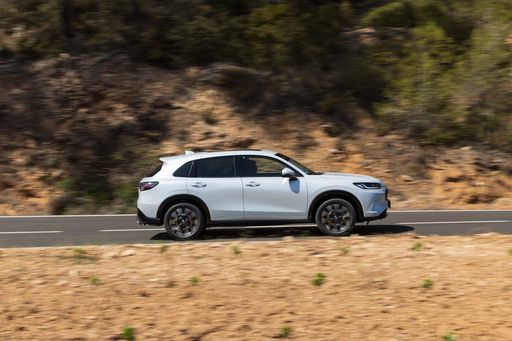
The Honda ZR-V measures 4568 mm in length, 1840 mm in width, and 1613 mm in height, making it a more compact choice compared to the Tucson, which spans 4510 to 4520 mm in length, 1865 mm in width, and 1650 mm in height. These dimensions give the Tucson a slightly more imposing road presence.

ZR-V

Environmental Considerations

In terms of environmental impact, both vehicles score within the CO2 efficiency class D, though the Tucson also offers variations classified as B and E, depending on the configuration. The CO2 emissions for the ZR-V range from 130 to 132 g/km, while the Tucson’s emissions are impressively low, notably in its eco-friendlier versions that boast as low as 22 g/km CO2 for plugin hybrids.

Tucson

Conclusion

Choosing between the Honda ZR-V and Hyundai Tucson depends largely on individual priorities. For those seeking a full hybrid with a well-rounded performance, the ZR-V stands as a robust choice. Meanwhile, the Tucson impresses with its versatile engine lineup and superior cargo space, making it a strong contender for families and tech-savvy drivers. Both models embody their brands’ commitment to innovation and quality, promising to satisfy a diverse range of SUV enthusiasts.

Here’s where it gets real: The technical differences in detail

Tucson

Costs and Efficiency:

Price and efficiency are often the first things buyers look at. Here it becomes clear which model has the long-term edge – whether at the pump, the plug, or in purchase price.

Hyundai Tucson is substantially cheaper – starting at 20,900 £ , while the Honda ZR-V costs 35,100 £ . That’s a price difference of around 14,160 £.

Fuel consumption also shows a difference: the Hyundai Tucson uses 2.7 L/100km and is considerably more efficient than the Honda ZR-V with 5.7 L/100km. The difference is about 3 L/100km.

ZR-V

Engine and Performance:

Under the bonnet, it becomes clear which model is tuned for sportiness and which one takes the lead when you hit the accelerator.

When it comes to engine power, the Hyundai Tucson offers clearly more power – delivering 288 HP compared to 184 HP. That’s roughly 104 HP more horsepower.

When accelerating from 0 to 100 km/h, the Hyundai Tucson is only slightly quicker – completing the sprint in 7.5 s, while the Honda ZR-V takes 7.8 s. That’s about 0.3 s quicker.

There’s also a difference in torque: the Hyundai Tucson delivers moderately more torque with 379 Nm compared to 315 Nm. That’s about 64 Nm more.

Tucson

Space and Everyday Use:

Beyond pure performance, interior space and usability matter most in daily life. This is where you see which car is more practical and versatile.

Both vehicles offer seating for 5 people.

In terms of curb weight, Hyundai Tucson is only slightly lighter – 1,542 kg compared to 1,660 kg. The difference is around 118 kg.

When it comes to payload, the Hyundai Tucson carries a bit more – 545 kg compared to 455 kg. That’s a difference of about 90 kg.

Who wins the race in the data check?

The Hyundai Tucson holds a decisive overall lead in the objective data comparison.
This result only shows which model scores more points on paper – not which of the two cars feels right for you.

from £20,900
Tucson

Hyundai Tucson

  • Engine Type : Petrol, Full Hybrid, Plugin Hybrid, Diesel MHEV
  • Transmission : Manuel, Automatic
  • Drive Type : Front-Wheel Drive, All-Wheel Drive
  • Power HP : 136 - 288 HP
  • Consumption L/100km : 2.7 - 7.6 L/100km
  • Electric Range : 63 - 70 km
Hyundai Tucson
Honda ZR-V

Costs and Consumption

View detailed analysis

Engine and Performance

View detailed analysis

Dimensions and Body

View detailed analysis

Hyundai Tucson

Hyundai Tucson marries bold, sculpted looks with a clever, roomy cabin that feels smarter than its price tag suggests. It's composed on the road, easy to live with day-to-day, and a sensible choice for buyers who want SUV style without the showroom theatrics.

details

Honda ZR-V

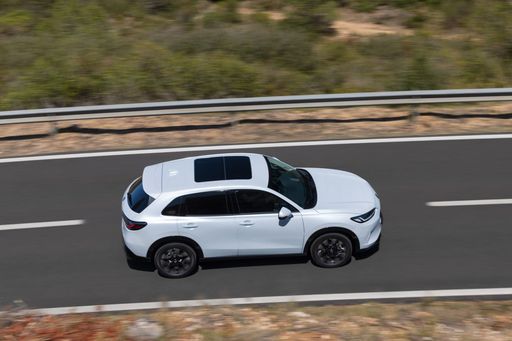
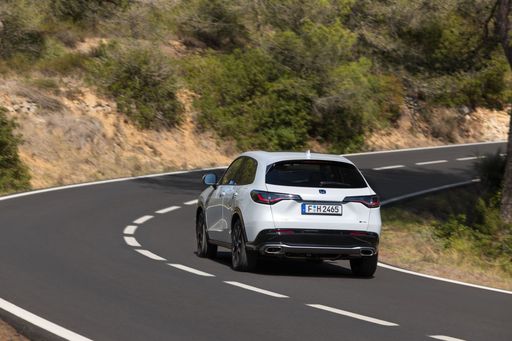
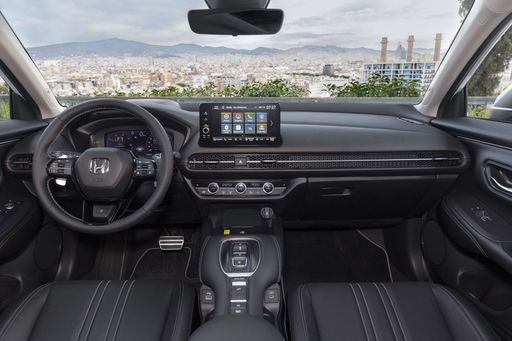
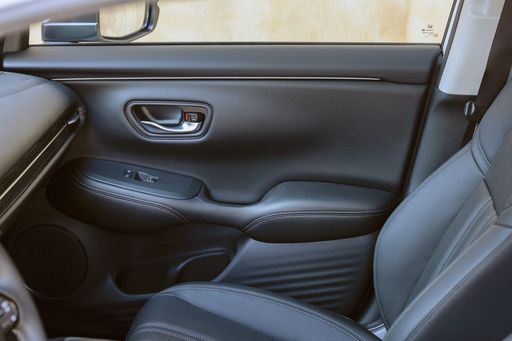
The Honda ZR-V blends smart practicality with sharper styling than you might expect, giving buyers a calm, competent companion for daily life. Inside it's comfortable and cleverly laid out, easy to live with and never trying too hard to be exciting.

details
Hyundai Tucson
Honda ZR-V

Costs and Consumption

Price
20,900 - 47,900 £
Price
35,100 - 38,700 £
Consumption L/100km
2.7 - 7.6 L/100km
Consumption L/100km
5.7 - 5.8 L/100km
Consumption kWh/100km
-
Consumption kWh/100km
-
Electric Range
63 - 70 km
Electric Range
-
Battery Capacity
-
Battery Capacity
-
co2
62 - 172 g/km
co2
130 - 132 g/km
Fuel tank capacity
52 - 54 L
Fuel tank capacity
-

Dimensions and Body

Body Type
SUV
Body Type
SUV
Seats
5
Seats
5
Doors
5
Doors
-
Curb weight
1,542 - 1,893 kg
Curb weight
1,660 - 1,710 kg
Trunk capacity
546 - 620 L
Trunk capacity
-
Length
4,525 - 4,535 mm
Length
-
Width
1,865 mm
Width
1,840 mm
Height
1,650 mm
Height
-
Max trunk capacity
1,795 - 1,799 L
Max trunk capacity
-
Payload
518 - 545 kg
Payload
440 - 455 kg

Engine and Performance

Engine Type
Petrol, Full Hybrid, Plugin Hybrid, Diesel MHEV
Engine Type
Full Hybrid
Transmission
Manuel, Automatic
Transmission
Automatic
Transmission Detail
Manual Gearbox, Dual-Clutch Automatic, Automatic Gearbox
Transmission Detail
CVT
Drive Type
Front-Wheel Drive, All-Wheel Drive
Drive Type
Front-Wheel Drive
Power HP
136 - 288 HP
Power HP
184 HP
Acceleration 0-100km/h
7.5 - 11.6 s
Acceleration 0-100km/h
7.8 - 8 s
Max Speed
196 - 204 km/h
Max Speed
-
Torque
250 - 379 Nm
Torque
315 Nm
Number of Cylinders
4
Number of Cylinders
4
Power kW
100 - 212 kW
Power kW
135 kW
Engine capacity
1,598 cm3
Engine capacity
1,993 cm3

General

Model Year
2,025
Model Year
2,025
CO2 Efficiency Class
F, D, E, B
CO2 Efficiency Class
D
Brand
Hyundai
Brand
Honda
DriveDuel uses data analysis and artificial intelligence to evaluate vehicle data and create content. Content is regularly reviewed and improved. The displayed prices are estimates based on German list prices, adjusted to the respective country’s VAT. Country-specific registration taxes are not included. This information is not legally binding.