Price and efficiency are key factors when choosing a car – and this is often where the real differences emerge.
Hyundai Tucson has a decisively advantage in terms of price – it starts at 30600 £, while the Lexus RX costs 63500 £. That’s a price difference of around 32880 £.
Fuel consumption also shows a difference: Hyundai Tucson manages with 1 L and is therefore to a small extent more efficient than the Lexus RX with 1.10 L. The difference is about 0.10 L per 100 km.
As for range, the Hyundai Tucson performs barely noticeable better – achieving up to 70 km, about 2 km more than the Lexus RX.
Power, torque and acceleration are the classic benchmarks for car enthusiasts – and here, some clear differences start to show.
When it comes to engine power, the Lexus RX has a noticeable edge – offering 371 HP compared to 252 HP. That’s roughly 119 HP more horsepower.
In acceleration from 0 to 100 km/h, the Lexus RX is evident quicker – completing the sprint in 6.20 s, while the Hyundai Tucson takes 7.90 s. That’s about 1.70 s faster.
In terms of top speed, the Lexus RX performs barely noticeable better – reaching 210 km/h, while the Hyundai Tucson tops out at 204 km/h. The difference is around 6 km/h.
There’s also a difference in torque: Lexus RX pulls noticeable stronger with 551 Nm compared to 379 Nm. That’s about 172 Nm difference.
Beyond pure performance, interior space and usability matter most in daily life. This is where you see which car is more practical and versatile.
Seats: offers more seating capacity – vs .
In curb weight, Hyundai Tucson is noticeable lighter – 1542 kg compared to 2040 kg. The difference is around 498 kg.
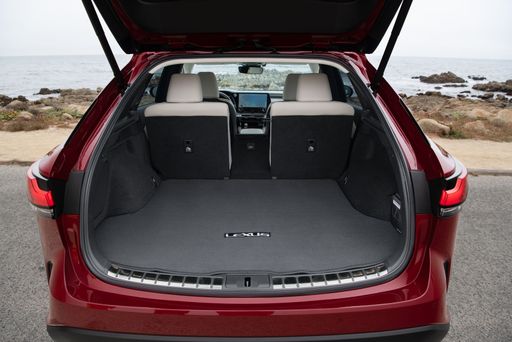
In terms of boot space, the Hyundai Tucson offers clearly perceptible more room – 620 L compared to 461 L. That’s a difference of about 159 L.
In maximum load capacity, the Hyundai Tucson performs minimal better – up to 1799 L, which is about 121 L more than the Lexus RX.
When it comes to payload, Lexus RX a bit takes the win – 620 kg compared to 545 kg. That’s a difference of about 75 kg.
Overall, the Hyundai Tucson shows itself to be edges out slightly and secures the title of DriveDuel Champion.
It convinces with the more balanced overall package and proves to be the more versatile choice for everyday use.
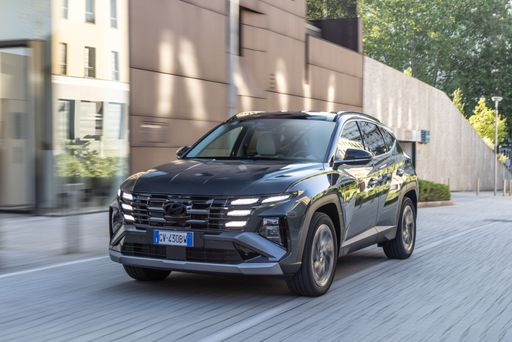
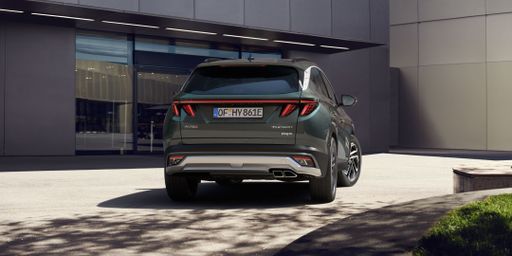
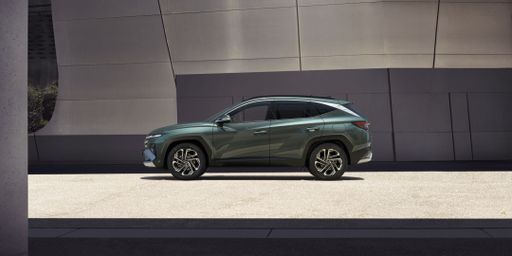
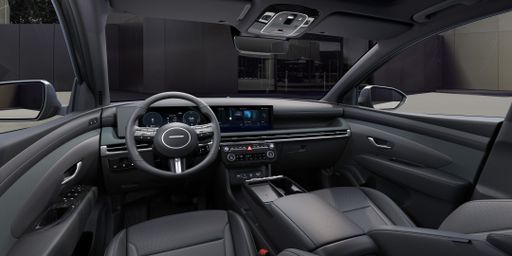
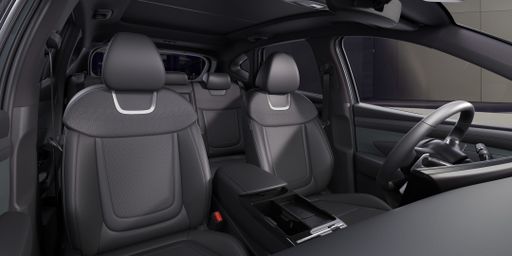
Hyundai Tucson marries bold, sculpted looks with a clever, roomy cabin that feels smarter than its price tag suggests. It's composed on the road, easy to live with day-to-day, and a sensible choice for buyers who want SUV style without the showroom theatrics.
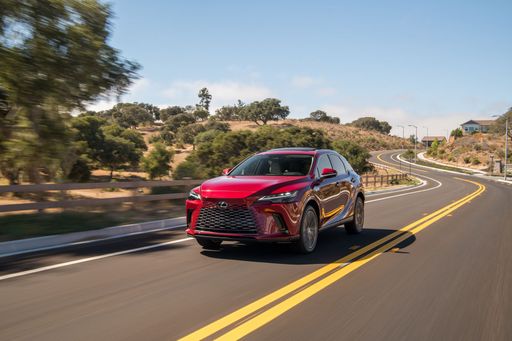
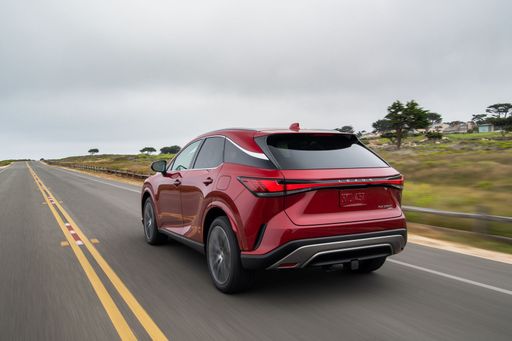
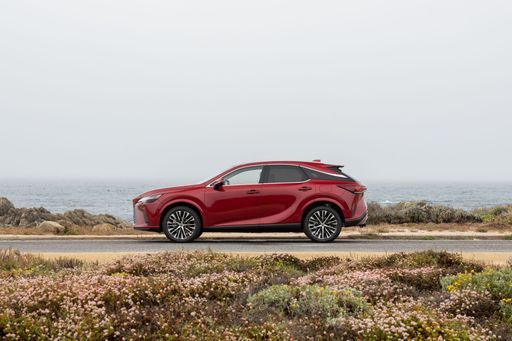
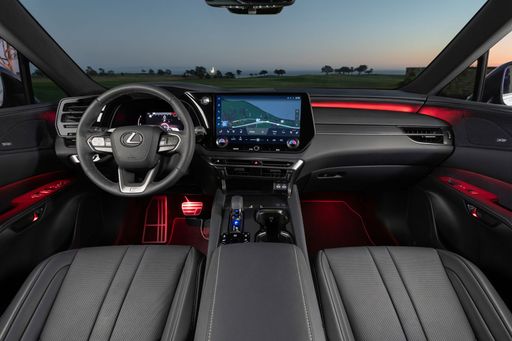
detailsThe Lexus RX glides through city streets with the kind of hushed refinement that turns mundane commutes into a private lounge. It mixes plush comfort and polished practicality in a package that suits buyers who want to arrive relaxed and a touch smug.
details|
|
|
|
|
|
Costs and Consumption |
|
|---|---|
|
Price
30600 - 46300 £
|
Price
63500 - 84700 £
|
|
Consumption L/100km
1 - 7.6 L
|
Consumption L/100km
1.1 - 8 L
|
|
Consumption kWh/100km
-
|
Consumption kWh/100km
-
|
|
Electric Range
64 - 70 km
|
Electric Range
68 km
|
|
Battery Capacity
-
|
Battery Capacity
-
|
|
co2
22 - 172 g/km
|
co2
25 - 182 g/km
|
|
Fuel tank capacity
42 - 54 L
|
Fuel tank capacity
55 - 65 L
|
Dimensions and Body |
|
|---|---|
|
Body Type
SUV
|
Body Type
SUV
|
|
Seats
5
|
Seats
5
|
|
Doors
5
|
Doors
5
|
|
Curb weight
1542 - 1889 kg
|
Curb weight
2040 - 2185 kg
|
|
Trunk capacity
546 - 620 L
|
Trunk capacity
461 L
|
|
Length
4510 - 4535 mm
|
Length
4890 mm
|
|
Width
1865 mm
|
Width
1920 mm
|
|
Height
1650 mm
|
Height
1695 mm
|
|
Max trunk capacity
1721 - 1799 L
|
Max trunk capacity
1678 L
|
|
Payload
523 - 545 kg
|
Payload
575 - 620 kg
|
Engine and Performance |
|
|---|---|
|
Engine Type
Diesel MHEV, Plugin Hybrid, Petrol, Full Hybrid
|
Engine Type
Full Hybrid, Plugin Hybrid
|
|
Transmission
Automatic, Manuel
|
Transmission
Automatic
|
|
Transmission Detail
Dual-Clutch Automatic, Automatic Gearbox, Manual Gearbox
|
Transmission Detail
CVT, Automatic Gearbox
|
|
Drive Type
Front-Wheel Drive, All-Wheel Drive
|
Drive Type
All-Wheel Drive
|
|
Power HP
136 - 252 HP
|
Power HP
250 - 371 HP
|
|
Acceleration 0-100km/h
7.9 - 11.6 s
|
Acceleration 0-100km/h
6.2 - 7.9 s
|
|
Max Speed
180 - 204 km/h
|
Max Speed
200 - 210 km/h
|
|
Torque
250 - 379 Nm
|
Torque
551 Nm
|
|
Number of Cylinders
4
|
Number of Cylinders
4
|
|
Power kW
100 - 185 kW
|
Power kW
184 - 273 kW
|
|
Engine capacity
1598 cm3
|
Engine capacity
2393 - 2487 cm3
|
General |
|
|---|---|
|
Model Year
2024 - 2025
|
Model Year
2023 - 2024
|
|
CO2 Efficiency Class
E, B, F, D
|
CO2 Efficiency Class
E, B, G
|
|
Brand
Hyundai
|
Brand
Lexus
|
Available configurations include Front-Wheel Drive or All-Wheel Drive.
The prices and data displayed are estimates based on German list prices and may vary by country. This information is not legally binding.