@ Hyundai Motor Company
@ MINI / BMW Group Press
VS

Hyundai Tucson vs MINI Countryman – Which one offers the better deal?

Compare performance, boot capacity, efficiency and price at a glance.
Find out which car is the better choice for you – Hyundai Tucson or MINI Countryman?

Hyundai Tucson

5 (2 Reviews)
rate

MINI Countryman

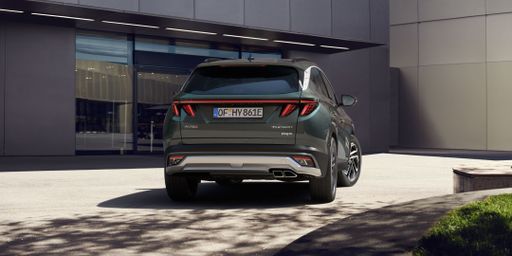
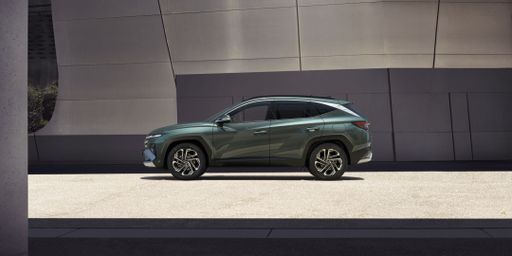
Tucson @ Hyundai Motor Company

Battle of the Compact SUVs: Hyundai Tucson vs. MINI Countryman

The compact SUV segment has witnessed a fierce competition with manufacturers consistently raising the bar in terms of innovation, performance, and style. Today, we're diving into a detailed comparison between two of the hottest contenders in this category: the Hyundai Tucson and the MINI Countryman. Both models have their unique charm and cutting-edge technology aiming to win over the modern driver.
Countryman @ MINI / BMW Group Press

Performance and Engine Options

The Hyundai Tucson offers a variety of powertrains, ranging from petrol to diesel and hybrid options. With engine powers spanning from 136 HP to 252 HP, and multi-powertrain choices such as the full hybrid and plug-in hybrid models, the Tucson caters to the eco-conscious as well as power-hungry driver. Its torque value peaks at 367 Nm, providing a robust driving experience particularly in its more powerful variants.

The MINI Countryman, true to its versatile nature, also comes with a plethora of powertrains including petrol, diesel, and fully electric options. The electrified versions boast power figures up to 313 HP with a commanding torque of 494 Nm, reflecting MINI's commitment to performance even in the zero-emission territory. Notably, the Countryman can speed from 0-100 km/h as quickly as 5.4 seconds, underscoring its sporty disposition.

Tucson @ Hyundai Motor Company

Efficiency and Range

For efficiency seekers, the Tucson's hybrid versions are compelling, with consumption figures as low as 1.2 L/100 km and an electric-only range up to 70 km. These figures appeal particularly to urban drivers looking for cost-effective and environmentally friendly solutions without sacrificing the versatility of an SUV.

On the other hand, the MINI Countryman's electric variants deliver an impressive range of up to 462 km on a single charge, positioning it as an excellent selection for those ready to embrace a fully electric lifestyle. Its overall fuel consumption for other variants starts at 4.6 L/100 km, demonstrating efficiency across the board.

Countryman @ MINI / BMW Group Press

Design and Dimensions

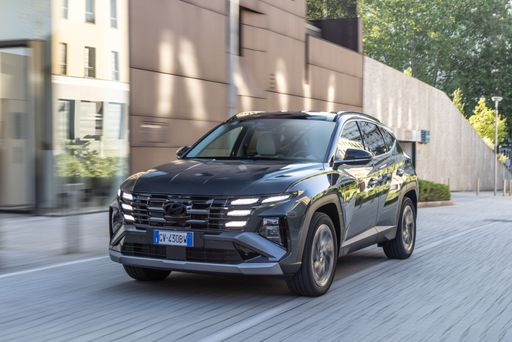
Both the Tucson and the Countryman share a modern design cue common with contemporary SUVs, yet they maintain distinctive brand aesthetics. The Tucson is slightly longer at up to 4,520 mm, giving it a more spacious appearance and offering a sizeable trunk capacity of up to 620 L, useful for family adventures.

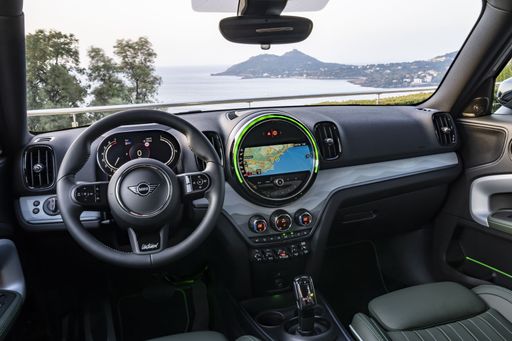
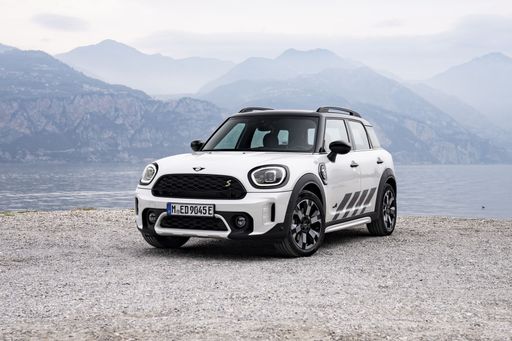
The MINI Countryman, adhering to its compact heritage, stretches up to 4,447 mm in length. While smaller in stature, MINI prioritizes interior sophistication and utilitarian design, providing trunk space up to 505 L. The refined build and elegant styling make it an appealing urban vehicle without compromising utility.

Tucson @ Hyundai Motor Company

Driving Experience

Both these SUVs excel in driving dynamics, offering automatic transmissions with detailed user configurations. The Tucson is available in front-wheel and all-wheel-drive setups, allowing customization depending on driving needs. This flexibility helps it tackle varied terrains with ease.

Similarly, the MINI Countryman provides front-wheel as well as all-wheel-drive options, ensuring robust handling across different scenarios. Its sporty edge is complemented by a top speed reaching 250 km/h in specific trims, making it an enticing choice for those with a penchant for speed.

Countryman @ MINI / BMW Group Press

Conclusion

Choosing between the Hyundai Tucson and the MINI Countryman ultimately boils down to individual needs and preferences. The Tucson emerges as an excellent companion for families seeking versatility, enhanced capacity, and innovation with its impressive hybrid portfolio. In contrast, the Countryman stands out with an alluring blend of heritage, performance, and eco-friendliness, especially in its electric form.

Both vehicles display a mastery of what it means to be a modern SUV, proving that whatever your preference, there's a perfect choice for everyone in the world of compact SUVs.

Here’s where it gets real: The technical differences in detail

Tucson @ Hyundai Motor Company

Costs and Efficiency:

Looking at overall running costs, both models reveal some interesting differences in everyday economy.

Hyundai Tucson has a barely noticeable advantage in terms of price – it starts at 30600 £, while the MINI Countryman costs 31500 £. That’s a price difference of around 908 £.

Fuel consumption also shows a difference: Hyundai Tucson manages with 1 L and is therefore convincingly more efficient than the MINI Countryman with 4.60 L. The difference is about 3.60 L per 100 km.

As for range, the MINI Countryman performs significantly better – achieving up to 462 km, about 392 km more than the Hyundai Tucson.

Countryman @ MINI / BMW Group Press

Engine and Performance:

Power, torque and acceleration say a lot about how a car feels on the road. This is where you see which model delivers more driving dynamics.

When it comes to engine power, the MINI Countryman has a somewhat edge – offering 313 HP compared to 252 HP. That’s roughly 61 HP more horsepower.

In acceleration from 0 to 100 km/h, the MINI Countryman is clearly quicker – completing the sprint in 5.40 s, while the Hyundai Tucson takes 7.90 s. That’s about 2.50 s faster.

In terms of top speed, the MINI Countryman performs a bit better – reaching 250 km/h, while the Hyundai Tucson tops out at 204 km/h. The difference is around 46 km/h.

There’s also a difference in torque: MINI Countryman pulls clearly perceptible stronger with 494 Nm compared to 379 Nm. That’s about 115 Nm difference.

Tucson @ Hyundai Motor Company

Space and Everyday Use:

Cabin size, boot volume and payload all play a role in everyday practicality. Here, comfort and flexibility make the difference.

Both vehicles offer seating for 5 people.

In curb weight, Hyundai Tucson is hardly perceptible lighter – 1542 kg compared to 1620 kg. The difference is around 78 kg.

In terms of boot space, the Hyundai Tucson offers somewhat more room – 620 L compared to 505 L. That’s a difference of about 115 L.

In maximum load capacity, the Hyundai Tucson performs to a small extent better – up to 1799 L, which is about 269 L more than the MINI Countryman.

When it comes to payload, Hyundai Tucson slight takes the win – 545 kg compared to 500 kg. That’s a difference of about 45 kg.

Who wins the race?

The Hyundai Tucson proves to be wins the duel decisively and therefore becomes our DriveDuel Champion!
Hyundai Tucson is the better all-rounder in this comparison.

Hyundai Tucson
MINI Countryman

Costs and Consumption

View detailed analysis

Engine and Performance

View detailed analysis

Dimensions and Body

View detailed analysis
from about £30,600
Tucson @ Hyundai Motor Company

Hyundai Tucson

  • Engine Type : Diesel MHEV, Plugin Hybrid, Petrol, Full Hybrid
  • Transmission : Automatic, Manuel
  • Drive Type : Front-Wheel Drive, All-Wheel Drive
  • Power HP : 136 - 252 HP
  • Consumption L/100km : 1 - 7.6 L
  • Electric Range : 64 - 70 km

Hyundai Tucson

5 (2 Reviews)
rate

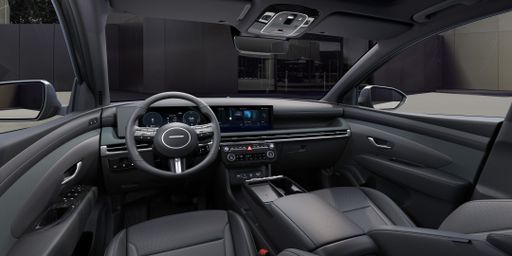
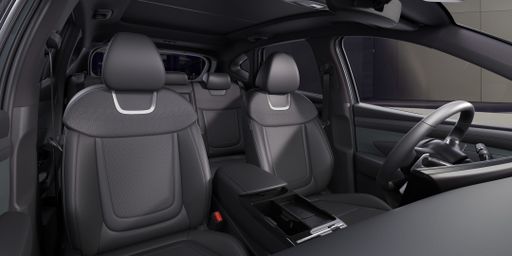
Hyundai Tucson marries bold, sculpted looks with a clever, roomy cabin that feels smarter than its price tag suggests. It's composed on the road, easy to live with day-to-day, and a sensible choice for buyers who want SUV style without the showroom theatrics.

details

MINI Countryman

The MINI Countryman turns the cheeky charm of a classic MINI into a proper all-rounder, blending playful styling with surprisingly usable space for everyday life. It still grins at city lights but will happily tackle muddy lanes, perfect for buyers who want character without sacrificing practicality.

details
Hyundai Tucson
MINI Countryman
Tucson @ Hyundai Motor Company
Countryman @ MINI / BMW Group Press

Costs and Consumption

Price
30600 - 46300 £
Price
31500 - 45300 £
Consumption L/100km
1 - 7.6 L
Consumption L/100km
4.6 - 7.8 L
Consumption kWh/100km
-
Consumption kWh/100km
15.7 - 16.8 kWh
Electric Range
64 - 70 km
Electric Range
432 - 462 km
Battery Capacity
-
Battery Capacity
64.60 kWh
co2
22 - 172 g/km
co2
0 - 177 g/km
Fuel tank capacity
42 - 54 L
Fuel tank capacity
45 - 54 L

Dimensions and Body

Body Type
SUV
Body Type
SUV
Seats
5
Seats
5
Doors
5
Doors
5
Curb weight
1542 - 1889 kg
Curb weight
1620 - 2075 kg
Trunk capacity
546 - 620 L
Trunk capacity
450 - 505 L
Length
4510 - 4535 mm
Length
4444 - 4447 mm
Width
1865 mm
Width
1843 mm
Height
1650 mm
Height
1635 - 1661 mm
Max trunk capacity
1721 - 1799 L
Max trunk capacity
1450 - 1530 L
Payload
523 - 545 kg
Payload
460 - 500 kg

Engine and Performance

Engine Type
Diesel MHEV, Plugin Hybrid, Petrol, Full Hybrid
Engine Type
Petrol MHEV, Diesel MHEV, Electric, Petrol
Transmission
Automatic, Manuel
Transmission
Automatic
Transmission Detail
Dual-Clutch Automatic, Automatic Gearbox, Manual Gearbox
Transmission Detail
Dual-Clutch Automatic, Automatic Gearbox, Reduction Gearbox
Drive Type
Front-Wheel Drive, All-Wheel Drive
Drive Type
Front-Wheel Drive, All-Wheel Drive
Power HP
136 - 252 HP
Power HP
163 - 313 HP
Acceleration 0-100km/h
7.9 - 11.6 s
Acceleration 0-100km/h
5.4 - 8.6 s
Max Speed
180 - 204 km/h
Max Speed
170 - 250 km/h
Torque
250 - 379 Nm
Torque
250 - 494 Nm
Number of Cylinders
4
Number of Cylinders
3 - 4
Power kW
100 - 185 kW
Power kW
120 - 230 kW
Engine capacity
1598 cm3
Engine capacity
1499 - 1998 cm3

General

Model Year
2024 - 2025
Model Year
2024
CO2 Efficiency Class
E, B, F, D
CO2 Efficiency Class
D, E, A, G
Brand
Hyundai
Brand
MINI
What drive types are available for the Hyundai Tucson?

Available configurations include Front-Wheel Drive or All-Wheel Drive.

The prices and data displayed are estimates based on German list prices and may vary by country. This information is not legally binding.

do not click