
 Deutschland
 France
 Nederland
 Great Britain
 Sverige
 Norge
Norge Danmark
 Suomi
Suomi Italia
 Polska
 España
VS
Hyundai Tucson vs Voyah Free – Which one offers the better deal?
Two cars, one duel: Hyundai Tucson meets Voyah Free.
Which one wins in performance, efficiency and value for money? Find out now!
Tucson
@ Hyundai Motor Company
Costs and Efficiency:
Price and efficiency are key factors when choosing a car – and this is often where the real differences emerge.
Hyundai Tucson has a decisively advantage in terms of price – it starts at 30600 £, while the Voyah Free costs 51400 £. That’s a price difference of around 20786 £.
As for range, the Voyah Free performs clearly better – achieving up to 500 km, about 430 km more than the Hyundai Tucson.
Tucson
@ Hyundai Motor Company
Engine and Performance:
Power, torque and acceleration say a lot about how a car feels on the road. This is where you see which model delivers more driving dynamics.
When it comes to engine power, the Voyah Free has a decisively edge – offering 490 HP compared to 252 HP. That’s roughly 238 HP more horsepower.
In acceleration from 0 to 100 km/h, the Voyah Free is convincingly quicker – completing the sprint in 4.40 s, while the Hyundai Tucson takes 7.90 s. That’s about 3.50 s faster.
In terms of top speed, the Hyundai Tucson performs slight better – reaching 204 km/h, while the Voyah Free tops out at 200 km/h. The difference is around 4 km/h.
There’s also a difference in torque: Voyah Free pulls significantly stronger with 720 Nm compared to 379 Nm. That’s about 341 Nm difference.
Tucson
@ Hyundai Motor Company
Space and Everyday Use:
Cabin size, boot volume and payload all play a role in everyday practicality. Here, comfort and flexibility make the difference.
Both vehicles offer seating for 5 people.
In curb weight, Hyundai Tucson is noticeable lighter – 1542 kg compared to 2150 kg. The difference is around 608 kg.
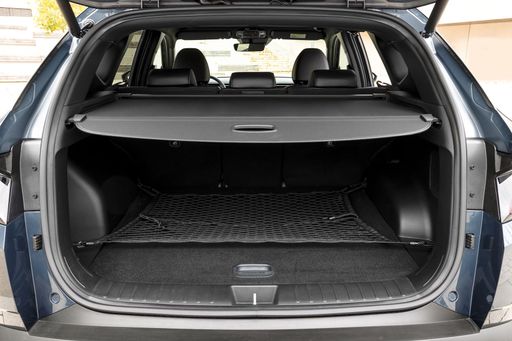
In terms of boot space, the Hyundai Tucson offers minimal more room – 620 L compared to 560 L. That’s a difference of about 60 L.
In maximum load capacity, the Hyundai Tucson performs clearly perceptible better – up to 1799 L, which is about 479 L more than the Voyah Free.
When it comes to payload, Voyah Free minimal takes the win – 605 kg compared to 545 kg. That’s a difference of about 60 kg.
Who comes out on top?
Overall, the Voyah Free shows itself to be is largely superior and secures the title of DriveDuel Champion.
It convinces with the more balanced overall package and proves to be the more versatile choice for everyday use.
from about £51,400

Voyah Free
Hyundai Tucson
Hyundai Tucson marries bold, sculpted looks with a clever, roomy cabin that feels smarter than its price tag suggests. It's composed on the road, easy to live with day-to-day, and a sensible choice for buyers who want SUV style without the showroom theatrics.
details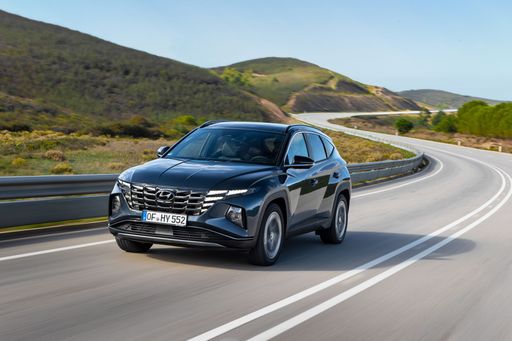 @ Hyundai Motor Company
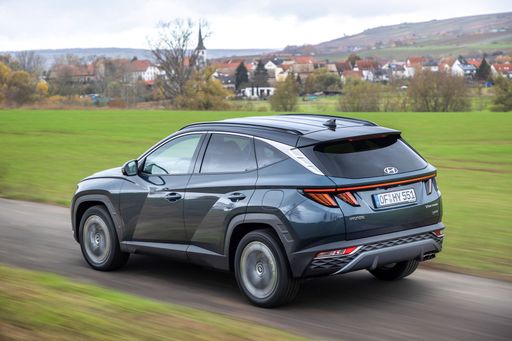 @ Hyundai Motor Company
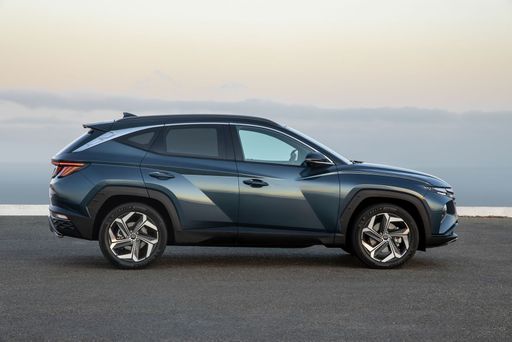 @ Hyundai Motor Company
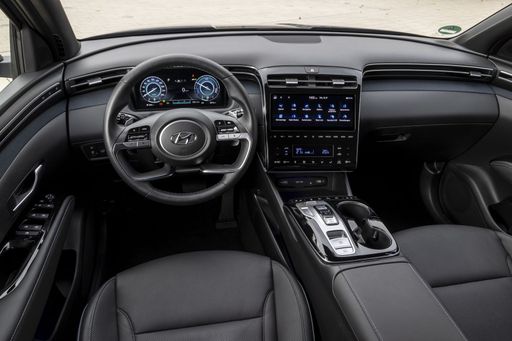 @ Hyundai Motor Company
 @ Hyundai Motor Company
Voyah Free
The Voyah Free is a luxurious all-electric SUV that combines cutting-edge technology with a sleek, modern design. Inside, the spacious cabin offers premium materials and a host of high-tech features, ensuring a comfortable and engaging driving experience. With its impressive performance and environmentally friendly credentials, the Voyah Free is positioned as a compelling choice in the growing market for electric vehicles.
details
Hyundai Tucson
Voyah Free
|
@ Hyundai Motor Company
|
|
|
|
|
Costs and Consumption |
|
|---|---|
|
Price
30600 - 46300 £
|
Price
51400 - 66000 £
|
|
Consumption L/100km
1 - 7.6 L
|
Consumption L/100km
-
|
|
Consumption kWh/100km
-
|
Consumption kWh/100km
20.20 kWh
|
|
Electric Range
64 - 70 km
|
Electric Range
259 - 500 km
|
|
Battery Capacity
-
|
Battery Capacity
-
|
|
co2
22 - 172 g/km
|
co2
0 g/km
|
|
Fuel tank capacity
42 - 54 L
|
Fuel tank capacity
-
|
Dimensions and Body |
|
|---|---|
|
Body Type
SUV
|
Body Type
SUV
|
|
Seats
5
|
Seats
5
|
|
Doors
5
|
Doors
5
|
|
Curb weight
1542 - 1889 kg
|
Curb weight
2150 - 2340 kg
|
|
Trunk capacity
546 - 620 L
|
Trunk capacity
560 L
|
|
Length
4510 - 4535 mm
|
Length
4905 mm
|
|
Width
1865 mm
|
Width
1950 mm
|
|
Height
1650 mm
|
Height
1645 mm
|
|
Max trunk capacity
1721 - 1799 L
|
Max trunk capacity
1320 L
|
|
Payload
523 - 545 kg
|
Payload
605 kg
|
Engine and Performance |
|
|---|---|
|
Engine Type
Diesel MHEV, Plugin Hybrid, Petrol, Full Hybrid
|
Engine Type
Electric, Plugin Hybrid
|
|
Transmission
Automatic, Manuel
|
Transmission
Automatic
|
|
Transmission Detail
Dual-Clutch Automatic, Automatic Gearbox, Manual Gearbox
|
Transmission Detail
Reduction Gearbox
|
|
Drive Type
Front-Wheel Drive, All-Wheel Drive
|
Drive Type
All-Wheel Drive, Rear-Wheel Drive
|
|
Power HP
136 - 252 HP
|
Power HP
272 - 490 HP
|
|
Acceleration 0-100km/h
7.9 - 11.6 s
|
Acceleration 0-100km/h
4.4 - 7.6 s
|
|
Max Speed
180 - 204 km/h
|
Max Speed
180 - 200 km/h
|
|
Torque
250 - 379 Nm
|
Torque
410 - 720 Nm
|
|
Number of Cylinders
4
|
Number of Cylinders
4
|
|
Power kW
100 - 185 kW
|
Power kW
200 - 360 kW
|
|
Engine capacity
1598 cm3
|
Engine capacity
1499 cm3
|
General |
|
|---|---|
|
Model Year
2024 - 2025
|
Model Year
2024 - 2025
|
|
CO2 Efficiency Class
E, B, F, D
|
CO2 Efficiency Class
A
|
|
Brand
Hyundai
|
Brand
Voyah
|
What drive types are available for the Hyundai Tucson?
Available configurations include Front-Wheel Drive or All-Wheel Drive.
The prices and data displayed are estimates based on German list prices and may vary by country. This information is not legally binding.