@ Jaguar Land Rover Media
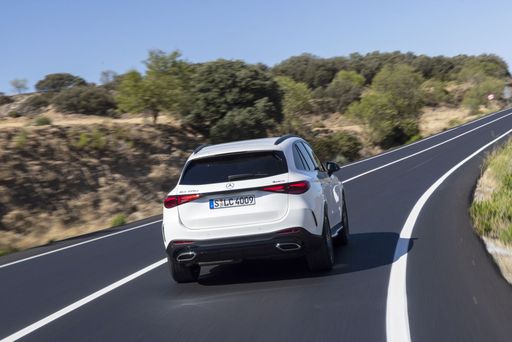
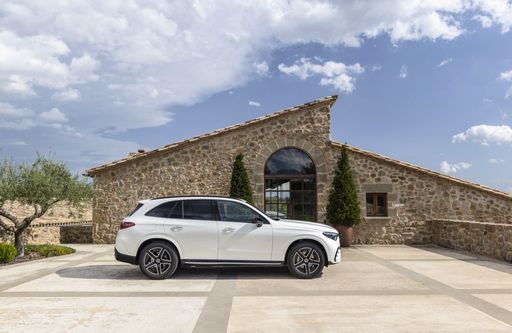
@ Mercedes-Benz Group Media
VS

Jaguar E-Pace vs Mercedes GLC – Which car suits you better?

Everyday use, family trips or long-distance drives – here’s where the differences show.
Discover whether Jaguar E-Pace or Mercedes GLC fits your lifestyle better.

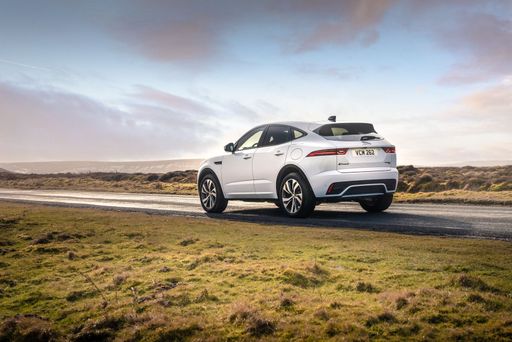
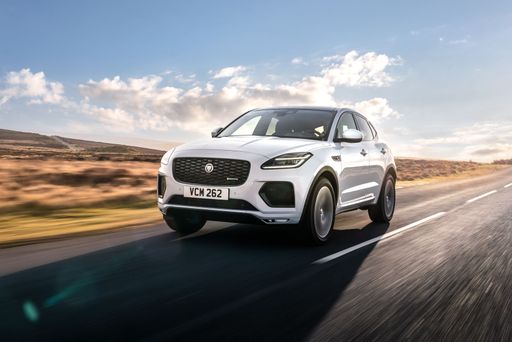
E-Pace @ Jaguar Land Rover Media

The Jaguar E-Pace vs. Mercedes GLC: A Clash of the Titans in the SUV Arena

In the ever-evolving world of luxury SUVs, two names stand out from the crowd: Jaguar E-Pace and Mercedes-Benz GLC. Both vehicles represent the pinnacle of automotive ingenuity and innovation, perfectly blending performance, elegance, and cutting-edge technology. In this article, we delve into the detailed comparison of these two giants to help you decide which one deserves a spot in your garage.
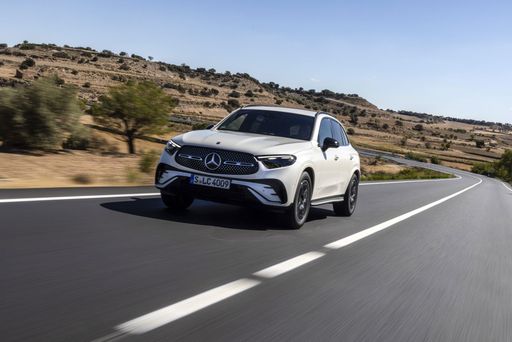
GLC @ Mercedes-Benz Group Media

Power and Performance

The Jaguar E-Pace offers a range of engine options, including Plugin Hybrid, Diesel Mild Hybrid Electric Vehicle (MHEV), and Petrol MHEV, with power ranging from 160 to 269 HP. The E-Pace boasts an acceleration of 0-100 km/h in as fast as 7.3 seconds and reaches a top speed of up to 211 km/h. The automatic transmission and all-wheel or front-wheel drive options add to its versatile performance on the road.

On the other hand, the Mercedes GLC comes with an impressive lineup of engine types, such as Petrol MHEV, Diesel MHEV, and Plugin Hybrid. The power output varies significantly from 186 to an exhilarating 680 HP, while the GLC can sprint from 0 to 100 km/h in a swift 3.5 seconds, reaching top speeds of 275 km/h. Exclusively featuring an automatic gearbox coupled with all-wheel drive, it's designed for those who crave a thrilling driving experience.

E-Pace @ Jaguar Land Rover Media

Efficiency and Range

Jaguar's E-Pace prides itself on its efficient fuel consumption, especially with the Plugin Hybrid variant featuring a consumption of just 1.4 L/100km. Its electric range extends to 69 km with an 11.5 kWh battery capacity, making it an excellent choice for environmentally conscious drivers.

The Mercedes GLC Plugin Hybrid pushes boundaries with a remarkably low consumption of 0.4 L/100km and an impressive electric range of up to 130 km. Such efficiency classifies it as one of the pioneers in hybrid technology, offering substantial reductions in fuel consumption and emissions.

GLC @ Mercedes-Benz Group Media

Interior and Comfort

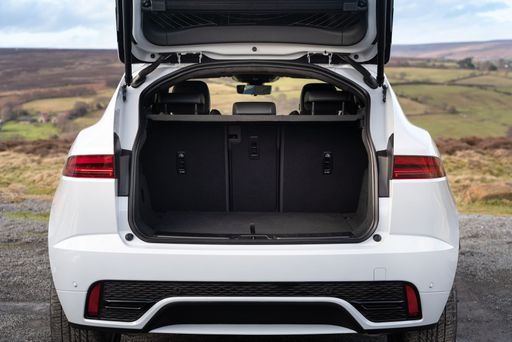
Jaguar E-Pace accommodates five passengers comfortably, providing ample space with its 494 L trunk capacity. Its sleek dimensions (4395 mm length by 1984 mm width by 1648 mm height) ensure a spacious interior while maintaining an elegant and sporty exterior look.

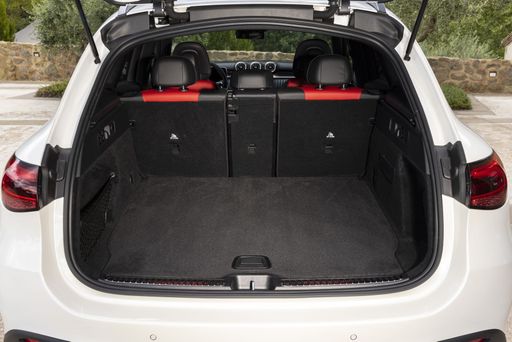
The Mercedes GLC also seats five, but with a slightly larger trunk capacity of 620 L in some variants. With dimensions measuring up to 4792 mm in length, it assures both comfort and practicality for those long family journeys. The GLC’s design is refined and sophisticated, living up to the prestigious Mercedes-Benz standard.

E-Pace @ Jaguar Land Rover Media

Innovations and Technology

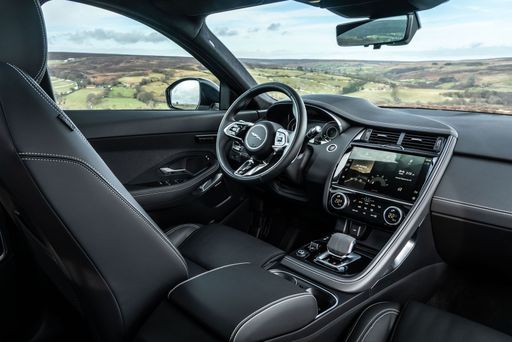
The E-Pace integrates numerous advanced features, enhancing safety and connectivity. It includes the latest in infotainment systems and driver assistance technologies, promising a seamless and enjoyable ride.

Mercedes GLC steps up the game with its state-of-the-art MBUX infotainment system, incorporating artificial intelligence to adapt to user behavior, providing a personalized driving experience. Its suite of safety features and driver aids set a benchmark in the SUV category, ensuring peace of mind on the road.

GLC @ Mercedes-Benz Group Media

The Verdict

The choice between the Jaguar E-Pace and the Mercedes GLC boils down to individual preference. The E-Pace is ideal for those who prioritize efficiency and an elegant style, whereas the GLC appeals to speed enthusiasts and tech-savvy drivers who desire a touch of luxury coupled with performance.

Ultimately, both vehicles offer a magnificent ride, making the final decision a matter of personal taste and lifestyle needs.

Here’s where it gets real: The technical differences in detail

E-Pace @ Jaguar Land Rover Media

Costs and Efficiency:

When it comes to price and running costs, the biggest differences usually appear. This is often where you see which car fits your budget better in the long run.

Jaguar E-Pace has a significantly advantage in terms of price – it starts at 32400 £, while the Mercedes GLC costs 50300 £. That’s a price difference of around 17927 £.

Fuel consumption also shows a difference: Jaguar E-Pace manages with 1.40 L and is therefore slightly more efficient than the Mercedes GLC with 1.60 L. The difference is about 0.20 L per 100 km.

As for range, the Mercedes GLC performs convincingly better – achieving up to 714 km, about 645 km more than the Jaguar E-Pace.

GLC @ Mercedes-Benz Group Media

Engine and Performance:

Power, torque and acceleration are the classic benchmarks for car enthusiasts – and here, some clear differences start to show.

When it comes to engine power, the Mercedes GLC has a clearly edge – offering 680 HP compared to 269 HP. That’s roughly 411 HP more horsepower.

In acceleration from 0 to 100 km/h, the Mercedes GLC is clearly quicker – completing the sprint in 3.50 s, while the Jaguar E-Pace takes 7.30 s. That’s about 3.80 s faster.

In terms of top speed, the Mercedes GLC performs distinct better – reaching 275 km/h, while the Jaguar E-Pace tops out at 211 km/h. The difference is around 64 km/h.

There’s also a difference in torque: Mercedes GLC pulls significantly stronger with 1020 Nm compared to 540 Nm. That’s about 480 Nm difference.

E-Pace @ Jaguar Land Rover Media

Space and Everyday Use:

Beyond pure performance, interior space and usability matter most in daily life. This is where you see which car is more practical and versatile.

Both vehicles offer seating for 5 people.

In curb weight, Jaguar E-Pace is slight lighter – 1783 kg compared to 1910 kg. The difference is around 127 kg.

In terms of boot space, the Mercedes GLC offers evident more room – 620 L compared to 494 L. That’s a difference of about 126 L.

In maximum load capacity, the Mercedes GLC performs distinct better – up to 1740 L, which is about 570 L more than the Jaguar E-Pace.

When it comes to payload, Mercedes GLC barely noticeable takes the win – 600 kg compared to 554 kg. That’s a difference of about 46 kg.

Who wins the race?

The Mercedes GLC proves to be is largely superior and therefore becomes our DriveDuel Champion!
Mercedes GLC is the better all-rounder in this comparison.

from about £50,300
GLC @ Mercedes-Benz Group Media

Mercedes GLC

  • Engine Type : Petrol MHEV, Plugin Hybrid, Diesel MHEV, Electric
  • Transmission : Automatic
  • Drive Type : All-Wheel Drive
  • Power HP : 186 - 680 HP
  • Consumption L/100km : 1.6 - 9.9 L
  • Consumption kWh/100km : 14.9 - 16.6 kWh
  • Electric Range : 12 - 714 km

Jaguar E-Pace

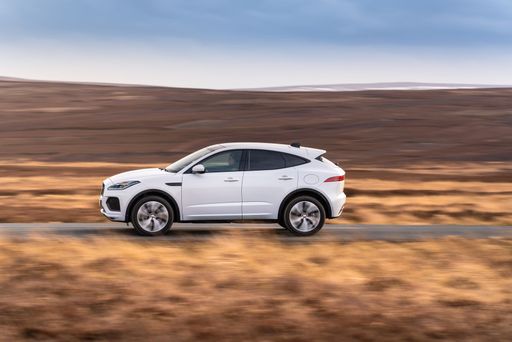
The Jaguar E-Pace is a compact SUV that combines the brand's signature luxury with a dynamic driving experience. Its sleek design features graceful lines and an assertive stance, making it a standout on any road. Inside, the E-Pace boasts a meticulously crafted interior with high-quality materials and advanced technology, providing both comfort and connectivity for drivers and passengers alike.

details

Mercedes GLC

4 (2)
rate

The Mercedes GLC blends plush cabin comfort and composed road manners into an SUV that feels more grown-up than it looks. It won’t shout for attention, but will quietly please buyers who want refinement, usable space and a touch of luxury without the drama.

details
Jaguar E-Pace
Mercedes GLC
E-Pace @ Jaguar Land Rover Media
GLC @ Mercedes-Benz Group Media

Costs and Consumption

Price
32400 - 56100 £
Price
50300 - 126600 £
Consumption L/100km
1.4 - 8.2 L
Consumption L/100km
1.6 - 9.9 L
Consumption kWh/100km
-
Consumption kWh/100km
14.9 - 16.6 kWh
Electric Range
69 km
Electric Range
12 - 714 km
Battery Capacity
11.50 kWh
Battery Capacity
94 kWh
co2
33 - 185 g/km
co2
0 - 225 g/km
Fuel tank capacity
56 - 67 L
Fuel tank capacity
49 - 65 L

Dimensions and Body

Body Type
SUV
Body Type
SUV
Seats
5
Seats
5
Doors
5
Doors
5
Curb weight
1783 - 2173 kg
Curb weight
1910 - 2535 kg
Trunk capacity
494 L
Trunk capacity
390 - 620 L
Length
4395 mm
Length
4716 - 4845 mm
Width
1984 mm
Width
1890 - 1913 mm
Height
1648 mm
Height
1603 - 1647 mm
Max trunk capacity
1170 L
Max trunk capacity
1335 - 1740 L
Payload
497 - 554 kg
Payload
475 - 600 kg

Engine and Performance

Engine Type
Plugin Hybrid, Diesel MHEV, Petrol MHEV
Engine Type
Petrol MHEV, Plugin Hybrid, Diesel MHEV, Electric
Transmission
Automatic
Transmission
Automatic
Transmission Detail
Automatic Gearbox
Transmission Detail
Automatic Gearbox, Reduction Gearbox
Drive Type
All-Wheel Drive, Front-Wheel Drive
Drive Type
All-Wheel Drive
Power HP
160 - 269 HP
Power HP
186 - 680 HP
Acceleration 0-100km/h
7.3 - 10.5 s
Acceleration 0-100km/h
3.5 - 9 s
Max Speed
190 - 211 km/h
Max Speed
208 - 275 km/h
Torque
260 - 540 Nm
Torque
320 - 1020 Nm
Number of Cylinders
3 - 4
Number of Cylinders
4 - 6
Power kW
118 - 198 kW
Power kW
137 - 500 kW
Engine capacity
1498 - 1998 cm3
Engine capacity
1991 - 2989 cm3

General

Model Year
2024
Model Year
2025 - 2026
CO2 Efficiency Class
B, G
CO2 Efficiency Class
F, G, B, A
Brand
Jaguar
Brand
Mercedes-Benz
What drive types are available for the Jaguar E-Pace?

The Jaguar E-Pace is offered with All-Wheel Drive or Front-Wheel Drive.

The prices and data displayed are estimates based on German list prices and may vary by country. This information is not legally binding.