
 Deutschland
 France
 Nederland
 Great Britain
 Sverige
 Norge
Norge Danmark
 Suomi
Suomi Italia
 Polska
 España
VS
Jaguar I-Pace vs Lucid Gravity - Differences and prices compared
Compare performance (400 HP vs 839 HP), boot space and price (79200 £ vs 85600 £ ) at a glance. Find out which car is the better choice for you – Jaguar I-Pace or Lucid Gravity?
I-Pace
Costs and Efficiency:
Price and efficiency are key factors when choosing a car – and this is often where the real differences emerge.
Jaguar I-Pace has a minimal advantage in terms of price – it starts at 79200 £ , while the Lucid Gravity costs 85600 £ . That’s a price difference of around 6428 £.
In terms of energy consumption, the advantage goes to the Lucid Gravity: with 18.20 kWh per 100 km, it’s noticeable more efficient than the Jaguar I-Pace with 25.20 kWh. That’s a difference of about 7 kWh.
As for electric range, the Lucid Gravity performs noticeable better – achieving up to 748 km, about 279 km more than the Jaguar I-Pace.
I-Pace
Engine and Performance:
Power, torque and acceleration say a lot about how a car feels on the road. This is where you see which model delivers more driving dynamics.
When it comes to engine power, the Lucid Gravity has a clearly edge – offering 839 HP compared to 400 HP. That’s roughly 439 HP more horsepower.
In acceleration from 0 to 100 km/h, the Lucid Gravity is noticeable quicker – completing the sprint in 3.60 s, while the Jaguar I-Pace takes 4.80 s. That’s about 1.20 s faster.
In terms of top speed, the Lucid Gravity performs somewhat better – reaching 250 km/h, while the Jaguar I-Pace tops out at 200 km/h. The difference is around 50 km/h.
There’s also a difference in torque: Lucid Gravity pulls significantly stronger with 1232 Nm compared to 696 Nm. That’s about 536 Nm difference.
Ad · Affiliate
As an Amazon Associate, we earn from qualifying purchases.
I-Pace
Space and Everyday Use:
Cabin size, boot volume and payload all play a role in everyday practicality. Here, comfort and flexibility make the difference.
Both vehicles offer seating for 5 people.
In curb weight, Jaguar I-Pace is a bit lighter – 2226 kg compared to 2522 kg. The difference is around 296 kg.
In terms of boot space, the Lucid Gravity offers slightly more room – 780 L compared to 638 L. That’s a difference of about 142 L.
In maximum load capacity, the Lucid Gravity performs clearly better – up to 3398 L, which is about 1945 L more than the Jaguar I-Pace.
When it comes to payload, Lucid Gravity convincingly takes the win – 798 kg compared to 444 kg. That’s a difference of about 354 kg.
Who comes out on top?
Overall, the Lucid Gravity shows itself to be is largely superior and secures the title of DriveDuel Champion.
It convinces with the more balanced overall package and proves to be the more versatile choice for everyday use.
from about £85,600

Lucid Gravity
Jaguar I-Pace
Lucid Gravity
Costs and Consumption
View detailed analysis
View detailed analysis
Engine and Performance
View detailed analysis
View detailed analysis
Dimensions and Body
View detailed analysis
View detailed analysis
Jaguar I-Pace
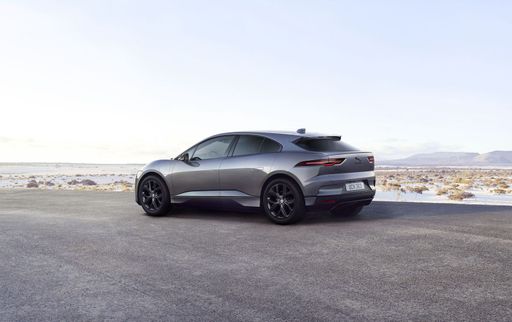
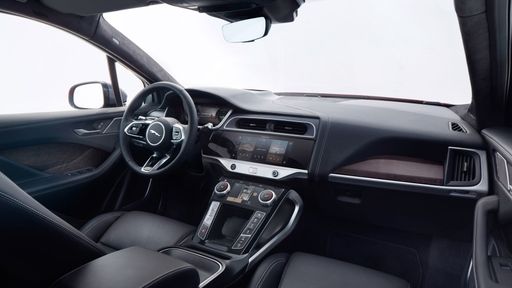
The Jaguar I-Pace pairs instantaneous electric shove with graceful, feline looks, so it never feels like you're piloting a refrigerator with style. Inside it serves proper Jaguar luxury and clever packaging, making it a tempting choice for buyers who want EV convenience without losing personality.
details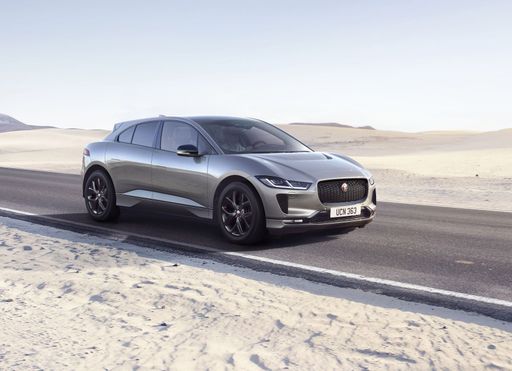
Lucid Gravity
The Lucid Gravity stands out as an impressive all-electric SUV that promises to redefine luxury and performance for adventure-loving drivers. With its sleek design and spacious interior, it offers a first-class travel experience, coupled with cutting-edge technology and style. As the SUV market continues to embrace electrification, the Lucid Gravity is setting new standards in both efficiency and elegance.
details
Jaguar I-Pace
Lucid Gravity
Costs and Consumption |
|
|---|---|
|
Price
79200 - 85500 £
|
Price
85600 - 100200 £
|
|
Consumption L/100km
-
|
Consumption L/100km
-
|
|
Consumption kWh/100km
25.20 kWh
|
Consumption kWh/100km
18.20 kWh
|
|
Electric Range
469 km
|
Electric Range
545 - 748 km
|
|
Battery Capacity
84.70 kWh
|
Battery Capacity
-
|
|
co2
0 g/km
|
co2
0 g/km
|
|
Fuel tank capacity
-
|
Fuel tank capacity
-
|
Dimensions and Body |
|
|---|---|
|
Body Type
SUV
|
Body Type
SUV
|
|
Seats
5
|
Seats
5
|
|
Doors
5
|
Doors
5
|
|
Curb weight
2226 kg
|
Curb weight
2522 - 2684 kg
|
|
Trunk capacity
638 L
|
Trunk capacity
780 L
|
|
Length
4682 mm
|
Length
5035 mm
|
|
Width
2011 mm
|
Width
2000 mm
|
|
Height
1566 mm
|
Height
1658 mm
|
|
Max trunk capacity
1453 L
|
Max trunk capacity
3398 L
|
|
Payload
444 kg
|
Payload
636 - 798 kg
|
Engine and Performance |
|
|---|---|
|
Engine Type
Electric
|
Engine Type
Electric
|
|
Transmission
Automatic
|
Transmission
Automatic
|
|
Transmission Detail
Reduction Gearbox
|
Transmission Detail
Reduction Gearbox
|
|
Drive Type
All-Wheel Drive
|
Drive Type
All-Wheel Drive
|
|
Power HP
400 HP
|
Power HP
568 - 839 HP
|
|
Acceleration 0-100km/h
4.80 s
|
Acceleration 0-100km/h
3.6 - 4.2 s
|
|
Max Speed
200 km/h
|
Max Speed
250 km/h
|
|
Torque
696 Nm
|
Torque
1232 Nm
|
|
Number of Cylinders
-
|
Number of Cylinders
-
|
|
Power kW
294 kW
|
Power kW
418 - 617 kW
|
|
Engine capacity
-
|
Engine capacity
-
|
General |
|
|---|---|
|
Model Year
2023
|
Model Year
2026
|
|
CO2 Efficiency Class
A
|
CO2 Efficiency Class
A
|
|
Brand
Jaguar
|
Brand
Lucid
|
What drivetrain options does the Jaguar I-Pace have?
Available configurations include All-Wheel Drive.
The prices shown are estimates based on German list prices, adjusted for local VAT. Local registration taxes (e.g. NoVA, BPM or CO2 malus) are not included. This information is not legally binding.