@ Jeep / Stellantis Media
@ Mercedes-Benz Group Media
VS

Jeep Compass vs Mercedes B Class – Which one offers the better deal?

Compare performance, boot capacity, efficiency and price at a glance.
Find out which car is the better choice for you – Jeep Compass or Mercedes B Class?

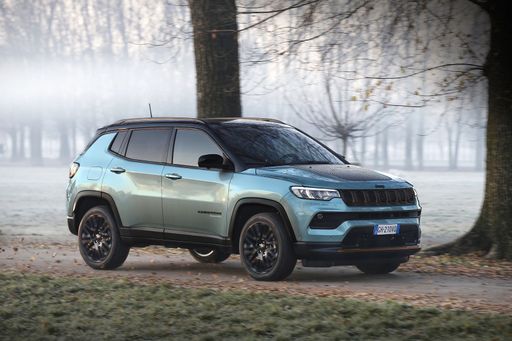
Compass @ Jeep / Stellantis Media

Jeep Compass vs. Mercedes B-Klasse: A Battle of Performance and Practicality

In the diverse world of automobiles, choosing between an SUV and an MPV can significantly impact your driving experience. For those eyeing the 2024 models, the Jeep Compass and the Mercedes B-Klasse represent top contenders in their respective classes. Both vehicles boast innovative features and performance-driven specifications that cater to a wide range of potential buyers. Let’s delve into a detailed comparison of these two models.
B Class @ Mercedes-Benz Group Media

Performance and Power

The Jeep Compass, an SUV known for its robust performance, offers multiple engine options, including the Petrol Mild Hybrid Electric Vehicle (MHEV) and a Plugin Hybrid. It generates a power range from 130 to an impressive 240 HP, providing drivers with considerable power on varied terrains. The Compass offers both Front-Wheel and All-Wheel Drive options, making it adaptable for different driving conditions. Acceleration-wise, it speeds from 0 to 100 km/h in as little as 7.3 seconds, and a maximum speed of 200 km/h caters to those with a need for speed.

On the other hand, the Mercedes B-Klasse positions itself as an efficient and performance-oriented MPV. The B-Klasse offers a diverse engine range, from Petrol MHEV to diesel and Plugin Hybrid configurations. With horsepower ranging from 116 to 238 HP, the B-Klasse promises flexibility in power delivery. Its acceleration ranges from 6.5 to 10 seconds (0-100 km/h), with top speeds reaching up to 250 km/h, primarily for the speed aficionados.

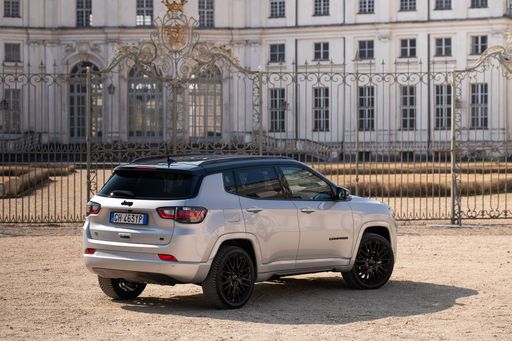
Compass @ Jeep / Stellantis Media

Efficiency and Range

Efficiency enthusiasts will find contrasting offerings in these two vehicles. The Compass Plugin Hybrid impressively delivers a low fuel consumption of 2 L/100km and supports an electric range of 36 km, catering to eco-conscious drivers. The Mercedes B-Klasse's Plugin Hybrid variant offers an electric range of 83 km and showcases commendable fuel consumption of just 0.8 L/100km, manifesting the brand's commitment to sustainable mobility.

B Class @ Mercedes-Benz Group Media

Design and Comfort

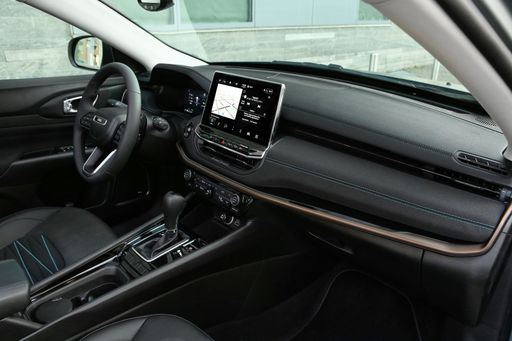
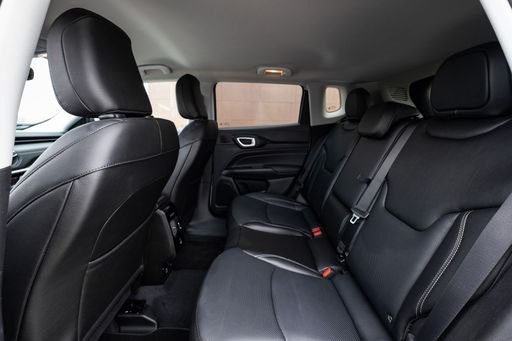
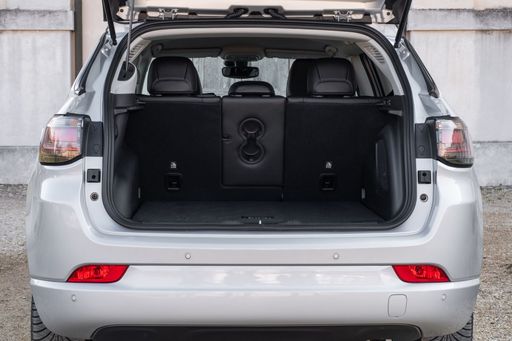
The Compass, with its rugged SUV design, measures 4404 mm in length and 1819 mm in width, providing a sturdy and spacious aesthetic. Inside, it seats five comfortably and boasts a trunk capacity ranging from 420 to 438 liters, enough for outdoor enthusiasts and families alike.

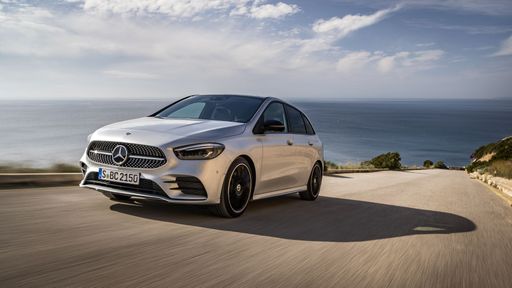
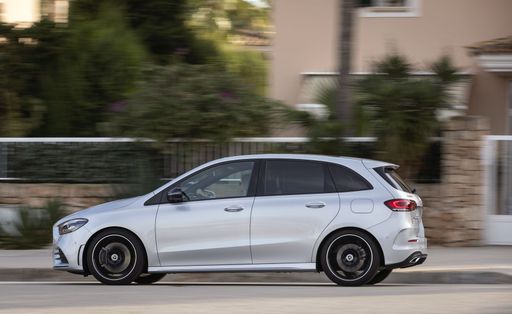
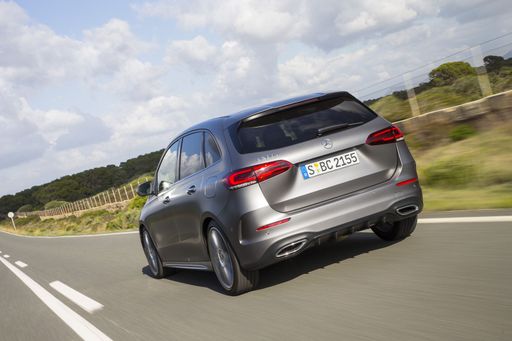
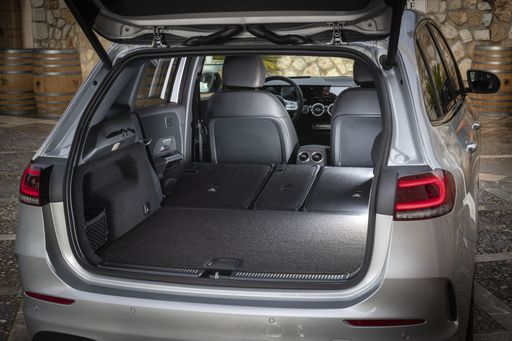
Mercedes' B-Klasse, meanwhile, leans towards a sophisticated MPV design, measuring 4419 mm in length and 1796 mm in width. Although it maintains a lower height compared to the Compass, its trunk offers a generous capacity reaching up to 455 liters. This, combined with advanced interior features, ensures that drivers and passengers experience comfort and style.

Compass @ Jeep / Stellantis Media

Innovation and Features

Both vehicles pack an array of features aimed at enhancing driving experience. Jeep's Compass, true to its adventurous spirit, integrates modern tech in its navigation and infotainment systems. Its dual-clutch automatic transmission offers smooth gear shifts for both the casual commuter and the off-road enthusiast.

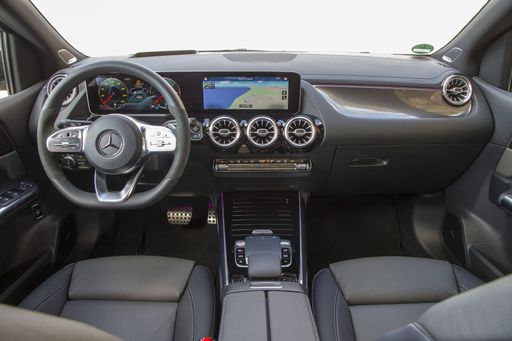
The B-Klasse, infused with Mercedes-Benz's hallmark luxury, focuses on driver assistance and connectivity. Its dual-clutch automatic transmission combined with renowned German engineering ensures precision and comfort. The B-Klasse is also available with advanced safety features and premium interior finishes, setting high standards in the MPV category.

B Class @ Mercedes-Benz Group Media

Conclusion

Choosing between the Jeep Compass and the Mercedes B-Klasse boils down to personal preferences and driving needs. The Compass offers robust performance and adventurous capability for the outdoor oriented. In contrast, the B-Klasse's elegance, efficiency, and performance are ideal for those seeking luxury in everyday commutes. Both models exemplify their brand ethos, making them worthy contenders in the automotive landscape for 2024. Whether you are driven by the call of the wild or the allure of refined urban travel, both vehicles offer compelling options.

Here’s where it gets real: The technical differences in detail

Compass @ Jeep / Stellantis Media

Costs and Efficiency:

Price and efficiency are often the first things buyers look at. Here it becomes clear which model has the long-term edge – whether at the pump, the plug, or in purchase price.

Mercedes B Class has a hardly perceptible advantage in terms of price – it starts at 33100 £, while the Jeep Compass costs 34200 £. That’s a price difference of around 1071 £.

Fuel consumption also shows a difference: Mercedes B Class manages with 2.50 L and is therefore clearly more efficient than the Jeep Compass with 5.80 L. The difference is about 3.30 L per 100 km.

As for range, the Jeep Compass performs decisively better – achieving up to 500 km, about 417 km more than the Mercedes B Class.

B Class @ Mercedes-Benz Group Media

Engine and Performance:

Power, torque and acceleration are the classic benchmarks for car enthusiasts – and here, some clear differences start to show.

When it comes to engine power, the Mercedes B Class has a to a small extent edge – offering 238 HP compared to 213 HP. That’s roughly 25 HP more horsepower.

In acceleration from 0 to 100 km/h, the Mercedes B Class is evident quicker – completing the sprint in 6.50 s, while the Jeep Compass takes 8.50 s. That’s about 2 s faster.

In terms of top speed, the Mercedes B Class performs clearly perceptible better – reaching 250 km/h, while the Jeep Compass tops out at 188 km/h. The difference is around 62 km/h.

There’s also a difference in torque: Mercedes B Class pulls noticeable stronger with 450 Nm compared to 345 Nm. That’s about 105 Nm difference.

Compass @ Jeep / Stellantis Media

Space and Everyday Use:

Cabin size, boot volume and payload all play a role in everyday practicality. Here, comfort and flexibility make the difference.

Both vehicles offer seating for 5 people.

In curb weight, Mercedes B Class is slightly lighter – 1405 kg compared to 1667 kg. The difference is around 262 kg.

In terms of boot space, the Jeep Compass offers to a small extent more room – 550 L compared to 455 L. That’s a difference of about 95 L.

In maximum load capacity, the Jeep Compass performs minimal better – up to 1561 L, which is about 21 L more than the Mercedes B Class.

Who wins the race?

The Mercedes B Class proves to be dominates this comparison and therefore becomes our DriveDuel Champion!
Mercedes B Class is the better all-rounder in this comparison.

from about £33,100
B Class @ Mercedes-Benz Group Media

Mercedes B Class

  • Engine Type : Plugin Hybrid, Petrol MHEV, Diesel
  • Transmission : Automatic
  • Drive Type : Front-Wheel Drive, All-Wheel Drive
  • Power HP : 116 - 238 HP
  • Consumption L/100km : 2.5 - 6.9 L
  • Electric Range : 83 km

Jeep Compass

2 (1)
rate

The Jeep Compass packs classic Jeep styling with a surprisingly composed demeanor, equally at home turning heads in the city or tackling a weekend dirt track. Inside it's a pragmatic, user-friendly compact SUV that prioritizes comfort and versatility — a smart pick if you want a dose of adventure without giving up everyday sense.

details

Mercedes B Class

5 (2)
rate

The Mercedes-Benz B-Class offers a blend of practicality and luxury that sets it apart in the compact MPV segment. Its spacious and versatile interior is complemented by high-quality materials and a sleek design, making it ideal for both families and individuals seeking a touch of elegance on their daily commute. Advanced technology and safety features round out the package, ensuring a comfortable and secure driving experience.

details
Jeep Compass
Mercedes B Class
Compass @ Jeep / Stellantis Media
B Class @ Mercedes-Benz Group Media

Costs and Consumption

Price
34200 - 43200 £
Price
33100 - 52500 £
Consumption L/100km
5.8 - 5.9 L
Consumption L/100km
2.5 - 6.9 L
Consumption kWh/100km
17.50 kWh
Consumption kWh/100km
-
Electric Range
500 km
Electric Range
83 km
Battery Capacity
74 kWh
Battery Capacity
12.90 kWh
co2
0 - 133 g/km
co2
56 - 156 g/km
Fuel tank capacity
55 L
Fuel tank capacity
35 - 51 L

Dimensions and Body

Body Type
SUV
Body Type
MPV
Seats
5
Seats
5
Doors
5
Doors
5
Curb weight
1667 - 2198 kg
Curb weight
1405 - 1745 kg
Trunk capacity
550 L
Trunk capacity
405 - 455 L
Length
4552 mm
Length
4419 mm
Width
1928 mm
Width
1796 mm
Height
1675 mm
Height
1562 mm
Max trunk capacity
1561 L
Max trunk capacity
1440 - 1540 L
Payload
-
Payload
505 - 550 kg

Engine and Performance

Engine Type
Petrol MHEV, Electric
Engine Type
Plugin Hybrid, Petrol MHEV, Diesel
Transmission
Automatic
Transmission
Automatic
Transmission Detail
Dual-Clutch Automatic, Reduction Gearbox
Transmission Detail
Dual-Clutch Automatic
Drive Type
Front-Wheel Drive
Drive Type
Front-Wheel Drive, All-Wheel Drive
Power HP
145 - 213 HP
Power HP
116 - 238 HP
Acceleration 0-100km/h
8.5 - 10.3 s
Acceleration 0-100km/h
6.5 - 10 s
Max Speed
180 - 188 km/h
Max Speed
200 - 250 km/h
Torque
230 - 345 Nm
Torque
200 - 450 Nm
Number of Cylinders
3 - 4
Number of Cylinders
4
Power kW
107 - 157 kW
Power kW
85 - 175 kW
Engine capacity
1199 cm3
Engine capacity
1332 - 1991 cm3

General

Model Year
2025
Model Year
2024 - 2025
CO2 Efficiency Class
D, A
CO2 Efficiency Class
B, D, E, F
Brand
Jeep
Brand
Mercedes-Benz
What drivetrain options does the Jeep Compass have?

The Jeep Compass is available as Front-Wheel Drive.

The prices and data displayed are estimates based on German list prices and may vary by country. This information is not legally binding.