VS

Jeep Renegade vs Fiat Panda comparison

Compare performance (240 HP vs 70 HP), boot space and price (26,700 £ vs 14,100 £ ) at a glance. Find out which car is the better choice for you – Jeep Renegade or Fiat Panda?

Jeep Renegade vs Fiat Panda: Key differences

Jeep Renegade

  • significantly more power
  • considerably more efficient
  • substantially quicker 0–100 km/h
  • visibly more trunk space

Fiat Panda

4.5 (2 Reviews)
rate
  • clearly cheaper
  • clearly lighter
Renegade

Urban Companion vs Rugged Performance: Fiat Panda vs Jeep Renegade

The world of automobiles is diverse, catering to a wide array of preferences and necessities. In the contrasting landscapes of compact urban cars and versatile SUVs, the Fiat Panda and Jeep Renegade shine as excellent representations of their respective categories. Let's delve into their specs and innovations, understanding what makes each distinctive in the context of precise engineering and performance dynamics.

Panda

Fiat Panda: Compact Yet Mighty

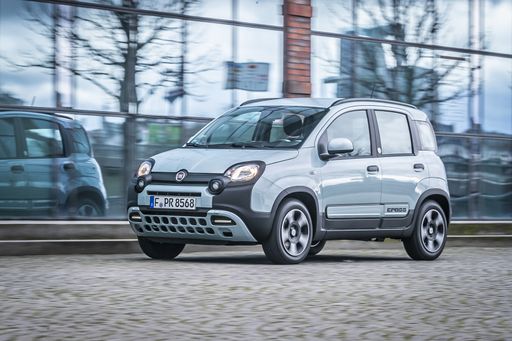
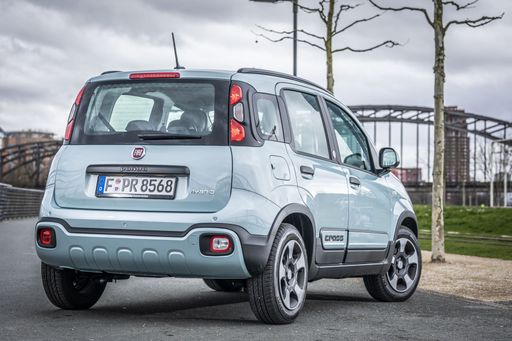
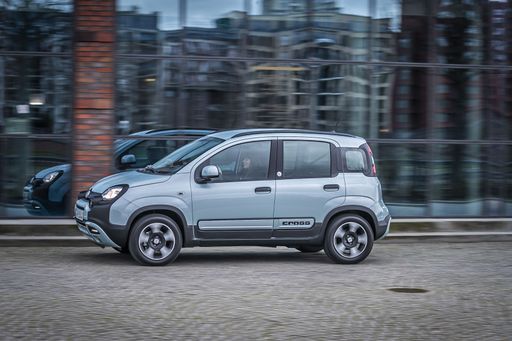
The Fiat Panda is revered for its practicality and compact design, making it an ideal choice for city dwellers. As a hatchback, it offers a body type that is maneuverable and efficient in crowded urban environments. The 2024 model continues this tradition, bringing in modern enhancements.

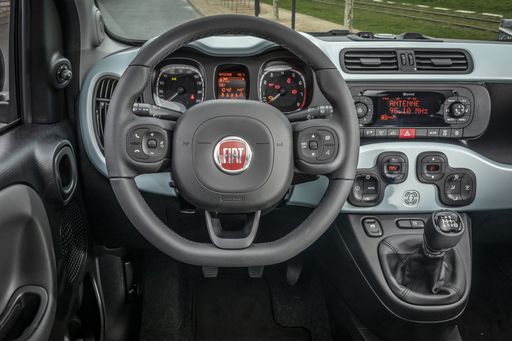
Under the hood, the Panda espouses modernity with a MHEV (Mild Hybrid Electric Vehicle) petrol engine. With a power output of 70 HP (51 kW) and a torque of 92 Nm, it adequately meets the needs of everyday urban commutes. This power is managed by a manual gearbox that delivers a straightforward driving experience, emphasizing control and engagement with a front-wheel-drive system.

Fuel efficiency is where the Panda truly shines, offering a consumption rate of 5 to 5.1 L/100 km, which aligns well with its CO2 emissions class of C or D. The Panda's engine capacity stands at 999 cm3, propelling the car from 0 to 100 km/h in around 13.9 to 14.7 seconds.

With a trunk capacity of 225 liters and seating for up to five people, the Panda ensures sufficient space for both passengers and their belongings. Its compact dimensions, with a length ranging between 3653 mm and 3705 mm, are perfect for navigating tight spaces, while a curb weight of 1055 kg adds to its efficiency and ease of use.

Renegade

Jeep Renegade: Adventure Awaits

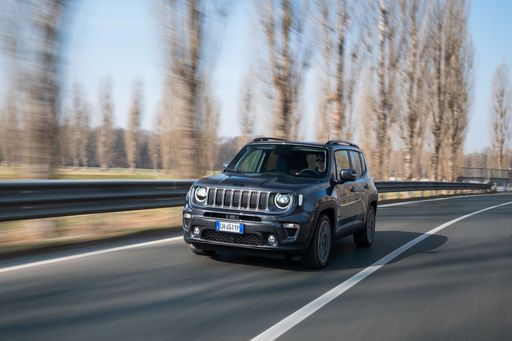
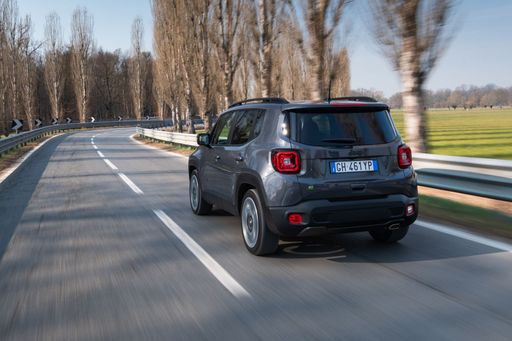
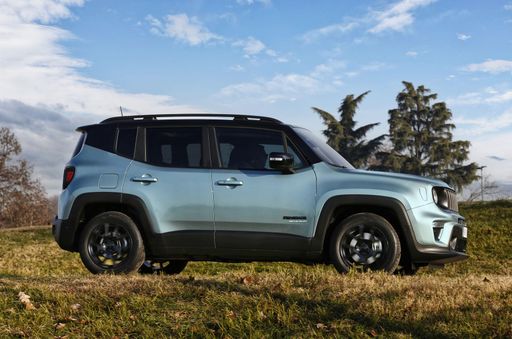
In stark contrast, the Jeep Renegade stands as a symbol of versatile adventure, appealing to those who crave more than just the urban sprawl. The Renegade's SUV body type conveys ruggedness and readiness for diverse terrains and weather conditions.

The 2024 model comes with a choice of engines: a petrol MHEV and a more eco-friendly Plugin Hybrid. The petrol engine offers 130 HP (96 kW), while the hybrid ups that to 240 HP (177 kW), emphasizing Jeep’s commitment to power and sustainability. Acceleration from 0 to 100 km/h is swift, ranging from 9.7 to a brisk 7.1 seconds, depending on the engine.

Fuel consumption varies with the engine choice, from 5.5 L/100km for the MHEV to an impressive 2.1 L/100km for the Plugin Hybrid, which boasts an electric range of 36 km. The CO2 efficiency class can drop to B with the hybrid option, a noteworthy achievement in emissions reduction.

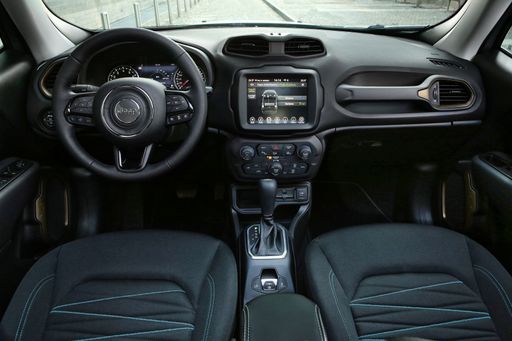
The Renegade's interior space is generous, with a trunk capacity of up to 351 liters. Comfortably seating five, it caters to families and adventurers alike. Its heftier curb weight, from 1420 kg to 1770 kg, adds to its stability on various terrains while providing a payload capacity ranging up to 570 kg.

Dimensions are bolder, with a length of 4236 mm and a height reaching 1718 mm, reinforcing its presence on the road.


Panda

Innovation Meets Individual Needs

Fiat Panda and Jeep Renegade cater to distinct buyer personas. The Panda thrives in urban settings, balancing efficiency and practicality with an environmentally conscious mindset. Meanwhile, the Renegade beckons to explorers, offering power, versatility, and innovation, particularly through its hybrid technology.

Both manufacturers, Fiat and Jeep, encapsulate their vision of modern driving through technical prowess and satisfying unique automotive desires, whether through the cityscape or rugged off-road expeditions.

Here’s where it gets real: The technical differences in detail

Renegade

Costs and Efficiency:

When it comes to price and running costs, the biggest differences usually appear. This is often where you see which car fits your budget better in the long run.

Fiat Panda is clearly cheaper – starting at 14,100 £ , while the Jeep Renegade costs 26,700 £ . That’s a price difference of around 12,523 £.

Fuel consumption also shows a difference: the Jeep Renegade uses 2.1 L/100km and is considerably more efficient than the Fiat Panda with 5 L/100km. The difference is about 2.9 L/100km.

Panda

Engine and Performance:

Power, torque and acceleration are the classic benchmarks for car enthusiasts – and here, some clear differences start to show.

When it comes to engine power, the Jeep Renegade offers significantly more power – delivering 240 HP compared to 70 HP. That’s roughly 170 HP more horsepower.

When accelerating from 0 to 100 km/h, the Jeep Renegade is substantially quicker – completing the sprint in 7.1 s, while the Fiat Panda takes 13.9 s. That’s about 6.8 s quicker.

Looking at top speed, the Jeep Renegade is slightly faster – reaching 199 km/h, while the Fiat Panda tops out at 164 km/h. The difference is around 35 km/h.

There’s also a difference in torque: the Jeep Renegade delivers clearly more torque with 240 Nm compared to 92 Nm. That’s about 148 Nm more.

Renegade

Space and Everyday Use:

Whether family car or daily driver – which one offers more room, flexibility and comfort?

Seats: Jeep Renegade offers more seats – 5 vs 4.

In terms of curb weight, Fiat Panda is clearly lighter – 1,055 kg compared to 1,420 kg. The difference is around 365 kg.

Looking at boot space, the Jeep Renegade offers visibly more boot space – 351 L compared to 225 L. That’s a difference of about 126 L.

For maximum load capacity, the Jeep Renegade offers noticeably more capacity – up to 1,297 L, about 427 L more than the Fiat Panda.

When it comes to payload, the Jeep Renegade carries visibly more – 570 kg compared to 365 kg. That’s a difference of about 205 kg.

Who wins the race in the data check?

The Jeep Renegade is far ahead overall in the objective data comparison.
This result only shows which model scores more points on paper – not which of the two cars feels right for you.

from £26,700
Renegade

Jeep Renegade

  • Engine Type : Petrol MHEV, Plugin Hybrid
  • Transmission : Automatic
  • Drive Type : Front-Wheel Drive, All-Wheel Drive
  • Power HP : 130 - 240 HP
  • Consumption L/100km : 2.1 - 5.5 L/100km
  • Electric Range : 36 km
Jeep Renegade
Fiat Panda

Costs and Consumption

View detailed analysis

Engine and Performance

View detailed analysis

Dimensions and Body

View detailed analysis

Jeep Renegade

The Jeep Renegade wears its chunky, boxy looks like a badge of character, blending genuine off-road swagger with city-friendly manners so it feels at home on a muddy trail or a tight urban lane. Inside you'll find a surprisingly practical cabin with rugged touches and clever storage, making it a sensible choice for buyers who want a compact SUV with personality rather than just another anonymous crossover.

details

Fiat Panda

The Panda is a charming, no-nonsense city companion that mixes cheerful Italian flair with genuinely useful practicality, making tight streets and daily errands feel less of a chore. Its honest simplicity, clever packaging and a dash of cheeky character make it a smart, low-stress buy for people who prefer sensible perks over showroom flash.

details
Jeep Renegade
Fiat Panda

Costs and Consumption

Price
26,700 - 39,200 £
Price
14,100 £
Consumption L/100km
2.1 - 5.5 L/100km
Consumption L/100km
5 L/100km
Consumption kWh/100km
-
Consumption kWh/100km
-
Electric Range
36 km
Electric Range
-
Battery Capacity
-
Battery Capacity
-
co2
48 - 125 g/km
co2
113 g/km
Fuel tank capacity
36 - 48 L
Fuel tank capacity
38 L

Dimensions and Body

Body Type
SUV
Body Type
Hatchback
Seats
5
Seats
4
Doors
5
Doors
5
Curb weight
1,420 - 1,770 kg
Curb weight
1,055 kg
Trunk capacity
330 - 351 L
Trunk capacity
225 L
Length
4,236 mm
Length
3,635 mm
Width
1,805 mm
Width
1,643 mm
Height
1,684 - 1,718 mm
Height
1,551 mm
Max trunk capacity
1,277 - 1,297 L
Max trunk capacity
870 L
Payload
545 - 570 kg
Payload
365 kg

Engine and Performance

Engine Type
Petrol MHEV, Plugin Hybrid
Engine Type
Petrol MHEV
Transmission
Automatic
Transmission
Manuel
Transmission Detail
Dual-Clutch Automatic, Automatic Gearbox
Transmission Detail
Manual Gearbox
Drive Type
Front-Wheel Drive, All-Wheel Drive
Drive Type
Front-Wheel Drive
Power HP
130 - 240 HP
Power HP
70 HP
Acceleration 0-100km/h
7.1 - 9.7 s
Acceleration 0-100km/h
13.9 s
Max Speed
191 - 199 km/h
Max Speed
164 km/h
Torque
240 Nm
Torque
92 Nm
Number of Cylinders
4
Number of Cylinders
3
Power kW
96 - 177 kW
Power kW
51 kW
Engine capacity
1,332 - 1,469 cm3
Engine capacity
999 cm3

General

Model Year
2,024
Model Year
2,024
CO2 Efficiency Class
D, B
CO2 Efficiency Class
C
Brand
Jeep
Brand
Fiat
DriveDuel uses data analysis and artificial intelligence to evaluate vehicle data and create content. Content is regularly reviewed and improved. The displayed prices are estimates based on German list prices, adjusted to the respective country’s VAT. Country-specific registration taxes are not included. This information is not legally binding.