VS

Fiat Panda vs Renault Clio comparison

Compare performance (70 HP vs 158 HP), boot space and price (14,100 £ vs 17,100 £ ) at a glance. Find out which car is the better choice for you – Fiat Panda or Renault Clio?

Fiat Panda vs Renault Clio: Key differences

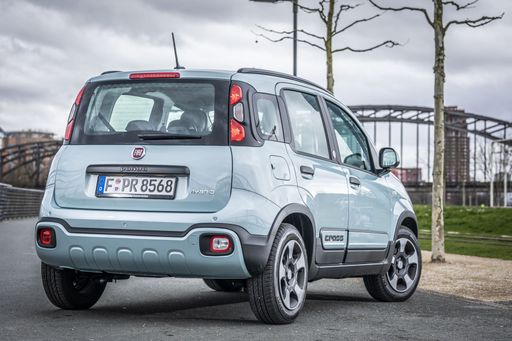
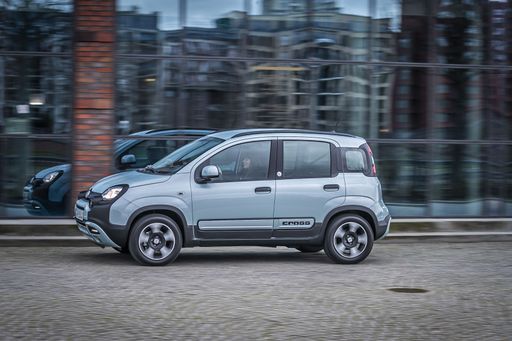
Fiat Panda

4.5 (3 Reviews)
rate
  • noticeably cheaper
  • moderately lighter
details

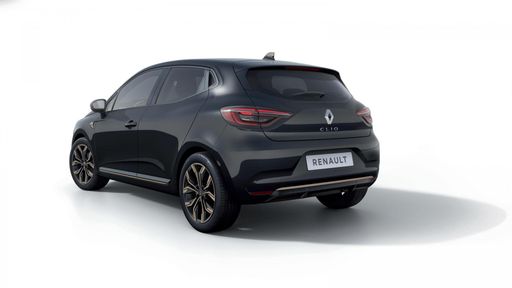
Renault Clio

4.4 (2 Reviews)
rate
  • significantly more power
  • visibly more efficient
  • significantly quicker 0–100 km/h
  • clearly more trunk space
details

All details on performance, efficiency, range and trunk space can be found in the technical comparison below – including user reviews for both models.

By Achim Sedelmaier

Panda

Fiat Panda vs Renault Clio — quick take

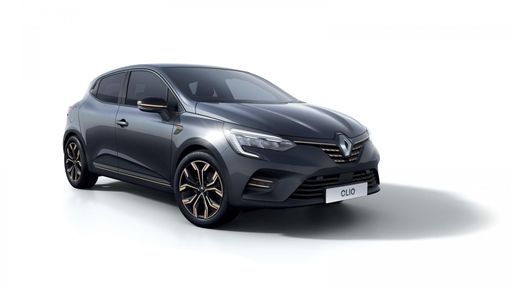
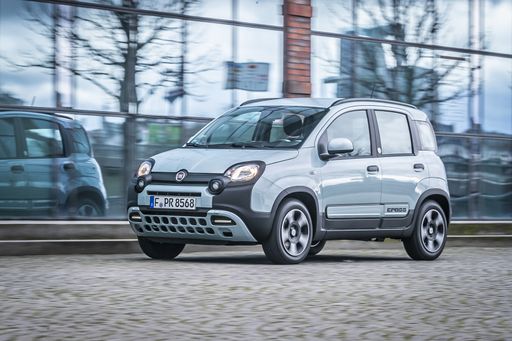
Fiat Panda and Renault Clio sit on opposite ends of the practical-small‑car spectrum: the Panda is the cheeky, ultra‑compact urban specialist while the Clio is the more grown‑up, tech‑forward hatch that stretches its comfort and economy beyond the city. The Panda sells simplicity — tiny footprint, straightforward controls and a friendly price — whereas the Clio sells refinement: quieter cruising, a sophisticated infotainment stack and efficiency gains if you opt for the hybrid. That contrast shapes every choice here: one prioritises parking ease and low purchase cost, the other prioritises low running costs and a calmer long‑distance experience. Read on to see which trade‑offs matter most for your everyday use.
Clio

Character and driving feel

The Fiat Panda feels light, bouncy and deliberately modest — it rewards nimble city moves and short hops but starts to sound and strain when you ask for sustained speed. The Renault Clio drives with a more composed, planted personality; steering is more direct and the chassis expects motorway miles as much as town errands. Where the Panda’s three‑cylinder character is part of its charm for short trips, the Clio’s quieter, stronger powertrain makes overtakes and long‑distance cruising feel less like a negotiation. Choose the Panda if you value agility and simplicity; choose the Clio if you want poise and confidence beyond 80–100 km/h.

Panda

Comfort and long‑distance behavior

On a long run the differences are obvious: the Panda’s firmer ride and three‑cylinder drone make extended highway stints tiring sooner, with bumps and wind noise more intrusive. The Clio is the more comfortable traveller, with better noise insulation and suspension that soaks highways and B‑roads more elegantly — it simply wears miles better. That said, the Clio’s hybrid logic can be audible during strong acceleration, and seats vary by trim; it’s not a luxury cruiser but it is more relaxed than the Panda. If motorway commuting or frequent trips are on your agenda, the Clio will put less strain on driver and passengers over time.

Clio

City friendliness and practicality

In town the Panda shines: it’s narrower, has a tiny turning circle and enormous outward visibility, so parking in tight old‑town streets is almost effortless. The Clio is still city‑capable and benefits from a hybrid electric drive for low‑speed efficiency, but its rear visibility is poorer and you’re more reliant on camera and sensors to park accurately. Practical differences extend to luggage and second‑row usability — the Panda’s boot is short and the rear space is tight, whereas the Clio generally offers more usable trunk room (though the hybrid’s boot is smaller and has a higher lip). For urban buyers who live and park in dense areas the Panda is the easier daily tool; for those who need weekend luggage and occasional longer trips the Clio manages both roles better.

Panda

Cabin feel, tech and perceived quality

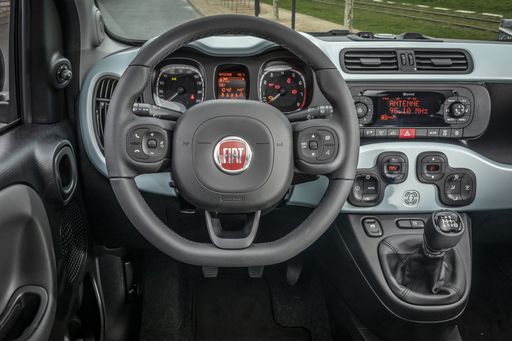
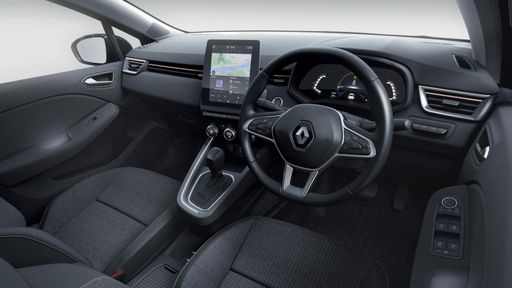
The Panda’s interior is refreshingly simple: hard plastics, lots of physical buttons and an uncomplicated layout that emphasises function over flair, which keeps distraction low and repair costs down. The Clio presents a clearly more modern cockpit with a fluid, Google‑based infotainment suite and software features you’ll notice daily — navigation, updates and voice integration feel ahead of the Panda’s modest display. Material quality in the Clio can vary by trim, with more upscale options feeling genuinely nicer; by contrast the Panda never aims for premium but its tactile simplicity has its own honest appeal. If you value up‑to‑date tech and a more premium touch, the Clio will satisfy; if you prefer straightforward controls and lower complexity, the Panda delivers.

Clio

Buyer fit — who should prefer which car

The Fiat Panda is the right choice for a city commuter, budget‑conscious buyer or a household seeking a second car that’s easy to park, cheap to buy and simple to run; its compromises are obvious but acceptable in tight urban use. The Renault Clio suits someone who wants a single, do‑everything hatch — a small family or commuter who values lower running costs, stronger safety/comfort on the motorway and a modern infotainment experience. If rear passenger space and boot ergonomics are decisive, check which Clio powertrain you pick because hybrid packaging affects practicality. The upcoming technical comparison will walk through the performance, fuel figures and carrying capacities so you can match these real‑world impressions to the numbers that matter for your use.

Here’s where it gets real: The technical differences in detail

Panda

Costs and Efficiency:

Price and efficiency are key factors when choosing a car – and this is often where the real differences emerge.

Fiat Panda is noticeably cheaper – starting at 14,100 £ , while the Renault Clio costs 17,100 £ . That’s a price difference of around 2,923 £.

Fuel consumption also shows a difference: the Renault Clio uses 4.1 L/100km and is visibly more efficient than the Fiat Panda with 5 L/100km. The difference is about 0.9 L/100km.

Clio

Engine and Performance:

Power, torque and acceleration say a lot about how a car feels on the road. This is where you see which model delivers more driving dynamics.

When it comes to engine power, the Renault Clio offers significantly more power – delivering 158 HP compared to 70 HP. That’s roughly 88 HP more horsepower.

When accelerating from 0 to 100 km/h, the Renault Clio is significantly quicker – completing the sprint in 8.3 s, while the Fiat Panda takes 13.9 s. That’s about 5.6 s quicker.

There’s also a difference in torque: the Renault Clio delivers clearly more torque with 190 Nm compared to 92 Nm. That’s about 98 Nm more.

Panda

Space and Everyday Use:

Beyond pure performance, interior space and usability matter most in daily life. This is where you see which car is more practical and versatile.

Seats: Renault Clio offers more seats – 5 vs 4.

In terms of curb weight, Fiat Panda is moderately lighter – 1,055 kg compared to 1,202 kg. The difference is around 147 kg.

Looking at boot space, the Renault Clio offers clearly more boot space – 327 L compared to 225 L. That’s a difference of about 102 L.

When it comes to payload, the Renault Clio carries clearly more – 463 kg compared to 365 kg. That’s a difference of about 98 kg.

Who wins the race in the data check?

The Renault Clio stands well ahead of its rival in the objective data comparison.
This result only shows which model scores more points on paper – not which of the two cars feels right for you.

from £17,100
Clio

Renault Clio

  • Engine Type Petrol, Full Hybrid
  • Transmission Manuel, Automatic
  • Drive Type Front-Wheel Drive
  • Power HP 115 - 158 HP
  • Consumption L/100km 4.1 - 5.2 L/100km
Fiat Panda
Renault Clio

Costs and Consumption

View detailed analysis

Engine and Performance

View detailed analysis

Dimensions and Body

View detailed analysis

Fiat Panda

The Panda is a charming, no-nonsense city companion that mixes cheerful Italian flair with genuinely useful practicality, making tight streets and daily errands feel less of a chore. Its honest simplicity, clever packaging and a dash of cheeky character make it a smart, low-stress buy for people who prefer sensible perks over showroom flash.

details

Renault Clio

The Renault Clio is a smartly styled and practical compact hatch that feels at home in city traffic while offering a surprisingly refined ride. It pairs user-friendly tech and a comfortable interior with a reputation for being economical and easy to live with.

details
Fiat Panda
Renault Clio

Costs and Consumption

Price
14,100 £
Price
17,100 - 23,700 £
Consumption L/100km
5 L/100km
Consumption L/100km
4.1 - 5.2 L/100km
Consumption kWh/100km
-
Consumption kWh/100km
-
Electric Range
-
Electric Range
-
Battery Capacity
-
Battery Capacity
-
co2
113 g/km
co2
92 - 118 g/km
Fuel tank capacity
38 L
Fuel tank capacity
-

Dimensions and Body

Body Type
Hatchback
Body Type
Hatchback
Seats
4
Seats
5
Doors
5
Doors
-
Curb weight
1,055 kg
Curb weight
1,202 - 1,316 kg
Trunk capacity
225 L
Trunk capacity
301 - 327 L
Length
3,635 mm
Length
-
Width
1,643 mm
Width
1,768 mm
Height
1,551 mm
Height
-
Max trunk capacity
870 L
Max trunk capacity
-
Payload
365 kg
Payload
453 - 463 kg

Engine and Performance

Engine Type
Petrol MHEV
Engine Type
Petrol, Full Hybrid
Transmission
Manuel
Transmission
Manuel, Automatic
Transmission Detail
Manual Gearbox
Transmission Detail
Manual Gearbox, Dual-Clutch Automatic, Automatic Gearbox
Drive Type
Front-Wheel Drive
Drive Type
Front-Wheel Drive
Power HP
70 HP
Power HP
115 - 158 HP
Acceleration 0-100km/h
13.9 s
Acceleration 0-100km/h
8.3 - 10.3 s
Max Speed
164 km/h
Max Speed
-
Torque
92 Nm
Torque
190 Nm
Number of Cylinders
3
Number of Cylinders
3 - 4
Power kW
51 kW
Power kW
84 - 116 kW
Engine capacity
999 cm3
Engine capacity
1,199 - 1,789 cm3

General

Model Year
2024
Model Year
2026
CO2 Efficiency Class
C
CO2 Efficiency Class
C, D, B
Brand
Fiat
Brand
Renault
DriveDuel uses data analysis and artificial intelligence to evaluate vehicle data and create content. Content is regularly reviewed and improved. The displayed prices are estimates based on German list prices, adjusted to the respective country’s VAT. Country-specific registration taxes are not included. This information is not legally binding.