VS

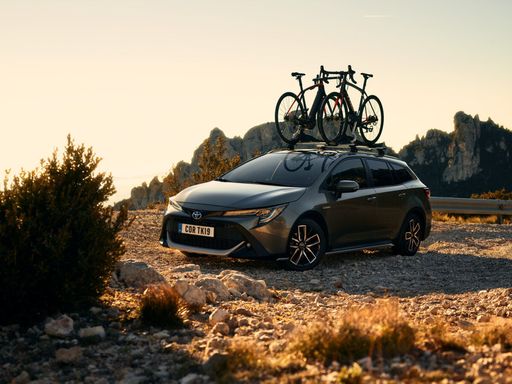
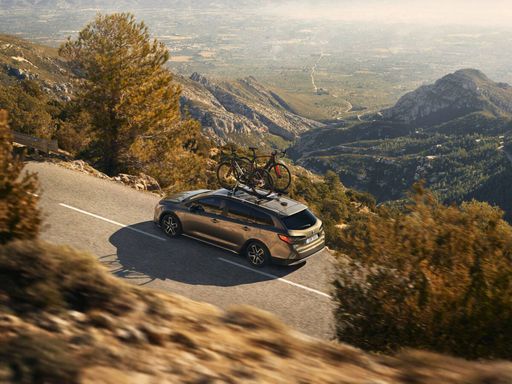
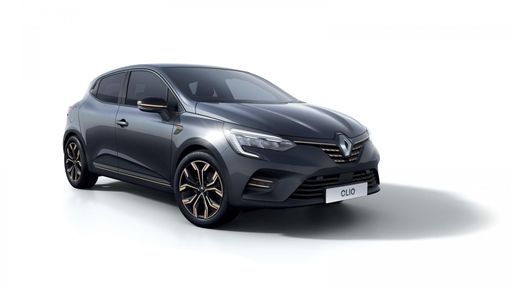
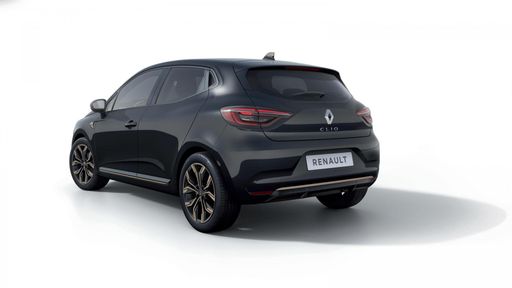
Renault Clio vs Toyota Corolla comparison

Compare performance (158 HP vs 178 HP), boot space and price (17,100 £ vs 28,600 £ ) at a glance. Find out which car is the better choice for you – Renault Clio or Toyota Corolla?

Renault Clio vs Toyota Corolla: Key differences

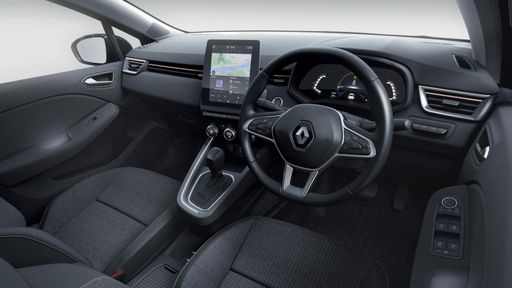
Renault Clio

4.7 (1 Reviews)
rate
  • clearly cheaper
  • only slightly more efficient
  • somewhat lighter
details

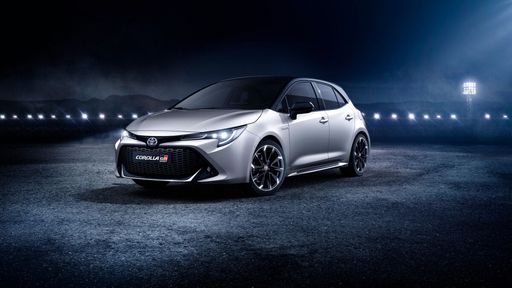
Toyota Corolla

4.4 (2 Reviews)
rate
  • a bit more power
  • moderately quicker 0–100 km/h
  • marginally more trunk space
details

All details on performance, efficiency, range and trunk space can be found in the technical comparison below – including user reviews for both models.

By Achim Sedelmaier

Clio

Renault Clio vs. Toyota Corolla: A Comparative Analysis of Performance and Efficiency

The automotive landscape is continually evolving with every passing year. Each new model beckons car enthusiasts to re-evaluate their preferences. Today, we dive into an exhilarating comparison between two standout hatchbacks: the Renault Clio and the Toyota Corolla. Both these vehicles bring forward robust features and innovative technologies, making them top contenders in the hatchback category. Let’s take a closer look at their technical aspects and innovations.
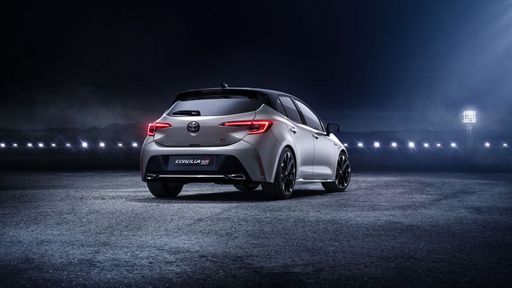
Corolla

Engine and Performance

The Renault Clio offers a diverse range of engine options. With configurations including Full Hybrid, Petrol, and LPG, buyers are afforded a variety of choices. The Clio's power output varies, with options generating between 67 and 143 horsepower and reaching up to 105 kW. Particularly noteworthy is the Full Hybrid variant, which demonstrates impressive acceleration from 0 to 100 km/h in just 9.3 seconds. This is comparable to the Toyota Corolla's Full Hybrid model, which clocks in at 9.2 seconds.

The Toyota Corolla sticks to its Full Hybrid engine across the board. With horsepower options of 140 and 196, it also reaches an impressive maximum speed of 180 km/h. The Corolla’s larger engine capacities, of up to 1987 cm³, confer a robust driving experience with a stellar balance between power and fuel efficiency.

Clio

Fuel Efficiency and Environmental Impact

When discussing fuel consumption, the Clio's Full Hybrid variant leads with an impressive claim of 4.3 L/100 km. Even the petrol versions maintain competitive consumption rates around 5.3 L/100 km. In comparison, the Toyota Corolla strongly positions itself with a fuel consumption range of approximately 4.4 to 4.6 L/100 km, highlighting its energy-efficient hybrid system.

Both models achieve commendable CO2 efficiency. The Clio exhibits CO2 emissions as low as 97 g/km, with the Toyota Corolla closely trailing at 100 g/km, placing both vehicles in the favorable efficiency class C.

Corolla

Dimensions and Practicality

Exterior dimensions often influence consumer decisions. The Renault Clio measures 4053 mm in length, making it a slightly more compact solution compared to the Toyota Corolla at 4370 mm. This gives the Clio an edge in urban maneuverability, while the Corolla offers more interior space due to its larger size.

Trunk capacity varies with the Clio offering up to 391 liters, which is somewhat narrower than the Corolla's 361 liters. However, the Corolla does compensate with its overall passenger comfort and increased payload capacity of up to 450 kg.

Clio

Advanced Features and Innovations

Both vehicles integrate modern automotive innovations aimed at enhancing the driving experience. The Renault Clio comes with options for automatic and manual transmissions, notably featuring an advanced CVT system in automatic models. Its feature-rich design incorporates a comprehensive infotainment system, adaptive cruise control, and enhanced connectivity options.

On the other hand, the Toyota Corolla capitalizes on its efficient CVT transmission, aligning with Toyota’s long-standing emphasis on hybrid technology. The Corolla’s cabin is equipped with state-of-the-art tech features, encompassing a digital cockpit, premium sound systems, and a suite of safety enhancements that include lane-keeping assist and collision mitigation.

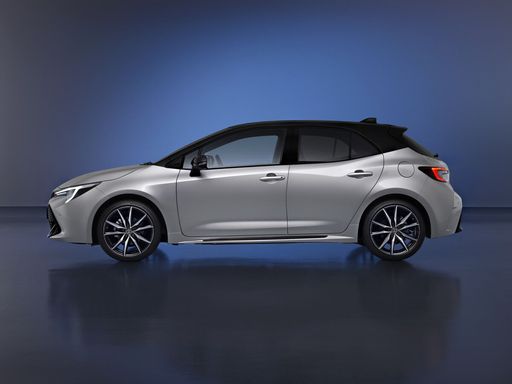
Corolla

Final Verdict

The Renault Clio and Toyota Corolla stand shoulder to shoulder in many areas but cater to slightly different consumer needs. The Clio appeals to those prioritizing urban agility and versatile engine choices, while the Corolla's edge lies in power, fuel efficiency, and larger dimensions. Ultimately, the choice between these models depends on individual priorities, whether it's embracing hybrid efficiency or seeking a compact, agile companion for city ventures.

Here’s where it gets real: The technical differences in detail

Clio

Costs and Efficiency:

Price and efficiency are often the first things buyers look at. Here it becomes clear which model has the long-term edge – whether at the pump, the plug, or in purchase price.

Renault Clio is clearly cheaper – starting at 17,100 £ , while the Toyota Corolla costs 28,600 £ . That’s a price difference of around 11,520 £.

Fuel consumption also shows a difference: the Renault Clio uses 4.1 L/100km and is only slightly more efficient than the Toyota Corolla with 4.4 L/100km. The difference is about 0.3 L/100km.

Corolla

Engine and Performance:

Under the bonnet, it becomes clear which model is tuned for sportiness and which one takes the lead when you hit the accelerator.

When it comes to engine power, the Toyota Corolla offers a bit more power – delivering 178 HP compared to 158 HP. That’s roughly 20 HP more horsepower.

When accelerating from 0 to 100 km/h, the Toyota Corolla is moderately quicker – completing the sprint in 7.5 s, while the Renault Clio takes 8.3 s. That’s about 0.8 s quicker.

Clio

Space and Everyday Use:

Beyond pure performance, interior space and usability matter most in daily life. This is where you see which car is more practical and versatile.

Both vehicles offer seating for 5 people.

In terms of curb weight, Renault Clio is somewhat lighter – 1,202 kg compared to 1,420 kg. The difference is around 218 kg.

Looking at boot space, the Toyota Corolla offers marginally more boot space – 361 L compared to 327 L. That’s a difference of about 34 L.

When it comes to payload, the Renault Clio carries barely more – 463 kg compared to 450 kg. That’s a difference of about 13 kg.

Who wins the race in the data check?

The Renault Clio comes out clearly ahead in the objective data comparison.
This result only shows which model scores more points on paper – not which of the two cars feels right for you.

from £17,100
Clio

Renault Clio

  • Engine Type Petrol, Full Hybrid
  • Transmission Manuel, Automatic
  • Drive Type Front-Wheel Drive
  • Power HP 115 - 158 HP
  • Consumption L/100km 4.1 - 5.2 L/100km
Renault Clio
Toyota Corolla

Costs and Consumption

View detailed analysis

Engine and Performance

View detailed analysis

Dimensions and Body

View detailed analysis

Renault Clio

The Renault Clio is a smartly styled and practical compact hatch that feels at home in city traffic while offering a surprisingly refined ride. It pairs user-friendly tech and a comfortable interior with a reputation for being economical and easy to live with.

details

Toyota Corolla

The Corolla is a reliable, no-nonsense compact car known for its practicality and composed ride. It’s economical to run, easy to maintain, and suits daily commuting while holding its value well.

details
Renault Clio
Toyota Corolla

Costs and Consumption

Price
17,100 - 23,700 £
Price
28,600 - 34,900 £
Consumption L/100km
4.1 - 5.2 L/100km
Consumption L/100km
4.4 L/100km
Consumption kWh/100km
-
Consumption kWh/100km
-
Electric Range
-
Electric Range
-
Battery Capacity
-
Battery Capacity
-
co2
92 - 118 g/km
co2
100 g/km
Fuel tank capacity
-
Fuel tank capacity
43 L

Dimensions and Body

Body Type
Hatchback
Body Type
Hatchback
Seats
5
Seats
5
Doors
-
Doors
5
Curb weight
1,202 - 1,316 kg
Curb weight
1,420 - 1,460 kg
Trunk capacity
301 - 327 L
Trunk capacity
313 - 361 L
Length
-
Length
4,370 mm
Width
1,768 mm
Width
1,790 mm
Height
-
Height
1,435 mm
Max trunk capacity
-
Max trunk capacity
1,004 - 1,052 L
Payload
453 - 463 kg
Payload
400 - 450 kg

Engine and Performance

Engine Type
Petrol, Full Hybrid
Engine Type
Full Hybrid
Transmission
Manuel, Automatic
Transmission
Automatic
Transmission Detail
Manual Gearbox, Dual-Clutch Automatic, Automatic Gearbox
Transmission Detail
CVT
Drive Type
Front-Wheel Drive
Drive Type
Front-Wheel Drive
Power HP
115 - 158 HP
Power HP
140 - 178 HP
Acceleration 0-100km/h
8.3 - 10.3 s
Acceleration 0-100km/h
7.5 - 9.2 s
Max Speed
-
Max Speed
180 km/h
Torque
190 Nm
Torque
-
Number of Cylinders
3 - 4
Number of Cylinders
4
Power kW
84 - 116 kW
Power kW
103 - 131 kW
Engine capacity
1,199 - 1,789 cm3
Engine capacity
1,798 - 1,987 cm3

General

Model Year
2026
Model Year
2025
CO2 Efficiency Class
C, D, B
CO2 Efficiency Class
C
Brand
Renault
Brand
Toyota
DriveDuel uses data analysis and artificial intelligence to evaluate vehicle data and create content. Content is regularly reviewed and improved. The displayed prices are estimates based on German list prices, adjusted to the respective country’s VAT. Country-specific registration taxes are not included. This information is not legally binding.