VS

Kia Ceed Sportswagon vs Hyundai i30 Wagon comparison

Compare performance (140 HP vs 150 HP), boot space and price (24,300 £ vs 25,400 £ ) at a glance. Find out which car is the better choice for you – Kia Ceed Sportswagon or Hyundai i30 Wagon?

Kia Ceed Sportswagon vs Hyundai i30 Wagon: Key differences

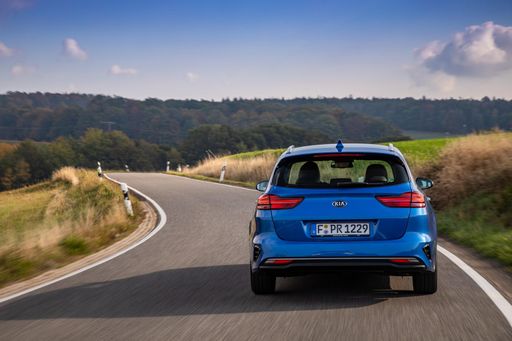
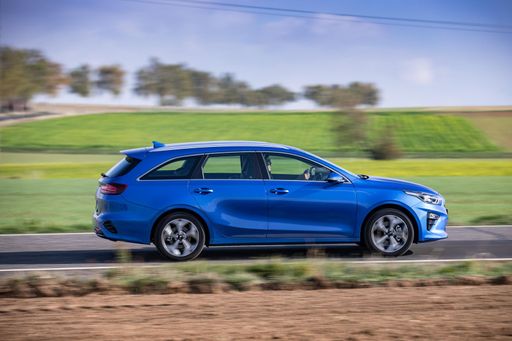
Kia Ceed Sportswagon

  • only slightly cheaper
  • marginally lighter
details

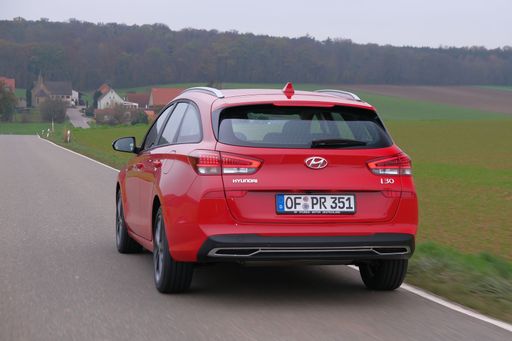
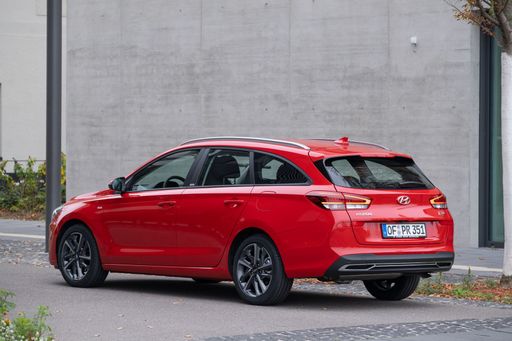
Hyundai i30 Wagon

4.3 (2 Reviews)
rate
  • barely more power
  • only slightly more efficient
  • very slightly quicker 0–100 km/h
details

All details on performance, efficiency, range and trunk space can be found in the technical comparison below – including user reviews for both models.

By Achim Sedelmaier

Ceed Sportswagon

Estate face-off: Hyundai i30 Wagon vs Kia Ceed Sportswagon

The Hyundai i30 Wagon vs Kia Ceed Sportswagon headline says it all — two practical estates pitched against each other for the family driveway. This direct comparison looks beyond badges to how each wagon behaves in daily life, who it suits and what kind of driver will feel smug parking it on the weekend. If you’re searching for a compact estate that balances usability with personality, this page sets that match-up out in plain sight. Expect talk of comfort, handling, packaging and the little details that tip a purchase decision one way or the other.
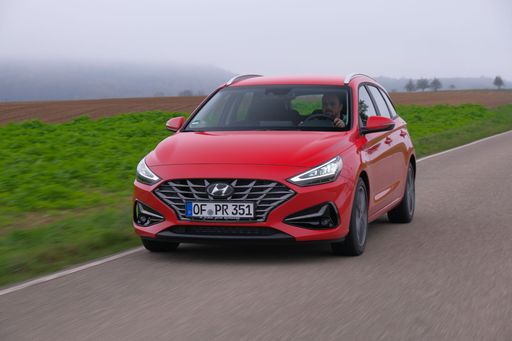
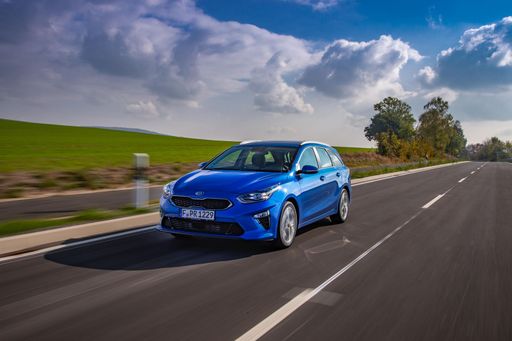
i30 Wagon

Character clash: calm cruiser or eager handler?

The Hyundai i30 Wagon arrives with a composed, grown-up personality — it’s the polite estate that rewards low-stress motoring and quiet confidence. The Kia Ceed Sportswagon leans more assertive in its presentation, nudging the driver with sharper steering and a slightly more extroverted look. That difference isn’t merely style: it’s a living-room-versus-cockpit split, where the Hyundai soothes and the Kia entertains. Choose based on whether you want the car to fade into the background or to remind you it’s there.

Ceed Sportswagon

Daily life: long runs, school runs or tight-city chores?

On long-distance duty the Hyundai i30 Wagon feels like the more supple choice, tuned towards relaxed miles and a quiet cabin that keeps conversation easy on motorways. The Kia Ceed Sportswagon is slightly more agile in town, squeezing into spaces with eager steering and making parking a less tedious task in urban life. Both wagons carry family kit without tantrums, but your priorities — cushioned cruising versus nimble city manners — will steer you. Practicality is shared; the nuance is in how each car goes about being practical.

i30 Wagon

The personality you drive home with

Buyers choose the Hyundai i30 Wagon because it whispers competence: a sensible exterior, friendly ergonomics and an interior that prefers function over flash. The Kia Ceed Sportswagon attracts shoppers who want a bit more edge to their daily commute — a touch sportier styling and a cabin that feels slightly livelier. Both cars offer sensible tech and usable cabins, but the emotional justification differs: one soothes, the other slightly excites. Your choice often says more about how you want your driving life to feel than about absolute capability.

Ceed Sportswagon

Who should reach for the Hyundai?

If you value a forgiving ride, clear-minded ergonomics and an estate that keeps the family content mile after mile, the Hyundai i30 Wagon will likely fit you best. It clicks for buyers who prioritise relaxed long-distance travel and straightforward practicality over theatrical handling or flash finishes. The i30 Wagon’s quieter character makes it the better partner for commuters with heavy motorway time or parents looking for a calm, dependable second car. In short: comfort and sense over swagger.

i30 Wagon

Who will prefer the Kia — and how the Hyundai stacks up

The Kia Ceed Sportswagon suits drivers who want their estate to feel a little sportier and more expressive, those who enjoy a nimble urban drive and don’t mind a firmer edge to the ride. It’s a sharper-suited pick for style-conscious buyers who still need luggage space and daily practicality without sacrificing driver engagement. If you find yourself weighing the Kia’s livelier character against the Hyundai i30 Wagon’s quieter composure, the decision comes down to personality: do you want comfort-first or slightly keener steering? Read on to see where the tiny differences show up in the numbers below.

Here’s where it gets real: The technical differences in detail

Ceed Sportswagon

Costs and Efficiency:

Price and efficiency are often the first things buyers look at. Here it becomes clear which model has the long-term edge – whether at the pump, the plug, or in purchase price.

Kia Ceed Sportswagon is only slightly cheaper – starting at 24,300 £ , while the Hyundai i30 Wagon costs 25,400 £ . That’s a price difference of around 1,080 £.

Fuel consumption also shows a difference: the Hyundai i30 Wagon uses 5.9 L/100km and is only slightly more efficient than the Kia Ceed Sportswagon with 6 L/100km. The difference is about 0.1 L/100km.

i30 Wagon

Engine and Performance:

Power, torque and acceleration are the classic benchmarks for car enthusiasts – and here, some clear differences start to show.

When it comes to engine power, the Hyundai i30 Wagon offers barely more power – delivering 150 HP compared to 140 HP. That’s roughly 10 HP more horsepower.

When accelerating from 0 to 100 km/h, the Hyundai i30 Wagon is very slightly quicker – completing the sprint in 9.1 s, while the Kia Ceed Sportswagon takes 9.7 s. That’s about 0.6 s quicker.

There’s also a difference in torque: the Kia Ceed Sportswagon delivers barely more torque with 253 Nm compared to 250 Nm. That’s about 3 Nm more.

Ceed Sportswagon

Space and Everyday Use:

Cabin size, boot volume and payload all play a role in everyday practicality. Here, comfort and flexibility make the difference.

Both vehicles offer seating for 5 people.

In terms of curb weight, Kia Ceed Sportswagon is marginally lighter – 1,335 kg compared to 1,340 kg. The difference is around 5 kg.

When it comes to payload, the Hyundai i30 Wagon carries only slightly more – 490 kg compared to 485 kg. That’s a difference of about 5 kg.

Who wins the race in the data check?

The Hyundai i30 Wagon shows a few small advantages in the objective data comparison.
This result only shows which model scores more points on paper – not which of the two cars feels right for you.

from £25,400
i30 Wagon

Hyundai i30 Wagon

  • Engine Type Petrol
  • Transmission Manuel, Automatic
  • Drive Type Front-Wheel Drive
  • Power HP 115 - 150 HP
  • Consumption L/100km 5.9 - 6.3 L/100km
Kia Ceed Sportswagon
Hyundai i30 Wagon

Costs and Consumption

View detailed analysis

Engine and Performance

View detailed analysis

Dimensions and Body

View detailed analysis

Kia Ceed Sportswagon

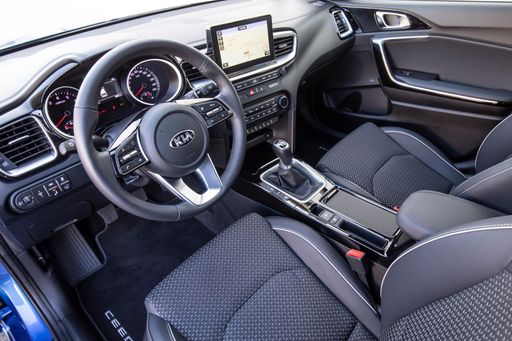
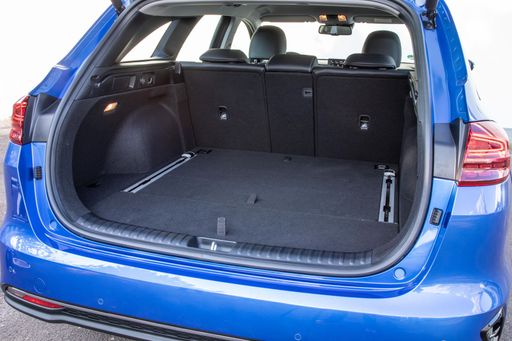
The Kia Ceed Sportswagon is a sensible and surprisingly stylish family wagon that turns daily chores into a bit less of a grind. Practical, comfortable and packed with thoughtful touches where they matter, it’s a smart choice for buyers who want usefulness without sacrificing personality.

details

Hyundai i30 Wagon

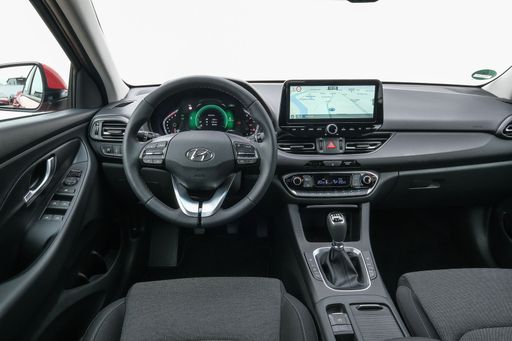
The Hyundai i30 Wagon is a practical family hauler that pairs roomy, sensible packaging with clean, modern lines and a surprisingly composed chassis. Comfortable, well-equipped and priced to make rivals sweat, it quietly ticks the boxes for daily life and weekend escapes while still managing a little grin on twisty roads.

details
Kia Ceed Sportswagon
Hyundai i30 Wagon

Costs and Consumption

Price
24,300 - 27,200 £
Price
25,400 - 32,300 £
Consumption L/100km
6 - 6.4 L/100km
Consumption L/100km
5.9 - 6.3 L/100km
Consumption kWh/100km
-
Consumption kWh/100km
-
Electric Range
-
Electric Range
-
Battery Capacity
-
Battery Capacity
-
co2
137 - 146 g/km
co2
134 - 142 g/km
Fuel tank capacity
-
Fuel tank capacity
-

Dimensions and Body

Body Type
Estate
Body Type
Estate
Seats
5
Seats
5
Doors
-
Doors
-
Curb weight
1,335 - 1,437 kg
Curb weight
1,340 - 1,460 kg
Trunk capacity
-
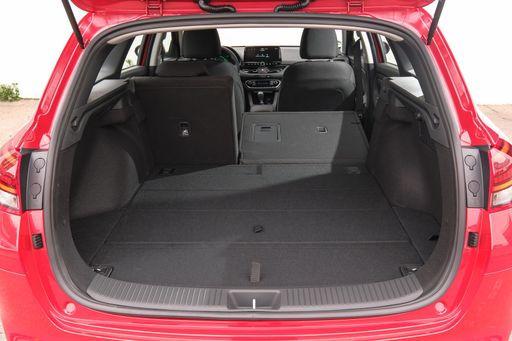
Trunk capacity
602 L
Length
-
Length
-
Width
1,800 mm
Width
1,795 mm
Height
-
Height
-
Max trunk capacity
-
Max trunk capacity
-
Payload
463 - 485 kg
Payload
450 - 490 kg

Engine and Performance

Engine Type
Petrol, Petrol MHEV
Engine Type
Petrol
Transmission
Manuel, Automatic
Transmission
Manuel, Automatic
Transmission Detail
Manual Gearbox, Dual-Clutch Automatic
Transmission Detail
Manual Gearbox, Dual-Clutch Automatic
Drive Type
Front-Wheel Drive
Drive Type
Front-Wheel Drive
Power HP
100 - 140 HP
Power HP
115 - 150 HP
Acceleration 0-100km/h
9.7 - 13.5 s
Acceleration 0-100km/h
9.1 - 11.9 s
Max Speed
-
Max Speed
-
Torque
172 - 253 Nm
Torque
172 - 250 Nm
Number of Cylinders
3 - 4
Number of Cylinders
3 - 4
Power kW
74 - 103 kW
Power kW
85 - 110 kW
Engine capacity
998 - 1,482 cm3
Engine capacity
998 - 1,598 cm3

General

Model Year
2024
Model Year
2026
CO2 Efficiency Class
E
CO2 Efficiency Class
D, E
Brand
Kia
Brand
Hyundai
DriveDuel uses data analysis and artificial intelligence to evaluate vehicle data and create content. Content is regularly reviewed and improved. The displayed prices are estimates based on German list prices, adjusted to the respective country’s VAT. Country-specific registration taxes are not included. This information is not legally binding.