
 Deutschland
 France
 Nederland
 Great Britain
 Sverige
 Norge
Norge Danmark
 Suomi
Suomi Italia
 Polska
 España
VS
Kia Ceed Sportswagon vs VW T-Cross – Performance, range & efficiency compared
Both models have their strengths – but which one suits you more?
Compare performance, efficiency, price and space directly: Kia Ceed Sportswagon or VW T-Cross?
Ceed Sportswagon
@ Kia Corporation
Costs and Efficiency:
Price and efficiency are often the first things buyers look at. Here it becomes clear which model has the long-term edge – whether at the pump, the plug, or in purchase price.
VW T-Cross has a slightly advantage in terms of price – it starts at 21100 £, while the Kia Ceed Sportswagon costs 24300 £. That’s a price difference of around 3257 £.
Fuel consumption also shows a difference: VW T-Cross manages with 5.40 L and is therefore slightly more efficient than the Kia Ceed Sportswagon with 6 L. The difference is about 0.60 L per 100 km.
T-Cross
@ Volkswagen AG / VW Media
Engine and Performance:
Power, torque and acceleration say a lot about how a car feels on the road. This is where you see which model delivers more driving dynamics.
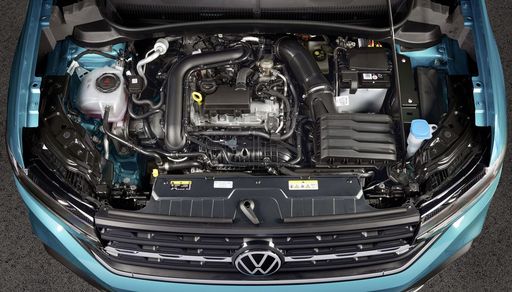
When it comes to engine power, the VW T-Cross has a hardly perceptible edge – offering 150 HP compared to 140 HP. That’s roughly 10 HP more horsepower.
In acceleration from 0 to 100 km/h, the VW T-Cross is to a small extent quicker – completing the sprint in 8.40 s, while the Kia Ceed Sportswagon takes 9.70 s. That’s about 1.30 s faster.
In terms of top speed, the VW T-Cross performs minimal better – reaching 200 km/h, while the Kia Ceed Sportswagon tops out at 197 km/h. The difference is around 3 km/h.
There’s also a difference in torque: Kia Ceed Sportswagon pulls slight stronger with 253 Nm compared to 250 Nm. That’s about 3 Nm difference.
Ceed Sportswagon
@ Kia Corporation
Space and Everyday Use:
Whether family car or daily driver – which one offers more room, flexibility and comfort?
Both vehicles offer seating for 5 people.
In curb weight, VW T-Cross is hardly perceptible lighter – 1267 kg compared to 1335 kg. The difference is around 68 kg.
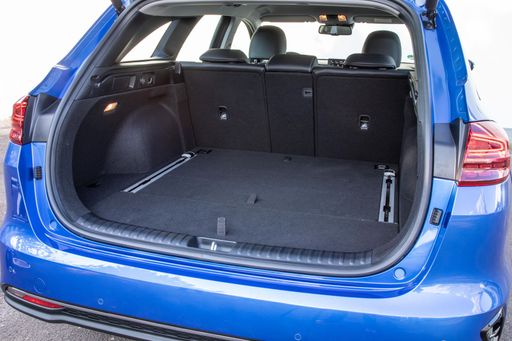
In terms of boot space, the Kia Ceed Sportswagon offers evident more room – 625 L compared to 455 L. That’s a difference of about 170 L.
In maximum load capacity, the Kia Ceed Sportswagon performs distinct better – up to 1694 L, which is about 413 L more than the VW T-Cross.
When it comes to payload, Kia Ceed Sportswagon hardly perceptible takes the win – 485 kg compared to 480 kg. That’s a difference of about 5 kg.
Who comes out on top?
Overall, the Kia Ceed Sportswagon shows itself to be edges out slightly and secures the title of DriveDuel Champion.
It convinces with the more balanced overall package and proves to be the more versatile choice for everyday use.
from about £24,300
 @ Kia Corporation
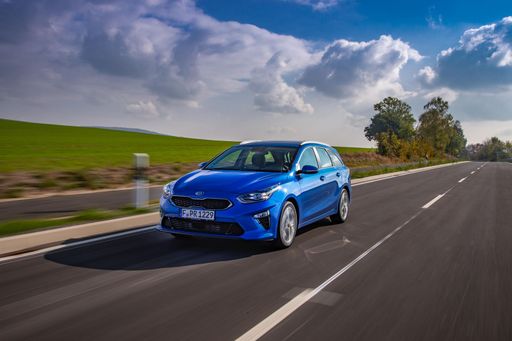
Kia Ceed Sportswagon
Kia Ceed Sportswagon
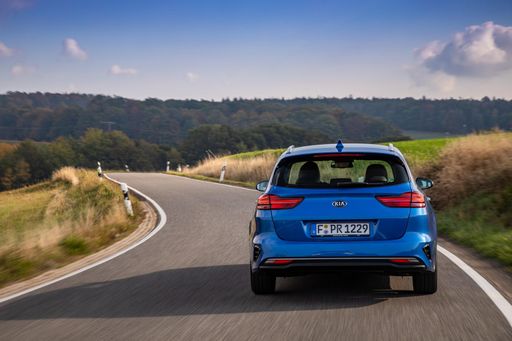
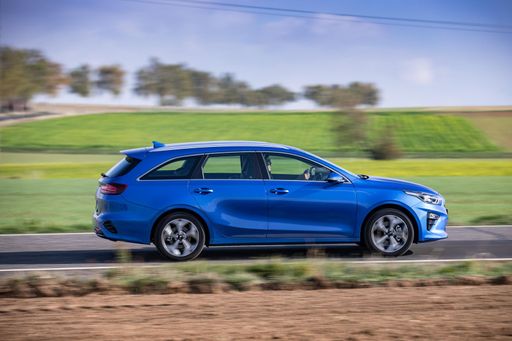
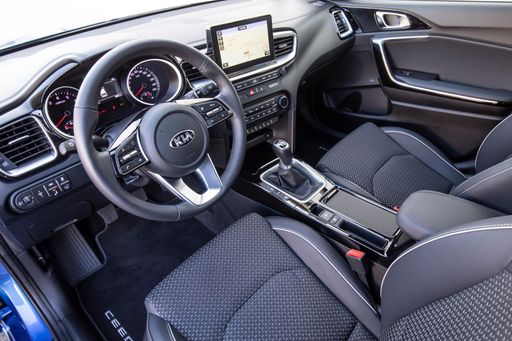
The Kia Ceed Sportswagon is a versatile estate car that combines practicality with a touch of elegance. It offers a spacious interior, making it ideal for families or those with an active lifestyle. The vehicle's sleek design and advanced features make it a strong contender in the competitive estate car market.
details
@ Kia Corporation
 @ Kia Corporation
 @ Kia Corporation
 @ Kia Corporation
 @ Kia Corporation
VW T-Cross
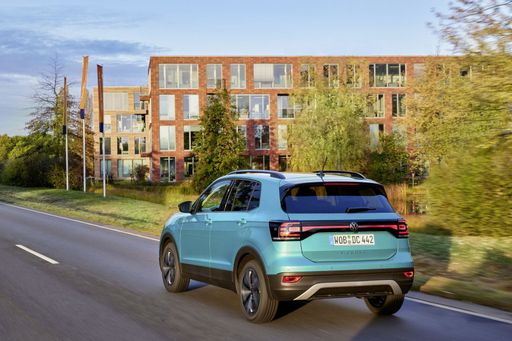
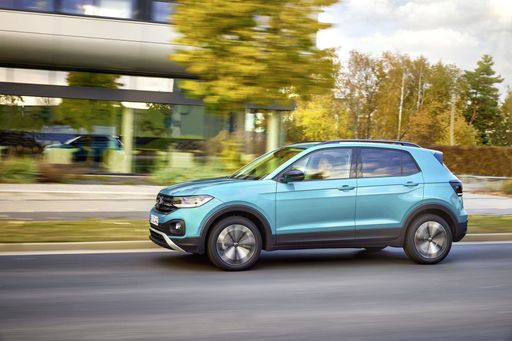
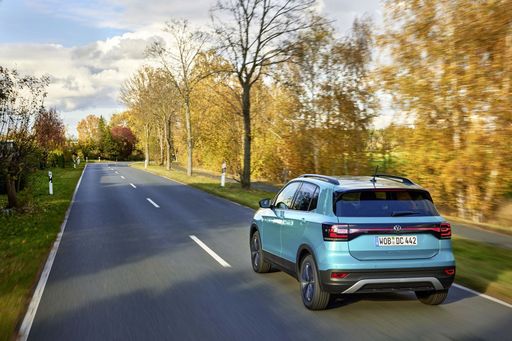
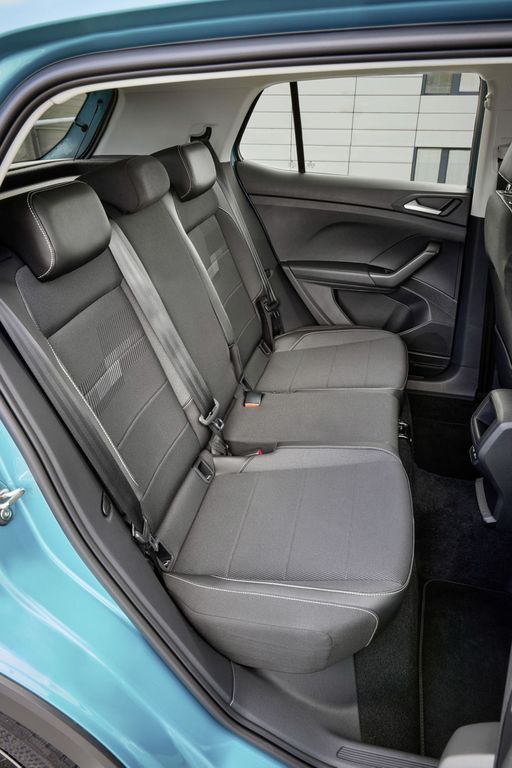
The VW T-Cross turns everyday practicality into a style statement, offering a roomy-feeling cabin, clever storage and playful design that suits town life and family duties alike. On the road it's composed and relaxed, rewarding buyers who want the raised seating and confident presence of an SUV without the weighty compromises.
details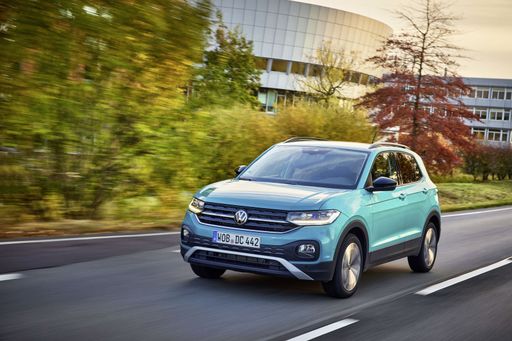 @ Volkswagen AG / VW Media
 @ Volkswagen AG / VW Media
 @ Volkswagen AG / VW Media
 @ Volkswagen AG / VW Media
 @ Volkswagen AG / VW Media
 @ Volkswagen AG / VW Media
Kia Ceed Sportswagon
VW T-Cross
|
@ Kia Corporation
|
@ Volkswagen AG / VW Media
|
|
|
|
Costs and Consumption |
|
|---|---|
|
Price
24300 - 29100 £
|
Price
21100 - 31500 £
|
|
Consumption L/100km
6 - 6.4 L
|
Consumption L/100km
5.4 - 6 L
|
|
Consumption kWh/100km
-
|
Consumption kWh/100km
-
|
|
Electric Range
-
|
Electric Range
-
|
|
Battery Capacity
-
|
Battery Capacity
-
|
|
co2
137 - 146 g/km
|
co2
124 - 136 g/km
|
|
Fuel tank capacity
50 L
|
Fuel tank capacity
40 L
|
Dimensions and Body |
|
|---|---|
|
Body Type
Estate
|
Body Type
SUV
|
|
Seats
5
|
Seats
5
|
|
Doors
5
|
Doors
5
|
|
Curb weight
1335 - 1437 kg
|
Curb weight
1267 - 1338 kg
|
|
Trunk capacity
512 - 625 L
|
Trunk capacity
455 L
|
|
Length
4605 mm
|
Length
4127 mm
|
|
Width
1800 mm
|
Width
1784 mm
|
|
Height
1422 - 1465 mm
|
Height
1573 mm
|
|
Max trunk capacity
1545 - 1694 L
|
Max trunk capacity
1281 L
|
|
Payload
455 - 485 kg
|
Payload
463 - 480 kg
|
Engine and Performance |
|
|---|---|
|
Engine Type
Petrol, Petrol MHEV
|
Engine Type
Petrol
|
|
Transmission
Automatic, Manuel
|
Transmission
Manuel, Automatic
|
|
Transmission Detail
Dual-Clutch Automatic, Manual Gearbox
|
Transmission Detail
Manual Gearbox, Dual-Clutch Automatic
|
|
Drive Type
Front-Wheel Drive
|
Drive Type
Front-Wheel Drive
|
|
Power HP
100 - 140 HP
|
Power HP
95 - 150 HP
|
|
Acceleration 0-100km/h
9.7 - 13.5 s
|
Acceleration 0-100km/h
8.4 - 11.3 s
|
|
Max Speed
178 - 197 km/h
|
Max Speed
180 - 200 km/h
|
|
Torque
172 - 253 Nm
|
Torque
175 - 250 Nm
|
|
Number of Cylinders
3 - 4
|
Number of Cylinders
3 - 4
|
|
Power kW
74 - 103 kW
|
Power kW
70 - 110 kW
|
|
Engine capacity
998 - 1482 cm3
|
Engine capacity
999 - 1498 cm3
|
General |
|
|---|---|
|
Model Year
2024
|
Model Year
2024 - 2025
|
|
CO2 Efficiency Class
E
|
CO2 Efficiency Class
D, E
|
|
Brand
Kia
|
Brand
VW
|
Is the Kia Ceed Sportswagon offered with different drivetrains?
The Kia Ceed Sportswagon is available as Front-Wheel Drive.
The prices and data displayed are estimates based on German list prices and may vary by country. This information is not legally binding.