VS

Jeep Avenger vs VW T-Cross comparison

Compare performance (156 HP vs 150 HP), boot space and price (22,500 £ vs 21,400 £ ) at a glance. Find out which car is the better choice for you – Jeep Avenger or VW T-Cross?

Jeep Avenger vs VW T-Cross: Key differences

Jeep Avenger

4.2 (4 Reviews)
rate
  • only slightly more power
  • a bit more efficient
  • only slightly lighter

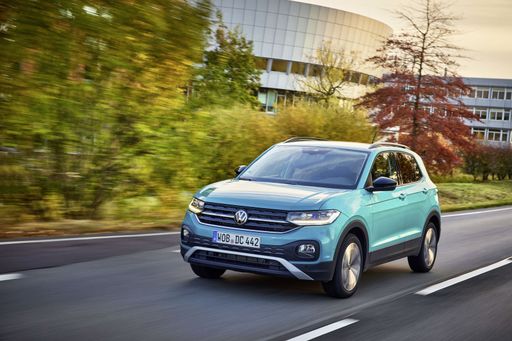
VW T-Cross

4.3 (3 Reviews)
rate
  • only slightly cheaper
  • barely quicker 0–100 km/h
  • a bit more trunk space

All details on performance, efficiency, range and trunk space can be found in the technical comparison below – including user reviews for both models.

Avenger

Showdown of the SUVs: Jeep Avenger vs. VW T-Cross

In the ever-evolving world of compact SUVs, two names stand out — the Jeep Avenger and the VW T-Cross. As consumers increasingly seek versatility, technological advancements, and eco-friendly options, we delve into a detailed comparison of these two popular models to help you decide which one deserves a place in your driveway.
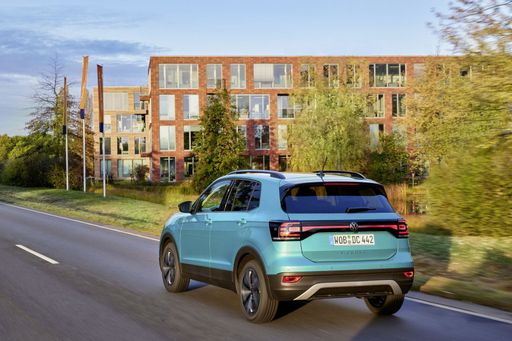
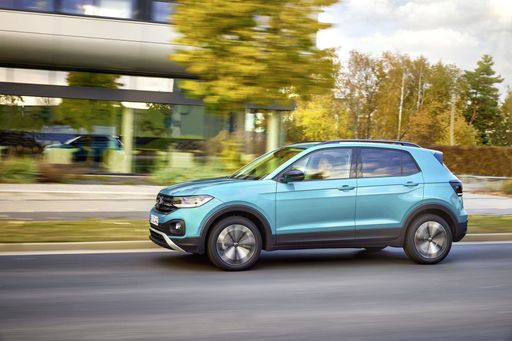
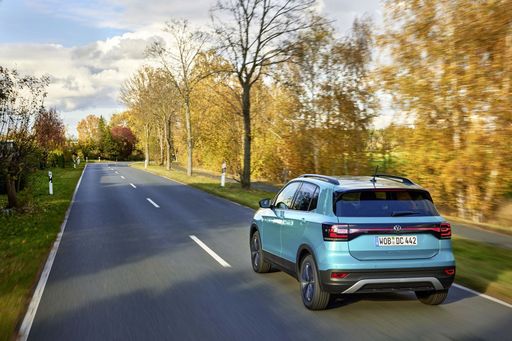
T-Cross

Powertrains and Performance

The Jeep Avenger offers a range of powertrains with its innovative electric, petrol MHEV, and traditional petrol options. The electric variant delivers a robust 156 HP and a staggering torque of 260 Nm, coupled with a consumption rate of 15.4 kWh/100 km. It also shatters the 0-100 km/h mark in just 9 seconds, making it an excellent choice for urban commuting while boasting an impressive electric range of 400 km thanks to its substantial 51 kWh battery.

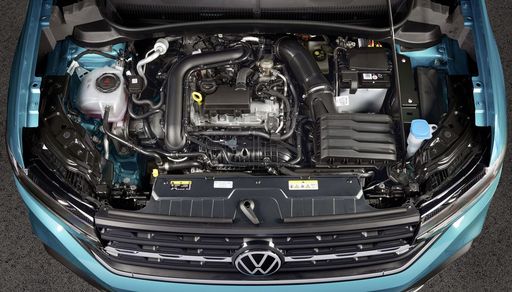
On the other hand, the VW T-Cross simplifies choices with its petrol-only offerings, featuring engines delivering between 95 to 150 HP. Although it lacks the electric option, the T-Cross shines in its fuel efficiency, with consumption figures ranging from 5.6 to 6 L/100 km. The best-performing model can achieve 0-100 km/h in a brisk 8.4 seconds, highlighting its sporty potential.

Avenger

Dimensions and Practicality

In terms of size, the Jeep Avenger measures 4084 mm in length, 1776 mm in width, and stands 1528 mm tall. It balances compactness with a functional trunk capacity of 355 liters. The T-Cross, slightly larger at 4127 mm long and 1784 mm wide, excels in trunk space with a generous 455 liters, making it a more practical choice for families or those needing extra cargo area.

T-Cross

Interior and Innovations

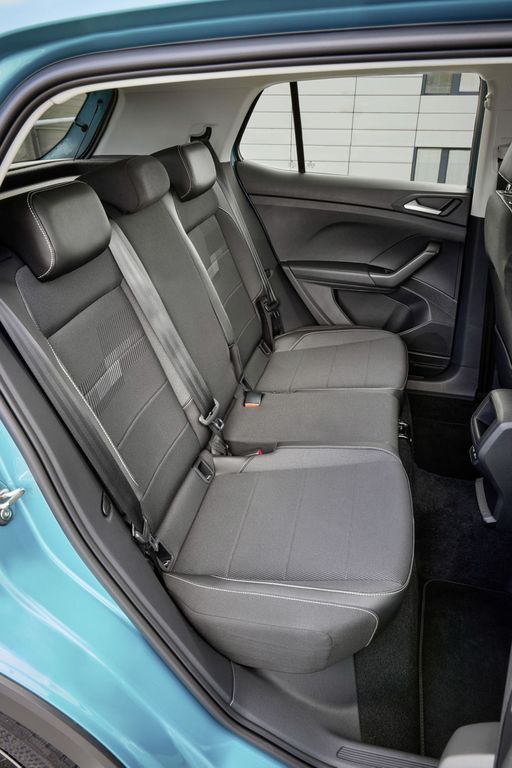
Both vehicles offer a five-seat configuration, but the materials and overall ambiance differ significantly. The T-Cross is tailored for comfort with refined materials and a more traditional dashboard layout, providing a familiar user experience common in VW vehicles.

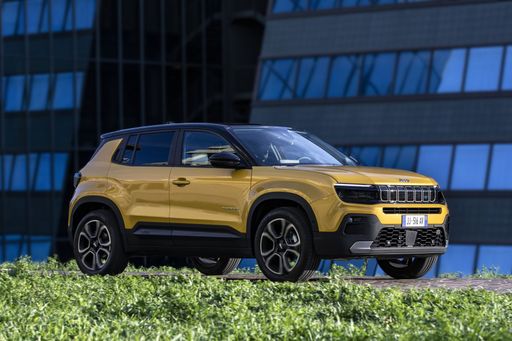
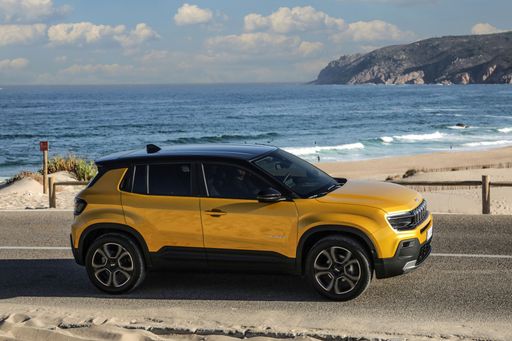
Conversely, the Avenger introduces technological innovations fitting for the modern driver, including an advanced infotainment system designed for seamless smartphone integration and various safety features. The Jeep’s rugged design ethos is complemented by a more outdoorsy aesthetic, perfect for adventure seekers.

Avenger

Driving Dynamics

The Jeep Avenger leverages its optional all-wheel drive, enhancing its capability over diverse terrains — a hallmark of the Jeep brand. Its suspension tuning is designed to tackle off-road conditions without compromising on-road comfort.

Meanwhile, the VW T-Cross, equipped with front-wheel drive only, offers a more composed ride ideal for city environments. Its handling is characterized by agility and responsiveness, making it a favorite for urban dwellers seeking convenience and maneuverability.

T-Cross

Cost and Value

Pricing for both models varies, with the Jeep Avenger positioned as a slightly premium option, especially for its electric variant, reflecting its advanced technology and eco-friendly offerings. The T-Cross, meanwhile, provides a more budget-friendly approach with strong value for money in its core petrol models.

Avenger

Final Verdict

Choosing between the Jeep Avenger and the VW T-Cross ultimately boils down to your priorities. If you're looking for an advanced electric vehicle with off-road capabilities, the Avenger is hard to beat. However, if practical space, driving comfort, and value are at the forefront of your needs, the T-Cross makes a compelling case. Each SUV brings its unique strengths to the table, making the decision a thrilling one!

Here’s where it gets real: The technical differences in detail

Avenger

Costs and Efficiency:

Looking at overall running costs, both models reveal some interesting differences in everyday economy.

VW T-Cross is only slightly cheaper – starting at 21,400 £ , while the Jeep Avenger costs 22,500 £ . That’s a price difference of around 1,148 £.

Fuel consumption also shows a difference: the Jeep Avenger uses 4.9 L/100km and is a bit more efficient than the VW T-Cross with 5.4 L/100km. The difference is about 0.5 L/100km.

T-Cross

Engine and Performance:

Under the bonnet, it becomes clear which model is tuned for sportiness and which one takes the lead when you hit the accelerator.

When it comes to engine power, the Jeep Avenger offers only slightly more power – delivering 156 HP compared to 150 HP. That’s roughly 6 HP more horsepower.

When accelerating from 0 to 100 km/h, the VW T-Cross is barely quicker – completing the sprint in 8.4 s, while the Jeep Avenger takes 9 s. That’s about 0.6 s quicker.

There’s also a difference in torque: the Jeep Avenger delivers marginally more torque with 260 Nm compared to 250 Nm. That’s about 10 Nm more.

Avenger

Space and Everyday Use:

Cabin size, boot volume and payload all play a role in everyday practicality. Here, comfort and flexibility make the difference.

Both vehicles offer seating for 5 people.

In terms of curb weight, Jeep Avenger is only slightly lighter – 1,180 kg compared to 1,267 kg. The difference is around 87 kg.

Looking at boot space, the VW T-Cross offers a bit more boot space – 455 L compared to 380 L. That’s a difference of about 75 L.

When it comes to payload, the Jeep Avenger carries marginally more – 502 kg compared to 480 kg. That’s a difference of about 22 kg.

Who wins the race in the data check?

The Jeep Avenger is decisively ahead in the objective data comparison.
This result only shows which model scores more points on paper – not which of the two cars feels right for you.

from £22,500
Avenger

Jeep Avenger

  • Engine Type : Electric, Petrol MHEV, Petrol
  • Transmission : Automatic, Manuel
  • Drive Type : Front-Wheel Drive, All-Wheel Drive
  • Power HP : 100 - 156 HP
  • Consumption L/100km : 4.9 - 5.7 L/100km
  • Consumption kWh/100km : 15.5 kWh/100km
  • Electric Range : 400 km
Jeep Avenger
VW T-Cross

Costs and Consumption

View detailed analysis

Engine and Performance

View detailed analysis

Dimensions and Body

View detailed analysis

Jeep Avenger

The Jeep Avenger shrinks Jeep's boxy, adventurous styling into a city-friendly electric crossover that looks just as at home on tight streets as it does on muddy weekend lanes. It's a savvy pick for drivers who want go-anywhere attitude without the truck-size ego — practical inside, lively around town and ready to tackle a bit of rough stuff when the mood strikes.

details

VW T-Cross

The VW T-Cross turns everyday practicality into a style statement, offering a roomy-feeling cabin, clever storage and playful design that suits town life and family duties alike. On the road it's composed and relaxed, rewarding buyers who want the raised seating and confident presence of an SUV without the weighty compromises.

details
Jeep Avenger
VW T-Cross

Costs and Consumption

Price
22,500 - 36,900 £
Price
21,400 - 32,000 £
Consumption L/100km
4.9 - 5.7 L/100km
Consumption L/100km
5.4 - 6 L/100km
Consumption kWh/100km
15.5 kWh/100km
Consumption kWh/100km
-
Electric Range
400 km
Electric Range
-
Battery Capacity
51 kWh
Battery Capacity
-
co2
0 - 129 g/km
co2
124 - 136 g/km
Fuel tank capacity
44 L
Fuel tank capacity
-

Dimensions and Body

Body Type
SUV
Body Type
SUV
Seats
5
Seats
5
Doors
5
Doors
-
Curb weight
1,180 - 1,520 kg
Curb weight
1,267 - 1,338 kg
Trunk capacity
325 - 380 L
Trunk capacity
455 L
Length
4,084 - 4,088 mm
Length
-
Width
1,776 mm
Width
1,784 mm
Height
1,527 - 1,541 mm
Height
-
Max trunk capacity
1,218 - 1,277 L
Max trunk capacity
-
Payload
494 - 502 kg
Payload
463 - 480 kg

Engine and Performance

Engine Type
Electric, Petrol MHEV, Petrol
Engine Type
Petrol
Transmission
Automatic, Manuel
Transmission
Manuel, Automatic
Transmission Detail
Reduction Gearbox, Dual-Clutch Automatic, Manual Gearbox
Transmission Detail
Manual Gearbox, Dual-Clutch Automatic
Drive Type
Front-Wheel Drive, All-Wheel Drive
Drive Type
Front-Wheel Drive
Power HP
100 - 156 HP
Power HP
95 - 150 HP
Acceleration 0-100km/h
9 - 10.6 s
Acceleration 0-100km/h
8.4 - 11.3 s
Max Speed
150 - 194 km/h
Max Speed
-
Torque
205 - 260 Nm
Torque
175 - 250 Nm
Number of Cylinders
3
Number of Cylinders
3 - 4
Power kW
74 - 115 kW
Power kW
70 - 110 kW
Engine capacity
1,199 cm3
Engine capacity
999 - 1,498 cm3

General

Model Year
2,023 - 2,026
Model Year
2,024 - 2,025
CO2 Efficiency Class
A, C, D
CO2 Efficiency Class
D, E
Brand
Jeep
Brand
VW
DriveDuel uses data analysis and artificial intelligence to evaluate vehicle data and create content. Content is regularly reviewed and improved. The displayed prices are estimates based on German list prices, adjusted to the respective country’s VAT. Country-specific registration taxes are not included. This information is not legally binding.