VS

Jeep Avenger vs VW Taigo comparison

Compare performance (156 HP vs 150 HP), boot space and price (22,500 £ vs 19,900 £ ) at a glance. Find out which car is the better choice for you – Jeep Avenger or VW Taigo?

Jeep Avenger vs VW Taigo: Key differences

Jeep Avenger

4.2 (10 Reviews)
rate
  • only slightly more power
  • marginally more efficient
  • barely lighter
details

VW Taigo

4.6 (5 Reviews)
rate
  • moderately cheaper
  • very slightly quicker 0–100 km/h
  • slightly more trunk space
details

All details on performance, efficiency, range and trunk space can be found in the technical comparison below – including user reviews for both models.

Avenger

Jeep Avenger VS VW Taigo — quick take for shoppers

Jeep Avenger VS VW Taigo set up a clear choice: the Avenger plays the compact, characterful urban Jeep while the Taigo leans into roomy practicality with a slick VW temperament. The Avenger feels smaller to live with in tight streets and gives you a tougher, rugged look and a very relaxed ride; the Taigo trades some of that cheeky personality for a noticeably larger boot, more rear-room and a stronger safety impression. Price and equipment tilt in the Taigo’s favour at entry trims, so the Taigo often feels like the more pragmatic buy, while the Avenger sells on image, city agility and available off‑road‑minded options. Read on for how those differences actually impact daily life rather than just spec sheets.
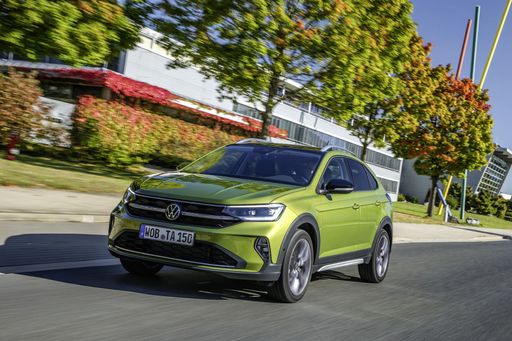
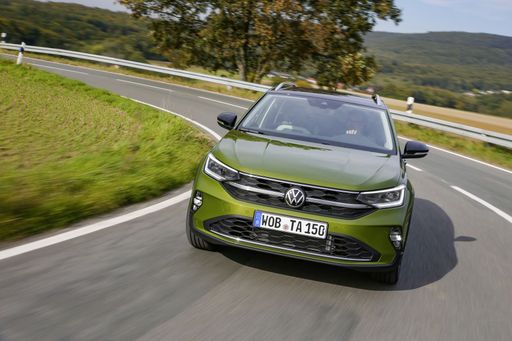
Taigo

Character and driving manners

The Jeep Avenger drives like a soft‑suspension city car: light steering, easy turn‑in and a forgiving ride that makes parking and weaving through traffic painless. The VW Taigo feels more composed at speed, with a steadier nose and a greater sense of reserve on longer runs — it’s the one you’ll trust for routine motorway miles. If you want an adventurous aesthetic and the occasional rough‑road confidence, the Avenger’s tougher cladding and optional higher‑traction options matter; if you prefer predictable, neutral handling and calm stability, the Taigo is the steadier companion. That trade‑off — fun, compact urbanity versus assured, long‑legged composure — is the defining driving contrast between them.

Avenger

Comfort and long‑distance behaviour

In town the Avenger’s softer setup and forgiving seats feel very comfortable and mask poor surfaces well, so short hops and stop‑start commuting are pleasant. On longer journeys the Taigo’s calmer high‑speed manners and bigger load space make extended trips less fussy — it simply copes with luggage and passenger needs more easily. Rear seating is where the split becomes obvious: the Avenger’s back row is tighter and best for kids or short adults, while the Taigo gives more usable rear room for family duty. If you regularly do long distances with luggage, the Taigo will feel less compromised; if most miles are urban or regional, the Avenger’s comfort bias wins out.

Taigo

Practicality, usability and family suitability

Practicality is where the Taigo scores cleanly: a larger, more usable boot and rear‑seat space that better handles child seats and weekend bags make it a smarter family tool. The Avenger answers with clever front‑cabin storage, a wide tailgate opening and protective exterior cladding that reduces the sting of parking dings in tight city spots. Both cars accept ISOFIX seats and cover everyday jobs, but families who need regular luggage capacity or want the peace of a stronger safety score will prefer the Taigo. Urban single drivers or lifestyle buyers who value compact footprint and rugged styling will find the Avenger’s package easier to live with day‑to‑day.

Avenger

Cabin feel, infotainment and perceived quality

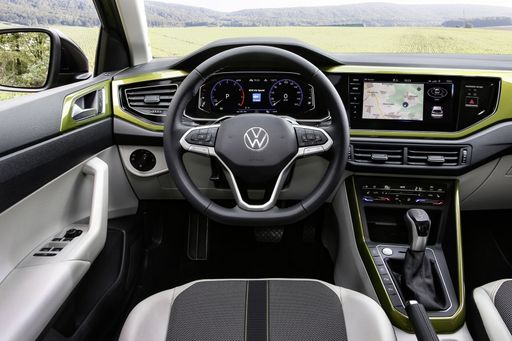
Step inside the Avenger and the vibe is rugged and functional: lots of hard plastics, useful physical climate controls and a straightforward layout that emphasises durability over polish. The Taigo trades a bit of that character for a cleaner VW presentation and a generally neater fit, though it still shows hard materials and can frustrate with touch‑slider controls and intermittent infotainment lag. Both systems have occasional sluggishness in real‑world use, so the tactile buttons in the Avenger can feel like a practical advantage for frequent short trips. If perceived cabin quality and a more conventional VW interface matter, the Taigo nudges ahead; if you prize tactile simplicity and a robust look, the Avenger stays appealing.

Taigo

Who should choose which — buyer fit and the next step

Choose the Jeep Avenger if you live in the city, want a compact car with personality, and value a soft, comfortable ride plus protective styling that shrugs off scrapes; it suits singles, couples and style‑minded buyers who rarely need maximum boot space. Opt for the VW Taigo if you need regular luggage room, a more assured motorway demeanour and a stronger safety/assistance profile for family duties — it’s the pragmatic choice for small families and frequent travellers. Both cars make sense for different lives: the Avenger prioritises urban usability and character, the Taigo prioritises everyday practicality and calm long‑distance behaviour. Below we break down the technical differences so you can match those real‑world impressions to the numbers that matter for your use case.

Here’s where it gets real: The technical differences in detail

Avenger

Costs and Efficiency:

Price and efficiency are key factors when choosing a car – and this is often where the real differences emerge.

VW Taigo is moderately cheaper – starting at 19,900 £ , while the Jeep Avenger costs 22,500 £ . That’s a price difference of around 2,622 £.

Fuel consumption also shows a difference: the Jeep Avenger uses 4.9 L/100km and is marginally more efficient than the VW Taigo with 5.3 L/100km. The difference is about 0.4 L/100km.

Taigo

Engine and Performance:

Power, torque and acceleration say a lot about how a car feels on the road. This is where you see which model delivers more driving dynamics.

When it comes to engine power, the Jeep Avenger offers only slightly more power – delivering 156 HP compared to 150 HP. That’s roughly 6 HP more horsepower.

When accelerating from 0 to 100 km/h, the VW Taigo is very slightly quicker – completing the sprint in 8.2 s, while the Jeep Avenger takes 9 s. That’s about 0.8 s quicker.

There’s also a difference in torque: the Jeep Avenger delivers marginally more torque with 260 Nm compared to 250 Nm. That’s about 10 Nm more.

Avenger

Space and Everyday Use:

Whether family car or daily driver – which one offers more room, flexibility and comfort?

Both vehicles offer seating for 5 people.

In terms of curb weight, Jeep Avenger is barely lighter – 1,180 kg compared to 1,229 kg. The difference is around 49 kg.

Looking at boot space, the VW Taigo offers slightly more boot space – 440 L compared to 380 L. That’s a difference of about 60 L.

When it comes to payload, the Jeep Avenger carries marginally more – 502 kg compared to 457 kg. That’s a difference of about 45 kg.

Who wins the race in the data check?

The Jeep Avenger is clearly ahead overall in the objective data comparison.
This result only shows which model scores more points on paper – not which of the two cars feels right for you.

from £22,500
Avenger

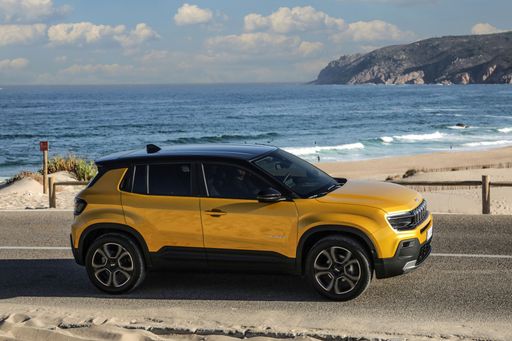
Jeep Avenger

  • Engine Type Petrol MHEV, Electric, Petrol
  • Transmission Automatic, Manual
  • Drive Type Front-Wheel Drive, All-Wheel Drive
  • Power HP 100 - 156 HP
  • Consumption L/100km 4.9 - 5.7 L/100km
  • Consumption kWh/100km 15.5 kWh/100km
  • Electric Range 400 km
Jeep Avenger
VW Taigo

Costs and Consumption

View detailed analysis

Engine and Performance

View detailed analysis

Dimensions and Body

View detailed analysis

Jeep Avenger

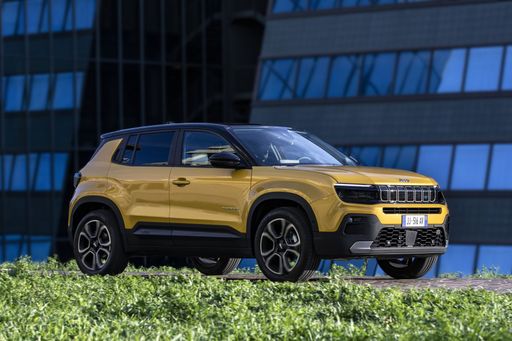
The Jeep Avenger mixes rugged styling with a compact, city‑friendly footprint that makes it easy to maneuver while keeping Jeep’s adventurous character. Inside it offers a practical, modern cabin with sensible tech and comfort aimed at everyday driving and light weekend getaways.

details

VW Taigo

The VW Taigo blends a coupe-like roofline with crossover practicality, giving it a stylish presence on the road while remaining easy to live with for everyday driving. It delivers a comfortable ride, intuitive tech and smart use of space, making it a good choice if you want SUV looks without the bulk of a larger vehicle.

details
Jeep Avenger
VW Taigo

Costs and Consumption

Price
22,500 - 36,800 £
Price
19,900 - 31,800 £
Consumption L/100km
4.9 - 5.7 L/100km
Consumption L/100km
5.3 - 5.8 L/100km
Consumption kWh/100km
15.5 kWh/100km
Consumption kWh/100km
-
Electric Range
400 km
Electric Range
-
Battery Capacity
-
Battery Capacity
-
co2
0 - 129 g/km
co2
120 - 132 g/km
Fuel tank capacity
-
Fuel tank capacity
-

Dimensions and Body

Body Type
SUV
Body Type
SUV
Seats
5
Seats
5
Doors
-
Doors
-
Curb weight
1,180 - 1,520 kg
Curb weight
1,229 - 1,302 kg
Trunk capacity
325 - 380 L
Trunk capacity
440 L
Length
-
Length
-
Width
1,776 mm
Width
1,757 mm
Height
-
Height
-
Max trunk capacity
-
Max trunk capacity
-
Payload
490 - 502 kg
Payload
448 - 457 kg

Engine and Performance

Engine Type
Petrol MHEV, Electric, Petrol
Engine Type
Petrol
Transmission
Automatic, Manual
Transmission
Manual, Automatic
Transmission Detail
Dual-Clutch Automatic, Reduction Gearbox, Manual Gearbox
Transmission Detail
Manual Gearbox, Dual-Clutch Automatic
Drive Type
Front-Wheel Drive, All-Wheel Drive
Drive Type
Front-Wheel Drive
Power HP
100 - 156 HP
Power HP
95 - 150 HP
Acceleration 0-100km/h
9 - 10.6 s
Acceleration 0-100km/h
8.2 - 11.1 s
Max Speed
-
Max Speed
-
Torque
205 - 260 Nm
Torque
175 - 250 Nm
Number of Cylinders
3
Number of Cylinders
3 - 4
Power kW
74 - 115 kW
Power kW
70 - 110 kW
Engine capacity
1,199 cm3
Engine capacity
999 - 1,498 cm3

General

Model Year
2026
Model Year
2,024 - 2,025
CO2 Efficiency Class
C, A, D
CO2 Efficiency Class
D
Brand
Jeep
Brand
VW
DriveDuel uses data analysis and artificial intelligence to evaluate vehicle data and create content. Content is regularly reviewed and improved. The displayed prices are estimates based on German list prices, adjusted to the respective country’s VAT. Country-specific registration taxes are not included. This information is not legally binding.