VS

Kia Ceed vs Hyundai i30 comparison

Compare performance (140 HP vs 150 HP), boot space and price (23,500 £ vs 24,600 £ ) at a glance. Find out which car is the better choice for you – Kia Ceed or Hyundai i30?

Kia Ceed vs Hyundai i30: Key differences

Kia Ceed

  • marginally cheaper
  • only slightly lighter

Hyundai i30

4.4 (1 Reviews)
rate
  • very slightly more power
  • marginally more efficient
  • marginally quicker 0–100 km/h
Ceed

Hyundai i30 VS Kia Ceed: head-to-head compact hatchback comparison

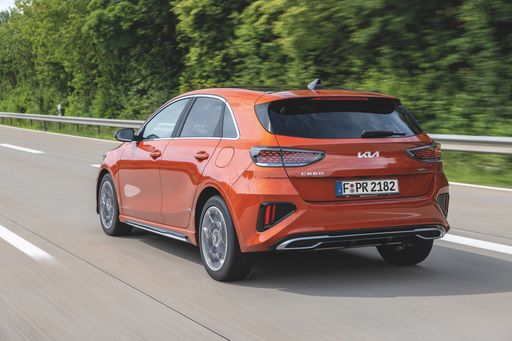
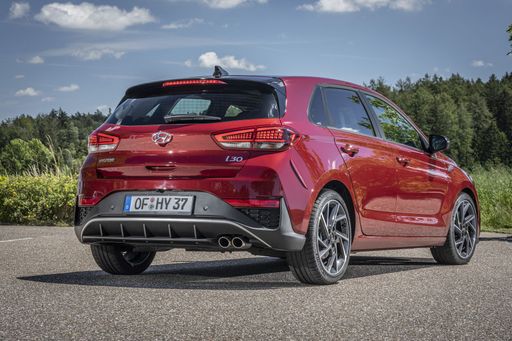
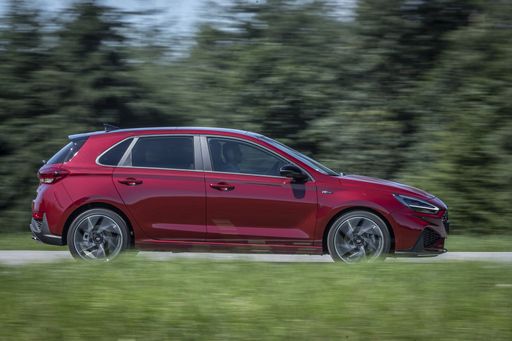
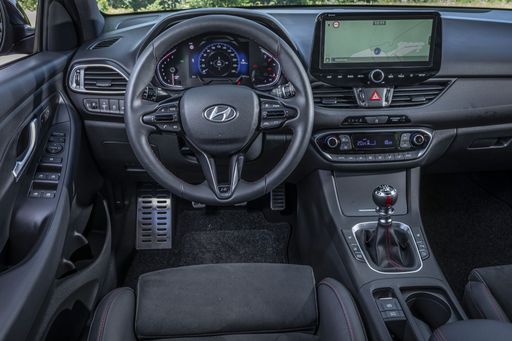
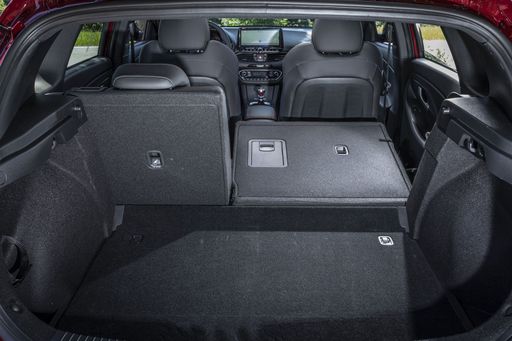
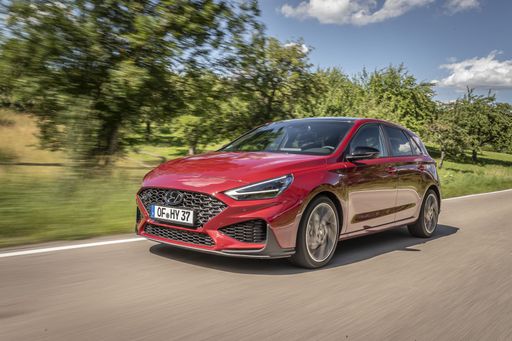
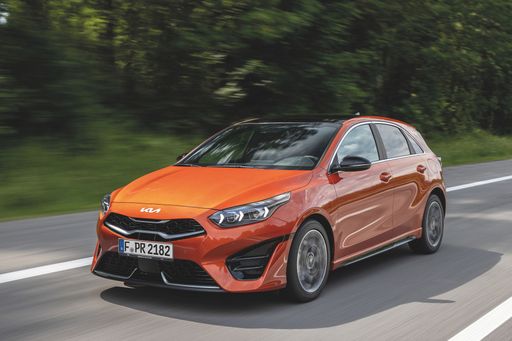
Hyundai i30 VS Kia Ceed pits two of the classiest compact hatchbacks against each other so you can see the real-world differences before you buy. This comparison drills into character, perceived comfort and everyday usability rather than just spec sheets. You’ll get a clear sense of how the Hyundai i30 and Kia Ceed present themselves on the road, in the garage and in the driveway. Think of this as the buyer’s guide to which hatchback better fits your life and priorities.
i30

Two different personalities in the same neighbourhood

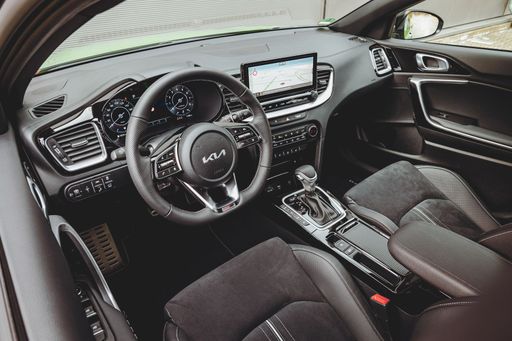
The Hyundai i30 carries a quieter, more refined vibe that leans toward composed driving and a slightly premium feel, while the Kia Ceed is more forthright and practical in its attitude. The Hyundai i30 feels like the choice for someone who values subtlety and a polished cabin; the Kia Ceed answers with an honest, workmanlike charm that rewards everyday use. Perceived material quality and cabin tuning tilt the sense of refinement toward the i30, whereas the Ceed emphasises durability and ergonomic clarity. The contrast is less about better or worse and more about which personality you prefer sitting across from you every morning.

Ceed

How they behave in daily life

On the commute and around town the Hyundai i30 and Kia Ceed split the workload: the i30 favours long miles and calm, composed journeys while the Ceed shines in tight city driving and practical chores. Families will find both sensible, but the Kia Ceed’s layout and user-friendly touches make loading, stowing and living with kids slightly easier. The Hyundai i30 rewards steady driving with a more settled feel, whereas the Ceed offers livelier responses that make parking and lane changes less fussy. Neither is uncomfortable, but their comfort philosophies diverge—serenity versus usable agility.

i30

Choosing one says something about you

Picking the Hyundai i30 often signals you want understated refinement and a car that feels a touch more grown-up; it’s for drivers who like modern tech without shouting about it. Choosing the Kia Ceed sends a practical message: you want sensible spec, visible value and a layout that handles daily life without drama. Both cars let you justify the purchase, but your justification will be different—tasteful composure with the i30, pragmatic clarity with the Ceed. It’s less about status and more about the story you prefer to tell on the road.

Ceed

Who should consider the Hyundai i30?

The Hyundai i30 suits drivers who prioritise a calm cabin, comfortable long runs and a modern infotainment experience that feels refined rather than flashy. If your driving is heavy on motorways, or you like a car that smooths out the day, the Hyundai i30 is likely to please. It’s a good fit for anyone wanting contemporary creature comforts with a quietly premium touch. In short, the Hyundai i30 is aimed at buyers who value comfort and a tidy, tech-forward feel.

i30

Who should consider the Kia Ceed (and how it compares to the i30)

The Kia Ceed is best for pragmatic buyers who want clear value, user-friendly packaging and durability that makes family life easier, especially compared with the Hyundai i30’s more composed leaning. If you favour straightforward ergonomics, sensible features and a car that’s easy to live with day-to-day, the Kia Ceed is the sharper choice. It’s the pick for someone who wants to be practical about cost and usability without sacrificing style completely. Still undecided? Read on and dig into the detailed numbers below to see where those small trade-offs line up on paper.

Here’s where it gets real: The technical differences in detail

Ceed

Costs and Efficiency:

Price and efficiency are often the first things buyers look at. Here it becomes clear which model has the long-term edge – whether at the pump, the plug, or in purchase price.

Kia Ceed is marginally cheaper – starting at 23,500 £ , while the Hyundai i30 costs 24,600 £ . That’s a price difference of around 1,080 £.

Fuel consumption also shows a difference: the Hyundai i30 uses 5.9 L/100km and is marginally more efficient than the Kia Ceed with 6 L/100km. The difference is about 0.1 L/100km.

i30

Engine and Performance:

Power, torque and acceleration are the classic benchmarks for car enthusiasts – and here, some clear differences start to show.

When it comes to engine power, the Hyundai i30 offers very slightly more power – delivering 150 HP compared to 140 HP. That’s roughly 10 HP more horsepower.

When accelerating from 0 to 100 km/h, the Hyundai i30 is marginally quicker – completing the sprint in 8.9 s, while the Kia Ceed takes 9.5 s. That’s about 0.6 s quicker.

There’s also a difference in torque: the Kia Ceed delivers marginally more torque with 253 Nm compared to 250 Nm. That’s about 3 Nm more.

Ceed

Space and Everyday Use:

Cabin size, boot volume and payload all play a role in everyday practicality. Here, comfort and flexibility make the difference.

Both vehicles offer seating for 5 people.

In terms of curb weight, Kia Ceed is only slightly lighter – 1,298 kg compared to 1,315 kg. The difference is around 17 kg.

When it comes to payload, the Kia Ceed carries barely more – 490 kg compared to 485 kg. That’s a difference of about 5 kg.

Who wins the race in the data check?

The Hyundai i30 comes out modestly ahead in the objective data comparison.
This result only shows which model scores more points on paper – not which of the two cars feels right for you.

from £24,600
i30

Hyundai i30

  • Engine Type : Petrol
  • Transmission : Manuel, Automatic
  • Drive Type : Front-Wheel Drive
  • Power HP : 115 - 150 HP
  • Consumption L/100km : 5.9 - 6.3 L/100km
Kia Ceed
Hyundai i30

Costs and Consumption

View detailed analysis

Engine and Performance

View detailed analysis

Dimensions and Body

View detailed analysis

Kia Ceed

The Kia Ceed is a sensible, stylish hatchback that gives buyers more than they'd expect for the money, blending practical space with crisp, modern looks. It drives with measured confidence and comes loaded with user-friendly kit, so you can enjoy daily life behind the wheel without breaking into a sweat.

details

Hyundai i30

The Hyundai i30 proves that sensible can also be stylish, offering a confident driving character wrapped in neat, modern design. It serves up a roomy, well-equipped cabin and composed ride that make everyday motoring feel like a clever purchase rather than a compromise.

details
Kia Ceed
Hyundai i30

Costs and Consumption

Price
23,500 - 26,300 £
Price
24,600 - 31,400 £
Consumption L/100km
6 - 6.4 L/100km
Consumption L/100km
5.9 - 6.3 L/100km
Consumption kWh/100km
-
Consumption kWh/100km
-
Electric Range
-
Electric Range
-
Battery Capacity
-
Battery Capacity
-
co2
137 - 146 g/km
co2
134 - 142 g/km
Fuel tank capacity
-
Fuel tank capacity
-

Dimensions and Body

Body Type
Hatchback
Body Type
Hatchback
Seats
5
Seats
5
Doors
-
Doors
-
Curb weight
1,298 - 1,372 kg
Curb weight
1,315 - 1,435 kg
Trunk capacity
-
Trunk capacity
395 L
Length
-
Length
-
Width
1,800 mm
Width
1,795 mm
Height
-
Height
-
Max trunk capacity
-
Max trunk capacity
-
Payload
478 - 490 kg
Payload
445 - 485 kg

Engine and Performance

Engine Type
Petrol, Petrol MHEV
Engine Type
Petrol
Transmission
Manuel, Automatic
Transmission
Manuel, Automatic
Transmission Detail
Manual Gearbox, Dual-Clutch Automatic
Transmission Detail
Manual Gearbox, Dual-Clutch Automatic
Drive Type
Front-Wheel Drive
Drive Type
Front-Wheel Drive
Power HP
100 - 140 HP
Power HP
115 - 150 HP
Acceleration 0-100km/h
9.5 - 13.2 s
Acceleration 0-100km/h
8.9 - 11.7 s
Max Speed
-
Max Speed
-
Torque
172 - 253 Nm
Torque
172 - 250 Nm
Number of Cylinders
3 - 4
Number of Cylinders
3 - 4
Power kW
74 - 103 kW
Power kW
85 - 110 kW
Engine capacity
998 - 1,482 cm3
Engine capacity
998 - 1,598 cm3

General

Model Year
2,024
Model Year
2,026
CO2 Efficiency Class
E
CO2 Efficiency Class
D, E
Brand
Kia
Brand
Hyundai
DriveDuel uses data analysis and artificial intelligence to evaluate vehicle data and create content. Content is regularly reviewed and improved. The displayed prices are estimates based on German list prices, adjusted to the respective country’s VAT. Country-specific registration taxes are not included. This information is not legally binding.