VS

Kia EV6 vs Hyundai IONIQ 6 comparison

Compare performance (609 HP vs 650 HP), boot space and price (38,600 £ vs 39,000 £ ) at a glance. Find out which car is the better choice for you – Kia EV6 or Hyundai IONIQ 6?

Kia EV6 vs Hyundai IONIQ 6: Key differences

Kia EV6

5 (3 Reviews)
rate
  • only slightly cheaper
  • slightly more trunk space
details

Hyundai IONIQ 6

4.6 (1 Reviews)
rate
  • very slightly more power
  • moderately more efficient
  • a bit more electric range
  • only slightly quicker 0–100 km/h
  • barely lighter
details

All details on performance, efficiency, range and trunk space can be found in the technical comparison below – including user reviews for both models.

By Achim Sedelmaier

EV6

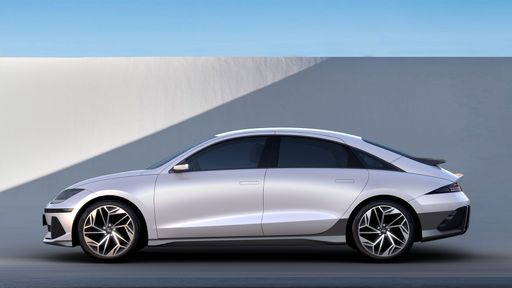
Electric Elegance: Hyundai IONIQ 6 vs. Kia EV6

In the rapidly evolving world of electric vehicles (EVs), the Hyundai IONIQ 6 and the Kia EV6 stand out as two prominent contenders that cater to diverse preferences among EV enthusiasts. These models exhibit advanced technical prowess and significant innovations, making them worthy of close examination. This article delves into their intricacies, comparing their performance, design, and technological features.
IONIQ 6

Performance and Power

The Hyundai IONIQ 6 and Kia EV6 both demonstrate impressive electric performance tailored to various driving needs. The IONIQ 6 offers a power range from 151 to 325 horsepower with torque stretching from 350 to 605 Nm. It accommodates different driving preferences with rear-wheel and all-wheel drive options, achieving 0-100 km/h acceleration between 8.8 to 5.1 seconds.

The Kia EV6 steps up with a broader power spectrum, spanning from 170 to 609 horsepower, and torque ranging from 350 to a robust 770 Nm. Its acceleration times range from 8.7 to a thrilling 3.5 seconds for the high-performance variants. The EV6 also provides both rear-wheel and all-wheel drive options, catering to diverse driving experiences.

EV6

Range and Efficiency

When it comes to electric range, the Hyundai IONIQ 6 offers between 429 to 614 kilometers, appealing to those seeking long journeys without frequent charging stops. The energy consumption ranges from 13.9 to 15.1 kWh/100km, which helps maintain efficiency over distances.

The Kia EV6, while slightly more power-hungry with consumption figures between 15.9 to 20.9 kWh/100km, offers a range between 428 to 582 kilometers. The trade-off offers more power for those prioritizing performance over maximized range.

IONIQ 6

Design and Dimensions

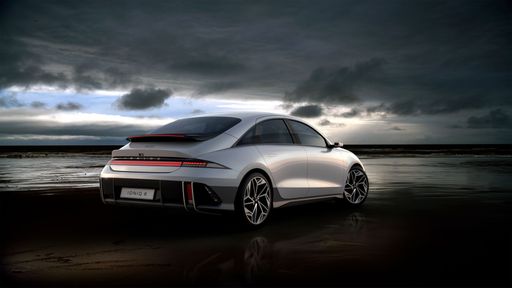
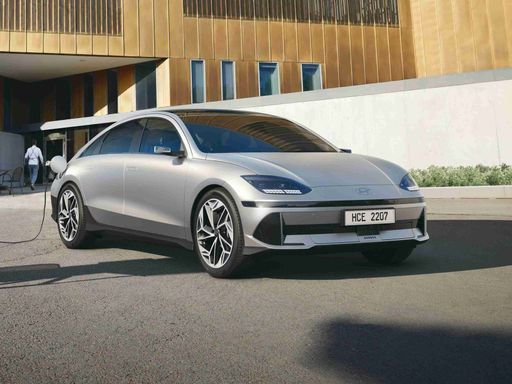
The Hyundai IONIQ 6 embodies a sleek hatchback design, measuring 4855 mm in length, 1880 mm in width, and a height of 1495 mm. With a curb weight between 1850 to 2095 kg, it maintains a stable ride, complemented by a trunk capacity of 401 liters for practical utility.

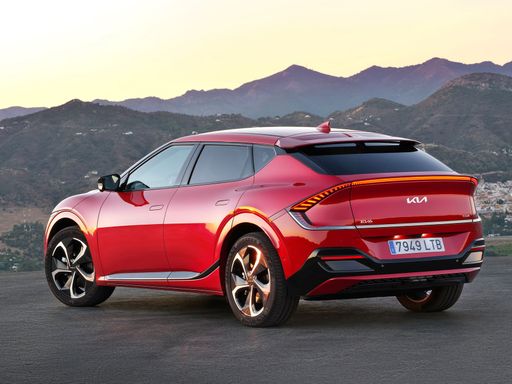
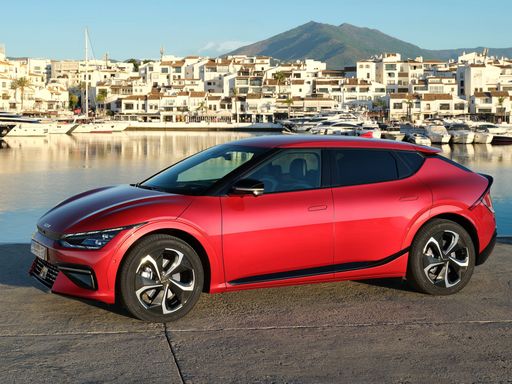
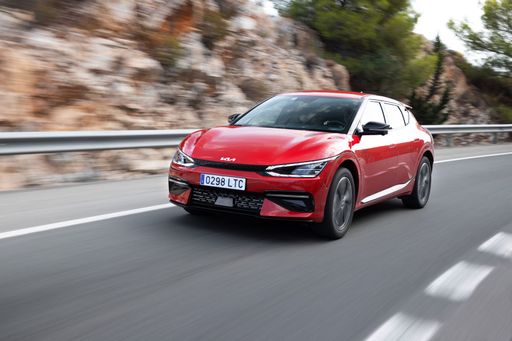
In contrast, the Kia EV6 embraces a more robust SUV profile. Its dimensions include a length of 4695 mm, a variable width of up to 1890 mm, and a height spanning 1545 to 1550 mm. The EV6's slightly heavier build with a curb weight ranging from 1955 to 2220 kg offers added road presence, and its trunk capacity reaches up to 490 liters, catering well to family and adventure seekers alike.

EV6

Technological Innovations

Both the IONIQ 6 and EV6 incorporate cutting-edge technology to enhance the driving experience. Standard features include automatic transmissions with a reduction gearbox. Both models boast an A-rated CO2 efficiency class, emphasizing their commitment to environmental sustainability with zero CO2 emissions.

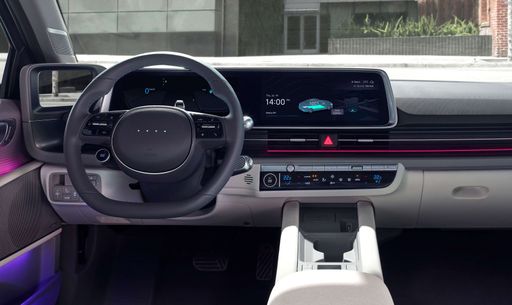
The IONIQ 6 and EV6 also integrate modern connectivity features and driver-assist technologies, providing comprehensive safety and comfort. The subtle nuances in technology packages across different models enable personalization to suit distinct user needs.

IONIQ 6

Conclusion

While the Hyundai IONIQ 6 impresses with its elegant design and extended range, the Kia EV6 captivates with higher performance capabilities and a commanding SUV stance. Both models encapsulate significant advances in electric vehicle technology, catering to varied consumer desires for efficiency, performance, and style. Choosing between them depends largely on individual priorities—be it the allure of easy elegance or the thrill of powerful performance.

Here’s where it gets real: The technical differences in detail

EV6

Costs and Efficiency:

Price and efficiency are key factors when choosing a car – and this is often where the real differences emerge.

Kia EV6 is only slightly cheaper – starting at 38,600 £ , while the Hyundai IONIQ 6 costs 39,000 £ . That’s a price difference of around 480 £.

In terms of energy consumption, the Hyundai IONIQ 6 is moderately more efficient: consuming 13.4 kWh/100km compared to 15.9 kWh/100km for the Kia EV6. That’s a difference of about 2.5 kWh/100km.

As for electric range, the Hyundai IONIQ 6 offers a bit more range – reaching up to 680 km, about 98 km more than the Kia EV6.

IONIQ 6

Engine and Performance:

Power, torque and acceleration say a lot about how a car feels on the road. This is where you see which model delivers more driving dynamics.

When it comes to engine power, the Hyundai IONIQ 6 offers very slightly more power – delivering 650 HP compared to 609 HP. That’s roughly 41 HP more horsepower.

When accelerating from 0 to 100 km/h, the Hyundai IONIQ 6 is only slightly quicker – completing the sprint in 3.2 s, while the Kia EV6 takes 3.5 s. That’s about 0.3 s quicker.

Both models offer the same torque – 770 Nm.

EV6

Space and Everyday Use:

Whether family car or daily driver – which one offers more room, flexibility and comfort?

Both vehicles offer seating for 5 people.

In terms of curb weight, Hyundai IONIQ 6 is barely lighter – 1,892 kg compared to 1,955 kg. The difference is around 63 kg.

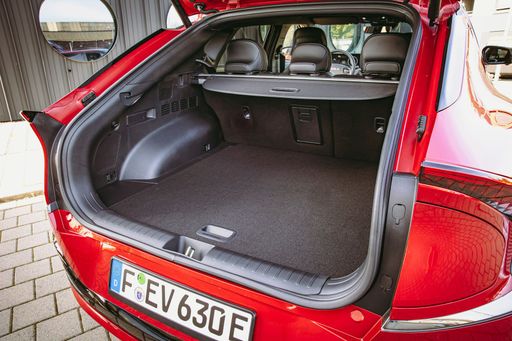
Looking at boot space, the Kia EV6 offers slightly more boot space – 490 L compared to 401 L. That’s a difference of about 89 L.

When it comes to payload, the Kia EV6 carries barely more – 450 kg compared to 438 kg. That’s a difference of about 12 kg.

Who wins the race in the data check?

The Hyundai IONIQ 6 comes out modestly ahead in the objective data comparison.
This result only shows which model scores more points on paper – not which of the two cars feels right for you.

from £39,000
IONIQ 6

Hyundai IONIQ 6

  • Engine Type : Electric
  • Transmission : Automatic
  • Drive Type : All-Wheel Drive, Rear-Wheel Drive
  • Power HP : 170 - 650 HP
  • Consumption kWh/100km : 13.4 - 15.9 kWh/100km
  • Electric Range : 469 - 680 km
Kia EV6
Hyundai IONIQ 6

Costs and Consumption

View detailed analysis

Engine and Performance

View detailed analysis

Dimensions and Body

View detailed analysis

Kia EV6

The Kia EV6 looks like it sprinted off a concept stage, its bold, futuristic lines wrapping a surprisingly spacious and grown-up cabin. On the road it delivers crisp, immediate thrust and composed handling, with enough everyday practicality and slick tech to make ditching petrol feel like an upgrade rather than a compromise.

details

Hyundai IONIQ 6

The Hyundai IONIQ 6 glides down the road with a poise that feels more runway model than commuter car, its sleek silhouette promising efficiency without trying too hard. Inside, a calm, minimalist cabin packed with clever, usable tech makes it a compelling choice for buyers who want electric motoring that's smart, stylish and quietly practical.

details
Kia EV6
Hyundai IONIQ 6

Costs and Consumption

Price
38,600 - 60,000 £
Price
39,000 - 64,300 £
Consumption L/100km
-
Consumption L/100km
-
Consumption kWh/100km
15.9 - 20.9 kWh/100km
Consumption kWh/100km
13.4 - 15.9 kWh/100km
Electric Range
428 - 582 km
Electric Range
469 - 680 km
Battery Capacity
63 - 84 kWh
Battery Capacity
-
co2
0 g/km
co2
0 g/km
Fuel tank capacity
-
Fuel tank capacity
-

Dimensions and Body

Body Type
SUV
Body Type
Hatchback
Seats
5
Seats
5
Doors
5
Doors
-
Curb weight
1,955 - 2,220 kg
Curb weight
1,892 - 2,134 kg
Trunk capacity
480 - 490 L
Trunk capacity
401 L
Length
4,695 mm
Length
-
Width
1,880 - 1,890 mm
Width
1,880 - 1,940 mm
Height
1,550 mm
Height
-
Max trunk capacity
1,290 L
Max trunk capacity
-
Payload
440 - 450 kg
Payload
386 - 438 kg

Engine and Performance

Engine Type
Electric
Engine Type
Electric
Transmission
Automatic
Transmission
Automatic
Transmission Detail
Reduction Gearbox
Transmission Detail
Reduction Gearbox
Drive Type
Rear-Wheel Drive, All-Wheel Drive
Drive Type
All-Wheel Drive, Rear-Wheel Drive
Power HP
170 - 609 HP
Power HP
170 - 650 HP
Acceleration 0-100km/h
3.5 - 8.7 s
Acceleration 0-100km/h
3.2 - 8.3 s
Max Speed
185 - 188 km/h
Max Speed
-
Torque
350 - 770 Nm
Torque
350 - 770 Nm
Number of Cylinders
-
Number of Cylinders
-
Power kW
125 - 448 kW
Power kW
125 - 478 kW
Engine capacity
-
Engine capacity
-

General

Model Year
2,024 - 2,025
Model Year
2026
CO2 Efficiency Class
A
CO2 Efficiency Class
A
Brand
Kia
Brand
Hyundai
DriveDuel uses data analysis and artificial intelligence to evaluate vehicle data and create content. Content is regularly reviewed and improved. The displayed prices are estimates based on German list prices, adjusted to the respective country’s VAT. Country-specific registration taxes are not included. This information is not legally binding.