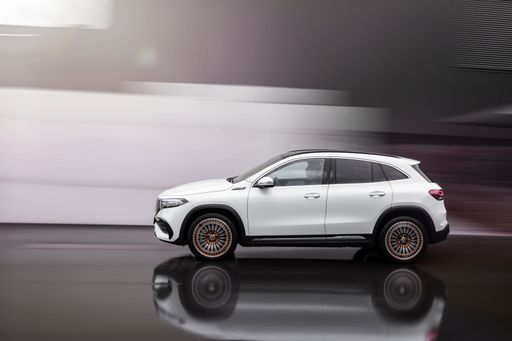
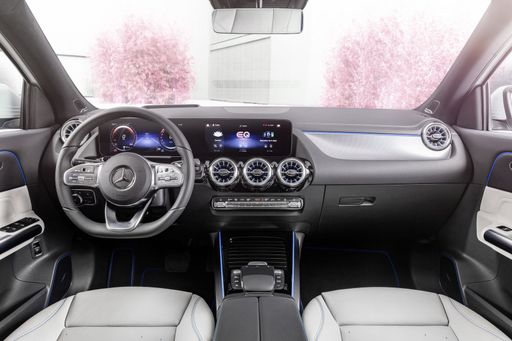
VS

Kia EV6 vs Mercedes EQA comparison

Compare performance (609 HP vs 292 HP), boot space and price (38,600 £ vs 44,200 £ ) at a glance. Find out which car is the better choice for you – Kia EV6 or Mercedes EQA?

Kia EV6 vs Mercedes EQA: Key differences

Kia EV6

5 (3 Reviews)
rate
  • slightly cheaper
  • substantially more power
  • marginally more electric range
  • clearly quicker 0–100 km/h
  • only slightly lighter
  • markedly more trunk space

Mercedes EQA

5 (1 Reviews)
rate
  • slightly more efficient

All details on performance, efficiency, range and trunk space can be found in the technical comparison below – including user reviews for both models.

EV6

Electric Rivalry: Kia EV6 vs. Mercedes EQA

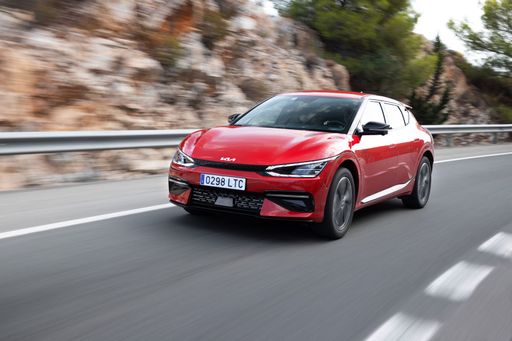
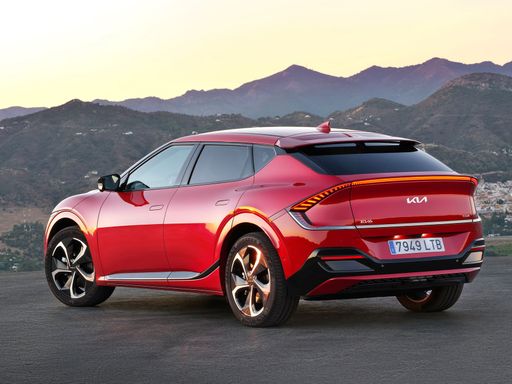
The electric vehicle landscape has seen monumental shifts in recent years, with brands like Kia and Mercedes-Benz setting new standards in what drivers can expect. The Kia EV6 and Mercedes EQA, both electric SUVs, stand as prime examples of modern engineering meeting eco-conscious strategies. But how do they stack up against each other? Let's delve into the technical details, innovations, and overall appeal of these two electric titans.
EQA

Power and Performance: A Closer Look

Kia's EV6 showcases impressive flexibility in powertrain options, ranging from 170 HP to a staggering 609 HP. This versatility caters to a diverse audience, from everyday drivers to performance enthusiasts. The advanced dual-motor all-wheel-drive system ensures robust torque delivery of up to 770 Nm, facilitating swift acceleration from 0 to 100 km/h in just 3.5 seconds for top models. The EV6 holds its own on the highway as well, with a top speed of 260 km/h, making it one of the quickest electric SUVs available.

On the other side, the Mercedes EQA presents a balanced offer with power outputs ranging between 190 and 292 HP. Equipped with front or all-wheel-drive, the EQA combines Mercedes' classic luxury feel with a Whisper-quiet drive experience. A steady 0 to 100 km/h sprint takes between 6 to 8.6 seconds depending on the model, and while its maximum speed is limited to 160 km/h, it emphasizes efficiency and the smoothness typical of a luxury ride.

EV6

Range and Efficiency: Distance Meets Dexterity

When it comes to range, the Mercedes EQA takes a slight edge with its ability to travel between 458 and 561 kilometers on a single charge thanks to efficient energy consumption as low as 14.4 kWh/100km. The EQA optimizes its 66.5-70.5 kWh battery capacity to navigate longer distances with ease.

Despite this, Kia's EV6 isn't far behind, offering a range of 428 to 582 kilometers with a larger battery capacity of 63 to 84 kWh. Its consumption rates start at 15.9 kWh/100km, emphasizing a design philosophy that balances speed and distance remarkably well.

EQA

Design and Practicality: Space and Style

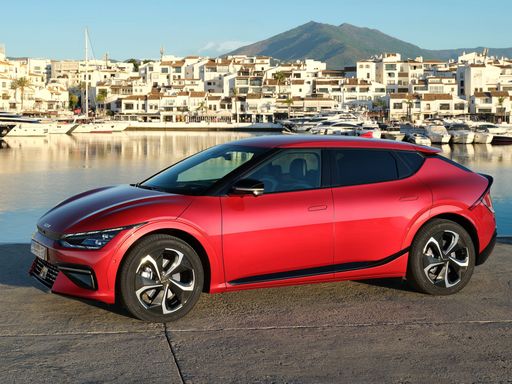
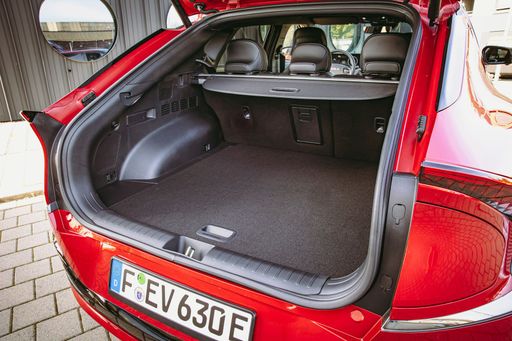
In terms of design, the Kia EV6 pushes boundaries with its sporty, aerodynamic shape. Measuring 4695 mm in length, 1890 mm in width, and 1550-1545 mm in height, the EV6 provides ample space without feeling cumbersome. The interior is roomy and futuristic, with an impressive 490-480 liters of trunk space, making it ideal for those who travel with plenty of luggage.

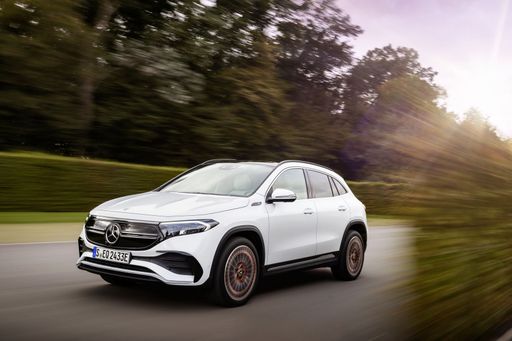
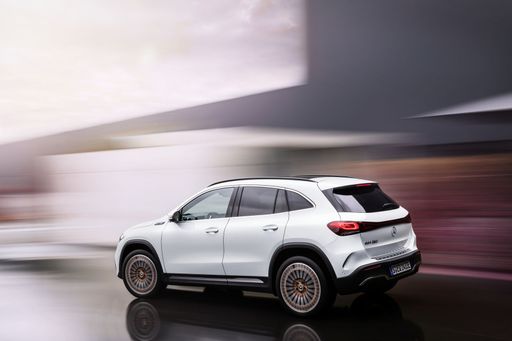
Meanwhile, the Mercedes EQA boasts the classic elegance expected from the brand. Its dimensions of 4463 mm in length, 1834 mm in width, and up to 1613 mm in height offer a compact agility that is perfect for city driving. However, it falls short in cargo capacity with just 340 liters of trunk space, though does boast a payload capacity of 425 kg.

EV6

Conclusion: A Decision of Preferences

Choosing between the Kia EV6 and the Mercedes EQA ultimately comes down to personal preference. The EV6 is perfect for those seeking a blend of high performance and ample space, with next-gen styling and speed. The EQA, on the other hand, is ideal for drivers looking for luxury comfort, long-range efficiency, and a more understated design. Both models represent the future of electric driving, each with unique attributes that cater to different lifestyles and priorities.

Here’s where it gets real: The technical differences in detail

EV6

Costs and Efficiency:

Price and efficiency are often the first things buyers look at. Here it becomes clear which model has the long-term edge – whether at the pump, the plug, or in purchase price.

Kia EV6 is slightly cheaper – starting at 38,600 £ , while the Mercedes EQA costs 44,200 £ . That’s a price difference of around 5,675 £.

In terms of energy consumption, the Mercedes EQA is slightly more efficient: consuming 14.4 kWh/100km compared to 15.9 kWh/100km for the Kia EV6. That’s a difference of about 1.5 kWh/100km.

As for electric range, the Kia EV6 offers marginally more range – reaching up to 582 km, about 21 km more than the Mercedes EQA.

EQA

Engine and Performance:

Under the bonnet, it becomes clear which model is tuned for sportiness and which one takes the lead when you hit the accelerator.

When it comes to engine power, the Kia EV6 offers substantially more power – delivering 609 HP compared to 292 HP. That’s roughly 317 HP more horsepower.

When accelerating from 0 to 100 km/h, the Kia EV6 is clearly quicker – completing the sprint in 3.5 s, while the Mercedes EQA takes 6 s. That’s about 2.5 s quicker.

Looking at top speed, the Kia EV6 is a bit faster – reaching 188 km/h, while the Mercedes EQA tops out at 160 km/h. The difference is around 28 km/h.

There’s also a difference in torque: the Kia EV6 delivers visibly more torque with 770 Nm compared to 520 Nm. That’s about 250 Nm more.

EV6

Space and Everyday Use:

Whether family car or daily driver – which one offers more room, flexibility and comfort?

Both vehicles offer seating for 5 people.

In terms of curb weight, Kia EV6 is only slightly lighter – 1,955 kg compared to 2,045 kg. The difference is around 90 kg.

Looking at boot space, the Kia EV6 offers markedly more boot space – 490 L compared to 340 L. That’s a difference of about 150 L.

For maximum load capacity, the Mercedes EQA offers barely more capacity – up to 1,320 L, about 30 L more than the Kia EV6.

When it comes to payload, the Kia EV6 carries very slightly more – 450 kg compared to 425 kg. That’s a difference of about 25 kg.

Who wins the race in the data check?

The Kia EV6 is clearly superior overall in the objective data comparison.
This result only shows which model scores more points on paper – not which of the two cars feels right for you.

from £38,600
EV6

Kia EV6

  • Engine Type : Electric
  • Transmission : Automatic
  • Drive Type : Rear-Wheel Drive, All-Wheel Drive
  • Power HP : 170 - 609 HP
  • Consumption kWh/100km : 15.9 - 20.9 kWh/100km
  • Electric Range : 428 - 582 km
Kia EV6
Mercedes EQA

Costs and Consumption

View detailed analysis

Engine and Performance

View detailed analysis

Dimensions and Body

View detailed analysis

Kia EV6

The Kia EV6 looks like it sprinted off a concept stage, its bold, futuristic lines wrapping a surprisingly spacious and grown-up cabin. On the road it delivers crisp, immediate thrust and composed handling, with enough everyday practicality and slick tech to make ditching petrol feel like an upgrade rather than a compromise.

details

Mercedes EQA

The Mercedes EQA slips into the electric crossover ranks with the brand’s familiar luxury polish, offering a quiet, fuss-free drive that feels perfectly at home in the city or on a country escape. Inside it’s neatly finished and tech-forward, projecting grown-up refinement even if it plays things a bit safe for anyone chasing outright excitement.

details
Kia EV6
Mercedes EQA

Costs and Consumption

Price
38,600 - 60,000 £
Price
44,200 - 57,400 £
Consumption L/100km
-
Consumption L/100km
-
Consumption kWh/100km
15.9 - 20.9 kWh/100km
Consumption kWh/100km
14.4 - 16.9 kWh/100km
Electric Range
428 - 582 km
Electric Range
476 - 561 km
Battery Capacity
63 - 84 kWh
Battery Capacity
70.5 kWh
co2
0 g/km
co2
0 g/km
Fuel tank capacity
-
Fuel tank capacity
-

Dimensions and Body

Body Type
SUV
Body Type
SUV
Seats
5
Seats
5
Doors
5
Doors
5
Curb weight
1,955 - 2,220 kg
Curb weight
2,045 - 2,115 kg
Trunk capacity
480 - 490 L
Trunk capacity
340 L
Length
4,695 mm
Length
4,463 mm
Width
1,880 - 1,890 mm
Width
1,834 mm
Height
1,550 mm
Height
1,608 - 1,613 mm
Max trunk capacity
1,290 L
Max trunk capacity
1,320 L
Payload
440 - 450 kg
Payload
425 kg

Engine and Performance

Engine Type
Electric
Engine Type
Electric
Transmission
Automatic
Transmission
Automatic
Transmission Detail
Reduction Gearbox
Transmission Detail
Reduction Gearbox
Drive Type
Rear-Wheel Drive, All-Wheel Drive
Drive Type
Front-Wheel Drive, All-Wheel Drive
Power HP
170 - 609 HP
Power HP
190 - 292 HP
Acceleration 0-100km/h
3.5 - 8.7 s
Acceleration 0-100km/h
6 - 8.6 s
Max Speed
185 - 188 km/h
Max Speed
160 km/h
Torque
350 - 770 Nm
Torque
385 - 520 Nm
Number of Cylinders
-
Number of Cylinders
-
Power kW
125 - 448 kW
Power kW
140 - 215 kW
Engine capacity
-
Engine capacity
-

General

Model Year
2,024 - 2,025
Model Year
2,024 - 2,025
CO2 Efficiency Class
A
CO2 Efficiency Class
A
Brand
Kia
Brand
Mercedes-Benz
DriveDuel uses data analysis and artificial intelligence to evaluate vehicle data and create content. Content is regularly reviewed and improved. The displayed prices are estimates based on German list prices, adjusted to the respective country’s VAT. Country-specific registration taxes are not included. This information is not legally binding.