VS

Kia EV9 vs VW ID.7 Touring comparison

Compare performance (508 HP vs 340 HP), boot space and price (54,200 £ vs 47,100 £ ) at a glance. Find out which car is the better choice for you – Kia EV9 or VW ID.7 Touring?

Kia EV9 vs VW ID.7 Touring: Key differences

Kia EV9

5 (1 Reviews)
rate
  • clearly more power
  • moderately quicker 0–100 km/h

VW ID.7 Touring

5 (2 Reviews)
rate
  • moderately cheaper
  • noticeably more efficient
  • slightly more electric range
  • very slightly lighter
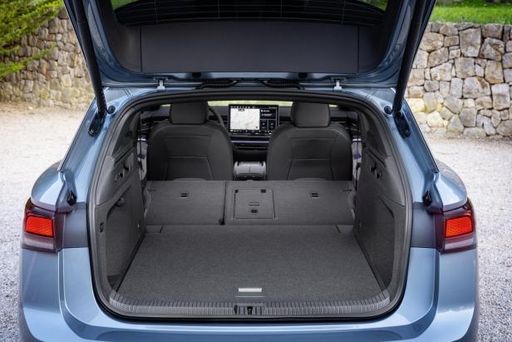
  • significantly more trunk space

By Achim Sedelmaier

EV9

Kia EV9 vs VW ID.7 Touring: A Clash of Electric Titans

The automotive world is rapidly shifting towards electric mobility, and the race to produce the most efficient and desirable electric vehicles is heating up. Two titans in the electric category, the Kia EV9 and the VW ID.7 Touring, bring unique strengths and innovative features to the table. Let's dive into their technical aspects and innovations to see which one might electrify your drive.
ID.7 Touring

Power and Performance

The Kia EV9 offers multiple powertrain configurations with rear-wheel as well as all-wheel drive options. The power ranges from a modest 204 HP in the RWD variant to a more dynamic 385 HP in its AWD counterpart. The torque supplied can reach up to 700 Nm, propelling this SUV from 0 to 100 km/h in as little as 5.3 seconds, depending on the model configuration. The EV9 tops out at a maximum speed of 200 km/h.

On the other hand, the VW ID.7 Touring delivers power between 286 HP and 340 HP, available in both rear-wheel and all-wheel drive systems. With a torque range reaching up to 679 Nm, the ID.7 Touring can sprint from 0 to 100 km/h in 5.5 seconds. Its powertrain is efficient enough, maximizing your range while cruising at up to 180 km/h.

EV9

Battery and Range

The Kia EV9 sports a battery capacity ranging from 76.1 kWh to 99.8 kWh, which provides a driving range between 443 km and 563 km under optimal conditions. This makes it a versatile choice for both urban commutes and longer road trips.

The VW ID.7 Touring, meanwhile, is armed with a slightly smaller battery capacity of up to 86 kWh, but thanks to its efficient power consumption ranging from 14 to 16.6 kWh/100 km, it stretches its legs and offers a longer range of up to 690 km on a single charge.

ID.7 Touring

Interior and Capacity

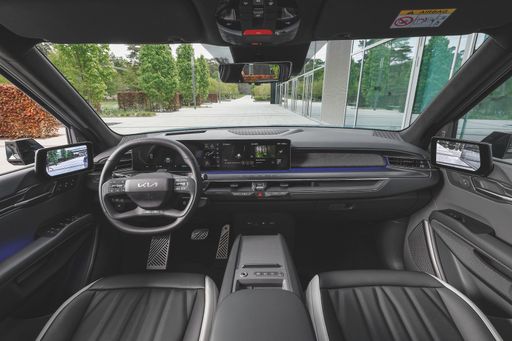
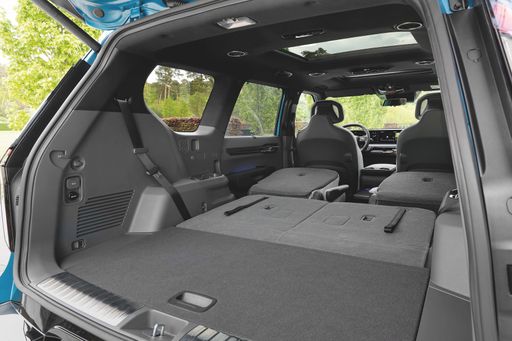
Designed with family and comfort in mind, the Kia EV9 seats up to 7 passengers — a boon for larger families or those needing extra passenger capacity. The EV9 offers a trunk capacity of 333 liters, sufficient for standard luggage and groceries.

The VW ID.7 Touring takes a slightly different approach, seating up to 5 passengers but compensating with a cavernous trunk capacity of 605 liters, making it an excellent choice for those who prioritize cargo space over extra seating.

EV9

Dimensions and Design

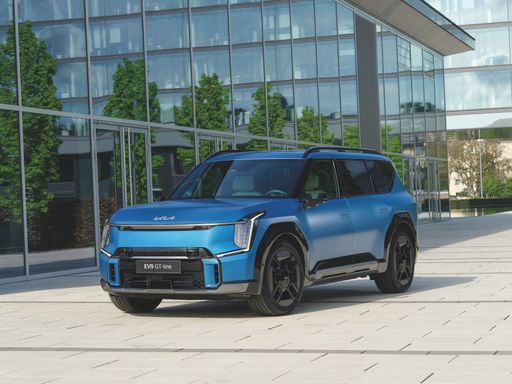
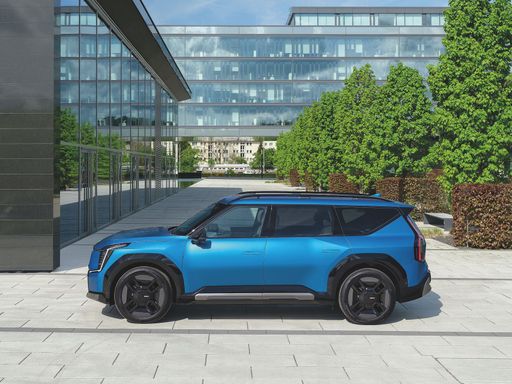
The Kia EV9 stands tall as a proper SUV, measuring up to 5015 mm in length, 1980 mm in width, and 1780 mm in height. These dimensions give it a commanding presence on the road, paired with the practicality of ample interior space.

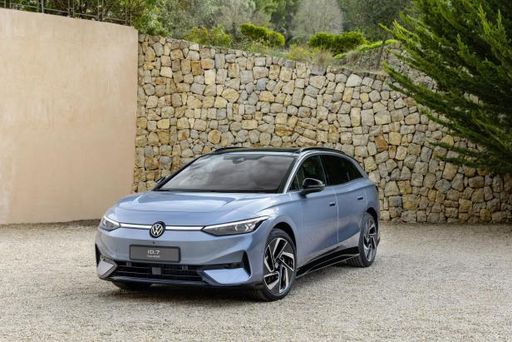
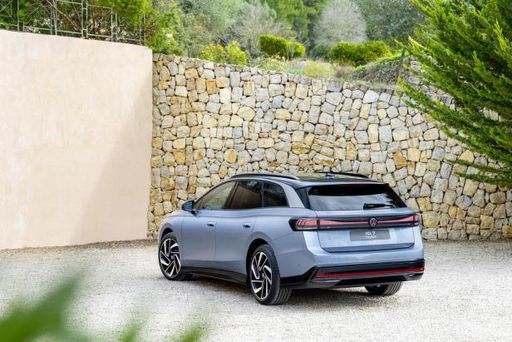
Comparatively, the VW ID.7 Touring, with its sleek wagon design, offers dimensions of 4961 mm in length, 1862 mm in width, and up to 1551 mm in height. Its design is more aerodynamic, favoring efficiency and style over the towering height of an SUV.

ID.7 Touring

Efficiency and Environmental Impact

Both the Kia EV9 and the VW ID.7 Touring boast impressive environmental credentials, with CO2 Efficiency Class ratings of A and zero CO2 emissions thanks to their fully electric powertrains.

EV9

Final Thoughts

The choice between the Kia EV9 and the VW ID.7 Touring hinges on your personal priorities. If you need more seating and the robust presence of an SUV, the EV9 is likely to appeal. However, if a longer range and more cargo space are your priorities, the ID.7 Touring is hard to beat. Both vehicles represent the forefront of innovation in the electric vehicle market, catering to differing needs while pushing the envelope on performance and eco-friendliness.

Here’s where it gets real: The technical differences in detail

EV9

Costs and Efficiency:

Price and efficiency are often the first things buyers look at. Here it becomes clear which model has the long-term edge – whether at the pump, the plug, or in purchase price.

VW ID.7 Touring is moderately cheaper – starting at 47,100 £ , while the Kia EV9 costs 54,200 £ . That’s a price difference of around 7,101 £.

In terms of energy consumption, the VW ID.7 Touring is noticeably more efficient: consuming 14 kWh/100km compared to 19.5 kWh/100km for the Kia EV9. That’s a difference of about 5.5 kWh/100km.

As for electric range, the VW ID.7 Touring offers slightly more range – reaching up to 689 km, about 126 km more than the Kia EV9.

ID.7 Touring

Engine and Performance:

Power, torque and acceleration are the classic benchmarks for car enthusiasts – and here, some clear differences start to show.

When it comes to engine power, the Kia EV9 offers clearly more power – delivering 508 HP compared to 340 HP. That’s roughly 168 HP more horsepower.

When accelerating from 0 to 100 km/h, the Kia EV9 is moderately quicker – completing the sprint in 4.6 s, while the VW ID.7 Touring takes 5.5 s. That’s about 0.9 s quicker.

Looking at top speed, the Kia EV9 is only slightly faster – reaching 200 km/h, while the VW ID.7 Touring tops out at 180 km/h. The difference is around 20 km/h.

There’s also a difference in torque: the Kia EV9 delivers only slightly more torque with 740 Nm compared to 679 Nm. That’s about 61 Nm more.

EV9

Space and Everyday Use:

Cabin size, boot volume and payload all play a role in everyday practicality. Here, comfort and flexibility make the difference.

Seats: Kia EV9 offers more seats – 7 vs 5.

In terms of curb weight, VW ID.7 Touring is very slightly lighter – 2,191 kg compared to 2,392 kg. The difference is around 201 kg.

Looking at boot space, the VW ID.7 Touring offers significantly more boot space – 605 L compared to 333 L. That’s a difference of about 272 L.

For maximum load capacity, the Kia EV9 offers visibly more capacity – up to 2,393 L, about 679 L more than the VW ID.7 Touring.

When it comes to payload, the Kia EV9 carries markedly more – 615 kg compared to 465 kg. That’s a difference of about 150 kg.

Who wins the race in the data check?

The Kia EV9 is far ahead overall in the objective data comparison.
This result only shows which model scores more points on paper – not which of the two cars feels right for you.

from £54,200
EV9

Kia EV9

  • Engine Type : Electric
  • Transmission : Automatic
  • Drive Type : All-Wheel Drive, Rear-Wheel Drive
  • Power HP : 204 - 508 HP
  • Consumption kWh/100km : 19.5 - 22.8 kWh/100km
  • Electric Range : 443 - 563 km
Kia EV9
VW ID.7 Touring

Costs and Consumption

View detailed analysis

Engine and Performance

View detailed analysis

Dimensions and Body

View detailed analysis

Kia EV9

The Kia EV9 is a bold, boxy electric SUV that looks like it could swallow your luggage and the in‑laws, with an interior that feels more lounge than cockpit and a presence that makes smaller rivals suddenly feel shy. On the road it delivers calm long‑distance composure with enough shove to keep overtakes effortless, and its tech and practicality make it an easy, sensible choice for buyers who want electric without compromise.

details

VW ID.7 Touring

The VW ID.7 Touring blends sleek, aerodynamic fastback looks with estate practicality, delivering an electric family car that looks grown-up and feels refined. Inside it's calm and spacious with clever storage and modern tech, swallowing suitcases and weekend plans with ease — a sensible, slightly flashy choice for buyers who want electric comfort without giving up practicality.

details
Kia EV9
VW ID.7 Touring

Costs and Consumption

Price
54,200 - 78,000 £
Price
47,100 - 54,900 £
Consumption L/100km
-
Consumption L/100km
-
Consumption kWh/100km
19.5 - 22.8 kWh/100km
Consumption kWh/100km
14 - 16.6 kWh/100km
Electric Range
443 - 563 km
Electric Range
584 - 689 km
Battery Capacity
99.8 kWh
Battery Capacity
77 - 86 kWh
co2
0 g/km
co2
0 g/km
Fuel tank capacity
-
Fuel tank capacity
-

Dimensions and Body

Body Type
SUV
Body Type
Estate
Seats
6 - 7
Seats
5
Doors
5
Doors
5
Curb weight
2,392 - 2,664 kg
Curb weight
2,191 - 2,336 kg
Trunk capacity
333 L
Trunk capacity
605 L
Length
5,015 mm
Length
4,961 mm
Width
1,980 mm
Width
1,862 mm
Height
1,780 mm
Height
1,549 - 1,551 mm
Max trunk capacity
2,318 - 2,393 L
Max trunk capacity
1,714 L
Payload
542 - 615 kg
Payload
459 - 465 kg

Engine and Performance

Engine Type
Electric
Engine Type
Electric
Transmission
Automatic
Transmission
Automatic
Transmission Detail
Reduction Gearbox
Transmission Detail
Reduction Gearbox
Drive Type
All-Wheel Drive, Rear-Wheel Drive
Drive Type
Rear-Wheel Drive, All-Wheel Drive
Power HP
204 - 508 HP
Power HP
286 - 340 HP
Acceleration 0-100km/h
4.6 - 9.4 s
Acceleration 0-100km/h
5.5 - 6.7 s
Max Speed
200 km/h
Max Speed
180 km/h
Torque
350 - 740 Nm
Torque
545 - 679 Nm
Number of Cylinders
-
Number of Cylinders
-
Power kW
150 - 374 kW
Power kW
210 - 250 kW
Engine capacity
-
Engine capacity
-

General

Model Year
2,023 - 2,025
Model Year
2,024
CO2 Efficiency Class
A
CO2 Efficiency Class
A
Brand
Kia
Brand
VW
DriveDuel uses data analysis and artificial intelligence to evaluate vehicle data and create content. Content is regularly reviewed and improved. The displayed prices are estimates based on German list prices, adjusted to the respective country’s VAT. Country-specific registration taxes are not included. This information is not legally binding.