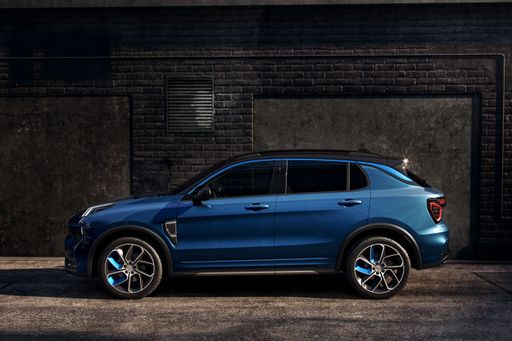
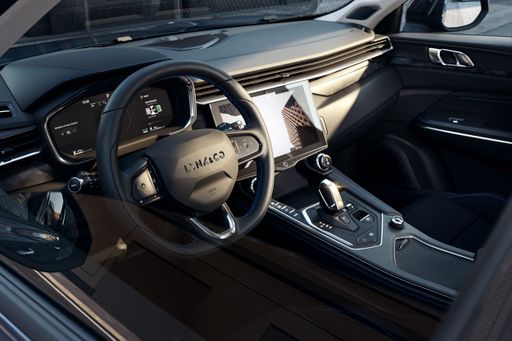
VS

Kia Niro vs Lynk & Co 01 - Differences and prices compared

Compare performance (180 HP vs 280 HP), boot space and price (29100 £ vs 36900 £ ) at a glance. Find out which car is the better choice for you – Kia Niro or Lynk & Co 01?

Niro

Battle of the Hybrids: Kia Niro vs. Lynk & Co 01

The hybrid segment of the SUV market is thriving, with options that blend efficiency, performance, and style. Today, we delve into a comparison between two prominent contenders: the Kia Niro and the Lynk & Co 01. These vehicles offer fascinating contrasts in technology and design, catering to discerning eco-conscious drivers.
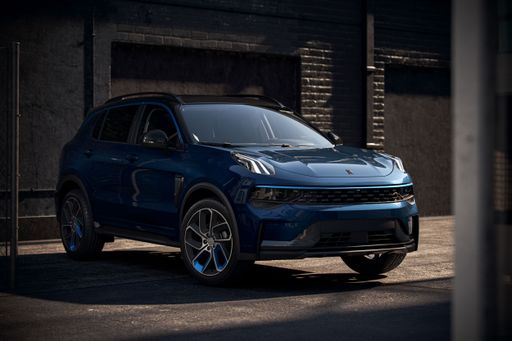
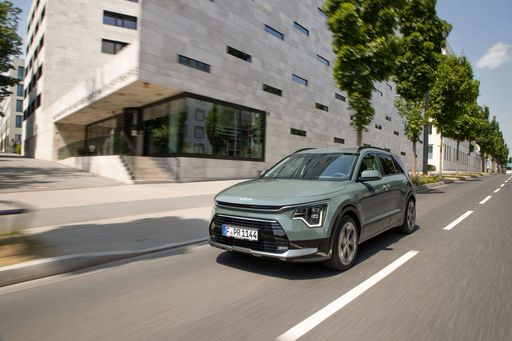
01

Performance and Power

The Kia Niro offers a choice between a full hybrid and a plug-in hybrid. The former delivers 129 HP with a consumption of 4.4 L/100km, while the latter pushes the envelope to 171 HP. Thanks to its 1.6-liter engine, the Niro promises acceleration from 0 to 100 km/h within 10.4 to 11.3 seconds, depending on the variant, and a top speed of up to 161 km/h.

In contrast, the Lynk & Co 01, specifically their plug-in hybrid model, boasts significantly higher power outputs of 261 to 276 HP. Its 3- and 4-cylinder engine configurations accelerate from 0 to 100 km/h in a brisk 7.7 to 8 seconds. With a top speed up to 210 km/h, the Lynk & Co 01 offers a more performance-oriented drive.

Niro

Efficiency and Range

Kia Niro's hybrid prowess is evident in its CO2 figures, which range from 19 to 23 g/km, with a fuel consumption of only 0.8 to 1 L/100km for the plug-in model. It features an electric range of up to 59 km and a battery capacity of 11.1 kWh, making it an economical choice for environmentally conscious drivers.

The Lynk & Co 01 ups the ante with an electric-only range of 75 km, facilitated by a larger 14.1 kWh battery. Its excellent CO2 rating of 20 to 24 g/km, coupled with fuel consumption figures around 0.9 to 1 L/100km, showcases its commitment to reducing carbon footprints.

01

Design and Dimensions

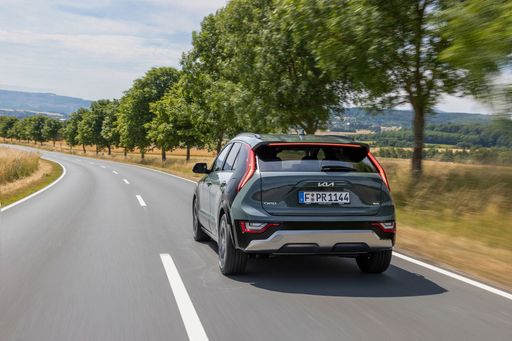
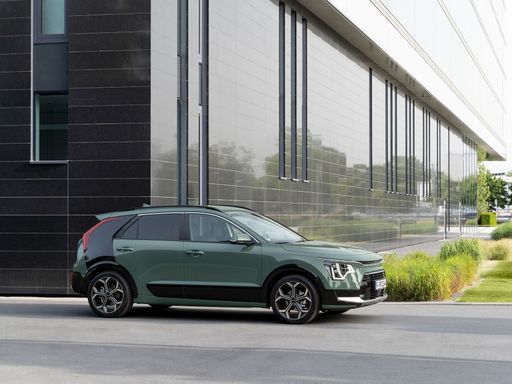
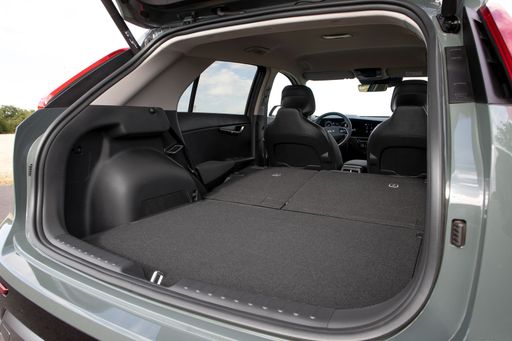
The Kia Niro sports a compact SUV body with dimensions of 4420 mm in length, 1825 mm in width, and a height of 1545 mm. It accommodates up to 5 passengers, providing a trunk capacity of between 348 and 451 liters.

The Lynk & Co 01 stands taller and broader, with dimensions stretching to 4545 mm in length, 1860 mm in width, and 1694 mm in height. It similarly seats 5 occupants while offering a generous trunk capacity of 466 liters.

Niro

Technological Advances

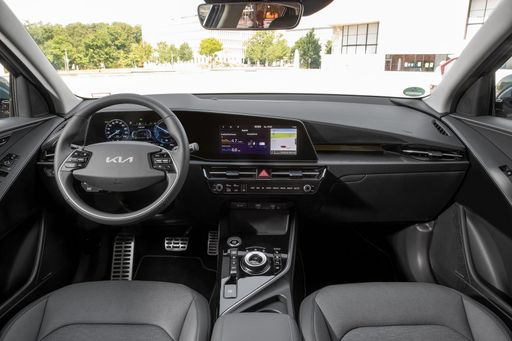
Kia's approach leans heavily on refined versatility with dual-clutch automatic transmission across all variants, providing a seamless driving experience. The Niro focuses on delivering efficiency and comfort, supported by a payload capacity reaching 466 kg.

Lynk & Co integrates advanced technology aimed at enhancing performance, reflected in its automatic gearbox that provides a sportier engagement with the road. This model is configured with up to 535 Nm torque for responsive acceleration, matched by a payload capacity of 377 to 445 kg.

01

Conclusion

Choosing between the Kia Niro and the Lynk & Co 01 boils down to personal priorities. If efficiency and a cost-effective eco-footprint are your main concerns, the Niro's blend of hybrid innovation and practicality makes it compelling. However, if a dynamic driving experience with superior performance figures appeals to you, the Lynk & Co 01 emerges as the front-runner.

Ultimately, both the Kia Niro and Lynk & Co 01 offer their unique takes on hybrid innovation, reflecting their manufacturer's distinct ethos and commitment to automotive excellence.

Kia Niro

5 (1 Reviews)
rate

Lynk & Co 01

5 (2 Reviews)
rate

Here’s where it gets real: The technical differences in detail

Niro

Costs and Efficiency:

When it comes to price and running costs, the biggest differences usually appear. This is often where you see which car fits your budget better in the long run.

Kia Niro has a evident advantage in terms of price – it starts at 29100 £ , while the Lynk & Co 01 costs 36900 £ . That’s a price difference of around 7718 £.

Fuel consumption also shows a difference: Lynk & Co 01 manages with 0.90 L and is therefore convincingly more efficient than the Kia Niro with 2.40 L. The difference is about 1.50 L per 100 km.

As for electric range, the Lynk & Co 01 performs somewhat better – achieving up to 75 km, about 13 km more than the Kia Niro.

Engine and Performance:

Power, torque and acceleration are the classic benchmarks for car enthusiasts – and here, some clear differences start to show.

When it comes to engine power, the Lynk & Co 01 has a noticeable edge – offering 280 HP compared to 180 HP. That’s roughly 100 HP more horsepower.

In acceleration from 0 to 100 km/h, the Lynk & Co 01 is clearly perceptible quicker – completing the sprint in 7.70 s, while the Kia Niro takes 9.90 s. That’s about 2.20 s faster.

There’s also a difference in torque: Lynk & Co 01 pulls significantly stronger with 535 Nm compared to 265 Nm. That’s about 270 Nm difference.

Space and Everyday Use:

Beyond pure performance, interior space and usability matter most in daily life. This is where you see which car is more practical and versatile.

Both vehicles offer seating for 5 people.

In curb weight, Kia Niro is noticeable lighter – 1474 kg compared to 1935 kg. The difference is around 461 kg.

In terms of boot space, the Lynk & Co 01 offers barely noticeable more room – 466 L compared to 451 L. That’s a difference of about 15 L.

When it comes to payload, Kia Niro slightly takes the win – 466 kg compared to 415 kg. That’s a difference of about 51 kg.

Who wins the race in the data check?

The Lynk & Co 01 is decisively ahead in the objective data comparison.
This result only shows which model scores more points on paper – not which of the two cars feels right for you.

Kia Niro
Lynk & Co 01

Costs and Consumption

View detailed analysis

Engine and Performance

View detailed analysis

Dimensions and Body

View detailed analysis
from about £36,900
01

Lynk & Co 01

  • Engine Type : Plugin Hybrid
  • Transmission : Automatic
  • Drive Type : Front-Wheel Drive
  • Power HP : 280 HP
  • Consumption L/100km : 0.90 L
  • Electric Range : 75 km

Kia Niro

5 (1 Reviews)
rate

The Kia Niro blends clever packaging and modern styling into a compact crossover that’s refreshingly sensible for daily life. It’s comfortable, economical and packed with user‑friendly tech, so if you want a fuss‑free family car with a touch of green credibility, the Niro is worth a test drive.

details

Lynk & Co 01

5 (2 Reviews)
rate

The Lynk & Co 01 marries bold, contemporary styling with a roomy, well-appointed cabin, striking a rare balance between fashionable flair and everyday practicality. With intuitive tech, flexible ownership ideas and a playful driving character, it’s the kind of crossover that turns heads at the lights and keeps owners grinning on the commute.

details
Kia Niro
Lynk & Co 01

Costs and Consumption

Price
29100 - 38600 £
Price
36900 - 40300 £
Consumption L/100km
2.4 - 4.9 L
Consumption L/100km
0.90 L
Consumption kWh/100km
-
Consumption kWh/100km
-
Electric Range
57 - 62 km
Electric Range
75 km
Battery Capacity
1.3 - 11.1 kWh
Battery Capacity
-
co2
53 - 111 g/km
co2
20 g/km
Fuel tank capacity
37 - 42 L
Fuel tank capacity
-

Dimensions and Body

Body Type
SUV
Body Type
SUV
Seats
5
Seats
5
Doors
5
Doors
-
Curb weight
1474 - 1594 kg
Curb weight
1935 kg
Trunk capacity
348 - 451 L
Trunk capacity
466 L
Length
4420 mm
Length
-
Width
1825 mm
Width
1860 mm
Height
1545 mm
Height
-
Max trunk capacity
1342 - 1445 L
Max trunk capacity
-
Payload
466 kg
Payload
415 kg

Engine and Performance

Engine Type
Full Hybrid, Plugin Hybrid
Engine Type
Plugin Hybrid
Transmission
Automatic
Transmission
Automatic
Transmission Detail
Dual-Clutch Automatic
Transmission Detail
Automatic Gearbox
Drive Type
Front-Wheel Drive
Drive Type
Front-Wheel Drive
Power HP
138 - 180 HP
Power HP
280 HP
Acceleration 0-100km/h
9.9 - 11.4 s
Acceleration 0-100km/h
7.70 s
Max Speed
170 - 185 km/h
Max Speed
-
Torque
265 Nm
Torque
535 Nm
Number of Cylinders
4
Number of Cylinders
4
Power kW
102 - 132 kW
Power kW
206 kW
Engine capacity
1580 cm3
Engine capacity
1499 cm3

General

Model Year
2025
Model Year
2024
CO2 Efficiency Class
C, B
CO2 Efficiency Class
B
Brand
Kia
Brand
Lynk & Co
Is the Kia Niro offered with different drivetrains?

The Kia Niro is available as Front-Wheel Drive.

The prices shown are estimates based on German list prices, adjusted for local VAT. Local registration taxes (e.g. NoVA, BPM or CO2 malus) are not included. This information is not legally binding.