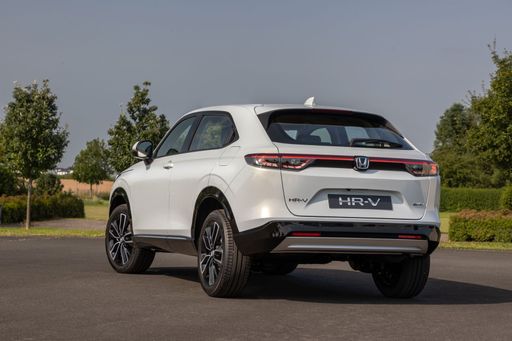
@ Honda Motor Co., Ltd.
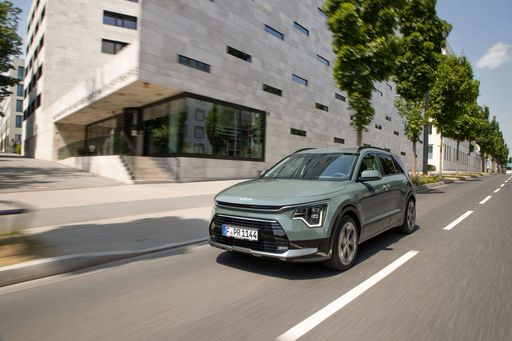
@ Kia Corporation
VS

Honda HR-V vs Kia Niro – Which car suits you better?

Everyday use, family trips or long-distance drives – here’s where the differences show.
Discover whether Honda HR-V or Kia Niro fits your lifestyle better.

HR-V @ Honda Motor Co., Ltd.

Compact SUV Showdown: Honda HR-V vs. Kia Niro

For 2025, the compact SUV segment welcomes the latest iterations of two popular hybrids: the Honda HR-V and the Kia Niro. Building on their storied reputations for blending practicality with efficiency, both models bring a host of valuable features and innovations to the table. Let's break down the technical aspects and unique offerings to determine which might be the better fit for your needs.

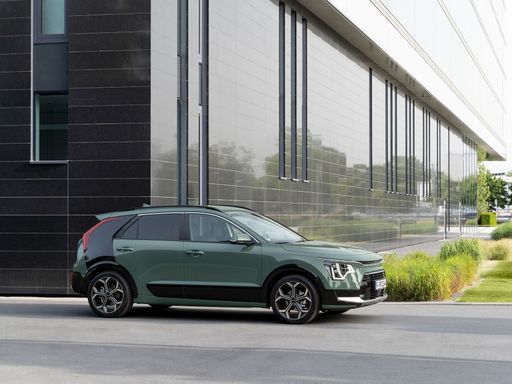
Niro @ Kia Corporation

Design and Dimensions

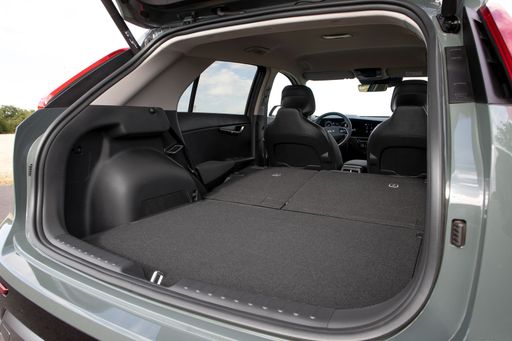
Both the Honda HR-V and the Kia Niro are classified as SUVs, but they each bring distinct design aesthetics and dimensions to set them apart. The Honda HR-V stands at a length of 4,355 mm, a height of 1,582 mm, and provides a trunk capacity of 319 liters. The Kia Niro, meanwhile, measures longer at 4,420 mm but slightly shorter in height at 1,545 mm. Its trunk capacity surpasses the HR-V with 451 liters, offering more storage space for long trips.

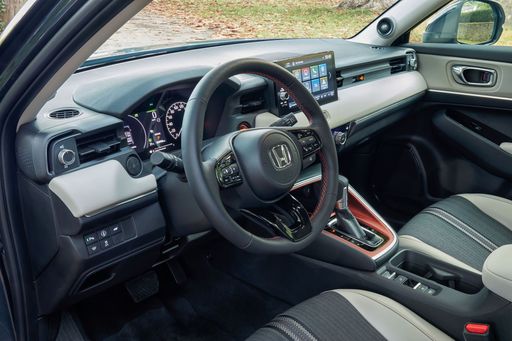
HR-V @ Honda Motor Co., Ltd.

Powertrain Options and Performance

The Honda HR-V relies exclusively on a full hybrid engine providing 131 HP, translating into a smooth front-wheel-drive experience. It accomplishes 0 to 100 km/h in an average of 10.6 to 10.8 seconds. Drivers focused on efficiency will appreciate its 5.4 L/100km fuel consumption, backed by an engine capacity of 1,498 cm³.

The Kia Niro, by contrast, offers versatility with both full and plug-in hybrid options. Horsepower ranges from 138 HP to 180 HP, depending on the chosen model. Acceleration varies from 9.9 seconds to 11.4 seconds for a 0 to 100 km/h sprint. The plug-in variant shines with an impressive electric range of up to 62 km, ideal for short commutes without gasoline consumption.

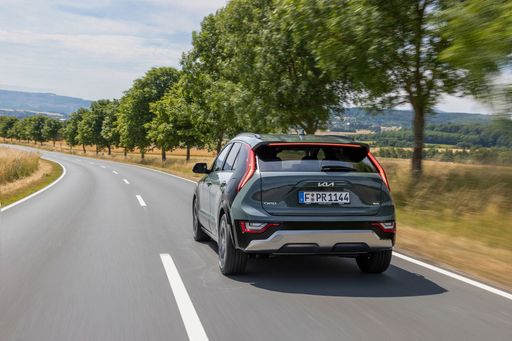
Niro @ Kia Corporation

Innovation and Technology

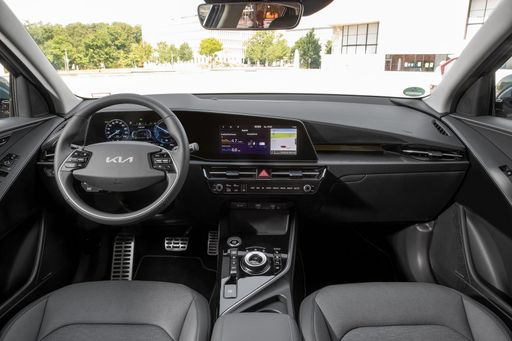
In the realm of driving aids and technology, the HR-V is equipped with a suite of Honda Sensing safety features, ensuring peace of mind on the road. Its automatic transmission complements a modern driver-focused cabin, reflecting Honda’s continued commitment to intuitive and responsive driving experiences.

The Kia Niro counters with an advanced dual-clutch automatic transmission, enhancing driving dynamics. Its technological edge includes a variety of eco-driving modes, giving drivers the ability to optimize fuel efficiency. The PHEV version excels with its larger battery capacity at 11.1 kWh, which supports extended electric-only travel.

HR-V @ Honda Motor Co., Ltd.

Environmental Considerations

Both cars offer effective solutions for reducing one's carbon footprint. The HR-V's CO2 efficiency class is rated at D, with emissions at 122 g/km. The Niro exhibits better CO2 credentials, with emissions ranging from 53 to 111 g/km and a CO2 efficiency class from B to C. This positions the Niro as a more environmentally friendly choice, especially the plug-in hybrid variant.

Niro @ Kia Corporation

Conclusion: Head-to-Head Verdict

In conclusion, the choice between the Honda HR-V and the Kia Niro largely depends on your priorities. The HR-V boasts Honda's reliable hybrid technology and a slightly lower curb weight of 1,452 kg, appealing to those who prioritize a simpler, hybrid-only experience. The Kia Niro, with its multiple powertrain options including a competitively efficient PHEV option, engages those wanting versatility and the opportunity to reduce emissions further.

Both models present strong offerings in the crowded compact SUV market. The decision may ultimately come down to whether you prioritize seemingly endless trunk space and eco-friendliness, represented by the Niro, or the straightforward efficiency and reliability of the HR-V.

Here’s where it gets real: The technical differences in detail

HR-V @ Honda Motor Co., Ltd.

Costs and Efficiency:

Looking at overall running costs, both models reveal some interesting differences in everyday economy.

Kia Niro has a barely noticeable advantage in terms of price – it starts at 29100 £, while the Honda HR-V costs 29700 £. That’s a price difference of around 608 £.

Fuel consumption also shows a difference: Kia Niro manages with 2.40 L and is therefore convincingly more efficient than the Honda HR-V with 5.40 L. The difference is about 3 L per 100 km.

Niro @ Kia Corporation

Engine and Performance:

Power, torque and acceleration say a lot about how a car feels on the road. This is where you see which model delivers more driving dynamics.

When it comes to engine power, the Kia Niro has a evident edge – offering 180 HP compared to 131 HP. That’s roughly 49 HP more horsepower.

In acceleration from 0 to 100 km/h, the Kia Niro is slight quicker – completing the sprint in 9.90 s, while the Honda HR-V takes 10.60 s. That’s about 0.70 s faster.

In terms of top speed, the Kia Niro performs hardly perceptible better – reaching 185 km/h, while the Honda HR-V tops out at 170 km/h. The difference is around 15 km/h.

There’s also a difference in torque: Kia Niro pulls hardly perceptible stronger with 265 Nm compared to 253 Nm. That’s about 12 Nm difference.

Space and Everyday Use:

Beyond pure performance, interior space and usability matter most in daily life. This is where you see which car is more practical and versatile.

Both vehicles offer seating for 5 people.

In curb weight, Honda HR-V is hardly perceptible lighter – 1452 kg compared to 1474 kg. The difference is around 22 kg.

In terms of boot space, the Kia Niro offers noticeable more room – 451 L compared to 319 L. That’s a difference of about 132 L.

In maximum load capacity, the Kia Niro performs to a small extent better – up to 1445 L, which is about 156 L more than the Honda HR-V.

When it comes to payload, Kia Niro slightly takes the win – 466 kg compared to 418 kg. That’s a difference of about 48 kg.

Who wins the race?

The Kia Niro proves to be outperforms in nearly all aspects and therefore becomes our DriveDuel Champion!
Kia Niro is the better all-rounder in this comparison.

from about £29,100
Niro @ Kia Corporation

Kia Niro

  • Engine Type : Full Hybrid, Plugin Hybrid
  • Transmission : Automatic
  • Drive Type : Front-Wheel Drive
  • Power HP : 138 - 180 HP
  • Consumption L/100km : 2.4 - 4.9 L
  • Electric Range : 57 - 62 km

Honda HR-V

5 (2)
rate

The Honda HR-V is the sensible compact crossover that blends roomy practicality with a composed, friendly drive, making it an easy pick for buyers who want everyday usability without fuss. It won’t thrill hardcore enthusiasts, but its clever packaging, comfortable cabin and low-key styling make life simpler — and that’s exactly the point.

details

Kia Niro

5 (1)
rate

The Kia Niro blends clever packaging and modern styling into a compact crossover that’s refreshingly sensible for daily life. It’s comfortable, economical and packed with user‑friendly tech, so if you want a fuss‑free family car with a touch of green credibility, the Niro is worth a test drive.

details
Honda HR-V
Kia Niro
HR-V @ Honda Motor Co., Ltd.
Niro @ Kia Corporation

Costs and Consumption

Price
29700 - 35400 £
Price
29100 - 38600 £
Consumption L/100km
5.40 L
Consumption L/100km
2.4 - 4.9 L
Consumption kWh/100km
-
Consumption kWh/100km
-
Electric Range
-
Electric Range
57 - 62 km
Battery Capacity
-
Battery Capacity
1.3 - 11.1 kWh
co2
122 g/km
co2
53 - 111 g/km
Fuel tank capacity
40 L
Fuel tank capacity
37 - 42 L

Dimensions and Body

Body Type
SUV
Body Type
SUV
Seats
5
Seats
5
Doors
5
Doors
5
Curb weight
1452 kg
Curb weight
1474 - 1594 kg
Trunk capacity
319 L
Trunk capacity
348 - 451 L
Length
4355 mm
Length
4420 mm
Width
-
Width
1825 mm
Height
1582 mm
Height
1545 mm
Max trunk capacity
1289 L
Max trunk capacity
1342 - 1445 L
Payload
418 kg
Payload
466 kg

Engine and Performance

Engine Type
Full Hybrid
Engine Type
Full Hybrid, Plugin Hybrid
Transmission
Automatic
Transmission
Automatic
Transmission Detail
CVT
Transmission Detail
Dual-Clutch Automatic
Drive Type
Front-Wheel Drive
Drive Type
Front-Wheel Drive
Power HP
131 HP
Power HP
138 - 180 HP
Acceleration 0-100km/h
10.6 - 10.8 s
Acceleration 0-100km/h
9.9 - 11.4 s
Max Speed
170 km/h
Max Speed
170 - 185 km/h
Torque
253 Nm
Torque
265 Nm
Number of Cylinders
4
Number of Cylinders
4
Power kW
96 kW
Power kW
102 - 132 kW
Engine capacity
1498 cm3
Engine capacity
1580 cm3

General

Model Year
2025
Model Year
2025
CO2 Efficiency Class
D
CO2 Efficiency Class
C, B
Brand
Honda
Brand
Kia
What drive types are available for the Honda HR-V?

The Honda HR-V is available as Front-Wheel Drive.

The prices and data displayed are estimates based on German list prices and may vary by country. This information is not legally binding.