VS

Kia Niro vs MG ZS comparison

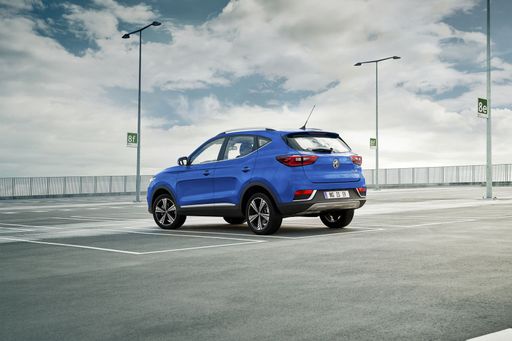
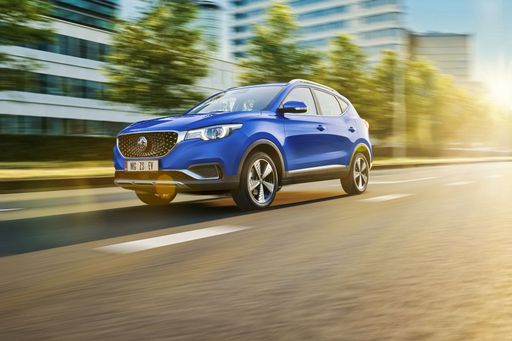
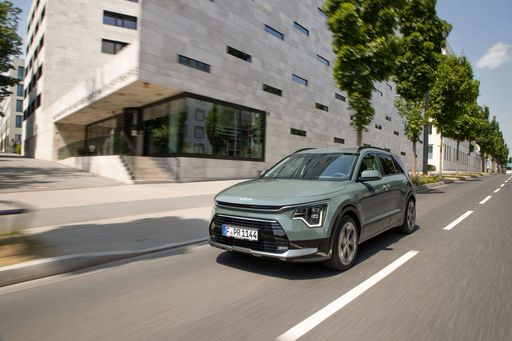
Compare performance (138 HP vs 197 HP), boot space and price (29,100 £ vs 18,000 £ ) at a glance. Find out which car is the better choice for you – Kia Niro or MG ZS?

Kia Niro vs MG ZS: Key differences

Kia Niro

4.6 (4 Reviews)
rate
  • moderately more efficient
  • marginally more trunk space
details

MG ZS

4.5 (5 Reviews)
rate
  • clearly cheaper
  • clearly more power
  • visibly quicker 0–100 km/h
  • moderately lighter
details

All details on performance, efficiency, range and trunk space can be found in the technical comparison below – including user reviews for both models.

Niro

Kia Niro VS MG ZS — pragmatic compact SUVs with different priorities

Kia Niro and MG ZS aim at buyers who want roomy, economical small SUVs, but they take different routes to that goal. The Kia Niro leans into efficiency, refinement and a calm, conventional feel; the MG ZS trades off some finesse to deliver stronger on immediate shove, rear space and a lower purchase price. That split sets up a classic trade-off: lowered running costs and a quieter cabin versus a more affordable, punchy package with bigger usable space. Expect the Niro to please rational, efficiency-minded owners and the ZS to attract value-oriented families who put usable space and pep above polish. Both cover the basics well, so the right pick comes down to which compromises you can live with day to day.
ZS

Character and everyday driving

The Kia Niro presents itself as relaxed and predictable — it’s happiest being driven steadily and rewards gentle inputs with low consumption and little fuss. By contrast, the MG ZS feels more eager off the line and gives the impression of greater on-demand performance, which makes urban overtakes and short bursts more satisfying. That extra zest in the MG comes with a firmer ride and a noisier engine under load, whereas the Niro masks urgency in favour of smoothness and composure. If you value a laid-back commute and measured responses, the Niro will match your temperament; if you prefer a livelier shove when you want it, the ZS is the more entertaining domestic commuter.

Niro

Comfort, cabin feel and perceived quality

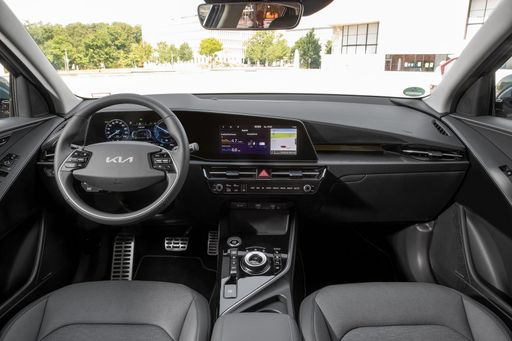
Inside, the Kia Niro aims for a quieter, neater ambience with better thought-out ergonomics and more refined surfaces that feel less budget-driven. The MG ZS delivers generous space but leans on harder plastics and simpler trims, which makes it feel less premium despite solid day-to-day durability. Both cars offer long warranties that take pressure off ownership, yet the Niro’s cabin comes across as the calmer, more grown-up place to spend miles while the ZS reads as practical and straightforward. Those who prize tactile refinement and a slightly calmer acoustic environment will favour the Niro; buyers who accept a tougher interior in return for value and room will find the ZS entirely acceptable.

ZS

Practicality and family usability

The MG ZS is the bolder pragmatist: more rear knee room and a cargo area that’s easy to pack thanks to a nearly flat load floor and a generous footprint for luggage. The Kia Niro is cleverly packaged too, but it has trade-offs like a higher loading sill and variants where the battery eats into usable boot volume, which matters for parents or anyone loading bulky items regularly. In the Niro’s favour, its cabin layout and controls are straightforward and family-friendly, while the ZS offers the more immediate advantage of space for three abreast in the back without feeling cramped. Families who haul strollers, sports kit or weekend luggage will likely prefer the MG ZS’s utility; those who prioritise ergonomic simplicity and efficient running may lean toward the Niro despite the higher lift-in.

Niro

City manners versus motorway miles

In town, the Kia Niro’s smooth transitions and efficient drivetrains (especially in its electrified variants) make it an easy, low-stress partner for stop-and-go life; energy-efficient cruising also keeps running costs down. The MG ZS is also city-friendly thanks to its eager hybrid behaviour and high seating position, but its firmer suspension and louder engine make long motorway stints more wearing. On highways the Niro holds a slight edge for overall composure, though both models can show wind and tyre noise at higher speeds — the ZS more obviously so. If your days are dense with urban journeys and economy matters, the Niro will feel more settled; if you split time between town and short intercity hops and want a stronger on-demand shove, the ZS will suit better.

ZS

Buyer fit and the trade-offs that decide your choice

Choose the Kia Niro if your priority is low running costs, a calmer cabin and a car that rewards measured driving with long-term savings and comfort; it’s the more refined, efficiency-first pick. Opt for the MG ZS if up-front price, rear-seat space and lively everyday performance matter more than material finesse or motorway serenity — it’s the pragmatic, value-packed contender. Both are sensible compact SUVs, but the Niro masks compromises with quiet persistence while the ZS wears them plainly in exchange for usable room and punch. Read on to the technical comparison for the precise mechanical and packaging differences that make these everyday consequences possible.

Here’s where it gets real: The technical differences in detail

Niro

Costs and Efficiency:

Price and efficiency are key factors when choosing a car – and this is often where the real differences emerge.

MG ZS is clearly cheaper – starting at 18,000 £ , while the Kia Niro costs 29,100 £ . That’s a price difference of around 11,143 £.

Fuel consumption also shows a difference: the Kia Niro uses 4.5 L/100km and is moderately more efficient than the MG ZS with 5.1 L/100km. The difference is about 0.6 L/100km.

ZS

Engine and Performance:

Power, torque and acceleration are the classic benchmarks for car enthusiasts – and here, some clear differences start to show.

When it comes to engine power, the MG ZS offers clearly more power – delivering 197 HP compared to 138 HP. That’s roughly 59 HP more horsepower.

When accelerating from 0 to 100 km/h, the MG ZS is visibly quicker – completing the sprint in 8.7 s, while the Kia Niro takes 11.1 s. That’s about 2.4 s quicker.

There’s also a difference in torque: the Kia Niro delivers clearly more torque with 265 Nm compared to 148 Nm. That’s about 117 Nm more.

Niro

Space and Everyday Use:

Whether family car or daily driver – which one offers more room, flexibility and comfort?

Both vehicles offer seating for 5 people.

In terms of curb weight, MG ZS is moderately lighter – 1,330 kg compared to 1,474 kg. The difference is around 144 kg.

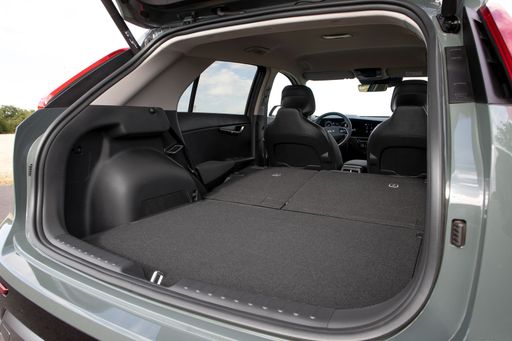
Looking at boot space, the Kia Niro offers marginally more boot space – 451 L compared to 443 L. That’s a difference of about 8 L.

When it comes to payload, the MG ZS carries marginally more – 470 kg compared to 466 kg. That’s a difference of about 4 kg.

Who wins the race in the data check?

The MG ZS is decisively ahead in the objective data comparison.
This result only shows which model scores more points on paper – not which of the two cars feels right for you.

from £18,000
ZS

MG ZS

  • Engine Type Petrol, Full Hybrid
  • Transmission Manual, Automatic
  • Drive Type Front-Wheel Drive
  • Power HP 116 - 197 HP
  • Consumption L/100km 5.1 - 6.5 L/100km
Kia Niro
MG ZS

Costs and Consumption

View detailed analysis

Engine and Performance

View detailed analysis

Dimensions and Body

View detailed analysis

Kia Niro

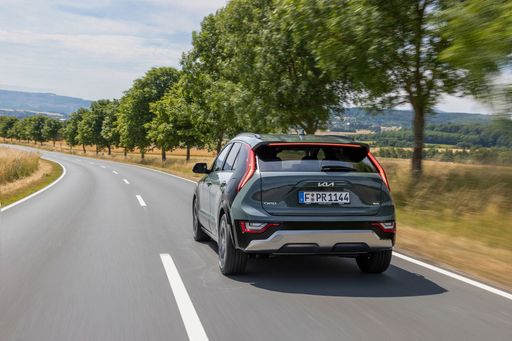
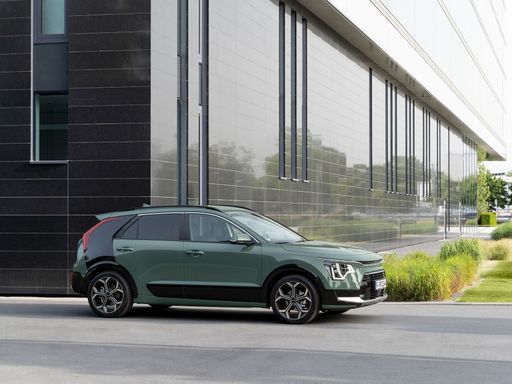
The Kia Niro is a practical crossover that blends economy and everyday versatility without sacrificing comfort. With a roomy, well-laid-out cabin and calm, composed handling, it’s an easy-to-live-with choice for commuters and families.

details

MG ZS

The MG ZS is a compact crossover that delivers strong value with a roomy cabin and straightforward tech, making it a sensible choice for budget-minded buyers. It’s easy to live with, offering comfortable rides and a practical layout that suits daily commutes and family errands.

details
Kia Niro
MG ZS

Costs and Consumption

Price
29,100 - 33,800 £
Price
18,000 - 24,000 £
Consumption L/100km
4.5 - 4.9 L/100km
Consumption L/100km
5.1 - 6.5 L/100km
Consumption kWh/100km
-
Consumption kWh/100km
-
Electric Range
-
Electric Range
-
Battery Capacity
-
Battery Capacity
-
co2
102 - 111 g/km
co2
115 - 145 g/km
Fuel tank capacity
-
Fuel tank capacity
-

Dimensions and Body

Body Type
SUV
Body Type
SUV
Seats
5
Seats
5
Doors
-
Doors
-
Curb weight
1,474 kg
Curb weight
1,330 - 1,420 kg
Trunk capacity
451 L
Trunk capacity
443 L
Length
-
Length
-
Width
1,825 mm
Width
1,818 mm
Height
-
Height
-
Max trunk capacity
-
Max trunk capacity
-
Payload
466 kg
Payload
375 - 470 kg

Engine and Performance

Engine Type
Full Hybrid
Engine Type
Petrol, Full Hybrid
Transmission
Automatic
Transmission
Manual, Automatic
Transmission Detail
Dual-Clutch Automatic
Transmission Detail
Manual Gearbox, Automatic Gearbox
Drive Type
Front-Wheel Drive
Drive Type
Front-Wheel Drive
Power HP
138 HP
Power HP
116 - 197 HP
Acceleration 0-100km/h
11.1 - 11.4 s
Acceleration 0-100km/h
8.7 - 12.5 s
Max Speed
-
Max Speed
-
Torque
265 Nm
Torque
148 Nm
Number of Cylinders
4
Number of Cylinders
4
Power kW
102 kW
Power kW
85 - 145 kW
Engine capacity
1,580 cm3
Engine capacity
1,495 - 1,498 cm3

General

Model Year
2025
Model Year
2025
CO2 Efficiency Class
C
CO2 Efficiency Class
E, C
Brand
Kia
Brand
MG
DriveDuel uses data analysis and artificial intelligence to evaluate vehicle data and create content. Content is regularly reviewed and improved. The displayed prices are estimates based on German list prices, adjusted to the respective country’s VAT. Country-specific registration taxes are not included. This information is not legally binding.