VS

Kia Picanto vs Hyundai i10 comparison

Compare performance (68 HP vs 90 HP), boot space and price (15,100 £ vs 14,600 £ ) at a glance. Find out which car is the better choice for you – Kia Picanto or Hyundai i10?

Kia Picanto vs Hyundai i10: Key differences

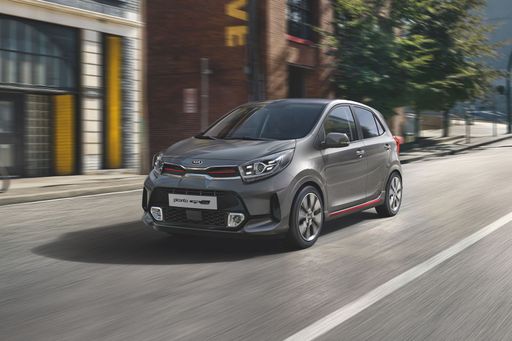
Kia Picanto

4.7 (5 Reviews)
rate
  • only slightly more trunk space
details

Hyundai i10

5 (1 Reviews)
rate
  • barely cheaper
  • noticeably more power
  • moderately more efficient
  • visibly quicker 0–100 km/h
  • somewhat lighter
details

All details on performance, efficiency, range and trunk space can be found in the technical comparison below – including user reviews for both models.

By Achim Sedelmaier

Picanto

Hyundai i10 VS Kia Picanto: which city runabout fits your life?

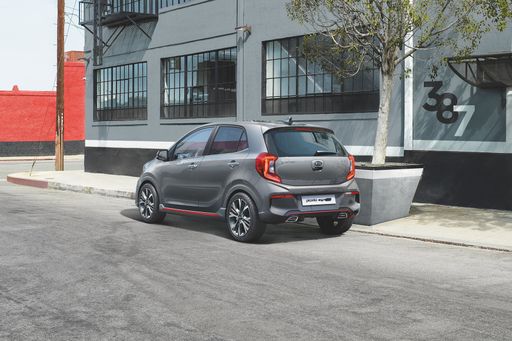
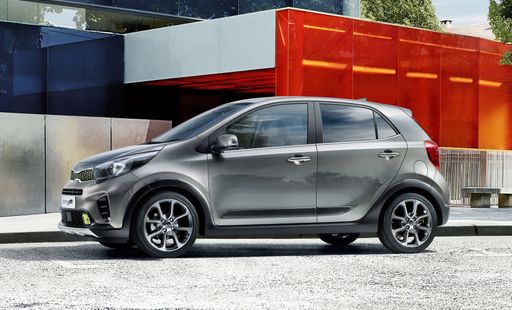
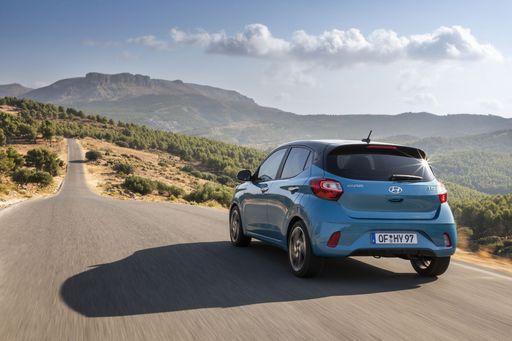
The Hyundai i10 and Kia Picanto are two of the last true city cars that still feel like proper, grown‑up small hatchbacks. In this matchup, the Hyundai i10 leans toward a more mature, stable feel with surprising space, while the Kia Picanto doubles down on urban agility and generous kit for the size. If your week is mostly tight streets and quick hops, the Picanto’s light, eager character shines. If your routes mix city with ring roads and the occasional motorway stretch, the i10’s calmer stride and extra reserve make everyday driving easier. Both aim at low running costs and simple usability, but they go about it with notably different personalities.
i10

Driving character: zippy vs assured

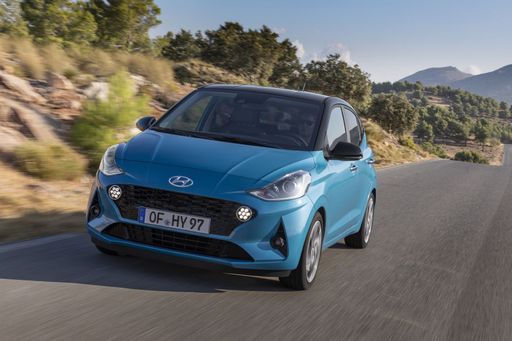
The Hyundai i10 feels the stronger of the two when you need to join faster traffic or crest a hill without a downshift frenzy. It’s not sporty, yet it builds speed more readily and tracks with reassuring stability at higher pace. The Kia Picanto is lighter on its feet in town, darting into gaps and making short work of parking, but it runs out of puff sooner outside the city. Both offer an automated manual option that tends to shuffle gears slowly and can feel jerky; the straightforward manual suits their character better. Drivers who value easy overtakes and a calmer motorway demeanor will gravitate to the i10, while urban commuters will enjoy the Picanto’s sprightly responses at low speeds.

Picanto

Ride and noise: city-slick vs grown-up calm

On patchy urban tarmac, the Kia Picanto rides with acceptable compliance and keeps things tidy at low speeds, but it gets noticeably louder and busier as the pace rises. The Hyundai i10 is the quieter, more settled companion on longer stints, suppressing fidget and wind noise a touch better for this class. Neither is a long-distance cruiser, yet the i10 feels less strained after an hour on the motorway. Wheel size makes a difference: smaller rims are the comfier choice on both. If you’re sensitive to cabin noise and want fewer mid-journey breathers, the i10 has the edge.

i10

Cabin feel and tech: simplicity with different flavors

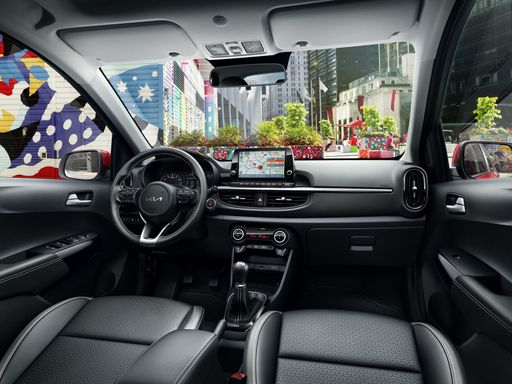
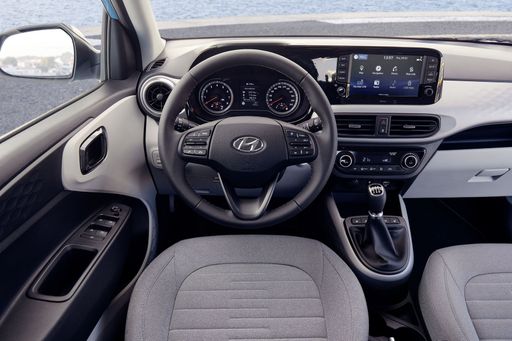
Both cars keep controls refreshingly simple, with real buttons and a clear touchscreen that mirrors your phone without fuss. The Hyundai i10’s cabin feels a bit more mature in its layout and assembly, with a sturdier impression in daily use. The Kia Picanto counters with straightforward ergonomics and, in many trims, generous features baked in, though the software and graphics can feel a step behind. Storage is adequate in both, but the Picanto’s rear area offers fewer handy cubbies and feels tighter overall. If you like a robust, quietly solid environment, the i10 suits; if you value equipment density and easy, no‑nonsense operation, the Picanto appeals.

Picanto

Space and practicality: rear room matters

For such small footprints, both make clever use of space, but they don’t feel the same once you climb in. The Hyundai i10 provides notably better rear leg- and headroom, making it realistic to carry adults in the back on more than just short hops. The Kia Picanto’s boot is usefully shaped for shopping and daily errands, yet the rear bench is tight and best for occasional passengers or kids. Loading lips are on the high side for both, so heavy items require a heave. If you often have friends or teens in the back, the i10 is the painless choice; for solo or two‑up city life, the Picanto’s compact packaging works fine.

i10

Costs and buyer fit: the smarter spend for your routes

Spec for spec, the Hyundai i10 often undercuts the Kia Picanto a little and tends to sip a bit less fuel, which helps over years of ownership. The Kia fights back with a longer warranty and strong standard equipment that keeps surprises at bay. City-centric drivers who want an ultra-compact footprint, easy parking and a value-packed spec will feel right at home in the Picanto. Those mixing urban duty with regular faster roads will appreciate the i10’s extra ease, quieter cruising and roomier back seat. Read on for the technical comparison to see how these everyday differences stem from the hardware choices in this Hyundai i10 VS Kia Picanto face-off.

Here’s where it gets real: The technical differences in detail

Picanto

Costs and Efficiency:

When it comes to price and running costs, the biggest differences usually appear. This is often where you see which car fits your budget better in the long run.

Hyundai i10 is barely cheaper – starting at 14,600 £ , while the Kia Picanto costs 15,100 £ . That’s a price difference of around 515 £.

Fuel consumption also shows a difference: the Hyundai i10 uses 4.9 L/100km and is moderately more efficient than the Kia Picanto with 5.5 L/100km. The difference is about 0.6 L/100km.

i10

Engine and Performance:

Power, torque and acceleration are the classic benchmarks for car enthusiasts – and here, some clear differences start to show.

When it comes to engine power, the Hyundai i10 offers noticeably more power – delivering 90 HP compared to 68 HP. That’s roughly 22 HP more horsepower.

When accelerating from 0 to 100 km/h, the Hyundai i10 is visibly quicker – completing the sprint in 11.4 s, while the Kia Picanto takes 14.6 s. That’s about 3.2 s quicker.

There’s also a difference in torque: the Hyundai i10 delivers considerably more torque with 172 Nm compared to 96 Nm. That’s about 76 Nm more.

Picanto

Space and Everyday Use:

Cabin size, boot volume and payload all play a role in everyday practicality. Here, comfort and flexibility make the difference.

Both vehicles offer seating for 5 people.

In terms of curb weight, Hyundai i10 is somewhat lighter – 996 kg compared to 1,124 kg. The difference is around 128 kg.

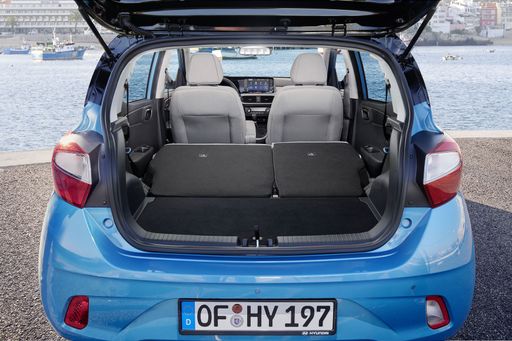
Looking at boot space, the Kia Picanto offers only slightly more boot space – 255 L compared to 252 L. That’s a difference of about 3 L.

When it comes to payload, the Hyundai i10 carries noticeably more – 423 kg compared to 332 kg. That’s a difference of about 91 kg.

Who wins the race in the data check?

The Hyundai i10 stands well ahead of its rival in the objective data comparison.
This result only shows which model scores more points on paper – not which of the two cars feels right for you.

from £14,600
i10

Hyundai i10

  • Engine Type : Petrol
  • Transmission : Manuel, Automatic
  • Drive Type : Front-Wheel Drive
  • Power HP : 63 - 90 HP
  • Consumption L/100km : 4.9 - 5.5 L/100km
Kia Picanto
Hyundai i10

Costs and Consumption

View detailed analysis

Engine and Performance

View detailed analysis

Dimensions and Body

View detailed analysis

Kia Picanto

Kia Picanto is a cheeky city hatch that squeezes surprising style, practicality and a smile-inducing drive into a pocket-friendly package. It’s ideal for urban buyers who want fuss-free running, effortless parking and a car that punches above its class without pretending to be anything it’s not.

details

Hyundai i10

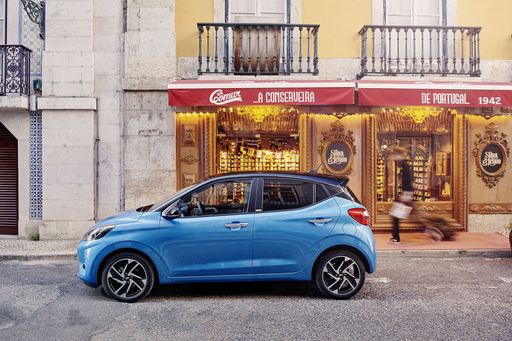
The Hyundai i10 is a cheeky city car that squeezes big-car confidence into a pocket-friendly package, carving through tight streets with surprising composure and sensible practicality. For buyers after low fuss, sensible equipment and wallet-friendly running costs, it's a smart, no-nonsense pick that makes sense whether you're a first-time driver or need a reliable second car.

details
Kia Picanto
Hyundai i10

Costs and Consumption

Price
15,100 - 19,500 £
Price
14,600 - 19,000 £
Consumption L/100km
5.5 - 5.9 L/100km
Consumption L/100km
4.9 - 5.5 L/100km
Consumption kWh/100km
-
Consumption kWh/100km
-
Electric Range
-
Electric Range
-
Battery Capacity
-
Battery Capacity
-
co2
126 - 134 g/km
co2
110 - 124 g/km
Fuel tank capacity
-
Fuel tank capacity
36 L

Dimensions and Body

Body Type
Hatchback
Body Type
Hatchback
Seats
4 - 5
Seats
4 - 5
Doors
-
Doors
5
Curb weight
1,124 - 1,131 kg
Curb weight
996 - 1,099 kg
Trunk capacity
255 L
Trunk capacity
252 L
Length
-
Length
3,670 - 3,675 mm
Width
1,595 mm
Width
1,680 mm
Height
-
Height
1,480 - 1,483 mm
Max trunk capacity
-
Max trunk capacity
1,050 L
Payload
253 - 332 kg
Payload
344 - 423 kg

Engine and Performance

Engine Type
Petrol
Engine Type
Petrol
Transmission
Manuel, Automatic
Transmission
Manuel, Automatic
Transmission Detail
Manual Gearbox, Automated Manual
Transmission Detail
Manual Gearbox, Automated Manual
Drive Type
Front-Wheel Drive
Drive Type
Front-Wheel Drive
Power HP
68 HP
Power HP
63 - 90 HP
Acceleration 0-100km/h
14.6 - 17.2 s
Acceleration 0-100km/h
11.4 - 18.4 s
Max Speed
-
Max Speed
143 - 175 km/h
Torque
96 Nm
Torque
93 - 172 Nm
Number of Cylinders
3
Number of Cylinders
3 - 4
Power kW
50 kW
Power kW
46 - 66 kW
Engine capacity
998 cm3
Engine capacity
998 - 1,197 cm3

General

Model Year
2025
Model Year
2024
CO2 Efficiency Class
D
CO2 Efficiency Class
C, D
Brand
Kia
Brand
Hyundai
DriveDuel uses data analysis and artificial intelligence to evaluate vehicle data and create content. Content is regularly reviewed and improved. The displayed prices are estimates based on German list prices, adjusted to the respective country’s VAT. Country-specific registration taxes are not included. This information is not legally binding.