VS

Kia Picanto vs Hyundai i20 comparison

Compare performance (68 HP vs 90 HP), boot space and price (15,300 £ vs 18,600 £ ) at a glance. Find out which car is the better choice for you – Kia Picanto or Hyundai i20?

Kia Picanto vs Hyundai i20: Key differences

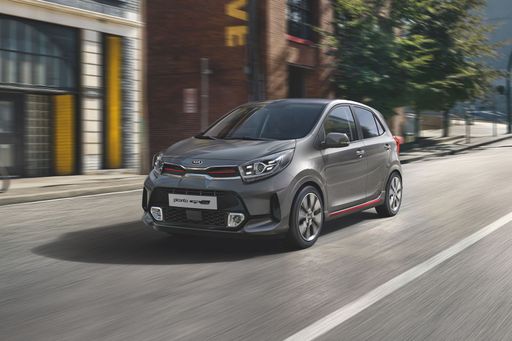
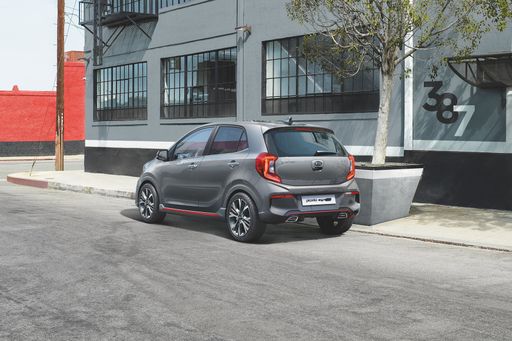
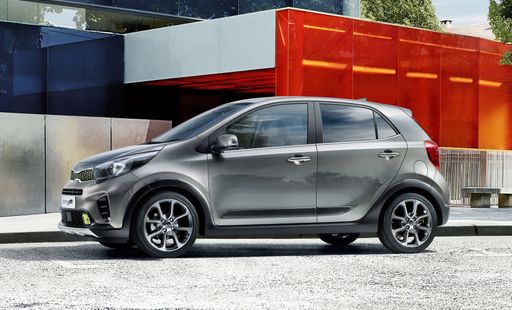
Kia Picanto

4.5 (3 Reviews)
rate
  • visibly cheaper
  • barely more efficient
  • marginally lighter
details

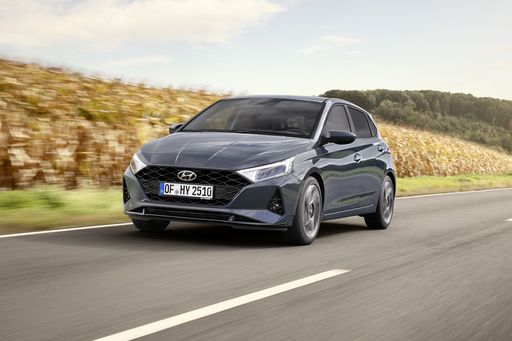
Hyundai i20

4 (1 Reviews)
rate
  • noticeably more power
  • visibly quicker 0–100 km/h
details

All details on performance, efficiency, range and trunk space can be found in the technical comparison below – including user reviews for both models.

By Achim Sedelmaier

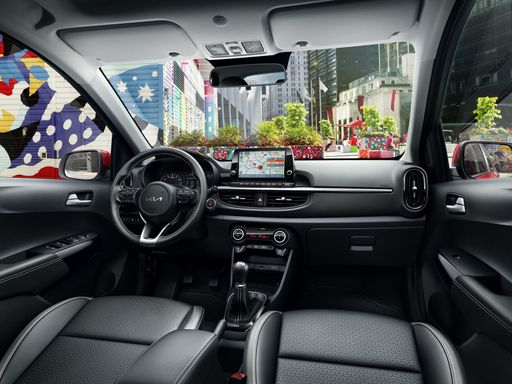
Picanto

Introduction: The Urban Battle - Hyundai i20 vs. Kia Picanto

In the ever-competitive hatchback segment, the Hyundai i20 and Kia Picanto stand out as popular choices among city dwellers seeking practicality, efficiency, and style. As both vehicles enter the 2024 market, we examine their technical specifications and innovations, providing a comprehensive comparison to help potential buyers decide which car suits their needs best.

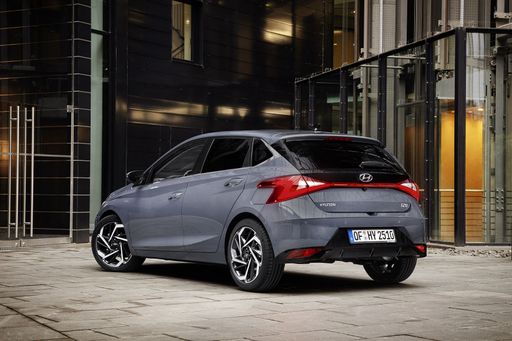
i20

Design and Dimensions: Space Efficiency

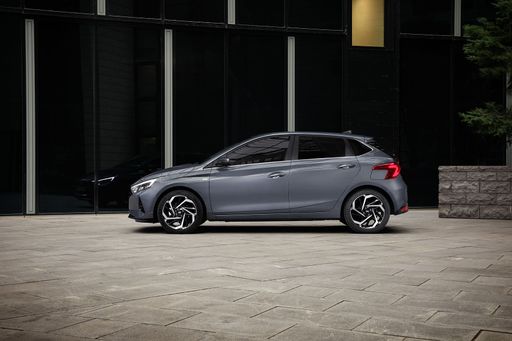
In terms of design, the Hyundai i20 is slightly larger than the Kia Picanto. The i20 measures 4075 mm in length and 1775 mm in width, providing a more spacious cabin and a larger trunk capacity of 352 liters. In contrast, the Picanto is more compact at 3605 mm in length and 1595 mm in width, resulting in a smaller trunk capacity of just 255 liters. While the i20 is designed for those requiring more room, the Picanto caters to urban drivers prioritizing maneuverability and parking ease.

Picanto

Engine Options: Power Under the Hood

The Hyundai i20 offers a range of engines, including a 1.0-liter Petrol MHEV with a power output of 100 HP and a more modest 1.2-liter Petrol engine generating 79 HP. The i20’s torque figures range from 113 Nm to 200 Nm, depending on the variant, ensuring a responsive drive. Notably, the i20 achieves impressive fuel consumption figures: 5.1 liters per 100 km from its base engine, ideal for those looking for efficiency.

On the other hand, the Kia Picanto provides two engine options – a 1.0-liter engine with 63 HP and a 1.2-liter option generating 79 HP. The Picanto's maximum torque is slightly lower at 95 Nm to 113 Nm, and its fuel consumption ranges from 5.2 to 5.7 liters per 100 km. This makes the Picanto an appealing choice for the budget-conscious urban driver.

i20

Performance: Acceleration and Top Speed

When it comes to acceleration, the Hyundai i20 outshines the Picanto, achieving 0-100 km/h in as little as 11.1 seconds. The i20's top speed reaches up to 182 km/h, making it a sporty option within its class.

The Kia Picanto, while not as quick, still performs adequately for city driving, with the fastest variant achieving 0-100 km/h in 13.1 seconds and a maximum speed of 159 km/h. This reflects its focus on practicality and urban suitability over outright performance.

Picanto

Transmission and Driving Experience

The Hyundai i20 offers keen buyers the choice between a modern automatic dual-clutch transmission and a manual gearbox, enhancing its driving dynamics. The i20's focus on comfort and user-friendly technology makes it suitable for longer drives as well as daily commutes.

In contrast, the Kia Picanto primarily features manual transmission options and an automated manual for those who prefer hassle-free city driving. Its lightweight design and smaller dimensions ensure nimbleness in the bustling city, but it may not feel as refined on longer journeys as the i20.

i20

Comfort and Interior Features

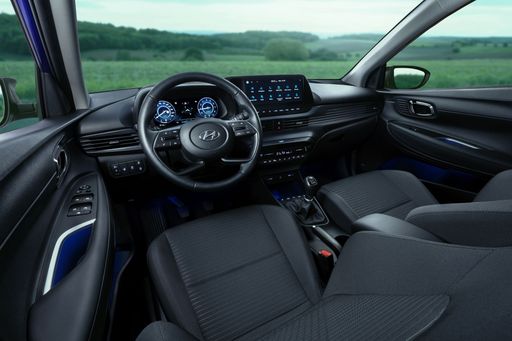
Both vehicles comfortably seat five, with the Hyundai i20 providing more rear legroom and overall space, contributing to a more comfortable ride for taller passengers. Moreover, the i20 boasts advanced technological features, including an upgraded infotainment system that seamlessly integrates with smartphones, a necessity for tech-savvy consumers.

The Kia Picanto, while slightly cramped in comparison, is still well-equipped with modern amenities and an intuitive dashboard, offering a balance of functionality and style. However, buyers should consider if the smaller space suits their needs, especially for rear-seat passengers.

Picanto

Innovation and Safety

Hyundai continues to push boundaries with the i20, equipping it with an array of safety features such as adaptive cruise control, lane-keeping assist, and automatic emergency braking. These innovations not only enhance passenger safety but also aim to engage younger drivers who crave technology in their daily vehicles.

The Picanto is not far behind, featuring essential safety functions and earning respectable safety ratings in its class. Although lacking some of the advanced tech found in the i20, it is built to ensure that urban drivers enjoy a safe commute.

i20

Final Verdict: Choosing Your Perfect Hatchback

In summary, both the Hyundai i20 and Kia Picanto cater to different market segments within the hatchback realm. The i20 is an ideal choice for those seeking a larger, more powerful vehicle packed with the latest technology. In contrast, the Picanto shines in urban environments with its compact size and efficient engines.

Ultimately, the decision hinges on individual lifestyle needs, whether it be space and features or size and affordability. Choosing between these two great cars will surely come down to personal preferences and intended use.

Here’s where it gets real: The technical differences in detail

Picanto

Costs and Efficiency:

Looking at overall running costs, both models reveal some interesting differences in everyday economy.

Kia Picanto is visibly cheaper – starting at 15,300 £ , while the Hyundai i20 costs 18,600 £ . That’s a price difference of around 3,300 £.

Fuel consumption also shows a difference: the Kia Picanto uses 5.5 L/100km and is barely more efficient than the Hyundai i20 with 5.7 L/100km. The difference is about 0.2 L/100km.

i20

Engine and Performance:

Power, torque and acceleration say a lot about how a car feels on the road. This is where you see which model delivers more driving dynamics.

When it comes to engine power, the Hyundai i20 offers noticeably more power – delivering 90 HP compared to 68 HP. That’s roughly 22 HP more horsepower.

When accelerating from 0 to 100 km/h, the Hyundai i20 is visibly quicker – completing the sprint in 11.5 s, while the Kia Picanto takes 14.6 s. That’s about 3.1 s quicker.

There’s also a difference in torque: the Hyundai i20 delivers substantially more torque with 172 Nm compared to 96 Nm. That’s about 76 Nm more.

Picanto

Space and Everyday Use:

Beyond pure performance, interior space and usability matter most in daily life. This is where you see which car is more practical and versatile.

Both vehicles offer seating for 5 people.

In terms of curb weight, Kia Picanto is marginally lighter – 1,124 kg compared to 1,145 kg. The difference is around 21 kg.

When it comes to payload, the Hyundai i20 carries clearly more – 465 kg compared to 332 kg. That’s a difference of about 133 kg.

Who wins the race in the data check?

The Hyundai i20 stands well ahead of its rival in the objective data comparison.
This result only shows which model scores more points on paper – not which of the two cars feels right for you.

from £18,600
i20

Hyundai i20

  • Engine Type : Petrol
  • Transmission : Manuel, Automatic
  • Drive Type : Front-Wheel Drive
  • Power HP : 90 HP
  • Consumption L/100km : 5.7 L/100km
Kia Picanto
Hyundai i20

Costs and Consumption

View detailed analysis

Engine and Performance

View detailed analysis

Dimensions and Body

View detailed analysis

Kia Picanto

Kia Picanto is a cheeky city hatch that squeezes surprising style, practicality and a smile-inducing drive into a pocket-friendly package. It’s ideal for urban buyers who want fuss-free running, effortless parking and a car that punches above its class without pretending to be anything it’s not.

details

Hyundai i20

The Hyundai i20 is a cheeky small car that mixes smart styling with sensible practicality, feeling more polished and roomy than you might expect for the money. It’s an easy car to live with, offering engaging handling, a comfy cabin and useful equipment that make daily commutes and weekend errands notably less dull.

details
Kia Picanto
Hyundai i20

Costs and Consumption

Price
15,300 - 19,300 £
Price
18,600 - 24,000 £
Consumption L/100km
5.5 - 5.9 L/100km
Consumption L/100km
5.7 L/100km
Consumption kWh/100km
-
Consumption kWh/100km
-
Electric Range
-
Electric Range
-
Battery Capacity
-
Battery Capacity
-
co2
126 - 134 g/km
co2
128 - 129 g/km
Fuel tank capacity
-
Fuel tank capacity
-

Dimensions and Body

Body Type
Hatchback
Body Type
Hatchback
Seats
4 - 5
Seats
5
Doors
-
Doors
-
Curb weight
1,124 - 1,131 kg
Curb weight
1,145 - 1,170 kg
Trunk capacity
-
Trunk capacity
352 L
Length
-
Length
-
Width
1,595 mm
Width
1,775 mm
Height
-
Height
-
Max trunk capacity
-
Max trunk capacity
-
Payload
253 - 332 kg
Payload
455 - 465 kg

Engine and Performance

Engine Type
Petrol
Engine Type
Petrol
Transmission
Manuel, Automatic
Transmission
Manuel, Automatic
Transmission Detail
Manual Gearbox, Automated Manual
Transmission Detail
Manual Gearbox, Dual-Clutch Automatic
Drive Type
Front-Wheel Drive
Drive Type
Front-Wheel Drive
Power HP
68 HP
Power HP
90 HP
Acceleration 0-100km/h
14.6 - 17.2 s
Acceleration 0-100km/h
11.5 - 12.8 s
Max Speed
-
Max Speed
-
Torque
96 Nm
Torque
172 Nm
Number of Cylinders
3
Number of Cylinders
3
Power kW
50 kW
Power kW
66 kW
Engine capacity
998 cm3
Engine capacity
998 cm3

General

Model Year
2025
Model Year
2025
CO2 Efficiency Class
D
CO2 Efficiency Class
D
Brand
Kia
Brand
Hyundai
DriveDuel uses data analysis and artificial intelligence to evaluate vehicle data and create content. Content is regularly reviewed and improved. The displayed prices are estimates based on German list prices, adjusted to the respective country’s VAT. Country-specific registration taxes are not included. This information is not legally binding.