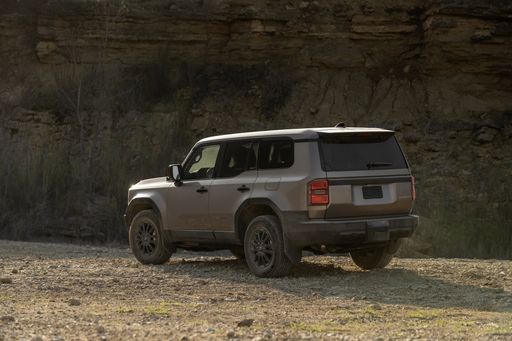
VS

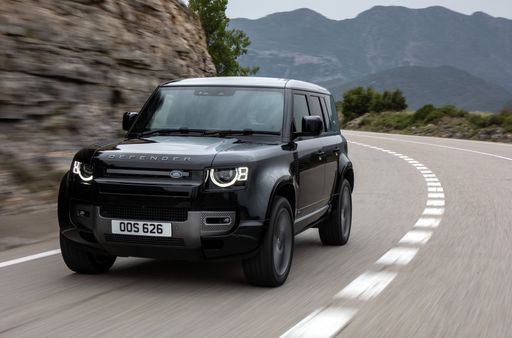
Land Rover Defender vs Toyota Land Cruiser comparison

Compare performance (635 HP vs 205 HP), boot space and price (57,900 £ vs 72,000 £ ) at a glance. Find out which car is the better choice for you – Land Rover Defender or Toyota Land Cruiser?

Land Rover Defender vs Toyota Land Cruiser: Key differences

Land Rover Defender

4.5 (2 Reviews)
rate
  • clearly cheaper
  • significantly more power
  • considerably more efficient
  • considerably quicker 0–100 km/h
  • barely lighter
  • barely more trunk space
details

Toyota Land Cruiser

5 (1 Reviews)
rate
details

All details on performance, efficiency, range and trunk space can be found in the technical comparison below – including user reviews for both models.

By Achim Sedelmaier

Defender

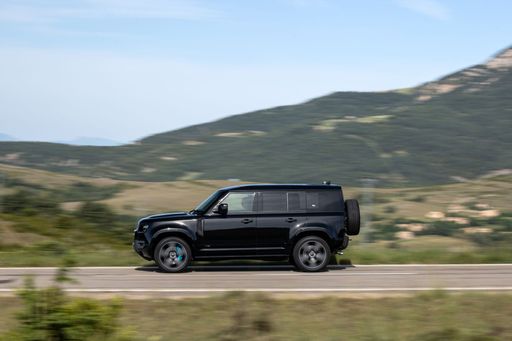
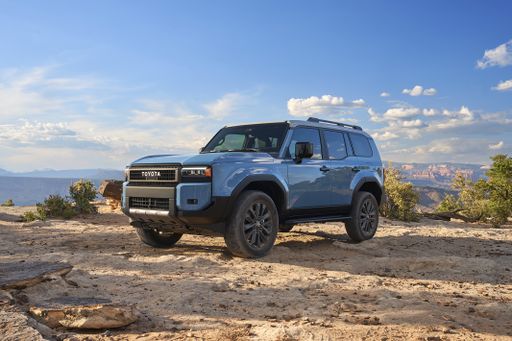
The Toyota Land Cruiser and Land Rover Defender are two of the most iconic off-road vehicles on the market today. Both models have earned their reputations for durability, capability, and adventure, making them favorites among wilderness enthusiasts and urban dwellers alike. In this comparison, we will dive into the technical aspects and innovations that set these two off-road titans apart.
Land Cruiser

Performance and Powertrains

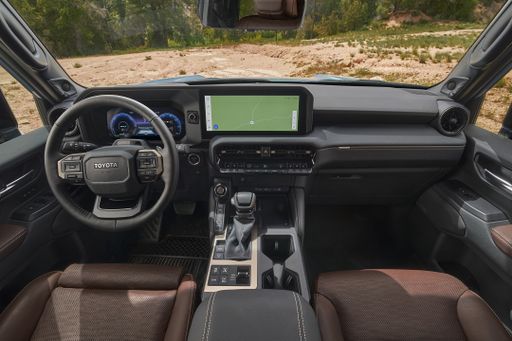
The 2024 Toyota Land Cruiser is powered by a robust 2.8-liter diesel engine that produces 205 horsepower and 500 Nm of torque. This efficient powertrain is paired with an automatic transmission, allowing for smooth shifts and impressive all-wheel drive capabilities. Its fuel consumption sits at 10.3 L/100km, and it achieves a maximum speed of 170 km/h. The Land Cruiser also boasts a reasonable curb weight of 2410 kg, contributing to its balance of strength and agility.

On the other hand, the Land Rover Defender offers a diverse range of engine options, including diesel MHEV and petrol variants. The Defender’s engines range from 200 HP to a staggering 525 HP, showcasing a breadth of choices for consumers with different performance preferences. The Defender can accelerate from 0 to 100 km/h in as little as 5.2 seconds, thanks to its powerful 5.0-liter V8 option. Fuel consumption varies depending on the engine selected, with options as efficient as 8.3 L/100km.

Defender

Technology and Innovations

Both vehicles are equipped with cutting-edge technology, but they take different approaches. The Toyota Land Cruiser focuses on reliability and traditional off-road prowess. Features like the Multi-Terrain Select system and Crawl Control help drivers navigate challenging terrain with ease. Its interior is spacious, offering comfortable seating for up to five passengers and plenty of room for luggage—742 liters of trunk capacity enhances its practicality.

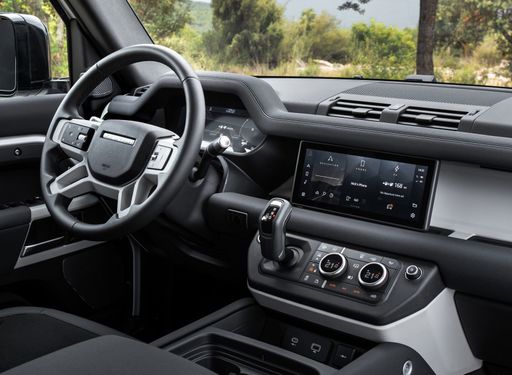
In contrast, the Land Rover Defender embraces modernity with its innovative technologies and features. Its infotainment system is centered around the Pivi Pro interface, a user-friendly system that integrates seamlessly with smartphones and includes advanced navigation and off-road navigation aids. The Defender’s commitment to sustainability is evident with its Plug-in Hybrid option that provides an electric range of up to 45 km. Not to mention the luxurious finishes available, which elevate the driving experience beyond mere utility.

Land Cruiser

Dimensions and Comfort

When comparing dimensions, the Land Cruiser measures 4925 mm in length and stands 1935 mm tall, offering a commanding presence on and off the road. The spacious interior accommodates five passengers comfortably. Its width is 1980 mm, providing a sturdy stance that translates well into its off-road capability.

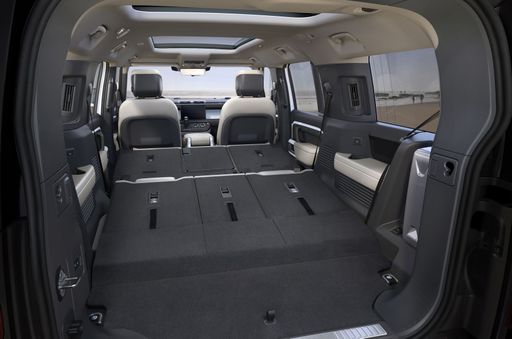
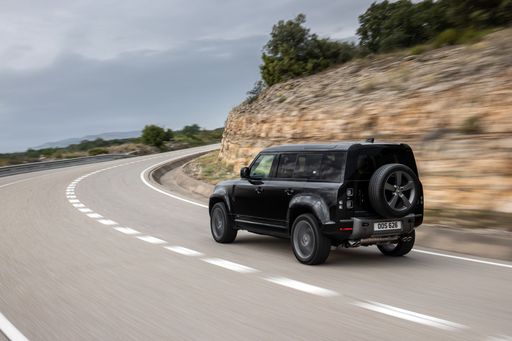
Meanwhile, the Land Rover Defender comes in various sizes, with the longest variant measuring 5358 mm. This flexibility, which includes configurations for five, eight, or even two passengers, gives buyers the option to choose a model that best suits their lifestyle. The Defender’s height ranges between 1967 mm and 1974 mm, and its width comes in at 2008 mm, emphasizing space and comfort in a rugged package.

Defender

Final Thoughts

In the ultimate showdown between the Toyota Land Cruiser and Land Rover Defender, it ultimately depends on what you value most in an off-road vehicle. The Land Cruiser is a stalwart of reliability and traditional off-road capability, suitable for enthusiasts who appreciate a tried-and-true model. Alternatively, the Defender's blend of cutting-edge technology, versatility, and powerful performance makes it a compelling choice for those looking for modern innovations alongside rugged capability. The decision between these two formidable off-road icons may hinge on personal preference, but both options offer unparalleled adventure-ready capabilities.

Here’s where it gets real: The technical differences in detail

Defender

Costs and Efficiency:

Price and efficiency are often the first things buyers look at. Here it becomes clear which model has the long-term edge – whether at the pump, the plug, or in purchase price.

Land Rover Defender is clearly cheaper – starting at 57,900 £ , while the Toyota Land Cruiser costs 72,000 £ . That’s a price difference of around 14,134 £.

Fuel consumption also shows a difference: the Land Rover Defender uses 6 L/100km and is considerably more efficient than the Toyota Land Cruiser with 10.6 L/100km. The difference is about 4.6 L/100km.

Land Cruiser

Engine and Performance:

Power, torque and acceleration say a lot about how a car feels on the road. This is where you see which model delivers more driving dynamics.

When it comes to engine power, the Land Rover Defender offers significantly more power – delivering 635 HP compared to 205 HP. That’s roughly 430 HP more horsepower.

When accelerating from 0 to 100 km/h, the Land Rover Defender is considerably quicker – completing the sprint in 4 s, while the Toyota Land Cruiser takes 12.3 s. That’s about 8.3 s quicker.

There’s also a difference in torque: the Land Rover Defender delivers markedly more torque with 750 Nm compared to 500 Nm. That’s about 250 Nm more.

Defender

Space and Everyday Use:

Cabin size, boot volume and payload all play a role in everyday practicality. Here, comfort and flexibility make the difference.

Seats: Land Rover Defender offers more seats – 8 vs 7.

In terms of curb weight, Land Rover Defender is barely lighter – 2,300 kg compared to 2,415 kg. The difference is around 115 kg.

Looking at boot space, the Land Rover Defender offers barely more boot space – 786 L compared to 742 L. That’s a difference of about 44 L.

When it comes to payload, the Land Rover Defender carries barely more – 819 kg compared to 750 kg. That’s a difference of about 69 kg.

Who wins the race in the data check?

The Land Rover Defender is decisively ahead in the objective data comparison.
This result only shows which model scores more points on paper – not which of the two cars feels right for you.

from £57,900
Defender

Land Rover Defender

  • Engine Type : Petrol, Diesel MHEV, Plugin Hybrid, Petrol MHEV
  • Transmission : Automatic
  • Drive Type : All-Wheel Drive
  • Power HP : 200 - 635 HP
  • Consumption L/100km : 6 - 14.4 L/100km
  • Electric Range : 48 km
Land Rover Defender
Toyota Land Cruiser

Costs and Consumption

View detailed analysis

Engine and Performance

View detailed analysis

Dimensions and Body

View detailed analysis

Land Rover Defender

The Land Rover Defender looks like it could shrug off a weekend of serious off-road abuse while still turning heads on the high street. Inside it balances practical, no-nonsense utility with enough creature comforts to make daily driving feel less like an expedition and more like a stylish commute—rugged charm with civilized manners.

details

Toyota Land Cruiser

The Toyota Land Cruiser is the kind of SUV that makes you feel ready to abandon the map and take the long way home, with legendary go-anywhere capability wrapped in reassuringly solid build quality. Inside it's surprisingly comfortable and grown-up — a practical luxury for buyers who want reliability and presence rather than fleeting flash.

details
Land Rover Defender
Toyota Land Cruiser

Costs and Consumption

Price
57,900 - 172,000 £
Price
72,000 - 79,700 £
Consumption L/100km
6 - 14.4 L/100km
Consumption L/100km
10.6 - 10.7 L/100km
Consumption kWh/100km
-
Consumption kWh/100km
-
Electric Range
48 km
Electric Range
-
Battery Capacity
-
Battery Capacity
-
co2
135 - 324 g/km
co2
278 - 282 g/km
Fuel tank capacity
-
Fuel tank capacity
-

Dimensions and Body

Body Type
Off-Roader
Body Type
Off-Roader
Seats
2 - 8
Seats
5 - 7
Doors
-
Doors
-
Curb weight
2,300 - 2,745 kg
Curb weight
2,415 - 2,450 kg
Trunk capacity
293 - 786 L
Trunk capacity
143 - 742 L
Length
-
Length
-
Width
2,008 mm
Width
1,980 mm
Height
-
Height
-
Max trunk capacity
-
Max trunk capacity
-
Payload
494 - 819 kg
Payload
685 - 750 kg

Engine and Performance

Engine Type
Petrol, Diesel MHEV, Plugin Hybrid, Petrol MHEV
Engine Type
Diesel MHEV
Transmission
Automatic
Transmission
Automatic
Transmission Detail
Automatic Gearbox
Transmission Detail
Automatic Gearbox
Drive Type
All-Wheel Drive
Drive Type
All-Wheel Drive
Power HP
200 - 635 HP
Power HP
205 HP
Acceleration 0-100km/h
4 - 10.2 s
Acceleration 0-100km/h
12.3 s
Max Speed
-
Max Speed
-
Torque
500 - 750 Nm
Torque
500 Nm
Number of Cylinders
4 - 8
Number of Cylinders
4
Power kW
147 - 467 kW
Power kW
151 kW
Engine capacity
1,997 - 5,000 cm3
Engine capacity
2,755 cm3

General

Model Year
2025
Model Year
2025
CO2 Efficiency Class
G, D
CO2 Efficiency Class
G
Brand
Land Rover
Brand
Toyota
DriveDuel uses data analysis and artificial intelligence to evaluate vehicle data and create content. Content is regularly reviewed and improved. The displayed prices are estimates based on German list prices, adjusted to the respective country’s VAT. Country-specific registration taxes are not included. This information is not legally binding.