VS

Land Rover Range Rover Velar vs BMW X3 comparison

Compare performance (404 HP vs 398 HP), boot space and price (62,000 £ vs 51,300 £ ) at a glance. Find out which car is the better choice for you – Land Rover Range Rover Velar or BMW X3?

Land Rover Range Rover Velar vs BMW X3: Key differences

Land Rover Range Rover Velar

  • barely more power

BMW X3

4.6 (1 Reviews)
rate
  • visibly cheaper
  • significantly more efficient
  • visibly more electric range
  • slightly quicker 0–100 km/h
  • marginally lighter
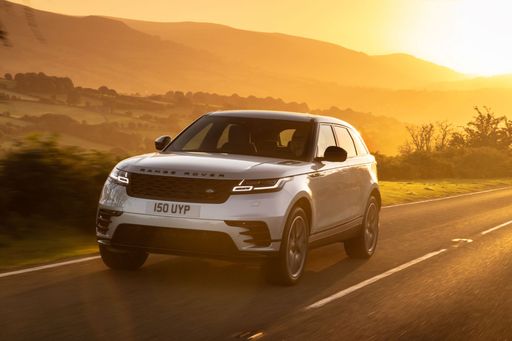
Range Rover Velar

Introduction: A Battle of the SUVs

In the realm of premium SUVs, the BMW X3 and Land Rover Range Rover Velar present formidable options for enthusiasts and practical drivers alike. Each vehicle boasts a blend of luxury, performance, and advanced technology. In this head-to-head comparison, we delve into the specifications and innovations that set these two titans apart.
X3

Exterior and Dimensions

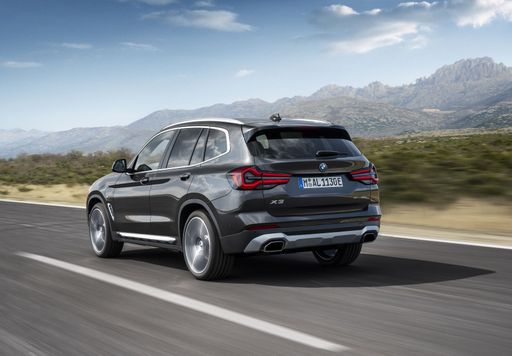
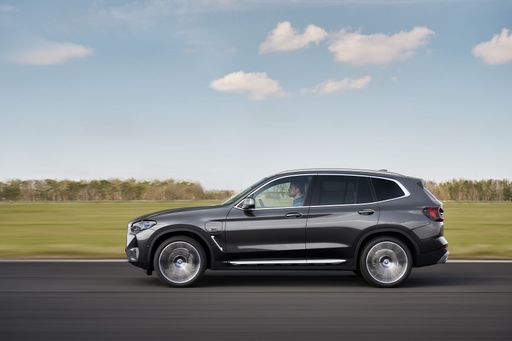
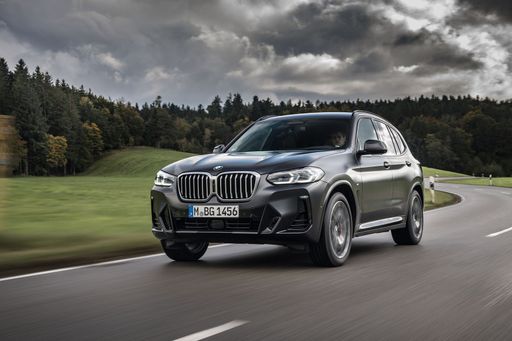
Both the BMW X3 and the Range Rover Velar flaunt their distinct stylistic charisma. The X3 measures between 4708mm and 4755mm in length, with a width spanning around 1891mm to 1920mm, and a height that varies between 1660mm to 1676mm. It’s a perfect example of BMW's ability to blend sporty aesthetics with elegance.

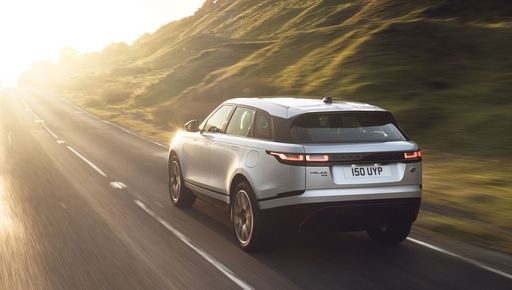
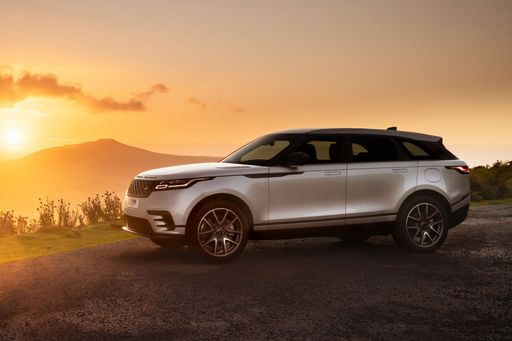
In contrast, the Velar's design is classic Land Rover—sophisticated yet muscular. It stretches slightly longer at 4797mm and slightly wider at 1933mm, with height dimensions of 1657mm to 1665mm. This contributed to the Velar's imposing road presence.

Range Rover Velar

Performance and Powertrain

The BMW X3 offers a versatile range of engines including diesel, petrol, plug-in hybrid, and mild-hybrid options. Power outputs range from 184 HP to a formidable 510 HP, enabling 0-100km/h acceleration times from a modest 8.4 seconds to a blistering 3.8 seconds. With a diverse torque range of 300 Nm to 700 Nm, the X3 handles various driving situations with finesse.

Meanwhile, the Range Rover Velar showcases an equally impressive engine lineup, predominantly featuring mild-hybrid and plug-in hybrid options. Engine power ranges from 204 HP up to 404 HP, and its acceleration capabilities span from 8.3 seconds to a swift 5.4 seconds for the 0-100km/h sprint. It holds a torque range from 430 Nm to 650 Nm.

X3

Fuel Efficiency and Environmental Impact

Fuel efficiency is a key consideration for modern drivers. The X3 offers notable consumption figures taking center stage with an efficient 6 L/100km on certain diesel variants, while plug-in hybrids can reach as low as 2.1 L/100km combined with an electric range of up to 90 km.

The Velar also impresses with eco-friendliness, showcasing a leading consumption rate of 1.9 L/100km in its plug-in guise, offering an electric range of 61 km. Emission levels are competitive, with its CO2 emissions starting at 43 g/km. Both models exist in a range of CO2 efficiency classes, demonstrating their commitment to reducing their environmental footprint.

Range Rover Velar

Innovative Technologies

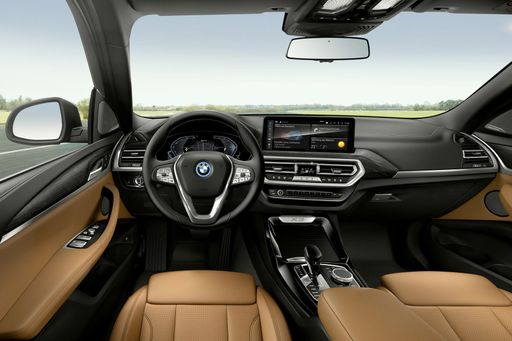
The BMW X3 is equipped with the latest in connectivity and driver assistance technologies. Features like intuitive interfaces, advanced driver-assistant systems, and premium quality interiors enhance the driving experience substantially.

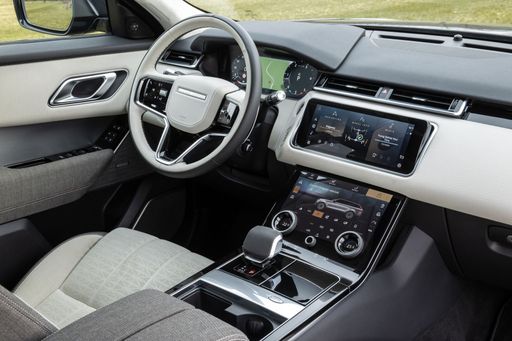
The Range Rover Velar similarly offers cutting-edge innovations. Highlight features include its state-of-the-art infotainment system, comprehensive safety technologies, as well as luxurious interior touches that ensure comfort and convenience for driver and passengers alike.

X3

Conclusion: Choosing Your Ideal SUV

The choice between the BMW X3 and the Range Rover Velar ultimately depends on what you prioritize: whether it’s BMW’s reputation for driving excitement or Land Rover’s unparalleled off-road and luxury prestige. Both SUVs are equipped with the latest technology and deliver outstanding performance, ensuring whichever vehicle you choose, you're guaranteed an exceptional driving experience.

Here’s where it gets real: The technical differences in detail

Range Rover Velar

Costs and Efficiency:

Price and efficiency are key factors when choosing a car – and this is often where the real differences emerge.

BMW X3 is visibly cheaper – starting at 51,300 £ , while the Land Rover Range Rover Velar costs 62,000 £ . That’s a price difference of around 10,714 £.

Fuel consumption also shows a difference: the BMW X3 uses 2.8 L/100km and is significantly more efficient than the Land Rover Range Rover Velar with 4.5 L/100km. The difference is about 1.7 L/100km.

As for electric range, the BMW X3 offers visibly more range – reaching up to 88 km, about 30 km more than the Land Rover Range Rover Velar.

X3

Engine and Performance:

Under the bonnet, it becomes clear which model is tuned for sportiness and which one takes the lead when you hit the accelerator.

When it comes to engine power, the Land Rover Range Rover Velar offers barely more power – delivering 404 HP compared to 398 HP. That’s roughly 6 HP more horsepower.

When accelerating from 0 to 100 km/h, the BMW X3 is slightly quicker – completing the sprint in 4.6 s, while the Land Rover Range Rover Velar takes 5.4 s. That’s about 0.8 s quicker.

There’s also a difference in torque: the BMW X3 delivers very slightly more torque with 670 Nm compared to 650 Nm. That’s about 20 Nm more.

Range Rover Velar

Space and Everyday Use:

Beyond pure performance, interior space and usability matter most in daily life. This is where you see which car is more practical and versatile.

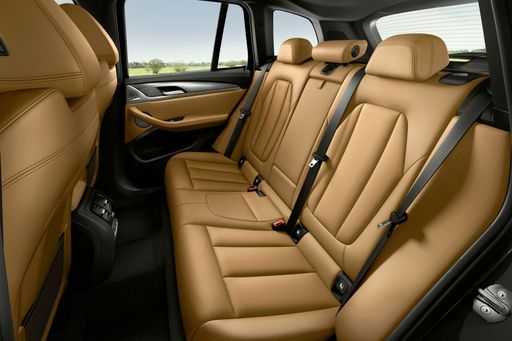
Both vehicles offer seating for 5 people.

In terms of curb weight, BMW X3 is marginally lighter – 1,930 kg compared to 2,003 kg. The difference is around 73 kg.

When it comes to payload, the Land Rover Range Rover Velar carries very slightly more – 587 kg compared to 570 kg. That’s a difference of about 17 kg.

Who wins the race in the data check?

The BMW X3 is far ahead overall in the objective data comparison.
This result only shows which model scores more points on paper – not which of the two cars feels right for you.

from £51,300
X3

BMW X3

  • Engine Type : Petrol MHEV, Diesel MHEV, Plugin Hybrid
  • Transmission : Automatic
  • Drive Type : All-Wheel Drive
  • Power HP : 197 - 398 HP
  • Consumption L/100km : 2.8 - 7.7 L/100km
  • Electric Range : 88 km
Land Rover Range Rover Velar
BMW X3

Costs and Consumption

View detailed analysis

Engine and Performance

View detailed analysis

Dimensions and Body

View detailed analysis

Land Rover Range Rover Velar

The Range Rover Velar marries sleek, pared-back styling with genuine off-road poise, so it looks at home in the city yet won’t flinch at rougher roads. Inside, a luxurious, tech-forward cabin pampers occupants while keeping the driving experience confidently in command — and yes, it somehow makes an SUV feel undeniably chic.

details

BMW X3

The BMW X3 mixes Bavarian poise with everyday practicality, delivering a composed ride and a cabin that feels both premium and lived-in. It’s the sort of SUV that lets you enjoy sporty handling without sacrificing family-friendly space, so you get fun and sense in one neat package.

details
Land Rover Range Rover Velar
BMW X3

Costs and Consumption

Price
62,000 - 87,400 £
Price
51,300 - 72,400 £
Consumption L/100km
4.5 - 10 L/100km
Consumption L/100km
2.8 - 7.7 L/100km
Consumption kWh/100km
-
Consumption kWh/100km
-
Electric Range
58 km
Electric Range
88 km
Battery Capacity
-
Battery Capacity
-
co2
103 - 228 g/km
co2
64 - 175 g/km
Fuel tank capacity
-
Fuel tank capacity
60 - 65 L

Dimensions and Body

Body Type
SUV
Body Type
SUV
Seats
5
Seats
5
Doors
-
Doors
5
Curb weight
2,003 - 2,280 kg
Curb weight
1,930 - 2,140 kg
Trunk capacity
-
Trunk capacity
460 - 570 L
Length
-
Length
4,755 mm
Width
1,933 mm
Width
1,920 mm
Height
-
Height
1,660 mm
Max trunk capacity
-
Max trunk capacity
1,700 L
Payload
460 - 587 kg
Payload
570 kg

Engine and Performance

Engine Type
Petrol MHEV, Plugin Hybrid, Diesel MHEV
Engine Type
Petrol MHEV, Diesel MHEV, Plugin Hybrid
Transmission
Automatic
Transmission
Automatic
Transmission Detail
Automatic Gearbox
Transmission Detail
Automatic Gearbox
Drive Type
All-Wheel Drive
Drive Type
All-Wheel Drive
Power HP
204 - 404 HP
Power HP
197 - 398 HP
Acceleration 0-100km/h
5.4 - 8.3 s
Acceleration 0-100km/h
4.6 - 7.8 s
Max Speed
-
Max Speed
215 - 250 km/h
Torque
430 - 650 Nm
Torque
330 - 670 Nm
Number of Cylinders
4 - 6
Number of Cylinders
4 - 6
Power kW
150 - 297 kW
Power kW
145 - 293 kW
Engine capacity
1,997 - 2,997 cm3
Engine capacity
1,995 - 2,998 cm3

General

Model Year
2,025 - 2,026
Model Year
2,024 - 2,025
CO2 Efficiency Class
G, C, F
CO2 Efficiency Class
F, E, B
Brand
Land Rover
Brand
BMW
DriveDuel uses data analysis and artificial intelligence to evaluate vehicle data and create content. Content is regularly reviewed and improved. The displayed prices are estimates based on German list prices, adjusted to the respective country’s VAT. Country-specific registration taxes are not included. This information is not legally binding.