
 Deutschland
 France
 Nederland
 Great Britain
 Sverige
 Norge
Norge Danmark
 Suomi
Suomi Italia
 Polska
 España
VS
Lexus ES vs Mitsubishi Eclipse Cross - Differences and prices compared
Compare performance (218 HP vs 218 HP), boot space and price (46600 £ vs 41100 £) at a glance. Find out which car is the better choice for you – Lexus ES or Mitsubishi Eclipse Cross?
ES
Costs and Efficiency:
When it comes to price and running costs, the biggest differences usually appear. This is often where you see which car fits your budget better in the long run.
Mitsubishi Eclipse Cross has a somewhat advantage in terms of price – it starts at 41100 £, while the Lexus ES costs 46600 £. That’s a price difference of around 5451 £.
Eclipse Cross
Engine and Performance:
Power, torque and acceleration say a lot about how a car feels on the road. This is where you see which model delivers more driving dynamics.
Both models deliver identical power – 218 HP each.
In acceleration from 0 to 100 km/h, the Mitsubishi Eclipse Cross is slightly quicker – completing the sprint in 7.90 s, while the Lexus ES takes 8.90 s. That’s about 1 s faster.
In terms of top speed, the Lexus ES performs hardly perceptible better – reaching 180 km/h, while the Mitsubishi Eclipse Cross tops out at 170 km/h. The difference is around 10 km/h.
ES
Space and Everyday Use:
Whether family car or daily driver – which one offers more room, flexibility and comfort?
Both vehicles offer seating for 5 people.
In terms of boot space, the Mitsubishi Eclipse Cross offers barely noticeable more room – 487 L compared to 454 L. That’s a difference of about 33 L.
Who comes out on top?
Overall, the Mitsubishi Eclipse Cross shows itself to be is largely superior and secures the title of DriveDuel Champion.
It convinces with the more balanced overall package and proves to be the more versatile choice for everyday use.
from about £41,100
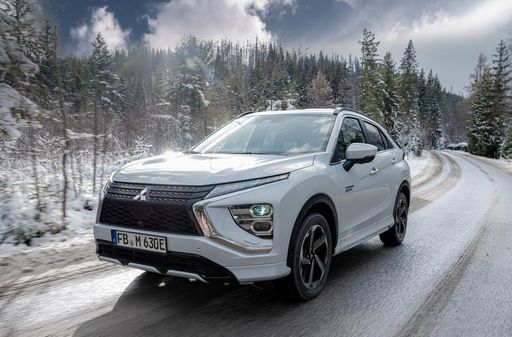
Mitsubishi Eclipse Cross
Lexus ES
Mitsubishi Eclipse Cross
Costs and Consumption
View detailed analysis
View detailed analysis
Engine and Performance
View detailed analysis
View detailed analysis
Dimensions and Body
View detailed analysis
View detailed analysis
Lexus ES
The Lexus ES delivers a supremely comfortable, quietly luxurious experience that favors serene cruising over sporting theatrics. It wraps everyday practicality, top-notch build quality and unimpeachable reliability in a handsome, grown-up package that will appeal to buyers who prize calm refinement over headline-grabbing excitement.
details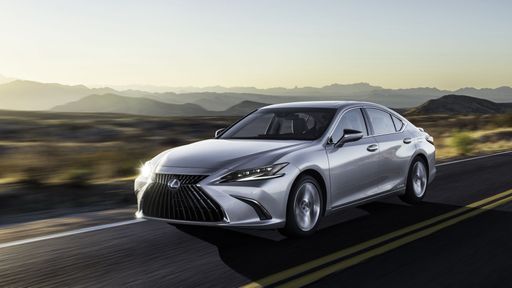
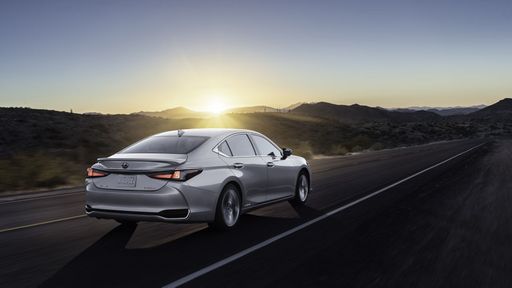

Mitsubishi Eclipse Cross
Mitsubishi Eclipse Cross combines coupe-like looks with crossover practicality, so you get style without the showroom attitude. It’s an affable daily driver that hides a few quirks behind a confident grin, making it an easy pick for buyers who want personality without fuss.
details
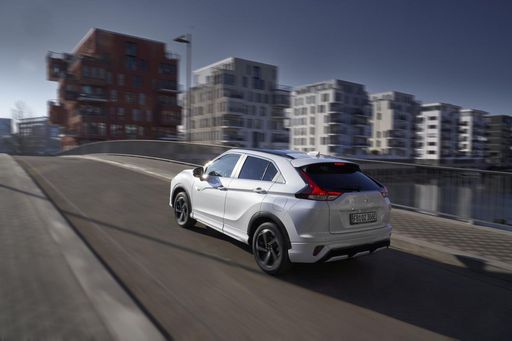
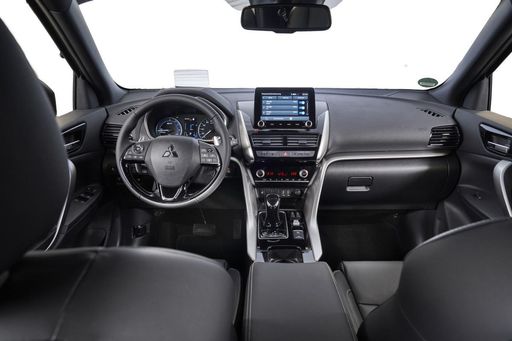
Lexus ES
Mitsubishi Eclipse Cross
|
|
|
|
|
|
Costs and Consumption |
|
|---|---|
|
Price
46600 - 59300 £
|
Price
41100 - 48200 £
|
|
Consumption L/100km
5.10 L
|
Consumption L/100km
-
|
|
Consumption kWh/100km
-
|
Consumption kWh/100km
16.7 - 16.9 kWh
|
|
Electric Range
-
|
Electric Range
635 km
|
|
Battery Capacity
-
|
Battery Capacity
-
|
|
co2
115 g/km
|
co2
0 g/km
|
|
Fuel tank capacity
50 L
|
Fuel tank capacity
-
|
Dimensions and Body |
|
|---|---|
|
Body Type
Sedan
|
Body Type
SUV
|
|
Seats
5
|
Seats
5
|
|
Doors
4
|
Doors
5
|
|
Curb weight
1680 kg
|
Curb weight
-
|
|
Trunk capacity
454 L
|
Trunk capacity
487 L
|
|
Length
4975 mm
|
Length
4489 mm
|
|
Width
1865 mm
|
Width
1908 mm
|
|
Height
1445 mm
|
Height
1571 mm
|
|
Max trunk capacity
-
|
Max trunk capacity
1670 L
|
|
Payload
470 kg
|
Payload
-
|
Engine and Performance |
|
|---|---|
|
Engine Type
Full Hybrid
|
Engine Type
Electric
|
|
Transmission
Automatic
|
Transmission
Automatic
|
|
Transmission Detail
CVT
|
Transmission Detail
Reduction Gearbox
|
|
Drive Type
Front-Wheel Drive
|
Drive Type
Front-Wheel Drive
|
|
Power HP
218 HP
|
Power HP
218 HP
|
|
Acceleration 0-100km/h
8.90 s
|
Acceleration 0-100km/h
7.90 s
|
|
Max Speed
180 km/h
|
Max Speed
170 km/h
|
|
Torque
-
|
Torque
300 Nm
|
|
Number of Cylinders
4
|
Number of Cylinders
-
|
|
Power kW
160 kW
|
Power kW
160 kW
|
|
Engine capacity
2487 cm3
|
Engine capacity
-
|
General |
|
|---|---|
|
Model Year
2024
|
Model Year
2025
|
|
CO2 Efficiency Class
C
|
CO2 Efficiency Class
A
|
|
Brand
Lexus
|
Brand
Mitsubishi
|
Is the Lexus ES offered with different drivetrains?
The Lexus ES is offered with Front-Wheel Drive.
The prices and data displayed are estimates based on German list prices and may vary by country. This information is not legally binding.