VS

Mitsubishi Eclipse Cross vs VW T-Roc comparison

Compare performance (218 HP vs 150 HP), boot space and price (41,100 £ vs 26,400 £ ) at a glance. Find out which car is the better choice for you – Mitsubishi Eclipse Cross or VW T-Roc?

Mitsubishi Eclipse Cross vs VW T-Roc: Key differences

Mitsubishi Eclipse Cross

4.9 (2 Reviews)
rate
  • visibly more power
  • slightly quicker 0–100 km/h
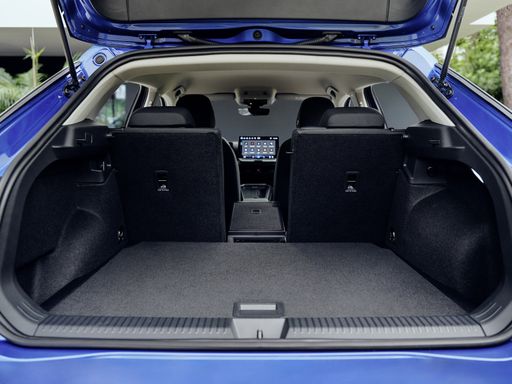
  • considerably more trunk space
details

VW T-Roc

4.8 (6 Reviews)
rate
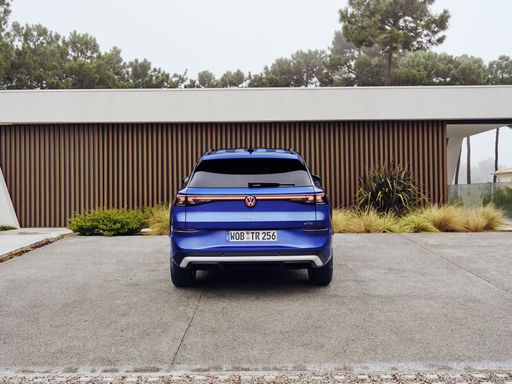
  • significantly cheaper
  • visibly lighter
details

All details on performance, efficiency, range and trunk space can be found in the technical comparison below – including user reviews for both models.

By Achim Sedelmaier

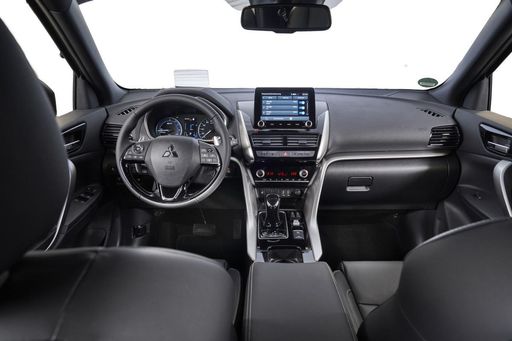
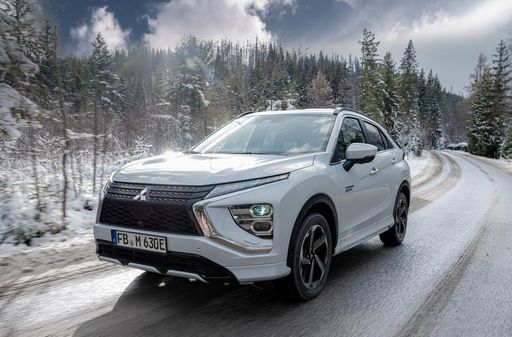
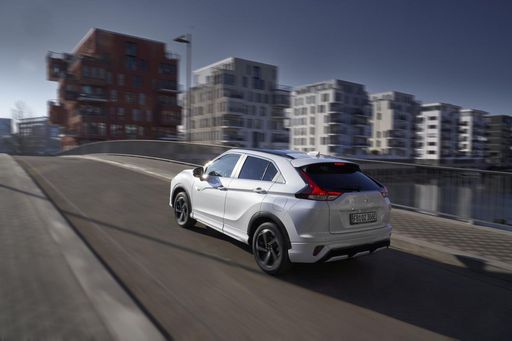
Eclipse Cross

A Battle of Compact SUVs: Mitsubishi Eclipse Cross vs. VW T-Roc

In the realm of compact SUVs, there are exciting options vying for the attention of the discerning driver. Two of the standout contenders are the Mitsubishi Eclipse Cross and the VW T-Roc. Each offers its unique blend of performance, innovation, and style, ensuring that buyers have a tough decision on their hands. Let's delve into the specifics and see how these two models stack up against each other.
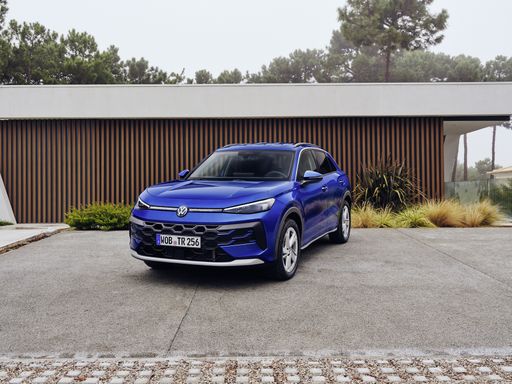
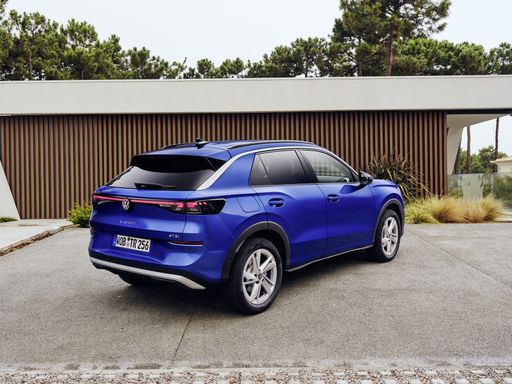
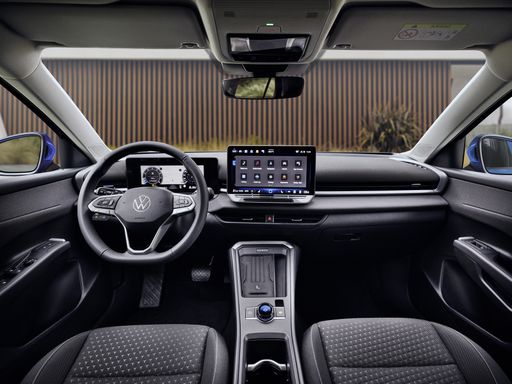
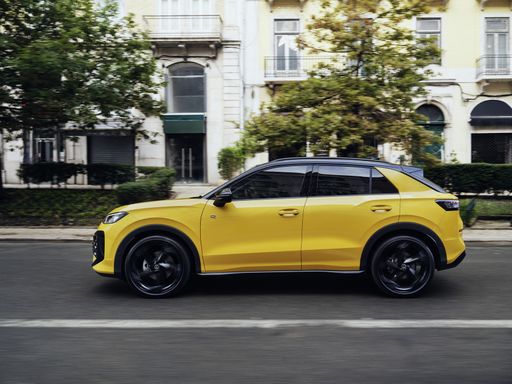
T-Roc

Power and Performance

The Mitsubishi Eclipse Cross introduces itself with a robust plugin hybrid setup, providing a total power output of 188 HP, supported by a four-cylinder engine with 138 kW. This SUV promises an efficient drive with an impressive electric range of 45 km and a fuel consumption of just 2 liters per 100 km, reflecting its commitment to sustainability with a CO2 output of only 46 g/km.

On the other hand, the VW T-Roc offers versatility with a range of petrol and diesel engines. The T-Roc's power lineup includes options ranging from 115 HP to a sporty 300 HP, catering to varying performance needs. Depending on the model, its fuel efficiency covers a spectrum from 4.7 to 8.5 liters per 100 km, with CO2 emissions falling between 125 g/km and 194 g/km.

Eclipse Cross

Drive Dynamics and Handling

The Eclipse Cross is equipped with an all-wheel-drive system ensuring superior traction and stability, particularly advantageous in diverse road conditions. Meanwhile, the T-Roc is available in both front-wheel and all-wheel-drive versions, providing flexibility based on one's driving preferences. The availability of manual and dual-clutch automatic transmissions further extends the T-Roc's versatility.

T-Roc

Interior Comfort and Space

Inside, both vehicles cater to comfort and convenience. The Eclipse Cross comfortably seats five and boasts a trunk capacity of 359 liters, adequate for daily needs and weekend getaways alike. With dimensions of 4545 mm in length, 1805 mm in width, and 1685 mm in height, it presents a commanding presence on the road.

The T-Roc, slightly more compact with lengths of 4236 mm and 4271 mm, offers varied seating configurations, supporting both five and four-seat arrangements. Its trunk capacity reaches up to 445 liters, demonstrating that efficiency doesn’t compromise on utility. With its nimble width of 1819 mm and heights between 1527 mm and 1584 mm, the T-Roc is designed for agility in urban environments.

Eclipse Cross

Technological Innovations

The Mitsubishi Eclipse Cross showcases innovation with its hybrid technology, balancing power and ecological responsibility. Its features aim at minimizing environmental impact while delivering reliable performance.

The VW T-Roc shines with a broad array of technological options, from various powertrains to advanced drivetrain choices. The availability of multiple configurations ensures it adapts to both the technical enthusiast and the eco-conscious driver.

T-Roc

Final Verdict

The decision between the Mitsubishi Eclipse Cross and the VW T-Roc ultimately depends on individual preferences and priorities. For those leaning towards green technology with substantial electric range and hybrid efficiency, the Eclipse Cross stands out as a modern choice. Conversely, the T-Roc’s extensive range of engine choices and drivetrain flexibility make it an appealing option for those seeking a balance between tradition and innovation.

In the ever-expanding world of compact SUVs, both these vehicles hold their own, offering unique attributes that cater to diverse lifestyles and needs.

Here’s where it gets real: The technical differences in detail

Eclipse Cross

Costs and Efficiency:

When it comes to price and running costs, the biggest differences usually appear. This is often where you see which car fits your budget better in the long run.

VW T-Roc is significantly cheaper – starting at 26,400 £ , while the Mitsubishi Eclipse Cross costs 41,100 £ . That’s a price difference of around 14,696 £.

T-Roc

Engine and Performance:

Power, torque and acceleration say a lot about how a car feels on the road. This is where you see which model delivers more driving dynamics.

When it comes to engine power, the Mitsubishi Eclipse Cross offers visibly more power – delivering 218 HP compared to 150 HP. That’s roughly 68 HP more horsepower.

When accelerating from 0 to 100 km/h, the Mitsubishi Eclipse Cross is slightly quicker – completing the sprint in 7.9 s, while the VW T-Roc takes 8.9 s. That’s about 1 s quicker.

There’s also a difference in torque: the Mitsubishi Eclipse Cross delivers somewhat more torque with 300 Nm compared to 250 Nm. That’s about 50 Nm more.

Eclipse Cross

Space and Everyday Use:

Whether family car or daily driver – which one offers more room, flexibility and comfort?

Both vehicles offer seating for 5 people.

In terms of curb weight, VW T-Roc is visibly lighter – 1,465 kg compared to 1,922 kg. The difference is around 457 kg.

Looking at boot space, the Mitsubishi Eclipse Cross offers considerably more boot space – 545 L compared to 284 L. That’s a difference of about 261 L.

When it comes to payload, the VW T-Roc carries somewhat more – 515 kg compared to 413 kg. That’s a difference of about 102 kg.

Who wins the race in the data check?

The Mitsubishi Eclipse Cross is far ahead overall in the objective data comparison.
This result only shows which model scores more points on paper – not which of the two cars feels right for you.

from £41,100
Eclipse Cross

Mitsubishi Eclipse Cross

  • Engine Type : Electric
  • Transmission : Automatic
  • Drive Type : Front-Wheel Drive
  • Power HP : 218 HP
  • Consumption kWh/100km : 16.7 - 17.1 kWh/100km
  • Electric Range : 615 - 627 km
Mitsubishi Eclipse Cross
VW T-Roc

Costs and Consumption

View detailed analysis

Engine and Performance

View detailed analysis

Dimensions and Body

View detailed analysis

Mitsubishi Eclipse Cross

Mitsubishi Eclipse Cross combines coupe-like looks with crossover practicality, so you get style without the showroom attitude. It’s an affable daily driver that hides a few quirks behind a confident grin, making it an easy pick for buyers who want personality without fuss.

details

VW T-Roc

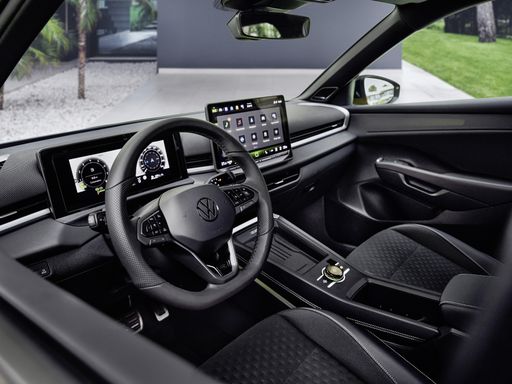
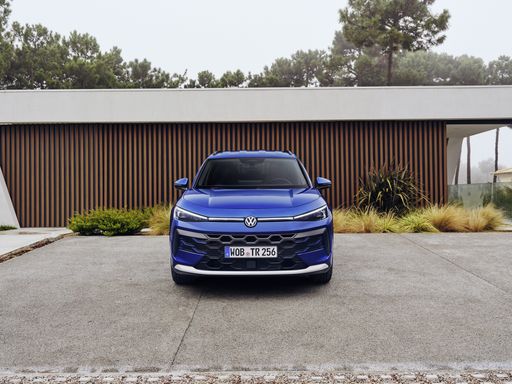
The Volkswagen T‑Roc is a stylish, well-proportioned crossover that blends hatchback agility with SUV presence. It delivers a comfortable cabin, user-friendly tech and a composed ride, making it a sensible choice for buyers who want practicality with a bit of character.

details
Mitsubishi Eclipse Cross
VW T-Roc

Costs and Consumption

Price
41,100 - 48,200 £
Price
26,400 - 38,600 £
Consumption L/100km
-
Consumption L/100km
5.5 - 6.3 L/100km
Consumption kWh/100km
16.7 - 17.1 kWh/100km
Consumption kWh/100km
-
Electric Range
615 - 627 km
Electric Range
-
Battery Capacity
-
Battery Capacity
-
co2
0 g/km
co2
126 - 143 g/km
Fuel tank capacity
-
Fuel tank capacity
-

Dimensions and Body

Body Type
SUV
Body Type
SUV
Seats
5
Seats
4 - 5
Doors
-
Doors
-
Curb weight
1,922 - 1,950 kg
Curb weight
1,465 - 1,539 kg
Trunk capacity
545 L
Trunk capacity
284 L
Length
-
Length
-
Width
1,908 mm
Width
1,811 - 1,828 mm
Height
-
Height
-
Max trunk capacity
-
Max trunk capacity
-
Payload
385 - 413 kg
Payload
368 - 515 kg

Engine and Performance

Engine Type
Electric
Engine Type
Petrol, Petrol MHEV
Transmission
Automatic
Transmission
Manuel, Automatic
Transmission Detail
Reduction Gearbox
Transmission Detail
Manual Gearbox, Dual-Clutch Automatic
Drive Type
Front-Wheel Drive
Drive Type
Front-Wheel Drive
Power HP
218 HP
Power HP
115 - 150 HP
Acceleration 0-100km/h
7.9 s
Acceleration 0-100km/h
8.9 - 12.3 s
Max Speed
-
Max Speed
-
Torque
300 Nm
Torque
200 - 250 Nm
Number of Cylinders
-
Number of Cylinders
3 - 4
Power kW
160 kW
Power kW
85 - 110 kW
Engine capacity
-
Engine capacity
999 - 1,498 cm3

General

Model Year
2025
Model Year
2,024 - 2,025
CO2 Efficiency Class
A
CO2 Efficiency Class
E, D
Brand
Mitsubishi
Brand
VW
DriveDuel uses data analysis and artificial intelligence to evaluate vehicle data and create content. Content is regularly reviewed and improved. The displayed prices are estimates based on German list prices, adjusted to the respective country’s VAT. Country-specific registration taxes are not included. This information is not legally binding.