VS

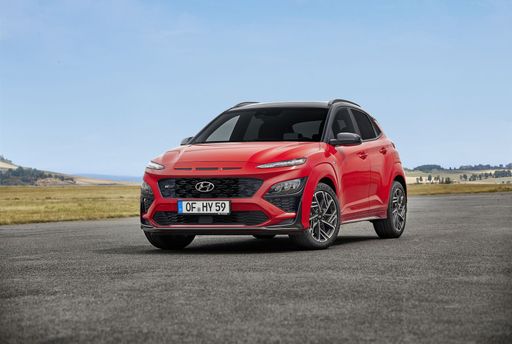
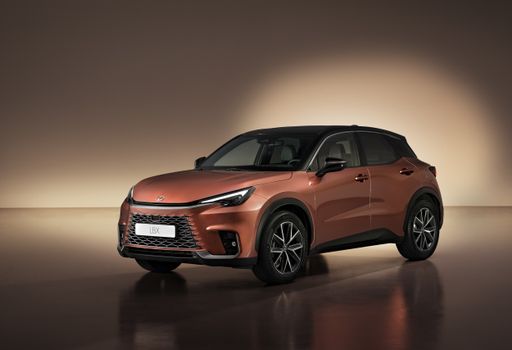
Lexus LBX vs Hyundai Kona comparison

Compare performance (136 HP vs 218 HP), boot space and price (28,300 £ vs 23,100 £ ) at a glance. Find out which car is the better choice for you – Lexus LBX or Hyundai Kona?

Lexus LBX vs Hyundai Kona: Key differences

Lexus LBX

5 (2 Reviews)
rate
  • barely more efficient
  • marginally lighter
details

Hyundai Kona

4.5 (3 Reviews)
rate
  • clearly cheaper
  • clearly more power
  • slightly quicker 0–100 km/h
details

All details on performance, efficiency, range and trunk space can be found in the technical comparison below – including user reviews for both models.

By Achim Sedelmaier

LBX

Hyundai Kona vs. Lexus LBX: Battle of the Subcompact SUVs

The subcompact SUV segment is bustling with innovation, and the 2024 models of Hyundai Kona and Lexus LBX are at the forefront. These two vehicles not only provide elegant styling and advanced features but also offer a variety of powertrains catering to different preferences. In this comparison, we'll delve into the technical specifications and innovations that make these SUVs stand out in the market.

Kona

Engine and Performance

Both the Hyundai Kona and Lexus LBX offer full hybrid options, which are sure to please environmentally conscious drivers. Kona brings a diverse range of engines, including petrol, full hybrid, and electric. Its power output ranges from 100 to 218 HP with multiple transmissions such as manual, dual-clutch automatic, and reduction gearbox.

In contrast, the Lexus LBX focuses exclusively on a full hybrid offering, paired with a CVT transmission, delivering 136 HP. The Kona provides both front-wheel and all-wheel drive configurations, mirroring the drivetrain options of the LBX, ensuring versatile performance across various driving conditions.

LBX

Fuel Efficiency and Environmental Impact

Fuel efficiency is a crucial factor in this segment, and both models aim to deliver. The Hyundai Kona boasts a fuel consumption rate as low as 4.5 L/100km for its hybrid variant, while the pure electric version achieves an electric range of up to 514 km. The Kona's impressive CO2 emissions range from 0 to 152 g/km, showcasing a significant effort in reducing environmental impact.

The Lexus LBX also excels in economy, offering a consumption rate of 4.5 to 4.8 L/100km and CO2 emissions between 102 and 109 g/km. The eco-friendly credentials of both models will surely appeal to those looking to reduce their carbon footprint.

Kona

Size and Practicality

In terms of dimensions, the Hyundai Kona offers a slightly larger frame with a length of up to 4385 mm, while the Lexus LBX measures 4190 mm. Both vehicles share a width of 1825 mm, providing ample room for passengers. The Kona stands a bit taller at 1585 mm compared to the LBX's 1560 mm height, contributing to improved visibility on the road.

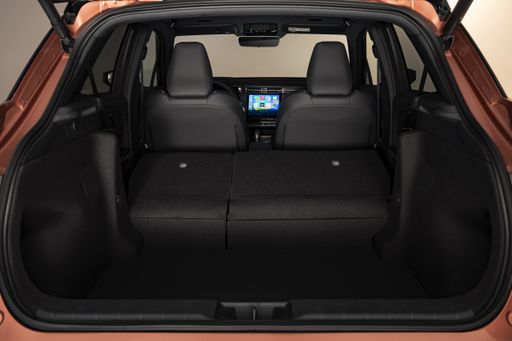
Although both SUVs have five-door configurations, the Kona offers seating for five, making it more family-friendly, whereas the LBX accommodates four, potentially limiting its appeal for larger families. The Kona's trunk capacity of 466 liters surpasses the LBX's maximum of 332 liters, offering more storage space for luggage on family adventures.

LBX

Technological Advancements and Features

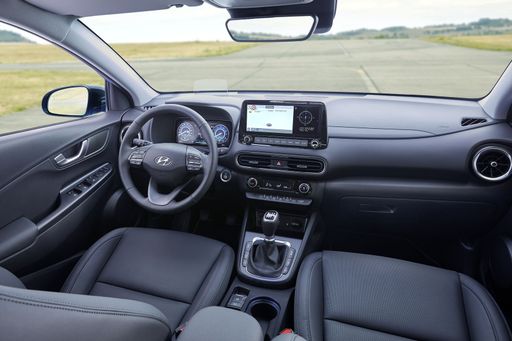
The Hyundai Kona is renowned for its suite of technological features, including advanced safety systems and connectivity innovations. Similarly, the Lexus LBX spares no expense in offering a luxurious driving experience with premium materials and cutting-edge technology.

Both provides all-wheel drive options and numerous driving assist systems. Still, the Kona might edge out with a broader array of powertrain options and a more capacious interior, appealing to tech-savvy consumers and families alike.

Kona

Conclusion: Tailoring to Preferences

Ultimately, the choice between the Hyundai Kona and Lexus LBX comes down to personal priorities. The Kona’s myriad of engine options and spacious interior cater to those seeking versatility and practicality. On the other hand, the Lexus LBX offers a premium experience with its focus on luxury and impressive hybrid technology.

Both vehicles are testament to the strides made in fuel efficiency and technology, presenting worthy contenders in the ever-competitive subcompact SUV market.

Here’s where it gets real: The technical differences in detail

LBX

Costs and Efficiency:

Looking at overall running costs, both models reveal some interesting differences in everyday economy.

Hyundai Kona is clearly cheaper – starting at 23,100 £ , while the Lexus LBX costs 28,300 £ . That’s a price difference of around 5,220 £.

Fuel consumption also shows a difference: the Lexus LBX uses 4.5 L/100km and is barely more efficient than the Hyundai Kona with 4.6 L/100km. The difference is about 0.1 L/100km.

Kona

Engine and Performance:

Power, torque and acceleration are the classic benchmarks for car enthusiasts – and here, some clear differences start to show.

When it comes to engine power, the Hyundai Kona offers clearly more power – delivering 218 HP compared to 136 HP. That’s roughly 82 HP more horsepower.

When accelerating from 0 to 100 km/h, the Hyundai Kona is slightly quicker – completing the sprint in 7.8 s, while the Lexus LBX takes 9.2 s. That’s about 1.4 s quicker.

There’s also a difference in torque: the Hyundai Kona delivers markedly more torque with 265 Nm compared to 185 Nm. That’s about 80 Nm more.

LBX

Space and Everyday Use:

Beyond pure performance, interior space and usability matter most in daily life. This is where you see which car is more practical and versatile.

Both vehicles offer seating for 5 people.

In terms of curb weight, Lexus LBX is marginally lighter – 1,280 kg compared to 1,370 kg. The difference is around 90 kg.

When it comes to payload, the Hyundai Kona carries marginally more – 490 kg compared to 475 kg. That’s a difference of about 15 kg.

Who wins the race in the data check?

The Hyundai Kona is decisively ahead in the objective data comparison.
This result only shows which model scores more points on paper – not which of the two cars feels right for you.

from £23,100
Kona

Hyundai Kona

  • Engine Type : Electric, Petrol, Full Hybrid
  • Transmission : Automatic, Manuel
  • Drive Type : Front-Wheel Drive, All-Wheel Drive
  • Power HP : 115 - 218 HP
  • Consumption L/100km : 4.6 - 7 L/100km
  • Consumption kWh/100km : 14.6 - 16.8 kWh/100km
  • Electric Range : 377 - 514 km
Lexus LBX
Hyundai Kona

Costs and Consumption

View detailed analysis

Engine and Performance

View detailed analysis

Dimensions and Body

View detailed analysis

Lexus LBX

The Lexus LBX wraps premium touches and a surprisingly spacious cabin into a compact crossover that’s perfectly at home in town or heading out on longer drives. It wears the badge with quiet confidence, serving up a refined ride and clever packaging for buyers who want Lexus polish without shouting for attention.

details

Hyundai Kona

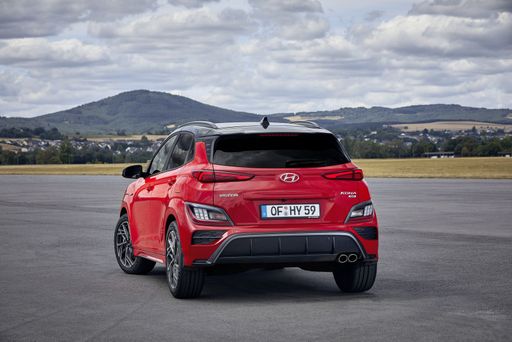
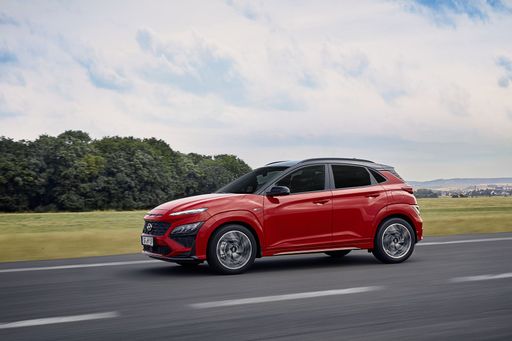
The Hyundai Kona wears its personality on the outside with bold styling and sprightly handling that turns city driving into something a little more fun than a commute. It blends practical space, modern tech and sensible running costs into a compact, stylish package — a smart pick if you want flair without paying luxury prices.

details
Lexus LBX
Hyundai Kona

Costs and Consumption

Price
28,300 - 40,000 £
Price
23,100 - 41,600 £
Consumption L/100km
4.5 - 4.8 L/100km
Consumption L/100km
4.6 - 7 L/100km
Consumption kWh/100km
-
Consumption kWh/100km
14.6 - 16.8 kWh/100km
Electric Range
-
Electric Range
377 - 514 km
Battery Capacity
-
Battery Capacity
48.4 - 65.4 kWh
co2
102 - 110 g/km
co2
0 - 163 g/km
Fuel tank capacity
-
Fuel tank capacity
-

Dimensions and Body

Body Type
SUV
Body Type
SUV
Seats
5
Seats
5
Doors
-
Doors
5
Curb weight
1,280 - 1,365 kg
Curb weight
1,370 - 1,773 kg
Trunk capacity
-
Trunk capacity
466 L
Length
-
Length
4,355 - 4,385 mm
Width
1,825 mm
Width
1,825 mm
Height
-
Height
1,580 mm
Max trunk capacity
-
Max trunk capacity
1,300 L
Payload
455 - 475 kg
Payload
420 - 490 kg

Engine and Performance

Engine Type
Full Hybrid
Engine Type
Electric, Petrol, Full Hybrid
Transmission
Automatic
Transmission
Automatic, Manuel
Transmission Detail
CVT
Transmission Detail
Reduction Gearbox, Manual Gearbox, Dual-Clutch Automatic
Drive Type
Front-Wheel Drive, All-Wheel Drive
Drive Type
Front-Wheel Drive, All-Wheel Drive
Power HP
136 HP
Power HP
115 - 218 HP
Acceleration 0-100km/h
9.2 - 9.6 s
Acceleration 0-100km/h
7.8 - 11.9 s
Max Speed
-
Max Speed
162 - 172 km/h
Torque
185 Nm
Torque
200 - 265 Nm
Number of Cylinders
3
Number of Cylinders
3 - 4
Power kW
100 kW
Power kW
85 - 160 kW
Engine capacity
1,490 cm3
Engine capacity
998 - 1,598 cm3

General

Model Year
2025
Model Year
2,024 - 2,025
CO2 Efficiency Class
C
CO2 Efficiency Class
A, D, C, E, F
Brand
Lexus
Brand
Hyundai
DriveDuel uses data analysis and artificial intelligence to evaluate vehicle data and create content. Content is regularly reviewed and improved. The displayed prices are estimates based on German list prices, adjusted to the respective country’s VAT. Country-specific registration taxes are not included. This information is not legally binding.