VS

Maxus Deliver 9 vs Fiat Ducato comparison

Compare performance (204 HP vs 140 HP), boot space and price (38,700 £ vs 34,300 £ ) at a glance. Find out which car is the better choice for you – Maxus Deliver 9 or Fiat Ducato?

Maxus Deliver 9 vs Fiat Ducato: Key differences

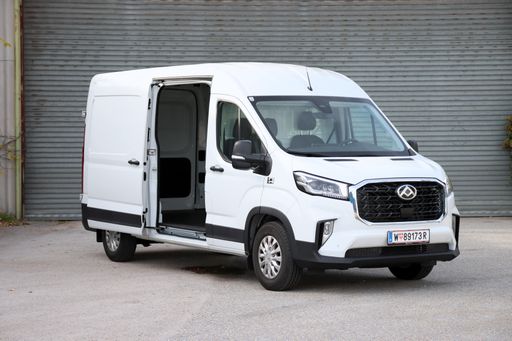
Maxus Deliver 9

  • visibly more power
details

Fiat Ducato

  • a bit cheaper
  • somewhat more efficient
  • moderately lighter
details

By Achim Sedelmaier

Deliver 9

The commercial vehicle sector is booming, and two formidable contenders are making waves in the cargo van market: the Fiat Ducato and the Maxus Deliver 9. Each vehicle boasts an array of features that cater to various business needs, but how do they stack up against each other in terms of performance, innovation, and practicality?

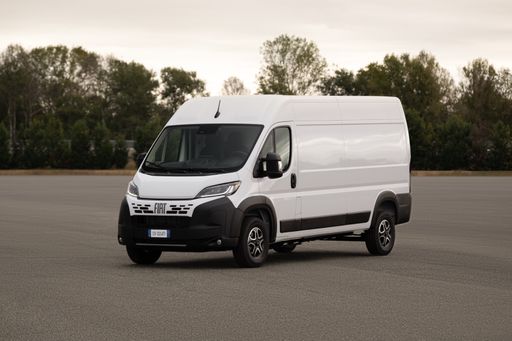
Ducato

Engine and Performance

When it comes to engine options, both the Fiat Ducato and Maxus Deliver 9 offer diesel and electric variants, which is increasingly essential in today’s eco-conscious market.

The Fiat Ducato offers a range of power outputs from 120 HP up to a robust 270 HP. This flexibility in power, combined with torque outputs reaching up to 450 Nm, ensures that it can handle heavy loads and challenging driving conditions. Meanwhile, the Ducato's fuel consumption ratings range between 7.2 to 9.3 L/100 km, showcasing efficiency in its operation.

On the other hand, the Maxus Deliver 9 is slightly more powerful in its maximum output, reaching up to 204 HP with a torque of up to 375 Nm. The Deliver 9 also offers a competitive fuel consumption of around 8.8 L/100 km. Furthermore, its electric range can reach up to 358 km, providing added versatility for urban deliveries.


Transmission and Drive Type

Both models come with the option of manual and automatic transmissions, allowing drivers to choose their preferred driving experience. The Fiat Ducato has a range of gearbox options, including a reduction gearbox which is excellent for heavy-duty applications.

Unlike the Ducato, the Deliver 9 offers both front-wheel and rear-wheel drive configurations, providing additional flexibility for businesses that require specific drivetrain setups for different types of cargo or terrain.

Dimensions and Cargo Capacity

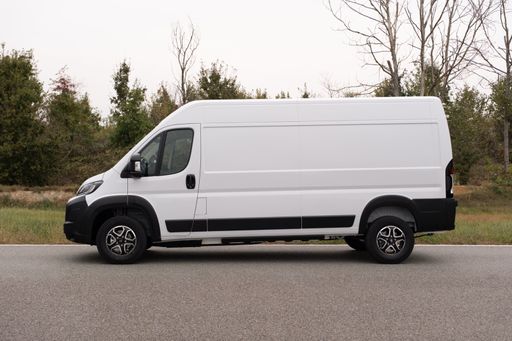
In terms of size, the Fiat Ducato varies significantly with lengths ranging from 5413 mm to 6678 mm, while the Maxus Deliver 9 measures between 5546 mm and 5940 mm. This can influence both parking and handling in urban areas, where space may be limited.

The Ducato also excels with a payload capacity topping out at 2020 kg, compared to the Deliver 9’s maximum payload of 1275 kg. For businesses whose operations depend heavily on carrying large loads, the Ducato’s capabilities might provide a significant advantage.

Innovations and Technology

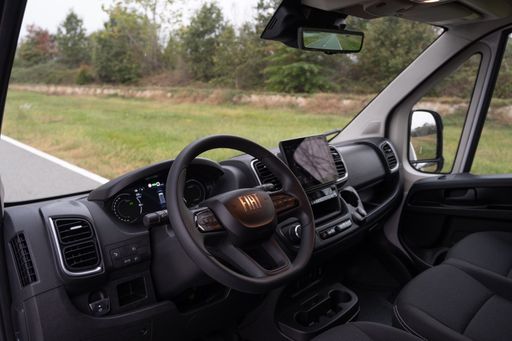
Both vehicles have integrated modern technology to improve driver experience and operational efficiency. The Fiat Ducato incorporates innovative features like advanced navigation systems, driver assistance technologies, and various connectivity options, ensuring a safe and convenient driving experience.

The Maxus Deliver 9 also focuses on technology, equipping its models with an impressive infotainment system and safety features, though it somewhat lags in the integration of cutting-edge driver assistance capabilities compared to the Ducato.

Cost Efficiency and Environmental Impact

The Ducato’s CO2 emissions range from 190 to 244 g/km, with efficiency ratings that can help businesses manage their environmental footprints. Meanwhile, the Deliver 9 has a higher emissions range at 231 to 254 g/km, making the Ducato a more eco-friendly choice for those concerned with sustainability.

With the growing trend towards electrification, the Ducato’s electric variant can achieve up to 430 km, while the Deliver 9’s electric options can reach approximately 358 km. While both vehicles offer electric alternatives, the Ducato appears to have a slight edge for long-range deliveries.

Conclusion

Deciding between the Fiat Ducato and the Maxus Deliver 9 ultimately comes down to specific business needs. The Ducato shines in terms of payload capacity, power versatility, and eco-efficiency, positioning it as a reliable choice for larger operations. The Deliver 9, while slightly less capable in payload, boasts modern technology and a potent performance that may appeal to those looking for a stylish and effective city van.

As the market continues to evolve, both models are set to cater to an array of business demands, but understanding the nuances of each vehicle will enable savvy operators to make the best choice for their specific requirements.

Here’s where it gets real: The technical differences in detail

Deliver 9

Costs and Efficiency:

Looking at overall running costs, both models reveal some interesting differences in everyday economy.

Fiat Ducato is a bit cheaper – starting at 34,300 £ , while the Maxus Deliver 9 costs 38,700 £ . That’s a price difference of around 4,426 £.

Fuel consumption also shows a difference: the Fiat Ducato uses 7.5 L/100km and is somewhat more efficient than the Maxus Deliver 9 with 8.8 L/100km. The difference is about 1.3 L/100km.

Ducato

Engine and Performance:

Power, torque and acceleration are the classic benchmarks for car enthusiasts – and here, some clear differences start to show.

When it comes to engine power, the Maxus Deliver 9 offers visibly more power – delivering 204 HP compared to 140 HP. That’s roughly 64 HP more horsepower.

There’s also a difference in torque: the Maxus Deliver 9 delivers marginally more torque with 375 Nm compared to 350 Nm. That’s about 25 Nm more.

Space and Everyday Use:

Whether family car or daily driver – which one offers more room, flexibility and comfort?

Seats: Maxus Deliver 9 offers more seats – 7 vs 3.

In terms of curb weight, Fiat Ducato is moderately lighter – 2,125 kg compared to 2,360 kg. The difference is around 235 kg.

When it comes to payload, the Fiat Ducato carries considerably more – 2,020 kg compared to 1,140 kg. That’s a difference of about 880 kg.

Who wins the race in the data check?

The Maxus Deliver 9 is clearly superior overall in the objective data comparison.
This result only shows which model scores more points on paper – not which of the two cars feels right for you.

from £38,700
Deliver 9

Maxus Deliver 9

  • Engine Type : Diesel, Electric
  • Transmission : Manuel, Automatic
  • Drive Type : Front-Wheel Drive
  • Power HP : 148 - 204 HP
  • Consumption L/100km : 8.8 L/100km
  • Consumption kWh/100km : 26.2 - 30.8 kWh/100km
  • Electric Range : 287 - 358 km
Maxus Deliver 9
Fiat Ducato

Costs and Consumption

View detailed analysis

Engine and Performance

View detailed analysis

Dimensions and Body

View detailed analysis

Maxus Deliver 9

The Maxus Deliver 9 is a no-nonsense cargo hauler that pairs clever practicality with a surprisingly car-like driving feel, making it a smart choice for urban fleets and weekend DIY warriors. It may not stop traffic for looks, but its roomy, sensible interior and dependable demeanour mean you get work done without the drama.

details

Fiat Ducato

The Fiat Ducato is a no-nonsense workhorse that turns practicality into an artform, with a cavernous, flexible load area and predictable, car-like driving manners that make long days behind the wheel far less tedious. It’s equally at home with a tradesman’s kit or a camper conversion, offering sensible packaging, easy servicing and the sort of reliability that keeps surprises—and down-time—to a minimum.

details
Maxus Deliver 9
Fiat Ducato

Costs and Consumption

Price
38,700 - 60,200 £
Price
34,300 - 43,900 £
Consumption L/100km
8.8 L/100km
Consumption L/100km
7.5 - 8.2 L/100km
Consumption kWh/100km
26.2 - 30.8 kWh/100km
Consumption kWh/100km
-
Electric Range
287 - 358 km
Electric Range
-
Battery Capacity
-
Battery Capacity
-
co2
0 - 231 g/km
co2
198 - 217 g/km
Fuel tank capacity
-
Fuel tank capacity
-

Dimensions and Body

Body Type
Cargo Van
Body Type
Cargo Van
Seats
3 - 7
Seats
3
Doors
-
Doors
-
Curb weight
2,360 - 2,770 kg
Curb weight
2,125 - 2,230 kg
Trunk capacity
-
Trunk capacity
-
Length
-
Length
-
Width
2,062 mm
Width
2,050 mm
Height
-
Height
-
Max trunk capacity
-
Max trunk capacity
-
Payload
730 - 1,140 kg
Payload
650 - 2,020 kg

Engine and Performance

Engine Type
Diesel, Electric
Engine Type
Diesel
Transmission
Manuel, Automatic
Transmission
Manuel, Automatic
Transmission Detail
Manual Gearbox, Reduction Gearbox
Transmission Detail
Manual Gearbox, Automatic Gearbox
Drive Type
Front-Wheel Drive
Drive Type
Front-Wheel Drive
Power HP
148 - 204 HP
Power HP
120 - 140 HP
Acceleration 0-100km/h
16 - 19 s
Acceleration 0-100km/h
-
Max Speed
-
Max Speed
-
Torque
330 - 375 Nm
Torque
320 - 350 Nm
Number of Cylinders
4
Number of Cylinders
4
Power kW
108 - 150 kW
Power kW
88 - 103 kW
Engine capacity
1,996 cm3
Engine capacity
2,184 cm3

General

Model Year
2,022 - 2,024
Model Year
2025
CO2 Efficiency Class
G, A
CO2 Efficiency Class
G
Brand
Maxus
Brand
Fiat
DriveDuel uses data analysis and artificial intelligence to evaluate vehicle data and create content. Content is regularly reviewed and improved. The displayed prices are estimates based on German list prices, adjusted to the respective country’s VAT. Country-specific registration taxes are not included. This information is not legally binding.