
VS

Maxus T90 EV vs Maxus eTERRON 9 comparison

Compare performance (177 HP vs 442 HP), boot space and price (56,100 £ vs 64,200 £ ) at a glance. Find out which car is the better choice for you – Maxus T90 EV or Maxus eTERRON 9?

Maxus T90 EV vs Maxus eTERRON 9: Key differences

Maxus T90 EV

  • moderately cheaper
  • markedly lighter
details

Maxus eTERRON 9

  • substantially more power
  • only slightly more efficient
  • noticeably more electric range
  • considerably quicker 0–100 km/h
details

By Achim Sedelmaier

T90 EV

Quick comparison: Maxus T90 EV vs Maxus eTERRON 9

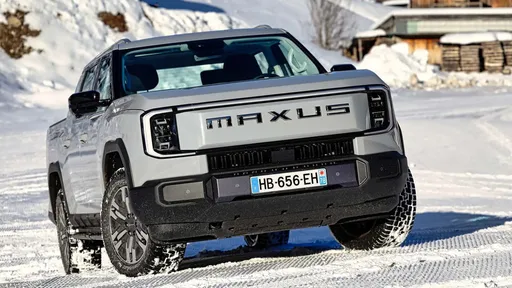
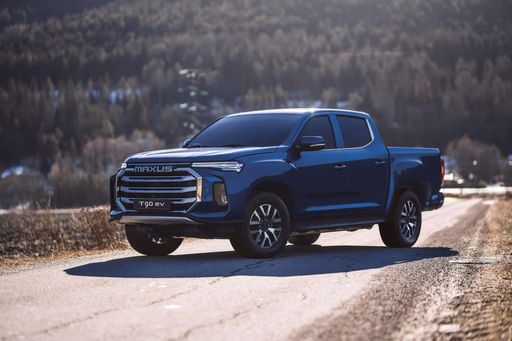
The Maxus T90 EV and the Maxus eTERRON 9 sit on the same electric pickup map but play very different roles, which is exactly the point of a Maxus showdown. The Maxus T90 EV presents itself as a pragmatic, work-focused electric pickup designed for short routes, easy loading and local zero‑emission operation, while the Maxus eTERRON 9 aims at long‑distance comfort, towing and a more sophisticated equipment package. In everyday terms, the T90 EV feels like a useful tool you can park at the depot and trust for daily tasks, whereas the eTERRON 9 feels like a grown‑up SUV with a bed — bigger, more refined and more demanding in tight places. Read on for how those character differences translate to comfort, practicality and buyer fit rather than headline specs alone.
eTERRON 9

Character and driving personality

The Maxus T90 EV drives like a purpose-built urban and short‑haul worker: brisk at town speeds, quiet and easy to maneuver, but it becomes strained and eager for a charge on sustained motorway runs. The Maxus eTERRON 9 is heavier and feels planted — air suspension and a stronger electric drive make it the less tiring companion on long trips and when towing, but that bulk shows in tight streets and when parking. In traffic the T90 EV’s lighter steering and simpler setup are easier to live with day‑to‑day, while the eTERRON 9 rewards relaxed cruising and carrying heavier loads. Your daily routes determine which personality suits you: frequent short hops favor the T90 EV’s simplicity, long runs and heavy trailers favor the eTERRON 9’s composure and strength.

Comfort and cabin experience

Inside the Maxus T90 EV the cabin is functional and robust, with pragmatic materials that cope with worksite scuffs but don’t aim for luxury — it’s quiet at low speeds but becomes livelier on the motorway. The Maxus eTERRON 9 leans into comfort: its air suspension, roomier rear seats and softer touchpoints give a noticeably more relaxed long‑distance environment, although the heavy mass and some design choices still transmit road inputs. Rear occupant space and long‑haul comfort clearly favor the eTERRON 9, while the T90 EV keeps things simple and serviceable for crews or tradespeople who value durability over plushness. If you prioritize a calm family ride or often carry adult passengers, the eTERRON 9 will feel like an upgrade; if you want a straightforward work cabin that cleans up easily, the T90 EV will be less fuss.

Usability, infotainment and day‑to‑day tech

The Maxus T90 EV keeps tech intentionally basic: smartphone mirroring is available to cover navigation needs and the layout is readable, but menus and functions are conservative and sometimes sluggish. The Maxus eTERRON 9 offers a fuller tech suite and more features, yet the software logic, frequent pop‑ups and a few dubious choices (like a digital rear view option that’s situational) make the experience less polished than hardware suggests. In practice the T90 EV’s simplicity can be a relief for crews who just want reliable essentials, whereas the eTERRON 9 gives more capability but demands patience and learning to stop the interruptions. Both need a real‑world test drive to judge which frustration level you can tolerate on a daily basis.

Practical work capability and load handling

When it comes to moving real stuff the Maxus T90 EV is built around payload usability: its bed accepts standard pallets and it carries healthy loads while offering an onboard socket that’s genuinely useful on sites. The Maxus eTERRON 9 switches the emphasis from payload to towing and versatility — it can haul heavy trailers and offers a large frunk and V2L options, but its usable payload is less generous than the T90 EV’s and its heft makes some urban loading awkward. The trade‑off is simple: choose the T90 EV if you need a workhorse that maximizes what you can carry in the bed day after day; choose the eTERRON 9 if towing capacity and long‑range tool power are mission‑critical and you can live with a smaller payload and bigger footprint. For mixed jobs that include heavy trailers, the eTERRON 9 is the practical choice; for fleet‑style local work, the T90 EV is the leaner operator.

Who should consider which model — buyer fit

If your typical week is depot to site, short runs, heavy daytime loading and you prize simplicity and lower operating fuss, the Maxus T90 EV maps to that life and keeps running costs predictable for local use. If your priorities are comfortable long drives, towing large loads, carrying five adults in comfort and having the broadest feature set, the Maxus eTERRON 9 fits better despite being larger, pricier and trickier in tight urban spots. Both are electric pickups, but they solve different problems: the T90 EV is the work‑oriented, cost‑aware choice, the eTERRON 9 is the capability‑first alternative for those who need towing and long‑distance refinement. The following technical comparison drills into charging, range, power and weights so you can match those real‑world impressions to the figures that matter for your use case.

Here’s where it gets real: The technical differences in detail

T90 EV

Costs and Efficiency:

Price and efficiency are key factors when choosing a car – and this is often where the real differences emerge.

Maxus T90 EV is moderately cheaper – starting at 56,100 £ , while the Maxus eTERRON 9 costs 64,200 £ . That’s a price difference of around 8,160 £.

In terms of energy consumption, the Maxus eTERRON 9 is only slightly more efficient: consuming 26.7 kWh/100km compared to 26.8 kWh/100km for the Maxus T90 EV. That’s a difference of about 0.1 kWh/100km.

As for electric range, the Maxus eTERRON 9 offers noticeably more range – reaching up to 430 km, about 100 km more than the Maxus T90 EV.

eTERRON 9

Engine and Performance:

Power, torque and acceleration say a lot about how a car feels on the road. This is where you see which model delivers more driving dynamics.

When it comes to engine power, the Maxus eTERRON 9 offers substantially more power – delivering 442 HP compared to 177 HP. That’s roughly 265 HP more horsepower.

When accelerating from 0 to 100 km/h, the Maxus eTERRON 9 is considerably quicker – completing the sprint in 5.8 s, while the Maxus T90 EV takes 12.3 s. That’s about 6.5 s quicker.

There’s also a difference in torque: the Maxus eTERRON 9 delivers substantially more torque with 700 Nm compared to 310 Nm. That’s about 390 Nm more.

Space and Everyday Use:

Cabin size, boot volume and payload all play a role in everyday practicality. Here, comfort and flexibility make the difference.

Both vehicles offer seating for 5 people.

In terms of curb weight, Maxus T90 EV is markedly lighter – 2,375 kg compared to 2,925 kg. The difference is around 550 kg.

When it comes to payload, the Maxus T90 EV carries visibly more – 925 kg compared to 575 kg. That’s a difference of about 350 kg.

Who wins the race in the data check?

The Maxus eTERRON 9 stands well ahead of its rival in the objective data comparison.
This result only shows which model scores more points on paper – not which of the two cars feels right for you.

from £64,200
eTERRON 9

Maxus eTERRON 9

  • Engine Type : Electric
  • Transmission : Automatic
  • Drive Type : All-Wheel Drive
  • Power HP : 442 HP
  • Consumption kWh/100km : 26.7 kWh/100km
  • Electric Range : 430 km
Maxus T90 EV
Maxus eTERRON 9

Costs and Consumption

View detailed analysis

Engine and Performance

View detailed analysis

Dimensions and Body

View detailed analysis

Maxus T90 EV

The Maxus T90 EV arrives as a rugged electric pickup that blends practical utility with surprising refinement, ideal for buyers who want a capable workhorse without diesel fumes. Inside it feels modern and well thought out, while the electric powertrain delivers instant shove and a composed ride that proves going electric doesn't mean losing muscle or character.

details

Maxus eTERRON 9

The eTERRON 9 stands out with its striking design and innovative features, making it a compelling choice for eco-conscious drivers. Its spacious interior and advanced technology provide a seamless driving experience that prioritizes both comfort and connectivity. With impressive efficiency and an array of smart capabilities, the eTERRON 9 is redefining what modern electric vehicles can offer.

details
Maxus T90 EV
Maxus eTERRON 9

Costs and Consumption

Price
56,100 £
Price
64,200 - 66,800 £
Consumption L/100km
-
Consumption L/100km
-
Consumption kWh/100km
26.8 kWh/100km
Consumption kWh/100km
26.7 kWh/100km
Electric Range
330 km
Electric Range
430 km
Battery Capacity
-
Battery Capacity
-
co2
0 g/km
co2
0 g/km
Fuel tank capacity
-
Fuel tank capacity
-

Dimensions and Body

Body Type
Pickup
Body Type
Pickup
Seats
5
Seats
5
Doors
-
Doors
-
Curb weight
2,375 kg
Curb weight
2,925 - 2,955 kg
Trunk capacity
-
Trunk capacity
-
Length
-
Length
-
Width
1,900 mm
Width
1,997 mm
Height
-
Height
-
Max trunk capacity
-
Max trunk capacity
-
Payload
925 kg
Payload
545 - 575 kg

Engine and Performance

Engine Type
Electric
Engine Type
Electric
Transmission
Automatic
Transmission
Automatic
Transmission Detail
Reduction Gearbox
Transmission Detail
Reduction Gearbox
Drive Type
Rear-Wheel Drive
Drive Type
All-Wheel Drive
Power HP
177 HP
Power HP
442 HP
Acceleration 0-100km/h
12.3 s
Acceleration 0-100km/h
5.8 s
Max Speed
-
Max Speed
-
Torque
310 Nm
Torque
700 Nm
Number of Cylinders
-
Number of Cylinders
-
Power kW
130 kW
Power kW
325 kW
Engine capacity
-
Engine capacity
-

General

Model Year
2023
Model Year
2025
CO2 Efficiency Class
A
CO2 Efficiency Class
A
Brand
Maxus
Brand
Maxus
DriveDuel uses data analysis and artificial intelligence to evaluate vehicle data and create content. Content is regularly reviewed and improved. The displayed prices are estimates based on German list prices, adjusted to the respective country’s VAT. Country-specific registration taxes are not included. This information is not legally binding.








