VS

Mazda 6 Estate vs VW ID.7 Touring - Differences and prices compared

Compare performance (194 HP vs 340 HP), boot space and price (30000 £ vs 47100 £ ) at a glance. Find out which car is the better choice for you – Mazda 6 Estate or VW ID.7 Touring?

6 Estate

Introduction to the Contenders

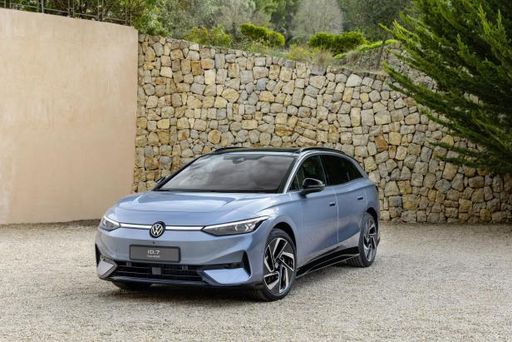
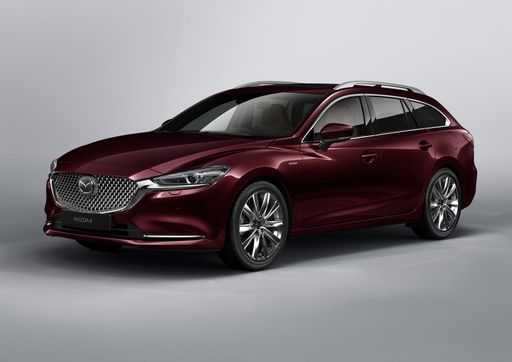
In the ever-evolving landscape of automobiles, two models stand out for their distinct approaches to performance and functionality: the Mazda 6 Kombi and the VW ID.7 Touring. While one leans towards a traditional combustion engine, the other embraces cutting-edge electric technology. This comparison will delve into the technical specifications, innovations, and driving experiences of these two remarkable wagons.
ID.7 Touring

Engine and Performance

The Mazda 6 Kombi boasts a range of petrol engines with power outputs ranging from 145 to 194 HP, making it a versatile option for those who appreciate a spirited drive. Available with both manual and automatic transmissions, the Kombi offers agility with an impressive acceleration from 0-100 km/h in as little as 8.1 seconds, thanks to its 194 HP variant. With a maximum speed reaching up to 223 km/h, it appeals to those who seek a performance-driven vehicle.

Conversely, the VW ID.7 Touring exemplifies the shift towards electric mobility. Available in both rear-wheel and all-wheel drive options, its electric motors deliver a robust 286 to 340 HP. The ID.7 Touring accelerates from 0-100 km/h in just 5.5 seconds for the powerful variant, showcasing the instant torque delivery characteristic of electric vehicles. While its top speed is capped at 180 km/h, the vehicle prioritizes efficiency and sustainability.

6 Estate

Fuel Efficiency and Range

When it comes to fuel consumption, the Mazda 6 Kombi's figures range from 6.8 to 7.6 L/100 km, which is competitive for its class. However, its petrol engines produce CO2 emissions of up to 172 g/km, placing it in an efficiency class of E to F.

In stark contrast, the ID.7 Touring operates with zero tailpipe emissions, thanks to its electric powertrain. With a consumption of 14 to 16.6 kWh/100 km and an impressive electric range of up to 690 km on a single charge, the ID.7 not only underscores Volkswagen's commitment to reducing carbon footprints but also promises convenience for long-distance travel.

ID.7 Touring

Interior and Cargo Space

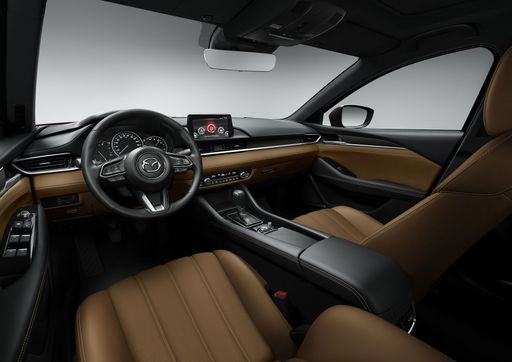
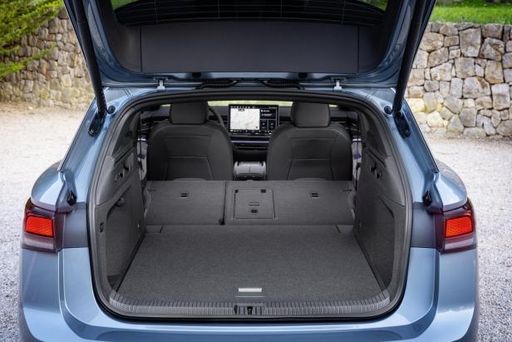
Both vehicles comfortably seat five passengers, but the differences in cargo capacity are notable. The Mazda 6 Kombi offers a trunk capacity of 522 liters, which is practical for everyday use and family outings. It maintains a balance of comfort with a well-designed interior that emphasizes driver engagement and user-friendly technology.

On the other hand, the VW ID.7 Touring leads in trunk capacity with an impressive 605 liters, a feature that adventurers and families alike will appreciate. The cabin of the ID.7 is designed with a modern vibe, highlighting a minimalistic approach with advanced digital interfaces, enhancing the overall user experience.

6 Estate

Innovation and Technology

While both models boast modern technological features, they cater to different preferences. The Mazda 6 Kombi integrates the latest in driver assistance systems, ensuring a blend of safety and engagement during the drive. Features like adaptive cruise control and lane-keeping assist elevate the driving experience, catering to a more traditional audience.

The VW ID.7, however, is a paragon of forward-thinking engineering. Equipped with Volkswagen's latest MEB platform, it supports over-the-air updates and provides connectivity options that integrate seamlessly with the lives of tech-savvy users. The vehicle features an extensive suite of driver-assistance technologies and highlights innovations such as electric propulsion systems that redefine driving dynamics.

ID.7 Touring

Conclusion: Which Wagon Reigns Supreme?

Choosing between the Mazda 6 Kombi and the VW ID.7 Touring ultimately boils down to individual priorities. If one values performance and the traditional characteristics of a petrol wagon, the Mazda 6 Kombi is a compelling choice. However, for those ready to embrace the future of driving with an emphasis on sustainability, efficiency, and advanced technology, the VW ID.7 Touring presents itself as the frontrunner.

As the automotive industry continues to evolve, both models represent significant advancements in their respective segments, offering drivers a clear distinction in preferences—whether that’s the thrill of combustion or the tranquility of electric mobility.

Mazda 6 Estate

VW ID.7 Touring

5 (2 Reviews)
rate

Here’s where it gets real: The technical differences in detail

6 Estate

Costs and Efficiency:

Price and efficiency are key factors when choosing a car – and this is often where the real differences emerge.

Mazda 6 Estate has a decisively advantage in terms of price – it starts at 30000 £ , while the VW ID.7 Touring costs 47100 £ . That’s a price difference of around 17061 £.

Engine and Performance:

Power, torque and acceleration say a lot about how a car feels on the road. This is where you see which model delivers more driving dynamics.

When it comes to engine power, the VW ID.7 Touring has a clearly edge – offering 340 HP compared to 194 HP. That’s roughly 146 HP more horsepower.

In acceleration from 0 to 100 km/h, the VW ID.7 Touring is significantly quicker – completing the sprint in 5.50 s, while the Mazda 6 Estate takes 8.10 s. That’s about 2.60 s faster.

In terms of top speed, the Mazda 6 Estate performs slightly better – reaching 223 km/h, while the VW ID.7 Touring tops out at 180 km/h. The difference is around 43 km/h.

There’s also a difference in torque: VW ID.7 Touring pulls decisively stronger with 679 Nm compared to 258 Nm. That’s about 421 Nm difference.

Space and Everyday Use:

Whether family car or daily driver – which one offers more room, flexibility and comfort?

Both vehicles offer seating for 5 people.

In curb weight, Mazda 6 Estate is convincingly lighter – 1475 kg compared to 2191 kg. The difference is around 716 kg.

In terms of boot space, the VW ID.7 Touring offers slightly more room – 605 L compared to 522 L. That’s a difference of about 83 L.

In maximum load capacity, the VW ID.7 Touring performs hardly perceptible better – up to 1714 L, which is about 50 L more than the Mazda 6 Estate.

When it comes to payload, Mazda 6 Estate somewhat takes the win – 571 kg compared to 465 kg. That’s a difference of about 106 kg.

Who wins the race in the data check?

The VW ID.7 Touring sits well ahead of its rival in the objective data comparison.
This result only shows which model scores more points on paper – not which of the two cars feels right for you.

Mazda 6 Estate
VW ID.7 Touring

Costs and Consumption

View detailed analysis

Engine and Performance

View detailed analysis

Dimensions and Body

View detailed analysis
from about £47,100
ID.7 Touring

VW ID.7 Touring

  • Engine Type : Electric
  • Transmission : Automatic
  • Drive Type : Rear-Wheel Drive, All-Wheel Drive
  • Power HP : 286 - 340 HP
  • Consumption kWh/100km : 14 - 16.6 kWh
  • Electric Range : 584 - 689 km

Mazda 6 Estate

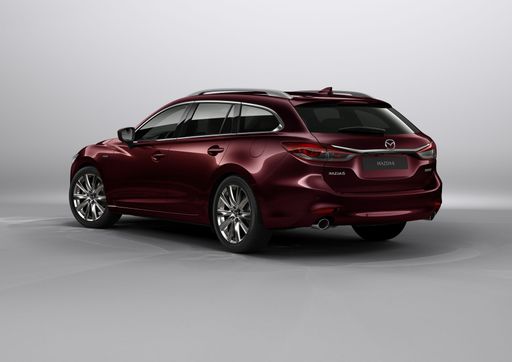
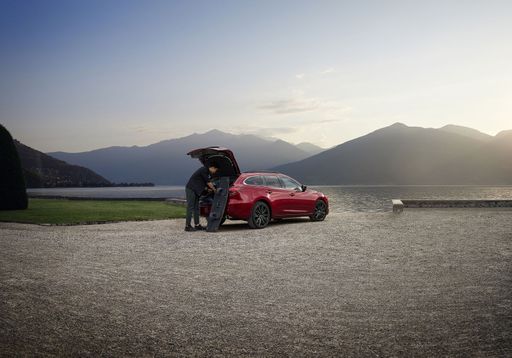
The Mazda 6 Estate marries elegant, flowing design with everyday practicality, so you get a grown-up wagon that still looks the part on a weekend escape. It rewards drivers with poised handling and a nicely finished cabin, proving that sensible family cars can be engaging — and a little bit cheeky — too.

details

VW ID.7 Touring

5 (2 Reviews)
rate

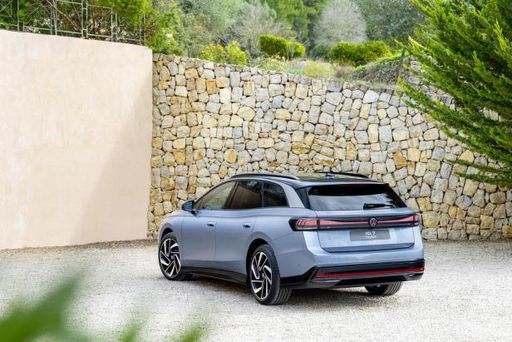
The VW ID.7 Touring blends sleek, aerodynamic fastback looks with estate practicality, delivering an electric family car that looks grown-up and feels refined. Inside it's calm and spacious with clever storage and modern tech, swallowing suitcases and weekend plans with ease — a sensible, slightly flashy choice for buyers who want electric comfort without giving up practicality.

details
Mazda 6 Estate
VW ID.7 Touring

Costs and Consumption

Price
30000 - 43500 £
Price
47100 - 54900 £
Consumption L/100km
6.8 - 7.6 L
Consumption L/100km
-
Consumption kWh/100km
-
Consumption kWh/100km
14 - 16.6 kWh
Electric Range
-
Electric Range
584 - 689 km
Battery Capacity
-
Battery Capacity
77 - 86 kWh
co2
155 - 172 g/km
co2
0 g/km
Fuel tank capacity
62 L
Fuel tank capacity
-

Dimensions and Body

Body Type
Estate
Body Type
Estate
Seats
5
Seats
5
Doors
5
Doors
5
Curb weight
1475 - 1598 kg
Curb weight
2191 - 2336 kg
Trunk capacity
522 L
Trunk capacity
605 L
Length
4805 mm
Length
4961 mm
Width
1840 mm
Width
1862 mm
Height
1480 mm
Height
1549 - 1551 mm
Max trunk capacity
1664 L
Max trunk capacity
1714 L
Payload
483 - 571 kg
Payload
459 - 465 kg

Engine and Performance

Engine Type
Petrol
Engine Type
Electric
Transmission
Manuel, Automatic
Transmission
Automatic
Transmission Detail
Manual Gearbox, Automatic Gearbox
Transmission Detail
Reduction Gearbox
Drive Type
Front-Wheel Drive
Drive Type
Rear-Wheel Drive, All-Wheel Drive
Power HP
145 - 194 HP
Power HP
286 - 340 HP
Acceleration 0-100km/h
8.1 - 10.7 s
Acceleration 0-100km/h
5.5 - 6.7 s
Max Speed
205 - 223 km/h
Max Speed
180 km/h
Torque
213 - 258 Nm
Torque
545 - 679 Nm
Number of Cylinders
4
Number of Cylinders
-
Power kW
107 - 143 kW
Power kW
210 - 250 kW
Engine capacity
1998 - 2488 cm3
Engine capacity
-

General

Model Year
2021 - 2022
Model Year
2024
CO2 Efficiency Class
E, F
CO2 Efficiency Class
A
Brand
Mazda
Brand
VW
What drive types are available for the Mazda 6 Estate?

Available configurations include Front-Wheel Drive.

The prices shown are estimates based on German list prices, adjusted for local VAT. Local registration taxes (e.g. NoVA, BPM or CO2 malus) are not included. This information is not legally binding.