VS

Mazda CX-60 vs Ford Kuga comparison

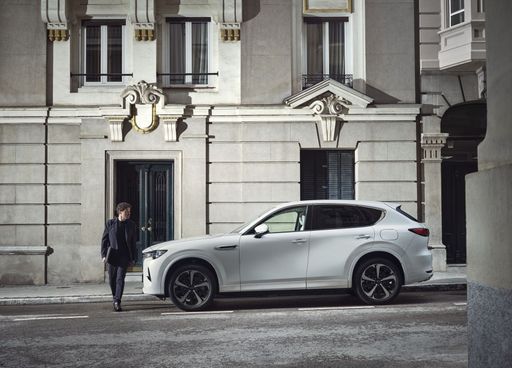
Compare performance (327 HP vs 243 HP), boot space and price (43,700 £ vs 34,200 £ ) at a glance. Find out which car is the better choice for you – Mazda CX-60 or Ford Kuga?

Mazda CX-60 vs Ford Kuga: Key differences

Mazda CX-60

4.5 (9 Reviews)
rate
  • noticeably more power
  • noticeably quicker 0–100 km/h
details

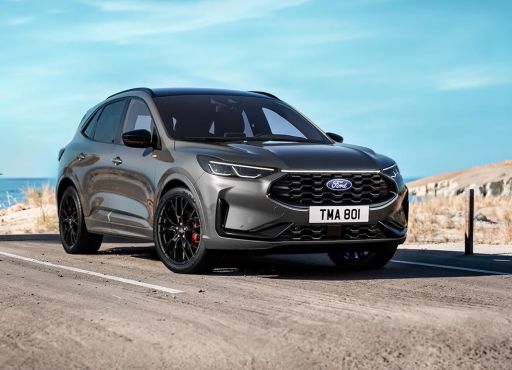
Ford Kuga

4.2 (6 Reviews)
rate
  • clearly cheaper
  • markedly more efficient
  • only slightly more electric range
  • clearly lighter
details

All details on performance, efficiency, range and trunk space can be found in the technical comparison below – including user reviews for both models.

By Achim Sedelmaier

CX-60

Ford Kuga VS Mazda CX-60 — quick take

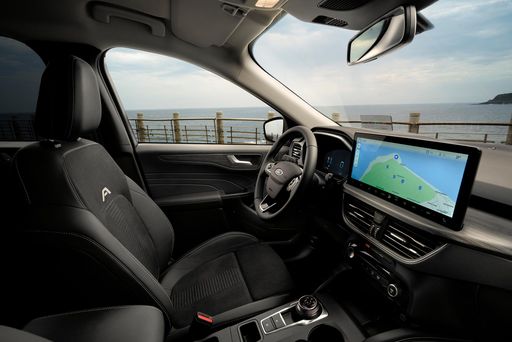
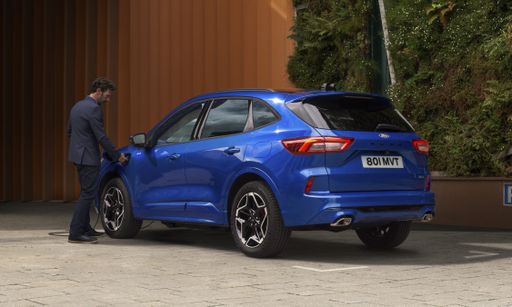
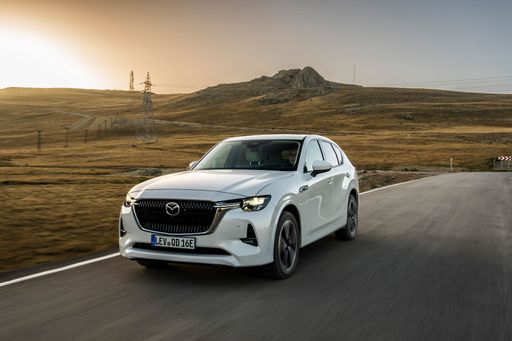
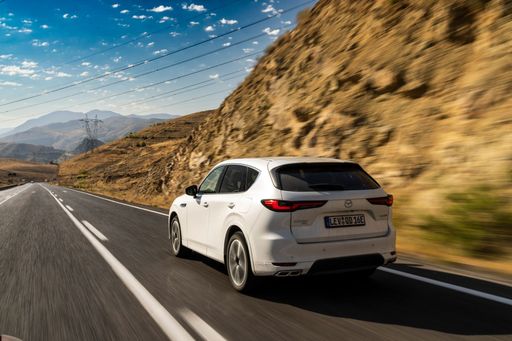
Ford Kuga VS Mazda CX-60 sets up a clear personality clash: the Kuga is the more driver-focused, tech-forward compact SUV while the CX-60 pitches semi‑premium build, long‑distance calm and serious towing/boot capability. The Kuga feels livelier around town and on twisty roads, with a roomy, flexible rear seat at the heart of its everyday appeal. The CX-60 trades that immediacy for thicker materials, a more composed motorway demeanour and a much larger, easier-to-use luggage area. Buyers will recognise this as a trade-off between agile practicality (Kuga) and hushed, utility-focused refinement (CX-60).
Kuga

Character and driving feel

The Ford Kuga leans toward a sharper, more engaging drive — steering is direct and the chassis rewards a brisk cornering pace, which makes it feel smaller and more entertaining than its format suggests. In contrast, the Mazda CX-60 is engineered for steadiness: it feels heavier and more planted, prioritising low‑effort high‑speed stability over sporty responses. The Kuga’s hybrid systems can sound strained under hard acceleration, reminding you it’s tuned for efficiency first; the CX-60’s larger engines deliver effortless shove and a calmer, more linear pull. If you prefer a car that invites enthusiastic driving choose the Kuga; if you favour relaxed, assured progress choose the CX-60.

CX-60

Cabin, controls and perceived quality

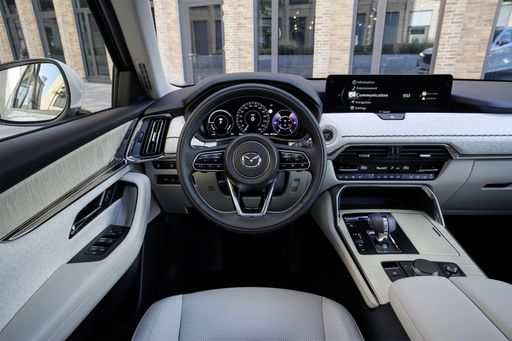
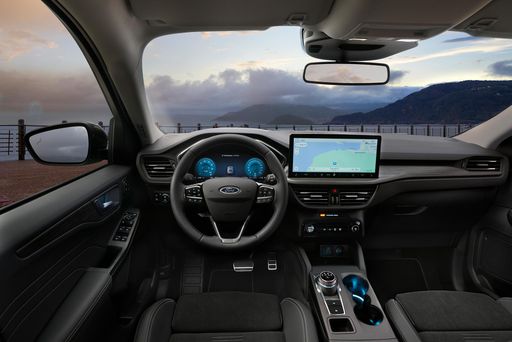
The Kuga’s interior is functional and tech-rich, highlighted by a big central screen and modern connectivity, but many surfaces feel utilitarian and the all-touch climate controls can be fiddly while driving. Mazda CX-60 counters with noticeably higher-grade materials and a quieter, more composed cabin ambience that reads closer to premium rivals, though its conservative rotary control takes longer to master than a touchscreen. In daily life the Kuga feels younger and more gadget-forward; the CX-60 feels crafted and restrained which makes longer trips feel a touch more special. If tactile luxury and finish matter, the CX-60 will satisfy more; if smart phones and instant connectivity are your priority, the Kuga is the more immediate choice.

Kuga

Practicality and day-to-day usability

The Ford Kuga wins on flexible family practicality: a sliding rear bench, generous rear legroom and easy ingress/egress make it a better companion for school runs, variable cargo loads and tight urban parking. Mazda CX-60 answers with a genuinely large boot and a load floor designed for real luggage or towing kit, plus a higher official towing capability that matters if you tow trailers or boats. In town the Kuga’s lighter feel and city-optimised hybrid variants deliver lower running costs and simpler manoeuvring, whereas the CX-60’s width and heavier steering make cramped streets more of a task. Families who frequently haul bulky items or tow will tip toward the CX-60, while those needing everyday versatility and city efficiency will prefer the Kuga.

CX-60

Long-distance behaviour and noise

On the motorway the Mazda CX-60 shows its strengths: composed ride, low noise levels and a diesel or larger petrol powertrain that maintains relaxed cruising without needing to be worked. The Ford Kuga is surprisingly quiet at steady speeds too, but its hybrid drive can become intrusive when you ask for strong acceleration, which dents serenity during overtakes. The CX-60’s firmer ride over sharp imperfections still pays dividends in stability at speed, whereas the Kuga’s setup favours nimbleness but can feel harsher on poor surfaces. Choose the CX-60 for long-haul calm and towing confidence; choose the Kuga if you want a crisper, more engaging car on varied roads.

Kuga

Buyer fit and trade-offs — who should test drive which

If you’re a commuter or family who values agility, lower urban running costs and a flexible cabin, the Ford Kuga will feel like the smarter everyday companion and is also kinder to the wallet at purchase. If your priority is perceived quality, big luggage capacity, long-distance comfort and towing capability, the Mazda CX-60 will repay you with a more premium feel and a stronger long‑haul temperament. Both have compromises: the Kuga sacrifices some material polish and pure boot space for liveliness, while the CX-60 asks you to accept a firmer ride and a heavier footprint in exchange for quality and utility. The technical comparison that follows will unpack engines, efficiency, weights and boot usability so you can convert these real‑world impressions into the numbers that matter for your decision.

Here’s where it gets real: The technical differences in detail

CX-60

Costs and Efficiency:

Looking at overall running costs, both models reveal some interesting differences in everyday economy.

Ford Kuga is clearly cheaper – starting at 34,200 £ , while the Mazda CX-60 costs 43,700 £ . That’s a price difference of around 9,429 £.

Fuel consumption also shows a difference: the Ford Kuga uses 2.8 L/100km and is markedly more efficient than the Mazda CX-60 with 3.8 L/100km. The difference is about 1 L/100km.

As for electric range, the Ford Kuga offers only slightly more range – reaching up to 68 km, about 5 km more than the Mazda CX-60.

Kuga

Engine and Performance:

Power, torque and acceleration say a lot about how a car feels on the road. This is where you see which model delivers more driving dynamics.

When it comes to engine power, the Mazda CX-60 offers noticeably more power – delivering 327 HP compared to 243 HP. That’s roughly 84 HP more horsepower.

When accelerating from 0 to 100 km/h, the Mazda CX-60 is noticeably quicker – completing the sprint in 5.8 s, while the Ford Kuga takes 7.3 s. That’s about 1.5 s quicker.

There’s also a difference in torque: the Mazda CX-60 delivers significantly more torque with 550 Nm compared to 240 Nm. That’s about 310 Nm more.

CX-60

Space and Everyday Use:

Cabin size, boot volume and payload all play a role in everyday practicality. Here, comfort and flexibility make the difference.

Both vehicles offer seating for 5 people.

In terms of curb weight, Ford Kuga is clearly lighter – 1,526 kg compared to 1,890 kg. The difference is around 364 kg.

When it comes to payload, the Mazda CX-60 carries a bit more – 612 kg compared to 550 kg. That’s a difference of about 62 kg.

Who wins the race in the data check?

The Mazda CX-60 is clearly ahead overall in the objective data comparison.
This result only shows which model scores more points on paper – not which of the two cars feels right for you.

from £43,700
CX-60

Mazda CX-60

  • Engine Type Plugin Hybrid, Diesel MHEV
  • Transmission Automatic
  • Drive Type All-Wheel Drive, Rear-Wheel Drive
  • Power HP 200 - 327 HP
  • Consumption L/100km 3.8 - 5.2 L/100km
  • Electric Range 63 km
Mazda CX-60
Ford Kuga

Costs and Consumption

View detailed analysis

Engine and Performance

View detailed analysis

Dimensions and Body

View detailed analysis

Mazda CX-60

The Mazda CX-60 pairs sculpted, understated looks with poised handling and a cabin that punches above its class, making long drives feel unexpectedly civilized. For buyers who want a premium feel without the showroom swagger, it's the sort of car that earns respect quietly — and still manages a wink when you push on.

details

Ford Kuga

The Ford Kuga is a practical and comfortable compact SUV that balances everyday usability with a composed ride and adaptable interior. It offers sensible tech and safety features, making it a solid choice for families or anyone seeking a versatile, easy-to-live-with crossover.

details
Mazda CX-60
Ford Kuga

Costs and Consumption

Price
43,700 - 57,900 £
Price
34,200 - 46,300 £
Consumption L/100km
3.8 - 5.2 L/100km
Consumption L/100km
2.8 - 6.8 L/100km
Consumption kWh/100km
-
Consumption kWh/100km
-
Electric Range
63 km
Electric Range
68 km
Battery Capacity
-
Battery Capacity
-
co2
85 - 137 g/km
co2
55 - 154 g/km
Fuel tank capacity
-
Fuel tank capacity
-

Dimensions and Body

Body Type
SUV
Body Type
SUV
Seats
5
Seats
5
Doors
-
Doors
-
Curb weight
1,890 - 2,055 kg
Curb weight
1,526 - 1,859 kg
Trunk capacity
570 L
Trunk capacity
-
Length
-
Length
-
Width
1,890 mm
Width
1,882 mm
Height
-
Height
-
Max trunk capacity
-
Max trunk capacity
-
Payload
581 - 612 kg
Payload
541 - 550 kg

Engine and Performance

Engine Type
Plugin Hybrid, Diesel MHEV
Engine Type
Petrol, Full Hybrid, Plugin Hybrid
Transmission
Automatic
Transmission
Manuel, Automatic
Transmission Detail
Automatic Gearbox
Transmission Detail
Manual Gearbox, CVT, Automatic Gearbox
Drive Type
All-Wheel Drive, Rear-Wheel Drive
Drive Type
Front-Wheel Drive, All-Wheel Drive
Power HP
200 - 327 HP
Power HP
150 - 243 HP
Acceleration 0-100km/h
5.8 - 8.4 s
Acceleration 0-100km/h
7.3 - 9.9 s
Max Speed
-
Max Speed
-
Torque
450 - 550 Nm
Torque
240 Nm
Number of Cylinders
4 - 6
Number of Cylinders
3 - 4
Power kW
147 - 241 kW
Power kW
111 - 178 kW
Engine capacity
2,488 - 3,283 cm3
Engine capacity
1,496 - 2,488 cm3

General

Model Year
2025
Model Year
2025
CO2 Efficiency Class
B, D, E
CO2 Efficiency Class
E, D, B
Brand
Mazda
Brand
Ford
DriveDuel uses data analysis and artificial intelligence to evaluate vehicle data and create content. Content is regularly reviewed and improved. The displayed prices are estimates based on German list prices, adjusted to the respective country’s VAT. Country-specific registration taxes are not included. This information is not legally binding.