VS

Mazda CX-60 vs Mazda CX-5 comparison

Compare performance (327 HP vs 141 HP), boot space and price (43,700 £ vs 30,000 £ ) at a glance. Find out which car is the better choice for you – Mazda CX-60 or Mazda CX-5?

Mazda CX-60 vs Mazda CX-5: Key differences

Mazda CX-60

4.5 (9 Reviews)
rate
  • significantly more power
  • clearly more efficient
  • clearly quicker 0–100 km/h
  • moderately more trunk space
details

Mazda CX-5

4.7 (8 Reviews)
rate
  • substantially cheaper
  • somewhat lighter
details

All details on performance, efficiency, range and trunk space can be found in the technical comparison below – including user reviews for both models.

By Achim Sedelmaier

CX-60

Mazda CX-5 vs Mazda CX-60: which Mazda SUV fits your life?

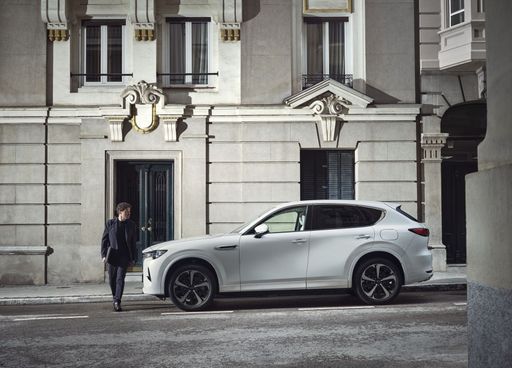
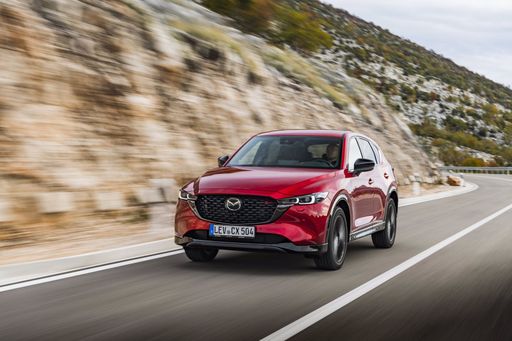
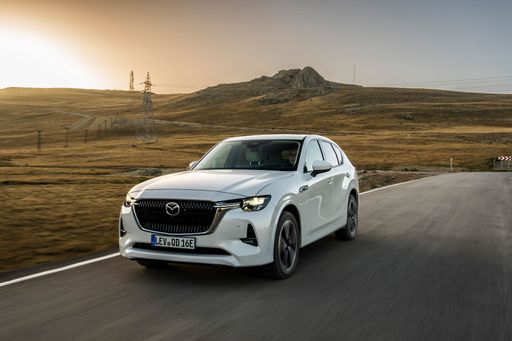
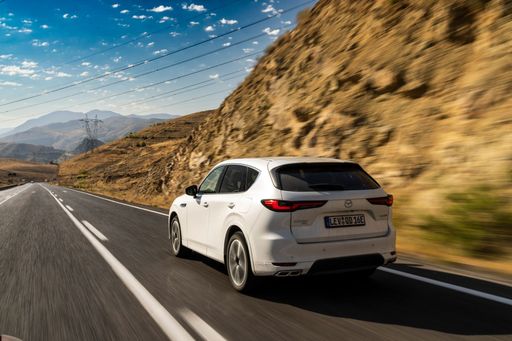
The Mazda CX-5 and Mazda CX-60 aim at different needs despite sharing a badge. In a Mazda CX-5 VS Mazda CX-60 matchup, the CX-5 leans into everyday comfort, easygoing manners, and family-friendly usability, while the CX-60 feels more serious, more powerful, and more premium. The CX-60 also asks for a higher budget and tolerates a firmer ride in exchange for long‑distance poise and strong towing. The CX-5 counters with a friendlier price and tech-forward infotainment that feels instantly familiar. Deciding between them comes down to whether you value relaxed simplicity or grand‑touring muscle and material richness.
CX-5

On the road: calm versus clout

The Mazda CX-5 prefers a relaxed pace, with light steering and a laid‑back transmission that suits commuting and school runs, though it can sound strained when you ask for quick acceleration. It’s a calm, predictable partner rather than a thrill-seeker. The Mazda CX-60 feels heavier in your hands but brings a clear step up in shove and high‑speed stability, especially on the motorway. Its strength shows when overtaking or towing, while the ride remains tauter over sharp city imperfections. If you like a soothing, unfussy drive, the CX-5 fits; if you want reserves and composure at speed, the CX-60 answers.

CX-60

Cabin feel and tech approach

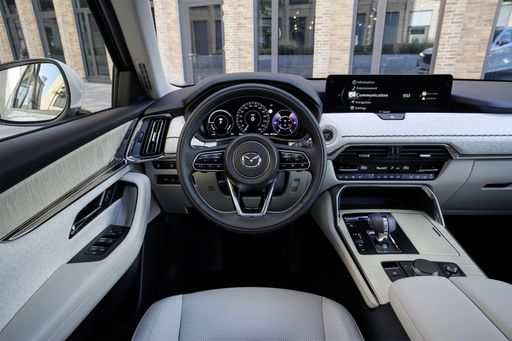
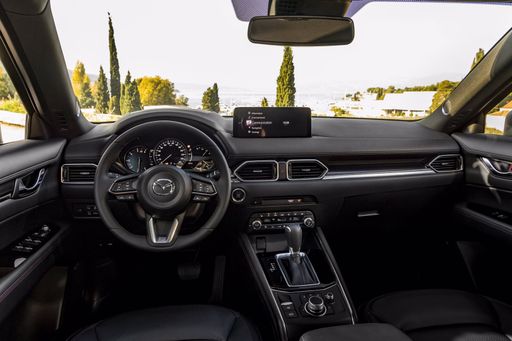
The Mazda CX-60’s cabin pushes toward semi‑premium, with rich materials, solid tactility, and a crafted, grown‑up ambience. Its control philosophy favors a rotary controller and keeps touch interaction limited while moving, which is secure but can feel slower for frequent inputs and online tasks. The Mazda CX-5 doesn’t look as plush in places, yet its Google-based system, wireless smartphone mirroring, and over‑the‑air updates make day‑to‑day interaction feel modern and familiar. Climate controls living in the screen can still be a nuisance on bumpy roads. In short, the CX-60 pampers your fingertips, the CX-5 streamlines your tech routine.

CX-5

Space, family use, and practicality

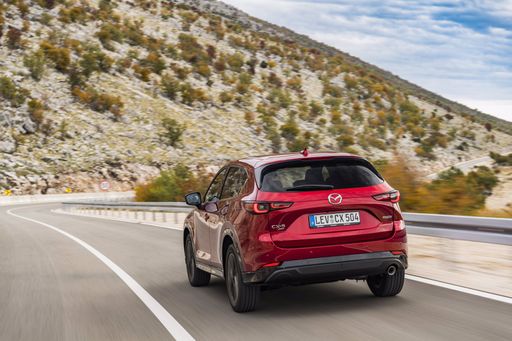
The Mazda CX-5 shines for family duty: broad rear doors, generous back‑seat room, and an easy 40:20:40 folding bench make child seats and bulky gear straightforward. Its cargo bay is flat and easy to load, with no awkward step to wrestle over. The Mazda CX-60 offers a big, square luggage area with handy remote levers for the rear backs and useful underfloor space for charging cables in PHEV versions. Rear room is adequate, though the middle perch is less welcoming than the CX-5’s back bench. For frequent passengers in row two, the CX-5 feels friendlier; for luggage-first trips and mixed duties, the CX-60’s boot-side usability has the edge.

CX-60

City manners and long‑distance comfort

In town, the Mazda CX-5’s more compact feel, lighter steering, and easy visibility reduce stress when threading tight streets or parking, aided by available 360° cameras. It rides with an easygoing gait, though rough surfaces can stir some road noise. The Mazda CX-60 demands a bit more care in tight spots due to its width and weight, and its firmer suspension makes urban scars more noticeable, but the PHEV’s silent glide helps in traffic. Out on the motorway, the CX-60 settles into a quiet, unflustered rhythm with impressive range if you choose diesel. The CX-5 cruises peacefully at a steady pace, yet needs more planning for brisk inclines or quick passes.

CX-5

Running costs and who each suits

The Mazda CX-5 undercuts the CX-60 on price and keeps ownership straightforward, making it a strong value play for families and commuters who want comfort, space, and up‑to‑date connectivity. Its petrol mild‑hybrid isn’t the thriftiest on long hauls, but the car’s easy nature and long warranty soothe the numbers. The Mazda CX-60 costs more but fights back with genuine long‑range efficiency in diesel form and the option of a plug-in hybrid that pays off if you charge consistently. Its upscale cabin and towing muscle suit caravans, trailers, and high-mileage life, though some surveys have raised reliability concerns worth researching locally. If your week is school runs, city errands, and the occasional road trip, the CX-5 feels tailor-made; if your calendar reads motorways, mountains, and towing, the CX-60 is the more natural fit—now let’s see how their specs underpin those differences.

Here’s where it gets real: The technical differences in detail

CX-60

Costs and Efficiency:

Looking at overall running costs, both models reveal some interesting differences in everyday economy.

Mazda CX-5 is substantially cheaper – starting at 30,000 £ , while the Mazda CX-60 costs 43,700 £ . That’s a price difference of around 13,680 £.

Fuel consumption also shows a difference: the Mazda CX-60 uses 3.8 L/100km and is clearly more efficient than the Mazda CX-5 with 7 L/100km. The difference is about 3.2 L/100km.

CX-5

Engine and Performance:

Power, torque and acceleration say a lot about how a car feels on the road. This is where you see which model delivers more driving dynamics.

When it comes to engine power, the Mazda CX-60 offers significantly more power – delivering 327 HP compared to 141 HP. That’s roughly 186 HP more horsepower.

When accelerating from 0 to 100 km/h, the Mazda CX-60 is clearly quicker – completing the sprint in 5.8 s, while the Mazda CX-5 takes 10.5 s. That’s about 4.7 s quicker.

There’s also a difference in torque: the Mazda CX-60 delivers clearly more torque with 550 Nm compared to 238 Nm. That’s about 312 Nm more.

CX-60

Space and Everyday Use:

Beyond pure performance, interior space and usability matter most in daily life. This is where you see which car is more practical and versatile.

Both vehicles offer seating for 5 people.

In terms of curb weight, Mazda CX-5 is somewhat lighter – 1,629 kg compared to 1,890 kg. The difference is around 261 kg.

Looking at boot space, the Mazda CX-60 offers moderately more boot space – 570 L compared to 466 L. That’s a difference of about 104 L.

When it comes to payload, the Mazda CX-60 carries only slightly more – 612 kg compared to 601 kg. That’s a difference of about 11 kg.

Who wins the race in the data check?

The Mazda CX-60 is far ahead overall in the objective data comparison.
This result only shows which model scores more points on paper – not which of the two cars feels right for you.

from £43,700
CX-60

Mazda CX-60

  • Engine Type Plugin Hybrid, Diesel MHEV
  • Transmission Automatic
  • Drive Type All-Wheel Drive, Rear-Wheel Drive
  • Power HP 200 - 327 HP
  • Consumption L/100km 3.8 - 5.2 L/100km
  • Electric Range 63 km
Mazda CX-60
Mazda CX-5

Costs and Consumption

View detailed analysis

Engine and Performance

View detailed analysis

Dimensions and Body

View detailed analysis

Mazda CX-60

The Mazda CX-60 pairs sculpted, understated looks with poised handling and a cabin that punches above its class, making long drives feel unexpectedly civilized. For buyers who want a premium feel without the showroom swagger, it's the sort of car that earns respect quietly — and still manages a wink when you push on.

details

Mazda CX-5

The Mazda CX-5 blends sporty handling with a refined, premium interior, making everyday driving feel engaging and comfortable. It pairs stylish design and thoughtful cabin materials with user-friendly tech to deliver a well-rounded compact SUV that suits drivers who want more driver involvement without sacrificing practicality.

details
Mazda CX-60
Mazda CX-5

Costs and Consumption

Price
43,700 - 57,900 £
Price
30,000 - 39,500 £
Consumption L/100km
3.8 - 5.2 L/100km
Consumption L/100km
7 - 7.5 L/100km
Consumption kWh/100km
-
Consumption kWh/100km
-
Electric Range
63 km
Electric Range
-
Battery Capacity
-
Battery Capacity
-
co2
85 - 137 g/km
co2
157 - 169 g/km
Fuel tank capacity
-
Fuel tank capacity
-

Dimensions and Body

Body Type
SUV
Body Type
SUV
Seats
5
Seats
5
Doors
-
Doors
-
Curb weight
1,890 - 2,055 kg
Curb weight
1,629 - 1,671 kg
Trunk capacity
570 L
Trunk capacity
466 L
Length
-
Length
-
Width
1,890 mm
Width
1,860 mm
Height
-
Height
-
Max trunk capacity
-
Max trunk capacity
-
Payload
581 - 612 kg
Payload
566 - 601 kg

Engine and Performance

Engine Type
Plugin Hybrid, Diesel MHEV
Engine Type
Petrol MHEV
Transmission
Automatic
Transmission
Automatic
Transmission Detail
Automatic Gearbox
Transmission Detail
Automatic Gearbox
Drive Type
All-Wheel Drive, Rear-Wheel Drive
Drive Type
Front-Wheel Drive, All-Wheel Drive
Power HP
200 - 327 HP
Power HP
141 HP
Acceleration 0-100km/h
5.8 - 8.4 s
Acceleration 0-100km/h
10.5 - 10.9 s
Max Speed
-
Max Speed
-
Torque
450 - 550 Nm
Torque
238 Nm
Number of Cylinders
4 - 6
Number of Cylinders
4
Power kW
147 - 241 kW
Power kW
104 kW
Engine capacity
2,488 - 3,283 cm3
Engine capacity
2,488 cm3

General

Model Year
2025
Model Year
2025
CO2 Efficiency Class
B, D, E
CO2 Efficiency Class
F
Brand
Mazda
Brand
Mazda
DriveDuel uses data analysis and artificial intelligence to evaluate vehicle data and create content. Content is regularly reviewed and improved. The displayed prices are estimates based on German list prices, adjusted to the respective country’s VAT. Country-specific registration taxes are not included. This information is not legally binding.