VS

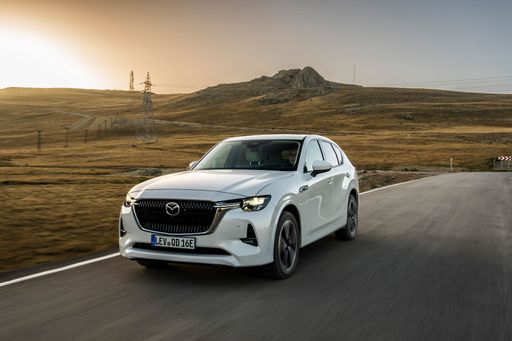
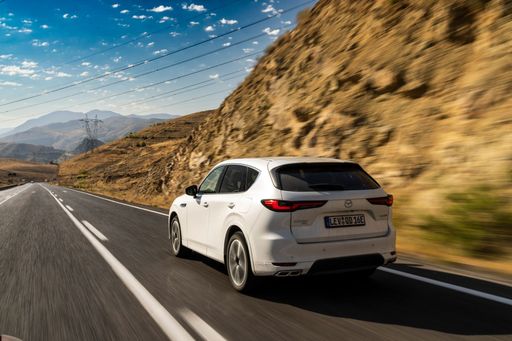
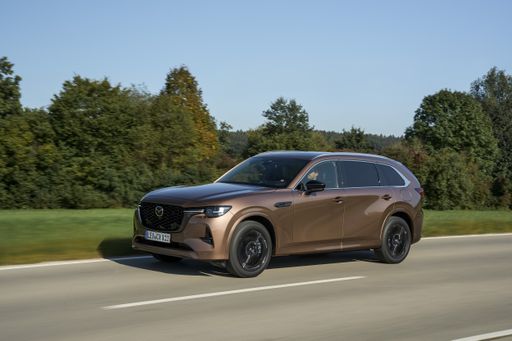
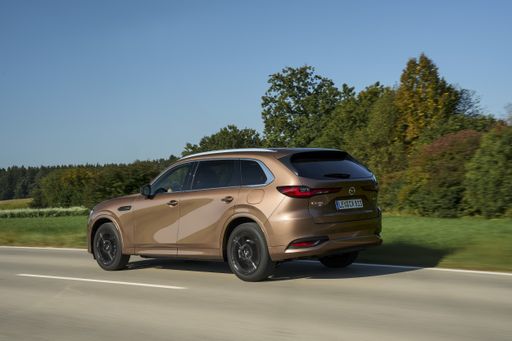
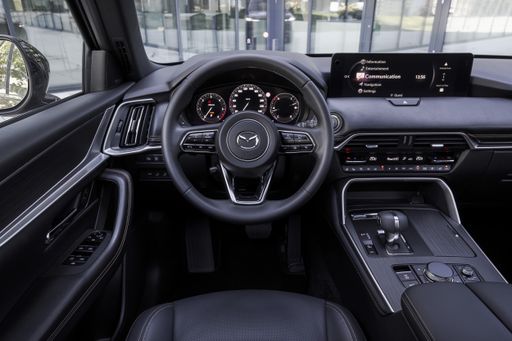
Mazda CX-60 vs Mazda CX-80 comparison

Compare performance (327 HP vs 327 HP), boot space and price (43,700 £ vs 49,300 £ ) at a glance. Find out which car is the better choice for you – Mazda CX-60 or Mazda CX-80?

Mazda CX-60 vs Mazda CX-80: Key differences

Mazda CX-60

4.6 (7 Reviews)
rate
  • a bit cheaper
  • marginally more efficient
  • marginally more electric range
  • moderately quicker 0–100 km/h
  • somewhat lighter
  • considerably more trunk space

Mazda CX-80

All details on performance, efficiency, range and trunk space can be found in the technical comparison below – including user reviews for both models.

CX-60

The Head-to-Head of Mazda's Modern Marvels: CX-60 vs CX-80

The automotive world is ever-evolving, and Mazda has once again marked its territory with the dynamic duo: the Mazda CX-60 and the Mazda CX-80. Both SUVs embody Mazda's pursuit of driving excellence and luxury, but which one stands out when pitted against the other? Let's dive into the technical specifications and innovations that these two models bring to the table.

CX-80

Performance and Engine Options

The Mazda CX-60 offers a diverse range of engines, tailored for those who prioritize power and efficiency. With options such as the strong 327 HP Plugin Hybrid and a diesel MHEV offering 200 HP, it promises versatility in performance. It's worth noting that the plugin hybrid achieves an acceleration from 0-100 km/h in a swift 5.8 seconds, showcasing its spirited dynamics. Paired with either all-wheel drive or rear-wheel drive, the CX-60 provides an adaptive driving experience.

On the other hand, the Mazda CX-80 aligns close with its sibling, with its marquee 327 HP Plugin Hybrid and 254 HP Diesel MHEV. While its fastest 0-100 km/h acceleration is clocked at 6.8 seconds, a tad behind the CX-60, it provides commendable performance for a larger SUV. Both models shine with their innovative straight-six diesel engine options, delivering robust torque and seamless power delivery.

CX-60

Dimension & Design

Size can matter when choosing your SUV, and the CX-80 takes the edge here. Stretching to 4,995 mm in length compared to the CX-60’s 4,745 mm, the CX-80 boasts a larger silhouette perfect for family adventures and cargo alike. While both SUVs share the same width of 1,890 mm, the CX-80 is marginally taller, adding to its imposing road presence.

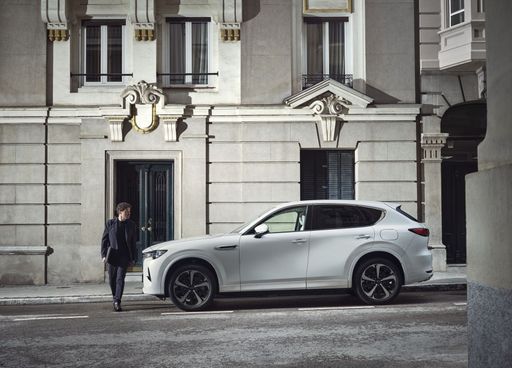
In terms of styling, both models exhibit Mazda's sleek design language with elegant contours and a bold front fascia. The CX-60 appeals to those who prefer a slightly more compact form, ideal for urban maneuverability without sacrificing spaciousness.

CX-80

Luxury and Seating Comfort

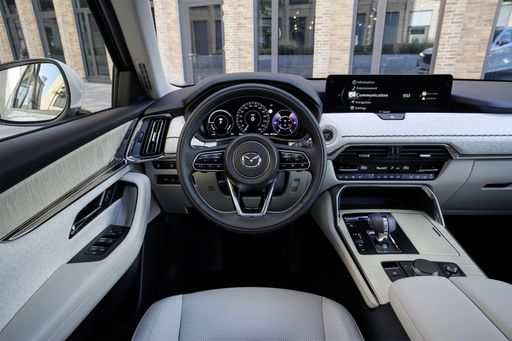
The interior of both Mazda models reflects the brand's commitment to luxury and utility. However, the CX-80 steps ahead with its seven-seat configuration, accommodating larger families with ease. This increase in seating doesn't sacrifice trunk space entirely, yet the CX-60’s 570 liters of trunk capacity will slightly edge out the CX-80, which offers a more modest 258 liters.

Both models are engineered with ergonomics in mind, featuring premium materials and intuitive infotainment systems to enhance the driving experience.

CX-60

Efficiency and Environment

The CX-60 provides an impressive electric range of 64 km, slightly surpassing the CX-80's 60 km range. These figures facilitate a compelling case for urban drivers looking for greener commutes. When evaluating fuel consumption, the CX-60 again nudges ahead with a remarkable 1.4 L/100 km in its hybrid iteration, compared to the CX-80's 1.6 L/100 km.

Both SUVs share commendable CO2 efficiency, catering to environmentally conscious drivers. The CX-60 offers CO2 emissions as low as 31 g/km, with the CX-80 following closely at 35 g/km.

CX-80

Conclusion

Ultimately, choosing between the Mazda CX-60 and CX-80 boils down to specific needs and preferences. The CX-60 is the athlete — offering a punchy performance, superb efficiency, and greater trunks capacitiy in a compact body. It is best suited for those who prioritize driving dynamics and urban practicality.

In contrast, the CX-80 is the family champion — providing greater passenger capacity and a presence that can't be overlooked. It's the vehicle for those who require space without compromising on performance and luxury.

Both SUVs are exemplars of Mazda's craftsmanship, ensuring no matter the choice, owners experience unparalleled satisfaction behind the wheel.

Here’s where it gets real: The technical differences in detail

CX-60

Costs and Efficiency:

Looking at overall running costs, both models reveal some interesting differences in everyday economy.

Mazda CX-60 is a bit cheaper – starting at 43,700 £ , while the Mazda CX-80 costs 49,300 £ . That’s a price difference of around 5,657 £.

Fuel consumption also shows a difference: the Mazda CX-60 uses 3.8 L/100km and is marginally more efficient than the Mazda CX-80 with 4 L/100km. The difference is about 0.2 L/100km.

As for electric range, the Mazda CX-60 offers marginally more range – reaching up to 63 km, about 3 km more than the Mazda CX-80.

CX-80

Engine and Performance:

Power, torque and acceleration are the classic benchmarks for car enthusiasts – and here, some clear differences start to show.

Both models deliver identical power – 327 HP each.

When accelerating from 0 to 100 km/h, the Mazda CX-60 is moderately quicker – completing the sprint in 5.8 s, while the Mazda CX-80 takes 6.8 s. That’s about 1 s quicker.

Both models offer the same torque – 550 Nm.

CX-60

Space and Everyday Use:

Cabin size, boot volume and payload all play a role in everyday practicality. Here, comfort and flexibility make the difference.

Seats: Mazda CX-80 offers more seats – 7 vs 5.

In terms of curb weight, Mazda CX-60 is somewhat lighter – 1,890 kg compared to 2,131 kg. The difference is around 241 kg.

Looking at boot space, the Mazda CX-60 offers considerably more boot space – 570 L compared to 258 L. That’s a difference of about 312 L.

When it comes to payload, the Mazda CX-80 carries very slightly more – 650 kg compared to 612 kg. That’s a difference of about 38 kg.

Who wins the race in the data check?

The Mazda CX-60 is decisively ahead in the objective data comparison.
This result only shows which model scores more points on paper – not which of the two cars feels right for you.

from £43,700
CX-60

Mazda CX-60

  • Engine Type : Plugin Hybrid, Diesel MHEV
  • Transmission : Automatic
  • Drive Type : All-Wheel Drive, Rear-Wheel Drive
  • Power HP : 200 - 327 HP
  • Consumption L/100km : 3.8 - 5.2 L/100km
  • Electric Range : 63 km
Mazda CX-60
Mazda CX-80

Costs and Consumption

View detailed analysis

Engine and Performance

View detailed analysis

Dimensions and Body

View detailed analysis

Mazda CX-60

The Mazda CX-60 pairs sculpted, understated looks with poised handling and a cabin that punches above its class, making long drives feel unexpectedly civilized. For buyers who want a premium feel without the showroom swagger, it's the sort of car that earns respect quietly — and still manages a wink when you push on.

details

Mazda CX-80

The Mazda CX-80 brings polished, near-premium styling and a cabin that feels far classier than its badge might imply. It steers with a composed, engaging character and packs the sensible practicality families want — with just enough flair to make school runs feel a little less ordinary.

details
Mazda CX-60
Mazda CX-80

Costs and Consumption

Price
43,700 - 57,900 £
Price
49,300 - 61,400 £
Consumption L/100km
3.8 - 5.2 L/100km
Consumption L/100km
4 - 5.6 L/100km
Consumption kWh/100km
-
Consumption kWh/100km
-
Electric Range
63 km
Electric Range
60 km
Battery Capacity
-
Battery Capacity
-
co2
85 - 137 g/km
co2
91 - 146 g/km
Fuel tank capacity
-
Fuel tank capacity
-

Dimensions and Body

Body Type
SUV
Body Type
SUV
Seats
5
Seats
7
Doors
-
Doors
-
Curb weight
1,890 - 2,055 kg
Curb weight
2,131 - 2,240 kg
Trunk capacity
570 L
Trunk capacity
258 L
Length
-
Length
-
Width
1,890 mm
Width
1,890 mm
Height
-
Height
-
Max trunk capacity
-
Max trunk capacity
-
Payload
581 - 612 kg
Payload
649 - 650 kg

Engine and Performance

Engine Type
Plugin Hybrid, Diesel MHEV
Engine Type
Plugin Hybrid, Diesel MHEV
Transmission
Automatic
Transmission
Automatic
Transmission Detail
Automatic Gearbox
Transmission Detail
Automatic Gearbox
Drive Type
All-Wheel Drive, Rear-Wheel Drive
Drive Type
All-Wheel Drive
Power HP
200 - 327 HP
Power HP
254 - 327 HP
Acceleration 0-100km/h
5.8 - 8.4 s
Acceleration 0-100km/h
6.8 - 8.4 s
Max Speed
-
Max Speed
-
Torque
450 - 550 Nm
Torque
500 - 550 Nm
Number of Cylinders
4 - 6
Number of Cylinders
4 - 6
Power kW
147 - 241 kW
Power kW
187 - 241 kW
Engine capacity
2,488 - 3,283 cm3
Engine capacity
2,488 - 3,283 cm3

General

Model Year
2,025
Model Year
2,025
CO2 Efficiency Class
B, D, E
CO2 Efficiency Class
B, E
Brand
Mazda
Brand
Mazda
DriveDuel uses data analysis and artificial intelligence to evaluate vehicle data and create content. Content is regularly reviewed and improved. The displayed prices are estimates based on German list prices, adjusted to the respective country’s VAT. Country-specific registration taxes are not included. This information is not legally binding.