VS

Mazda MX-30 vs Honda HR-V comparison

Compare performance (170 HP vs 131 HP), boot space and price (30,800 £ vs 29,100 £ ) at a glance. Find out which car is the better choice for you – Mazda MX-30 or Honda HR-V?

Mazda MX-30 vs Honda HR-V: Key differences

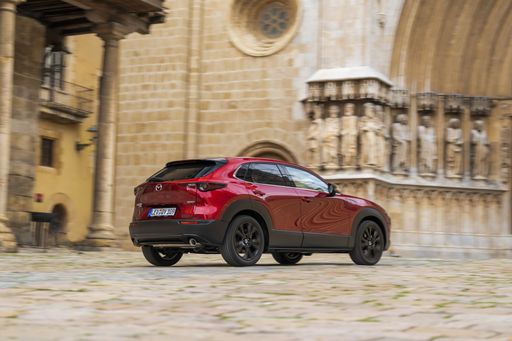
Mazda MX-30

4.6 (1 Reviews)
rate
  • visibly more power
  • moderately quicker 0–100 km/h
  • only slightly more trunk space
details

Honda HR-V

4.3 (15 Reviews)
rate
  • very slightly cheaper
  • clearly lighter
details

All details on performance, efficiency, range and trunk space can be found in the technical comparison below – including user reviews for both models.

By Achim Sedelmaier

MX-30

A Clash of the Compact SUVs: Honda HR-V vs. Mazda MX-30

With the growing popularity of compact SUVs, the automotive marketplace has seen an influx of stylish, practical, and agile vehicles that cater to modern-day needs. Among these are the Honda HR-V and the Mazda MX-30, two names that have been making waves with their advanced features and impressive specifications. This comparison delves into the details of these two SUVs, helping you determine which stands out in the ever-evolving automotive landscape.
HR-V

Powertrain Prowess: Hybrid vs. Electric

The Honda HR-V is powered by a 1.5-liter Full Hybrid engine, delivering 130 horsepower and 96 kW from its four-cylinder engine. A Continuously Variable Transmission (CVT) ensures smooth gear changes, keeping the HR-V efficient with a fuel consumption of 5.4 L/100km. This compact SUV also boasts a top speed of 170 km/h, appealing to those who enjoy a quiet yet powerful drive.

On the other hand, the Mazda MX-30 focuses on sustainability with its Electric and Plug-in Hybrid options. The all-electric variant provides 145 horsepower and a range of 200 km, with a battery capacity of 32 kWh. For those opting for the plug-in hybrid, power output rises to 170 horsepower. The electric models are particularly suitable for city dwellers who seek an emission-free commute, underscored by a consumption rate between 17.5 to 18.3 kWh/100km.

MX-30

Design and Dimensions

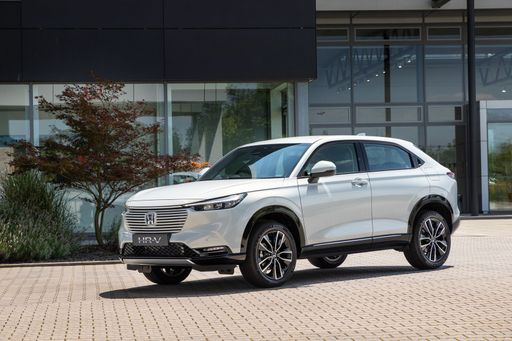
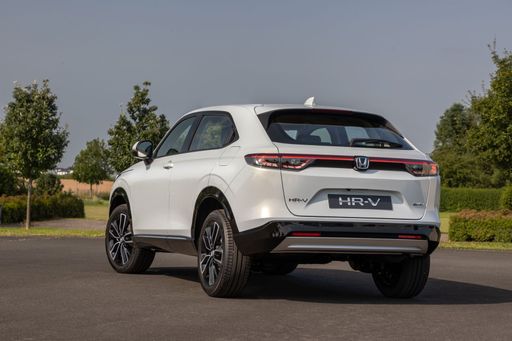
Both models offer a modern and compact design but vary slightly in dimensions. The Honda HR-V measures 4340 mm in length, 1582 mm in height, providing a robust and comfortable space for city drives and countryside adventures. It offers 335 to 320 liters of trunk capacity, slightly less than its Mazda counterpart but adequate for everyday storage.

The Mazda MX-30, however, extends to 4395 mm in length, paired with a height of 1560 mm, offering a slightly more elongated profile. The trunk capacity ranges from 350 to 332 liters, providing a notch more room for luggage, aligning well with its reputation for practicality.

HR-V

Environmental Impact and Efficiency

With the growing emphasis on reducing carbon footprints, both vehicles have committed to offering eco-friendly driving options. The Honda HR-V features a CO2 emission of 122 g/km, placing it in CO2 efficiency class D. While this is a decent rating, the Mazda MX-30 shines brighter in this aspect.

Thanks to its purely electric variant, the Mazda MX-30 can boast zero-tailpipe emissions, situating it firmly in CO2 efficiency class A. Even the plug-in hybrid version maintains impressive eco-credentials, with CO2 output as low as 21-22 g/km. This makes the MX-30 a fitting choice for environmental enthusiasts who are ready to embrace cleaner technologies.

MX-30

Interior Comfort and Technology

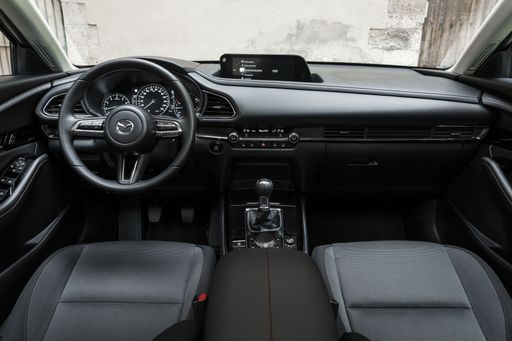
The HR-V and MX-30 both accommodate up to five passengers, offering generous interior space. Advances in technology enhance the driving experience, providing features that cater to contemporary needs. Though specific infotainment systems and technological gadgets might differ slightly, both brands are renowned for integrating user-friendly interfaces and connectivity options.

HR-V

The Final Word: Choosing Your Ideal SUV

The decision between the Honda HR-V and Mazda MX-30 ultimately comes down to personal preferences and environmental considerations. If hybrid efficiency and conventional driving experiences are what you prioritize, the Honda HR-V's seamless transition between power sources offers the balance you might be seeking.

However, if you are leading towards an electric future with minimal emissions and innovative design, the Mazda MX-30 represents a forward-thinking choice. With a lesser environmental impact and stylish aesthetics, it caters well to tech-savvy, eco-conscious customers alike.

As individual needs and tastes play a significant role, both the Honda HR-V and Mazda MX-30 stand strong, poised to take drivers on exciting journeys, redefining the compact SUV experience in their unique ways.

Here’s where it gets real: The technical differences in detail

MX-30

Costs and Efficiency:

Price and efficiency are key factors when choosing a car – and this is often where the real differences emerge.

Honda HR-V is very slightly cheaper – starting at 29,100 £ , while the Mazda MX-30 costs 30,800 £ . That’s a price difference of around 1,791 £.

HR-V

Engine and Performance:

Power, torque and acceleration are the classic benchmarks for car enthusiasts – and here, some clear differences start to show.

When it comes to engine power, the Mazda MX-30 offers visibly more power – delivering 170 HP compared to 131 HP. That’s roughly 39 HP more horsepower.

When accelerating from 0 to 100 km/h, the Mazda MX-30 is moderately quicker – completing the sprint in 9.1 s, while the Honda HR-V takes 10.6 s. That’s about 1.5 s quicker.

MX-30

Space and Everyday Use:

Beyond pure performance, interior space and usability matter most in daily life. This is where you see which car is more practical and versatile.

Both vehicles offer seating for 5 people.

In terms of curb weight, Honda HR-V is clearly lighter – 1,452 kg compared to 1,849 kg. The difference is around 397 kg.

Looking at boot space, the Mazda MX-30 offers only slightly more boot space – 350 L compared to 319 L. That’s a difference of about 31 L.

When it comes to payload, the Honda HR-V carries only slightly more – 418 kg compared to 402 kg. That’s a difference of about 16 kg.

Who wins the race in the data check?

The Mazda MX-30 is decisively ahead in the objective data comparison.
This result only shows which model scores more points on paper – not which of the two cars feels right for you.

from £30,800
MX-30

Mazda MX-30

  • Engine Type Plugin Hybrid
  • Transmission Automatic
  • Drive Type Front-Wheel Drive
  • Power HP 170 HP
  • Consumption kWh/100km 18.3 kWh/100km
  • Electric Range 85 km
Mazda MX-30
Honda HR-V

Costs and Consumption

View detailed analysis

Engine and Performance

View detailed analysis

Dimensions and Body

View detailed analysis

Mazda MX-30

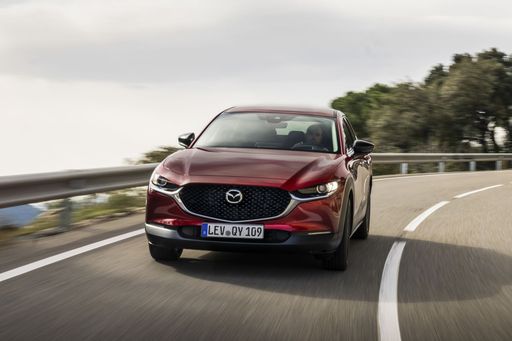
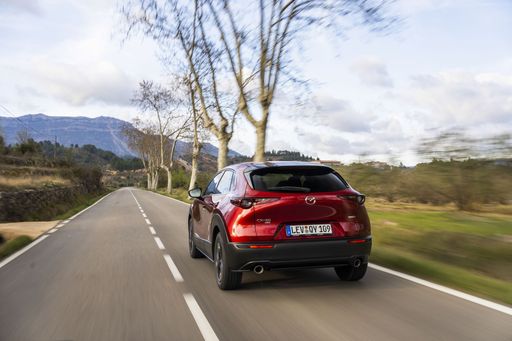
The Mazda MX-30 trades conventional EV practicality for a boutique vibe, wrapping easy urban agility and a stylish, artisan interior into a compact package that stands out in the crossover crowd. It’s ideal for city-minded buyers who value design and driving feel over long-distance trips, and its quirky details prove Mazda can be playful without losing its driver-focused soul.

details

Honda HR-V

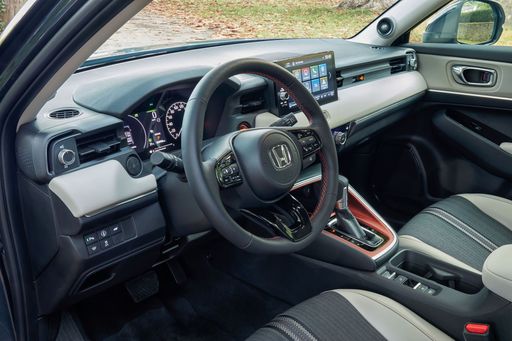
The Honda HR-V is a compact crossover that blends practical versatility with a comfortable, refined cabin, making it a strong choice for daily driving and weekend trips. Its clever packaging and easy-to-use features give owners flexible cargo space and a confidence-inspiring driving experience without feeling fussy.

details
Mazda MX-30
Honda HR-V

Costs and Consumption

Price
30,800 - 37,100 £
Price
29,100 - 34,700 £
Consumption L/100km
-
Consumption L/100km
5.4 L/100km
Consumption kWh/100km
18.3 kWh/100km
Consumption kWh/100km
-
Electric Range
85 km
Electric Range
-
Battery Capacity
-
Battery Capacity
-
co2
22 g/km
co2
122 g/km
Fuel tank capacity
-
Fuel tank capacity
-

Dimensions and Body

Body Type
SUV
Body Type
SUV
Seats
5
Seats
5
Doors
5
Doors
-
Curb weight
1,849 kg
Curb weight
1,452 kg
Trunk capacity
332 - 350 L
Trunk capacity
319 L
Length
4,395 mm
Length
-
Width
1,848 mm
Width
1,866 mm
Height
1,555 mm
Height
-
Max trunk capacity
1,137 - 1,155 L
Max trunk capacity
-
Payload
402 kg
Payload
418 kg

Engine and Performance

Engine Type
Plugin Hybrid
Engine Type
Full Hybrid
Transmission
Automatic
Transmission
Automatic
Transmission Detail
Reduction Gearbox
Transmission Detail
Automatic Gearbox
Drive Type
Front-Wheel Drive
Drive Type
Front-Wheel Drive
Power HP
170 HP
Power HP
131 HP
Acceleration 0-100km/h
9.1 s
Acceleration 0-100km/h
10.6 - 10.8 s
Max Speed
140 km/h
Max Speed
-
Torque
-
Torque
253 Nm
Number of Cylinders
-
Number of Cylinders
4
Power kW
125 kW
Power kW
96 kW
Engine capacity
830 cm3
Engine capacity
1,498 cm3

General

Model Year
2025
Model Year
2025
CO2 Efficiency Class
B
CO2 Efficiency Class
D
Brand
Mazda
Brand
Honda
DriveDuel uses data analysis and artificial intelligence to evaluate vehicle data and create content. Content is regularly reviewed and improved. The displayed prices are estimates based on German list prices, adjusted to the respective country’s VAT. Country-specific registration taxes are not included. This information is not legally binding.