VS

Mercedes B Class vs SsangYong Tivoli comparison

Compare performance (238 HP vs 163 HP), boot space and price (33,100 £ vs 21,400 £ ) at a glance. Find out which car is the better choice for you – Mercedes B Class or SsangYong Tivoli?

Mercedes B Class vs SsangYong Tivoli: Key differences

Mercedes B Class

4.9 (5 Reviews)
rate
  • noticeably more power
  • substantially more efficient

SsangYong Tivoli

  • considerably cheaper
  • marginally lighter
  • markedly more trunk space

All details on performance, efficiency, range and trunk space can be found in the technical comparison below – including user reviews for both models.

B Class

The Battle of Versatility: Mercedes B-Klasse vs. SsangYong Tivoli

When it comes to choosing between the Mercedes B-Klasse and the SsangYong Tivoli, potential buyers are faced with a choice between German engineering and South Korean ingenuity. Both cars offer distinct characteristics that cater to various needs and preferences. Let's delve into the technicalities and innovations of these two vehicles.
Tivoli

Design and Body Type

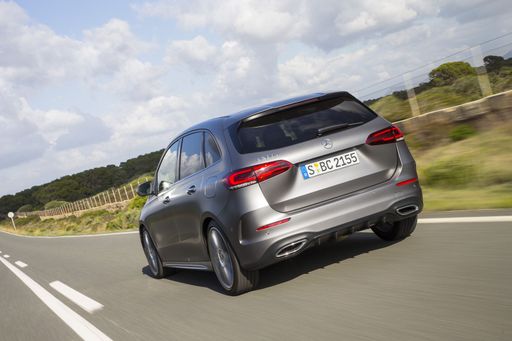
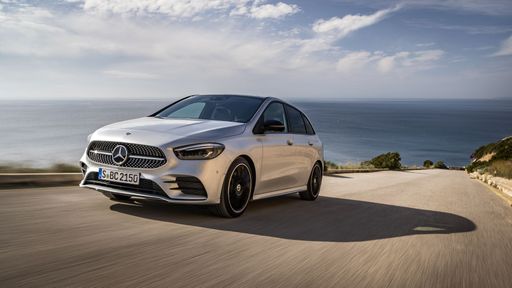
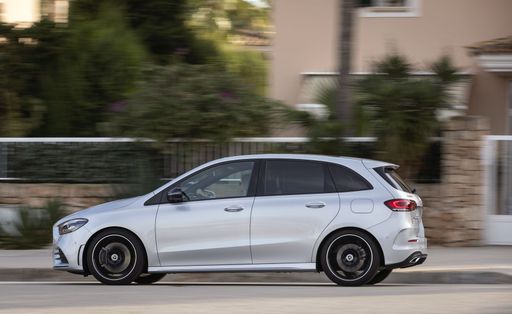
The Mercedes B-Klasse is an MPV (multi-purpose vehicle) that exudes a sleek yet practical design with its dimensions of 4419 mm in length, 1796 mm in width, and 1562 mm in height. Its robust and well-crafted structure is intended for families and those seeking versatility with a hint of elegance.

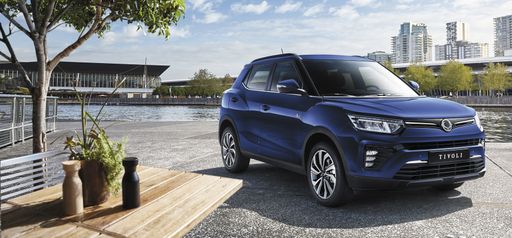
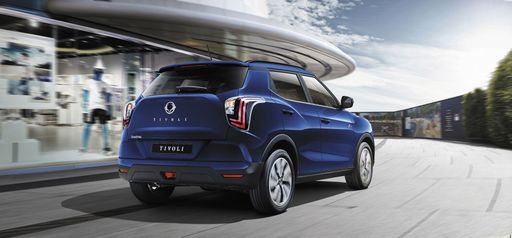
On the other hand, the SsangYong Tivoli is positioned firmly in the SUV segment. Its bold and modern exterior is characterized by its compact yet robust size, measuring between 4225 mm to 4480 mm in length, 1810 mm in width, and up to 1646 mm in height. This combination makes it well-suited for urban adventures and off-road excursions.

B Class

Engine Performance and Drive

The B-Klasse offers a diverse range of powertrains including petrol mild hybrid, diesel, and a plug-in hybrid variant. The power ranges from 116 to 238 HP, and it is available with a dual-clutch automatic transmission. Notably, the plug-in hybrid offers an electric range of up to 83 km, perfect for eco-conscious drivers.

Conversely, the Tivoli houses a singular petrol engine option with a power output of 163 HP. It comes with both manual and automatic gearbox options, which may appeal to traditionalists and those who enjoy the control of a manual drive. The Tivoli’s drive type can be either front-wheel drive or all-wheel drive, providing adaptability for different driving conditions.

Tivoli

Fuel Efficiency and Environment

In terms of fuel consumption, the B-Klasse offers a commendably efficient journey with figures ranging from 5.1 to 7.1 L/100km for its internal combustion engines and an impressive 0.8 L/100km for its plug-in hybrid option. The CO2 emissions are similarly varied, with an efficiency class stretching from E to B.

Meanwhile, the Tivoli’s fuel consumption is recorded between 7.0 to 8.3 L/100km, which is competitive within the petrol engine segment. However, the CO2 emissions fall within the F to G class, which might influence environmentally-focused buyers.

B Class

Interior and Space

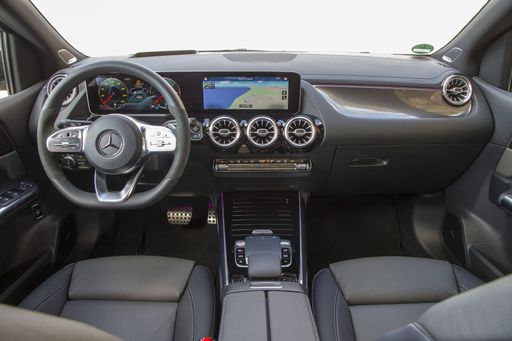
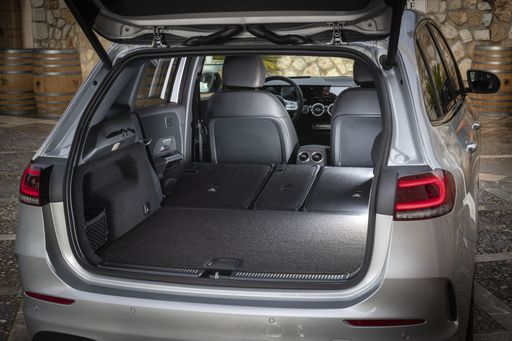
Both vehicles accommodate five passengers comfortably, but it is in their trunk capacity where they diverge. The B-Klasse provides between 405 to 455 liters of trunk space, making it excellent for families and long journeys.

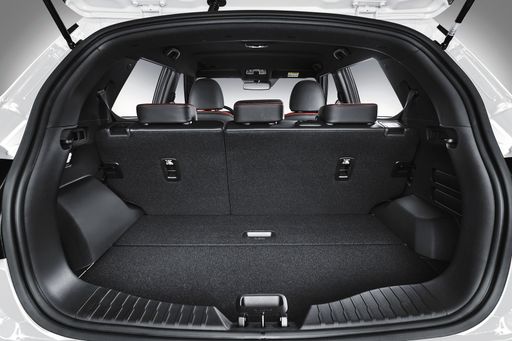
The Tivoli steps ahead with a massive trunk capacity of 720 liters, which could be a deciding factor for those who prioritize cargo space for their adventures.

Tivoli

The Final Word

In conclusion, the choice between the Mercedes B-Klasse and SsangYong Tivoli rests heavily on personal needs. If hybrid technology, a premium interior fit, and extensive customization appeal to you, the B-Klasse is the choice to make. However, if an SUV with generous cargo space and competitive pricing is your priority, the Tivoli stands out as the better option. Each has its strengths, carving its niche in the automotive landscape.

Here’s where it gets real: The technical differences in detail

B Class

Costs and Efficiency:

Price and efficiency are often the first things buyers look at. Here it becomes clear which model has the long-term edge – whether at the pump, the plug, or in purchase price.

SsangYong Tivoli is considerably cheaper – starting at 21,400 £ , while the Mercedes B Class costs 33,100 £ . That’s a price difference of around 11,709 £.

Fuel consumption also shows a difference: the Mercedes B Class uses 2.5 L/100km and is substantially more efficient than the SsangYong Tivoli with 7 L/100km. The difference is about 4.5 L/100km.

Tivoli

Engine and Performance:

Power, torque and acceleration say a lot about how a car feels on the road. This is where you see which model delivers more driving dynamics.

When it comes to engine power, the Mercedes B Class offers noticeably more power – delivering 238 HP compared to 163 HP. That’s roughly 75 HP more horsepower.

Looking at top speed, the Mercedes B Class is somewhat faster – reaching 223 km/h, while the SsangYong Tivoli tops out at 181 km/h. The difference is around 42 km/h.

There’s also a difference in torque: the Mercedes B Class delivers markedly more torque with 450 Nm compared to 280 Nm. That’s about 170 Nm more.

B Class

Space and Everyday Use:

Whether family car or daily driver – which one offers more room, flexibility and comfort?

Both vehicles offer seating for 5 people.

In terms of curb weight, SsangYong Tivoli is marginally lighter – 1,375 kg compared to 1,405 kg. The difference is around 30 kg.

Looking at boot space, the SsangYong Tivoli offers markedly more boot space – 720 L compared to 455 L. That’s a difference of about 265 L.

Maximum load volume is the same – both hold up to 1,440 L.

When it comes to payload, the Mercedes B Class carries slightly more – 550 kg compared to 455 kg. That’s a difference of about 95 kg.

Who wins the race in the data check?

The Mercedes B Class is clearly superior overall in the objective data comparison.
This result only shows which model scores more points on paper – not which of the two cars feels right for you.

from £33,100
B Class

Mercedes B Class

  • Engine Type : Plugin Hybrid, Petrol MHEV, Diesel
  • Transmission : Automatic
  • Drive Type : Front-Wheel Drive, All-Wheel Drive
  • Power HP : 116 - 238 HP
  • Consumption L/100km : 2.5 - 6.9 L/100km
  • Electric Range : 83 km
Mercedes B Class
SsangYong Tivoli

Costs and Consumption

View detailed analysis

Engine and Performance

View detailed analysis

Dimensions and Body

View detailed analysis

Mercedes B Class

The Mercedes B-Class is a smart, grown-up compact people carrier that dresses everyday practicality in a near‑premium polish, perfect for buyers who want comfort and a classy badge without the theatrics. It won’t set your pulse racing on a back road, but it will make school runs, commutes and grocery hauls feel pleasantly civilized — a reliable, slightly posh companion for real life.

details

SsangYong Tivoli

The SsangYong Tivoli is an unpretentious small crossover that surprises with a roomy, well-finished cabin and an agreeable ride that suits everyday life. It won't win any beauty contests, but it's a smart, economical choice for buyers who value practicality, comfort and a bit of cheeky character.

details
Mercedes B Class
SsangYong Tivoli

Costs and Consumption

Price
33,100 - 52,500 £
Price
21,400 - 30,300 £
Consumption L/100km
2.5 - 6.9 L/100km
Consumption L/100km
7 - 8.3 L/100km
Consumption kWh/100km
-
Consumption kWh/100km
-
Electric Range
83 km
Electric Range
-
Battery Capacity
12.9 kWh
Battery Capacity
-
co2
56 - 156 g/km
co2
161 - 191 g/km
Fuel tank capacity
35 L
Fuel tank capacity
50 L

Dimensions and Body

Body Type
MPV
Body Type
SUV
Seats
5
Seats
5
Doors
5
Doors
5
Curb weight
1,405 - 1,745 kg
Curb weight
1,375 - 1,492 kg
Trunk capacity
405 - 455 L
Trunk capacity
395 - 720 L
Length
4,419 mm
Length
4,225 - 4,480 mm
Width
1,796 mm
Width
1,810 mm
Height
1,562 mm
Height
1,613 - 1,646 mm
Max trunk capacity
1,440 L
Max trunk capacity
1,115 - 1,440 L
Payload
505 - 550 kg
Payload
425 - 455 kg

Engine and Performance

Engine Type
Plugin Hybrid, Petrol MHEV, Diesel
Engine Type
Petrol
Transmission
Automatic
Transmission
Manuel, Automatic
Transmission Detail
Dual-Clutch Automatic
Transmission Detail
Manual Gearbox, Automatic Gearbox
Drive Type
Front-Wheel Drive, All-Wheel Drive
Drive Type
Front-Wheel Drive, All-Wheel Drive
Power HP
116 - 238 HP
Power HP
163 HP
Acceleration 0-100km/h
6.5 - 10 s
Acceleration 0-100km/h
-
Max Speed
223 km/h
Max Speed
175 - 181 km/h
Torque
200 - 450 Nm
Torque
260 - 280 Nm
Number of Cylinders
4
Number of Cylinders
4
Power kW
85 - 175 kW
Power kW
120 kW
Engine capacity
1,332 - 1,991 cm3
Engine capacity
1,497 cm3

General

Model Year
2,024 - 2,025
Model Year
2,021 - 2,024
CO2 Efficiency Class
B, D, E, F
CO2 Efficiency Class
F, G
Brand
Mercedes-Benz
Brand
SsangYong
DriveDuel uses data analysis and artificial intelligence to evaluate vehicle data and create content. Content is regularly reviewed and improved. The displayed prices are estimates based on German list prices, adjusted to the respective country’s VAT. Country-specific registration taxes are not included. This information is not legally binding.