
 Deutschland
 France
 Nederland
 Great Britain
 Sverige
 Norge
Norge Danmark
 Suomi
Suomi Italia
 Polska
 España
VS
Mercedes C Class Wagon vs Volvo XC90 - Differences and prices compared
Compare performance (680 HP vs 455 HP), boot space and price (42400 £ vs 69800 £ ) at a glance. Find out which car is the better choice for you – Mercedes C Class Wagon or Volvo XC90?
C Class Wagon
Costs and Efficiency:
Looking at overall running costs, both models reveal some interesting differences in everyday economy.
Mercedes C Class Wagon has a convincingly advantage in terms of price – it starts at 42400 £ , while the Volvo XC90 costs 69800 £ . That’s a price difference of around 27320 £.
Fuel consumption also shows a difference: Mercedes C Class Wagon manages with 0.40 L and is therefore significantly more efficient than the Volvo XC90 with 3.50 L. The difference is about 3.10 L per 100 km.
As for electric range, the Mercedes C Class Wagon performs evident better – achieving up to 112 km, about 41 km more than the Volvo XC90.
XC90
Engine and Performance:
Power, torque and acceleration say a lot about how a car feels on the road. This is where you see which model delivers more driving dynamics.
When it comes to engine power, the Mercedes C Class Wagon has a distinct edge – offering 680 HP compared to 455 HP. That’s roughly 225 HP more horsepower.
In acceleration from 0 to 100 km/h, the Mercedes C Class Wagon is significantly quicker – completing the sprint in 3.40 s, while the Volvo XC90 takes 5.40 s. That’s about 2 s faster.
In terms of top speed, the Mercedes C Class Wagon performs distinct better – reaching 280 km/h, while the Volvo XC90 tops out at 180 km/h. The difference is around 100 km/h.
There’s also a difference in torque: Mercedes C Class Wagon pulls clearly perceptible stronger with 1020 Nm compared to 709 Nm. That’s about 311 Nm difference.
Ad · Affiliate



As an Amazon Associate, we earn from qualifying purchases.
C Class Wagon
Space and Everyday Use:
Whether family car or daily driver – which one offers more room, flexibility and comfort?
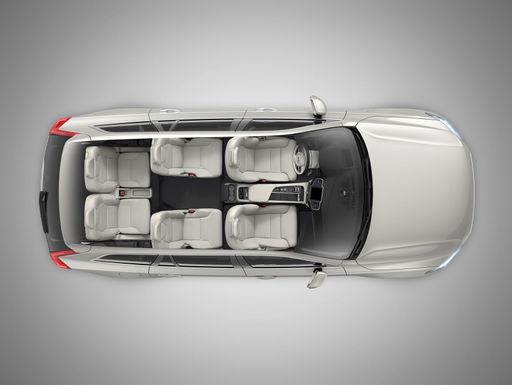
Seats: Volvo XC90 offers noticeable more seating capacity – 7 vs 5.
In curb weight, Mercedes C Class Wagon is to a small extent lighter – 1755 kg compared to 2080 kg. The difference is around 325 kg.
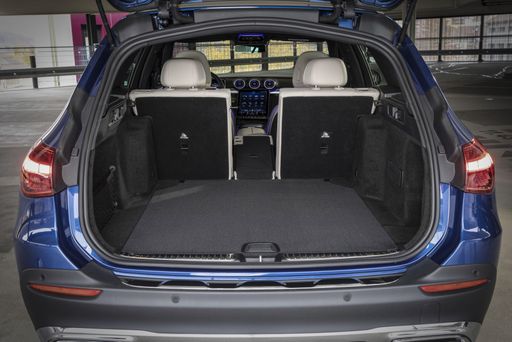
In terms of boot space, the Mercedes C Class Wagon offers evident more room – 490 L compared to 302 L. That’s a difference of about 188 L.
In maximum load capacity, the Volvo XC90 performs slightly better – up to 1856 L, which is about 346 L more than the Mercedes C Class Wagon.
When it comes to payload, Volvo XC90 noticeable takes the win – 710 kg compared to 565 kg. That’s a difference of about 145 kg.
Who wins the race in the data check?
The Mercedes C Class Wagon is decisively ahead in the objective data comparison.
This result only shows which model scores more points on paper – not which of the two cars feels right for you.
Mercedes C Class Wagon
Volvo XC90
Costs and Consumption
View detailed analysis
View detailed analysis
Engine and Performance
View detailed analysis
View detailed analysis
Dimensions and Body
View detailed analysis
View detailed analysis
from about £42,400
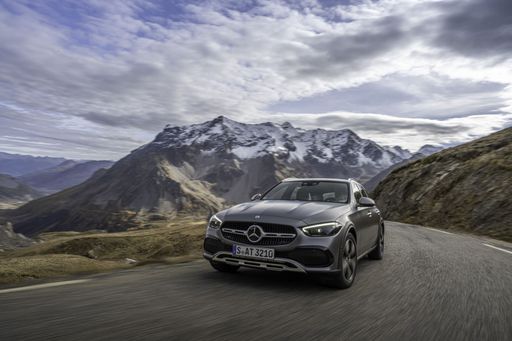
Mercedes C Class Wagon
Mercedes C Class Wagon
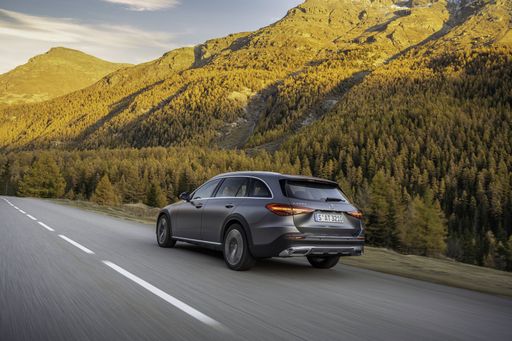
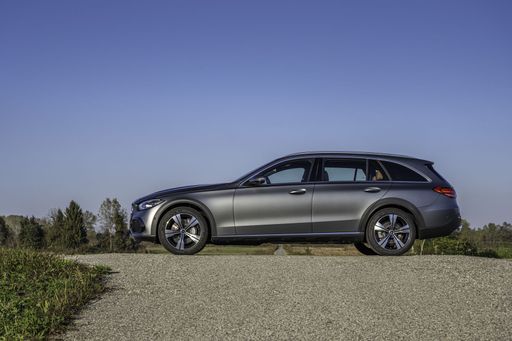
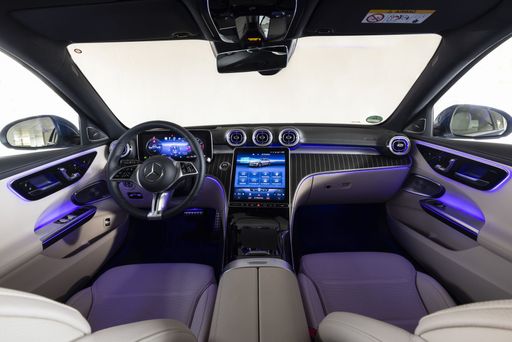
The Mercedes C-Class wagon dresses Mercedes refinement in a sensible, practical package, marrying a sleek estate silhouette with a plush, high-quality cabin that feels more premium than its badge implies. It quietly soaks up motorway miles and cartloads of family kit with composed handling and effortless comfort — a clever alternative to an SUV for buyers who still like to steer.
details
Volvo XC90
5 (1 Reviews)
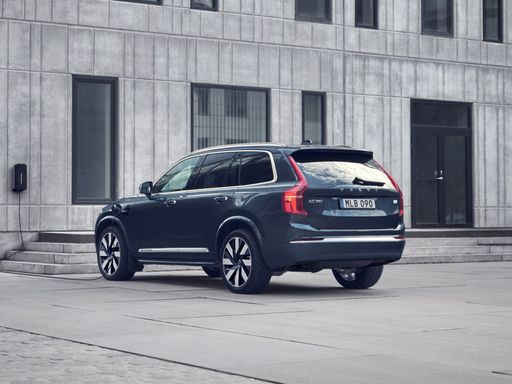
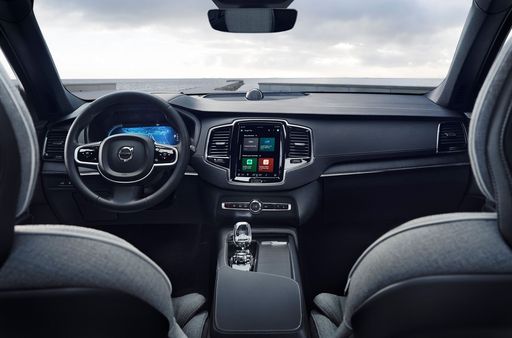
The Volvo XC90 is a serene Scandinavian SUV that mixes minimalist luxury with a composed, confidence-inspiring presence — ideal for buyers who want family practicality without sacrificing style. Inside it serves up a calm, well-crafted cabin and user-friendly tech that keeps long journeys pleasant and tantrums to a minimum, making the XC90 a smart, stylish pick for sensible drivers.
details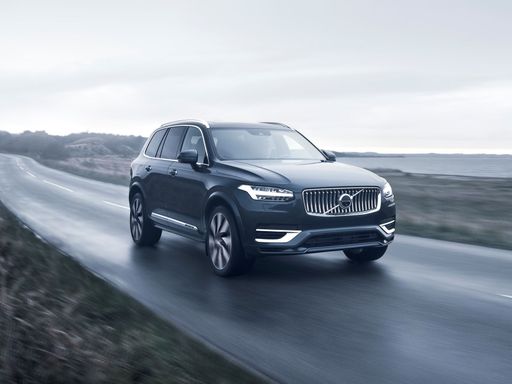

Mercedes C Class Wagon
Volvo XC90
Costs and Consumption |
|
|---|---|
|
Price
42400 - 115300 £
|
Price
69800 - 84600 £
|
|
Consumption L/100km
0.4 - 9 L
|
Consumption L/100km
3.5 - 8.5 L
|
|
Consumption kWh/100km
-
|
Consumption kWh/100km
-
|
|
Electric Range
11 - 112 km
|
Electric Range
71 km
|
|
Battery Capacity
19.50 kWh
|
Battery Capacity
14.70 kWh
|
|
co2
11 - 206 g/km
|
co2
79 - 191 g/km
|
|
Fuel tank capacity
40 - 66 L
|
Fuel tank capacity
71 L
|
Dimensions and Body |
|
|---|---|
|
Body Type
Estate
|
Body Type
SUV
|
|
Seats
5
|
Seats
7
|
|
Doors
5
|
Doors
5
|
|
Curb weight
1755 - 2235 kg
|
Curb weight
2080 - 2297 kg
|
|
Trunk capacity
360 - 490 L
|
Trunk capacity
262 - 302 L
|
|
Length
4751 - 4842 mm
|
Length
4953 mm
|
|
Width
1820 - 1900 mm
|
Width
1923 mm
|
|
Height
1454 - 1494 mm
|
Height
1771 mm
|
|
Max trunk capacity
1375 - 1510 L
|
Max trunk capacity
1816 - 1856 L
|
|
Payload
440 - 565 kg
|
Payload
653 - 710 kg
|
Engine and Performance |
|
|---|---|
|
Engine Type
Petrol MHEV, Plugin Hybrid, Diesel MHEV
|
Engine Type
Petrol MHEV, Plugin Hybrid
|
|
Transmission
Automatic
|
Transmission
Automatic
|
|
Transmission Detail
Automatic Gearbox
|
Transmission Detail
Automatic Gearbox
|
|
Drive Type
Rear-Wheel Drive, All-Wheel Drive
|
Drive Type
All-Wheel Drive
|
|
Power HP
186 - 680 HP
|
Power HP
250 - 455 HP
|
|
Acceleration 0-100km/h
3.4 - 8.8 s
|
Acceleration 0-100km/h
5.4 - 7.7 s
|
|
Max Speed
226 - 280 km/h
|
Max Speed
180 km/h
|
|
Torque
250 - 1020 Nm
|
Torque
360 - 709 Nm
|
|
Number of Cylinders
4
|
Number of Cylinders
4
|
|
Power kW
137 - 500 kW
|
Power kW
184 - 335 kW
|
|
Engine capacity
1496 - 1999 cm3
|
Engine capacity
1969 cm3
|
General |
|
|---|---|
|
Model Year
2024 - 2025
|
Model Year
2024 - 2025
|
|
CO2 Efficiency Class
E, F, G, B, D
|
CO2 Efficiency Class
G, B
|
|
Brand
Mercedes-Benz
|
Brand
Volvo
|
Is the Mercedes C Class Wagon offered with different drivetrains?
The Mercedes C Class Wagon is available as Rear-Wheel Drive or All-Wheel Drive.
The prices shown are estimates based on German list prices, adjusted for local VAT. Local registration taxes (e.g. NoVA, BPM or CO2 malus) are not included. This information is not legally binding.